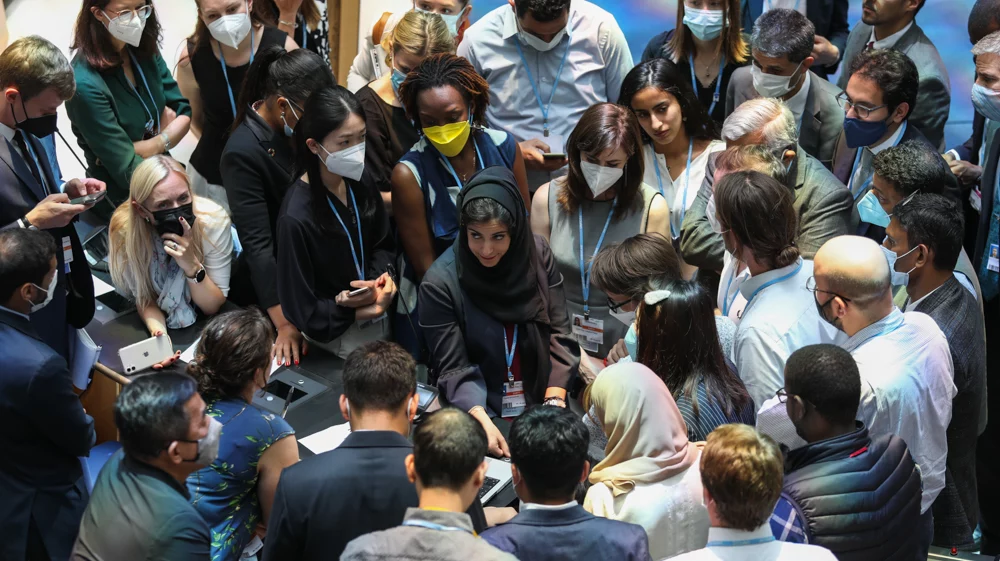
Negotiators are meeting this week in Baku, Azerbaijan, to discuss the details of the New Collective Quantified Goal (NCQG) under the UN convention on climate. They need to consider a dozen “must-haves”, for the new goal for adaptation finance to be sufficient, effective and equitable for adaptation, writes Katherine Browne, which could set the goal for success for the next few decades.
The NCQG has been nearly a decade in the making.
Countries agreed to establish the new goal in 2015, to go into effect in 2025.1 At the time, developed countries committed to mobilize USD 100 billion annually from 2020 to support climate mitigation and adaptation in developing countries.2 This financial support is vital to the success of the Paris Agreement, as many developing countries’ climate commitments are contingent on receiving funding. This climate finance is also seen as critical to climate justice, as countries with the greatest historical responsibility for climate change are obligated to provide financial support.
According to the Organisation for Economic Cooperation and Development (OECD), developed countries met the USD 100 billion goal in 2022 – two years behind schedule. The late delivery, combined with persistent concerns over lack of transparency and accountability, has contributed to distrust between richer and poorer nations.
The NCQG will address mitigation and adaptation, and it could include funding for loss and damage as well. This week, negotiations will handle all of finance all three, but to hammer out a successful goal for future finance, negotiators should pay special attention to needs for adaptation.
Adaptation is considered separately from mitigation here for two reasons: first, because adaptation can be interpreted as a conceptually different objective than mitigation, with inherent difficulties in quantifying needs and impact, and in evaluating outcomes. Second, adaptation funding has consistently fallen short of that for mitigation, with the shortfall contributing significantly to the growing distrust between countries. COP29 is an opportunity for parties to commit to funding adaptation and to rebuilding trust in climate finance over the long term.
The NCQG must advance sufficient, effective and equitable finance for climate adaptation. The “must-haves” described here also are in the SEI brief for negotiators, “‘Must-haves’ for adaptation finance in the New Collective Quantified Goal“.
The biggest open question in the NCQG negotiations is how big the final number will be, known as the quantum. Countries previously decided this new goal would be set “from a floor of USD 100 billion per year”.1 They also agreed that the goal should “take into account the needs and priorities of developing countries”.4 Some developing country groups have asked for USD 1.1–1.3 trillion annually, with USD 400 billion annually for adaptation. Developed countries have so far declined to suggest specific figures.
Research shows that international support for adaptation has lagged far behind that for mitigation. It remains methodologically challenging for countries to quantify their financial needs for adaptation. It is nevertheless clear that these needs are growing rapidly. Developing countries already require approximately USD 215 billion to USD 387 billion per year to support adaptation.
From the SEI brief “Must-haves” for adaptation finance in the New Collective Quantified Goal, ensuring sufficient finance for adaptation means the NCQG must:
Sources and finance instruments: International adaptation finance flows through a wide range of channels, including UN climate funds, bilateral agreements and private corporations. Developed countries argue that public sources (such as grants and concessional loans) are insufficient to meet all adaptation needs, stating that the NCQG should encourage private actors to invest in adaptation. These investment proposals include the development of “innovative sources” of finance, such as public-private partnerships, de-risking instruments, guarantees, green bonds, and debt-for-climate swaps. Many developing countries counter that they face structural challenges in attracting private investment and that innovative approaches are unlikely to work in all contexts.
Research shows that much of current international climate finance comes in the form of non-concessional loans – loans with market-based interest rates. These loans add to many vulnerable countries’ pre-existing debt burdens, restricting their ability to invest in adaptation and resilience building. Private climate finance is growing but is far more likely to support mitigation initiatives with higher expected rates of return than adaptation. Some potential forms of support, such as proposed levies on international shipping and aviation, could help fill the gap in the long-term but face significant political opposition.
From the SEI brief, to ensure sufficient sources and instruments, the NCQG must:
Though all countries agree that climate finance should advance effective adaptation, they disagree about how effectiveness should be reflected in the NCQG. Developed countries seek an “outcome-” or “results-based” goal that demonstrates impact and rewards countries for ambitious climate action. Developing countries want the effectiveness of finance to be measured in terms of how funding aligns with national priorities and plans.5
Measuring the effectiveness of adaptation is extremely difficult over long timescales. International funders tend to use two primary indicators to measure the “success” of adaptation: the number of beneficiaries with increased adaptive capacity and the number of plans or projects. Researchers are developing methods to measure reduced vulnerability and enhanced adaptive capacity over the long-term. They are also trying to measure how international funding is aligned with recipient countries’ plans and priorities. Some argue it is simply impossible to develop universal measures of “success” and that funders should focus on enabling locally led adaptation.
Emerging research on “transboundary climate risks” also shows that it is insufficient to enable adaptation solely at the national and local level. The first global stocktake recognized the need for global cooperation to address complex climate risks that cascade across borders.
From the SEI brief, ensuring finance is enabling effective adaptation means the NCQG must:
Allocation: The Paris Agreement recognizes that financial resources should be provided to “particularly vulnerable” countries, such as Least Developed Countries (LDCs) and Small Island Developing States (SIDS). Both developed and developing countries have called for support for local and “frontline” communities, those already facing adverse impacts, and vulnerable groups, including women, youth and children, Indigenous Peoples and marginalized communities. Countries have never defined vulnerability under the UN climate convention, however, making it difficult to target funding to specific regions, countries and communities and evaluate whether it is reaching them.
Research shows that vulnerable countries receive less than their fair share of international adaptation finance. As little as 17% of funding makes it to local level organizations. Indigenous Peoples may receive as little as 1% of climate finance. Social barriers often prevent funding from reaching women.
From the SEI brief, ensuring adaptation finance is equitably allocated means the NCQG must:
Access: The Paris Agreement calls on financial institutions to ensure efficient access to financial resources, especially for smaller countries and those with lower administrative capacity. Developing countries argue they continue to encounter significant challenges in accessing international financial resources. UN funds require long and complex accreditation and application procedures, with significant differences between funds. Developed countries counter that such procedures are necessary to ensure effectiveness and fiduciary responsibility.
Research shows that vulnerable countries, especially SIDS, continue to have trouble accessing finance from both UN funds and multilateral development banks (MDBs). Direct Access mechanisms that empower national and local stakeholders have been shown to improve equity and effectiveness.
From the SEI brief, ensuring equitable access to adaptation finance means the NCQG must:
Making the NCQG sufficient, effective and equitable in the long term will require actions not just of negotiators, but also of governments, MDBs, other international financial institutions and private companies. The NCQG has been a decade in the making; setting it up now in the right way could lead to success in the decades to come.
It remains to be seen whether negotiators will manage to bake in the necessary ingredients for adaptation finance (read the SEI brief, “Must-haves” for adaptation finance in the New Collective Quantified Goal). Negotiations this week in Baku will set the stage for agreement at COP29 later this year.
The international climate risk and adaptation team works to understand, manage and support adaptation to climate risk, especially as it cascades across borders.
The UN Climate Convention classifies countries according to annexes. Annex II countries, known as “developed countries,” are required to provide financial resources to non-Annex I countries, known as “developing countries.” Though the terms “contributor” and “recipient” countries are now considered more neutral, I continue to use developed/developing to maintain consistency with the UN climate convention.
SEI brief / The NCQG must include these must-haves to ensure funding meets the objectives of sufficient, effective and equitable climate adaptation.
SEI brief / This brief informs adaptation financiers, the broader community of adaptation scholars, and practitioners in their efforts to scale up support for LLA.
Past event / Get the who, what, when and where for SEI's presence at Climate Week NYC.