part of Environment and policy in Asia
Who holds the power to decide how climate adaptation resources are used? This episode of the Adaptation Research Alliance (ARA) podcast series explores how philanthropy can share power with grassroots communities, moving beyond treating vulnerable populations as passive aid recipients to positioning them as active agents in designing and implementing their own climate solutions.
00:00 – 00:24
Welcome to SEI Asia’s podcast on environment and policy in Asia. In this podcast series, we invite experts to discuss the many critical and complex environmental challenges in Asia, and how to find solutions through policy and partnerships.
00:33 – 00:51
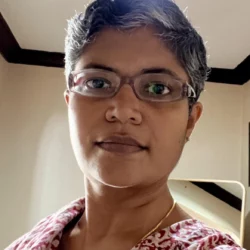
Preeti: Good afternoon, good evening and good morning to our listeners around the world. Welcome to the second episode of Adaptation Action, brought to you by the Adaptation Research Alliance, in short, ARA. I’m your host, Preeti Abraham, Programs and Operations Lead at the ARA Secretariat in Bangkok.
00:52 – 01:50
Preeti: Today’s episode is called Shifting Power, Trust-Based Philanthropy and the Future of Locally Led Adaptation. We will explore some urgent questions facing us today. Is there a way to enable predictable patient funding for locally led adaptation? What is the role of trust-based philanthropy? Does it help to make adaptation investments more responsive to the local context? How does it challenge power dynamics and move beyond treating vulnerable communities as passive recipients of aid and instead position them as active agents in designing, funding and implementing their own climate change adaptation solutions? For today’s episode, we are joined by leaders working among informal sector workers, the urban poor and indigenous people, all of whom are at the frontiers of climate action.
01:51 – 02:42
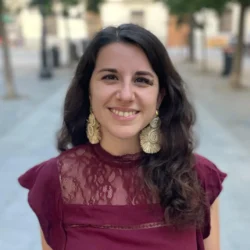
Preeti: Together, we explore how philanthropy can share power with these communities and bring about transformative change through more trust-based, flexible approaches to funding for climate change adaptation. So, to introduce our guests today, let me start with Juliana Tinoco. Juliana serves as Executive Coordinator of the Allianza Socioambiental Fondos del Sur, or in English, the Socio-Environmental Funds from the Global South, an innovative network of Global South-led funds that support grassroots communities or environmental protection and social equity across Latin America, Africa and Southeast Asia. She conceived the Global South House, a platform that brings together philanthropic actors from the Global South for the Global South. Welcome, Juliana.
02:43 – 02:45
Juliana: Thank you, Preeti.
02:46– 03:23
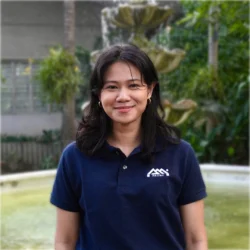
Preeti: Nice to have you here. Next, we have Ericka Lynne Nava. Erika is the Assistant Executive Director of the Philippine Action for Community-Led Shelter Initiatives, commonly known as PACSI. Erika is a grassroots leader who empowers the homeless, spearheads community-led housing and advocates for genuine, locally-led decision-making in climate resilience and disaster response. Beyond her work with PACSI, Erika also serves as a lecturer with the Department of Political Science at Ateneo de Manila University. So glad to have you here, Erika. Welcome.
03:24 – 03:25
Erika: Thank you, Preeti. Thanks for having me.
03:26 – 04:00
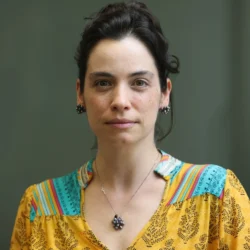
Preeti: And then, our final guest for today’s podcast is Paula Sevilla-Núñez. Paula is a Housing Justice Researcher at the International Institute for Environment and Development, IIED. She is passionate about tackling inequality and building equitable, peaceful societies through inclusive urban policy. She specializes in applied policy analysis on issues like housing inequality, financialization, local governance, and effective multilateral action for more sustainable, fairer, and caring cities. Welcome, Paula.
04:01 – 04:02
Paula: Thank you for having me.
04:03 – 04:16
Preeti: Great. So let’s jump right into the questions. My first query is to Juliana. Let’s start with the very basics. How do you define trust-based philanthropy? How does it differ from more conventional funding approaches? Juliana?
04:17 – 05:17
Juliana: So Preeti, I would like to kick us off with a provocation. I believe philanthropy is and has always been based on trust. The debate isn’t whether to trust. It’s who we believe is worthy of that trust. We can best understand trust-based philanthropy as a structural transformation in how we think about climate finance and power in this context. So for decades, climate finance has operated on the assumption that expertise, decision-making, power, risk management capacities, they all sit far away from the territories that have been most affected by climate change and environmental emergencies. So as a result, the communities are constantly the ones that have been asked to prove their capacity, while the institutions holding the resources rarely have to question their own assumptions on what’s actually valid, efficient, and important in terms of climate action.
05:18 – 06:15
Juliana: So trust-based philanthropy is what actually challenged this logic, I believe. It starts from the recognition that communities already possess knowledge, legitimacy, and solutions built through generations of living with those environmental changes and with that living environment. So the question is not simply how much money should reach them, but who decides where it goes, who defines what’s supposed to deliver, who defines what the risks are, who produces the knowledge, and who ultimately holds power within that conversation. So it’s not about being less accountable by no means, it’s about shifting the accountability towards the people living the realities that we are trying to address rather than primarily upwards to institutions and donors.
06:16 – 07:17
Juliana: So what does that mean a little bit more in practice? So when we talk about trust-based philanthropy, we’re really talking about a different way of thinking about grant making, for example. So we’re talking about flexibility, but also rethinking who makes decisions. Traditional funding often starts from questions like, can communities manage the money? Can they report according to our systems? Can they fit our priorities? And trust-based philanthropy starts somewhere else. It would ask, how do we support the existing community leadership? How do we reduce the unnecessary barriers and bureaucracies that have been created by our own systems? How do we strengthen local institutions instead of bypassing them in favour of our own institutional view? And how do we become accountable to them as well, rather than expecting all the accountability to flow only upwards to donors? So I believe this is mainly at the core, at the heart of how we should understand trust-based philanthropy.
07:18 – 07:56
Preeti: Wonderful. Thank you so much for explaining that and laying it out so clearly. It feels like it’s in many ways upending the traditional funding architecture that we have known for aid initiatives or any kind of even climate change solutions that are being implemented at the moment. That takes me to trying to understand the relationship between trust-based philanthropy and locally-led adaptation a bit more. And I’d like to come to Paula. So Paula, as a researcher in your explorations, how have you seen that trust-based approaches support local leadership, support decision-making at the local level and support ownership of the local communities?
07:57 – 08:43
Paula: Thank you, Preeti. So IIED, the International Institute for Environment and Development, is among more than 150 organisations, donors, governments that have endorsed what we’re calling principles for locally-led adaptation. And these principles help move programmes, funding, practices towards adaptation that is increasingly owned by local stakeholders. So trying to shift the resources, but also the power to the local level. And this is, these principles were developed in a collaborative way among all the organisations and all the stakeholders, recognising that we all have a role to play. And of course, philanthropy and trust-based philanthropy also has an important contribution to make in this area.
08:44 – 09:44
Paula: And so I wanted to reflect on some of the elements of these principles. There are eight principles of locally-led adaptation, but I’ll focus on three key elements that I think trust-based philanthropy and trust-based approaches reflect how these principles can be put to practice. The first one is devolving decision-making to the lowest level possible, which is at the core of locally-led adaptation. And trust-based models tend to include democratic structures and the incorporation of community feedback that then shifts the accountability between the funders, those that mobilise the resources, those that are at the front lines of solutions. And so the resources are made to serve the needs of the communities rather than the needs of a specific funder or a specific donor that is usually sitting far away from the local realities. And in this devolution of decision-making to the lowest level, listening is a very important step in the timeline.
09:45 – 10:30
Paula: It is not an add-on, it is not an afterthought, but it actually actively shapes the kind of programming and the kind of activities that trust-based approaches end up supporting and implementing. So this component of listening, of participatory evaluation of projects, or of mixing different types of calls, for example, open calls with invitation calls that allow those that are going to implement and use the resource to shape the programme itself is a key element of trust-based philanthropy, but also an important way of making locally-led adaptation a reality. Another important aspect of locally-led adaptation that trust-based philanthropy can help us get there is investing in local capacities.
10:31 – 11:17
Paula: As Juliana was mentioning, a lot of trust-based approaches are about what we can do to support what is already there, what already exists. And a key component of trust-based financing is not tying funding to specific projects or specific short-term timelines, but to actually invest in capacity strengthening and providing the resources that a community or an organisation or a group needs to develop their own capacities and be able to implement the programmes and the activities that they think are most needed for the communities. And ultimately, it demonstrates that funding is not just a technical mechanism or just a transfer of money and of resources, but it is also, it can be a redistribution of power and agency that allows a community to shape their futures.
11:18 – 12:11
Paula: The third element I wanted to touch on is around flexible programming and learning. Again, we’re not talking about a specific funder or a donor prescribing the kind of reporting that a group needs to do, but rather developing a chain of trust that allows them to adapt the due diligence processes, the ways that communities or organisations can report to whoever’s providing the funds, simplified reporting activities, but also providing technical and financial accompaniment wherever it is needed, and even paying for external technical services to support the implementation of programmes so that you shift the burden of reporting and the burden of adapting to certain requirements away from those people that are actually implementing the solutions. But also an important component of that is around learning, flexible learning.
12:12 – 13:01
Paula: Learning and monitoring is not considered a requirement or even a punitive approach, where if you haven’t obtained certain objectives, you are no longer qualified to receive the fundings. Trust-based approaches interpret monitoring and evaluation in a different way. It’s an opportunity to learn, to adapt, to change the course if needed. Reviewing the initiatives is therefore part of the processes, therefore part of the programming. And it is also a way of implementing a form of political education, where through active learning, the communities connect their own realities to broader societal issues, the funders learn about the realities on the ground, and therefore it’s an active kind of education rather than just a reporting requirement. And this flexibility is key to locally led adaptation.
13:02 – 13:26
Preeti: Thank you, Paula, for laying out those principles. It really sounds like the answer that a lot of community-based actors have been looking for, for a long time, I mean, this reduction in the burdens for due diligence, reduction in this reporting requirements and capacity building, providing, you know, transfer of technical capacities so that communities can themselves learn and manage their situations. Thank you for laying these out.
13:27 – 13:46
Preeti: Juliana, Coming back to you, so you had mentioned that there are people taking several assumptions about risk, accountability, etc. That is addressed differently by trust-based philanthropy. Could you elaborate a little bit on that? What assumptions about risk, accountability, and decision-making does trust-based philanthropy challenge?
13:47 – 14:37
Juliana: Well, I think we’ve touched upon a bit on the decision-making aspect, right? So, definitely taking into account that when we think about adaptation, adaptation is a verb with a subject, right? So, there are people adapting and their territory is adapting. So, it is local in essence. So, definitely decisions should be made as locally as possible because those people are the ones that hold the knowledge, the expertise, the lived experience. So, on decision-making, I think creating and elaborating on the best practices on how to allow this shift. I think governance is key in that aspect, making sure that that is incorporated within the governance and the decision-making structures of the funders themselves, which obviously is a challenge.
14:38 – 15:38
Juliana: When it comes to risk, I believe one of the biggest misconceptions that we have today in climate finance is that communities represent the greatest financial risk, right? So, working straight with communities, trusting communities, believing that communities hold agency and power to define the solutions they’re best fitted to their realities is in itself inherently risky for the institutions, the donor institutions from the financial perspective. And in reality, I tend to believe that communities are often the greatest managers of climate risk and therefore also the greatest de-risker for funders and for the philanthropic and finance sector because obviously they have already been adapting to environmental change and climate change for generations, making sure that ecosystems are protected at the same way, making sure that the social tissue is preserved, that would then bring them resilience to climate shocks.
15:39 – 16:46
Juliana: I believe the real risk lies in distant decision-making that is apart from lived realities in inflexible funding mechanisms because flexibility is also inherent to adaptation, right? Adaptation entails flexibility in its own meaning, fragmented finance, short-term vision, and institutions that have very little knowledge about the territories where they’re operating being the decision-making holders. I mean, no one would want that in any other given sector, right? That people that don’t have the expertise make the decisions. Why would we want that when it comes to community work, when it comes to working with people on the ground? So I think those are a few assumptions that we need to start challenging a bit more, but ultimately believing that there is a subject to adaptation and there is a place to adaptation. And therefore, the people and the place should come first whenever we are designing and thinking about how to fund them and the best structures to do so.
16:47 – 17:03
Preeti: So, Ericka, in fact, relating to what Julianna just said, so this far from your experience, what have you seen in terms of the kinds of actors or initiatives or priorities that often get overlooked by the traditional funding mechanisms? Ericka?
17:04 – 18:09
Ericka: Thank you, Preeti, for the question. And I’ll answer the question by answering both what is not being addressed by traditional funding mechanisms and how trust-based approaches are providing those opportunities. And some of my answers, I think, have been covered by Julianna and Paula already. But the very, very first thing I want to mention is the question of, again, the time, the time element in the project cycles that traditional funding usually design themselves around. If we’re lucky, we can get a three-year committed funding. But within that period, we have to prove that we have made some substantial changes or else, again, the donors don’t trust us for the next project or the next cycle. But the problem is the climate issues that our communities are facing often need longer timescales to address, especially when we’re working with very vulnerable communities whose vulnerabilities are tied to histories of exclusion and histories of disenfranchisement.
18:10 – 19:37
Ericka: And so what ends up happening because of these shorter durations and the need to prove ourselves is that we are constrained to addressing the symptoms of the problems but not addressing the deeper drivers of it and not having the time and the space to address those deeper drivers. So, for example, a community is facing problems in access to potable water, right? And we have this limited timeframe. Because we have to do that, we end up addressing their access problems by building a rainwater harvesting system. But the bigger and deeper question is why is it that this particular community, this informal settlement, has problems with accessing potable water, which is a basic need, right? So that’s one, the deeper drivers, which ties to land use, which ties to insecurity in their tenure, etc. A second thing, which is connected to the time element, is the question of the socio-political conditions in which our actions take place, right? If you want to take more transformative adaptation actions, we cannot do away with considering those questions. But many funders, especially if they’re funders or donors from a foreign government, have a little bit of an allergy to funding and prioritizing political engagements.
19:38 – 20:28
Ericka: Maybe because they don’t want to be seen influencing, even indirectly, a foreign government. Or maybe because policy changes are harder to attribute to any singular project. And so when a donor is trying to publicize their accomplishments, they can’t readily claim ownership over a particular change, right? And the third thing is that it’s also very unpredictable. A policy change is often influenced by so many factors, not all of which are rational. And so all of the logical frameworks, the anchor of much traditional funding, is thrown out the window. But it is necessary, especially when we’re talking about sustainability, when we’re talking about, again, transformation and not just addressing the symptoms.
20:29 – 21:36
Ericka: And lastly, so what opportunities does trust-based approaches provide for us? And here I turn to the question of movement building, right? Empowering the movement behind all of these physical interventions or actions. I think the values of genuine participation, of equal partnership, that seem to permeate trust-based approaches, would allow us to invest and empower the people that would drive this transformation between project cycles, between political cycles. Funders come and go, politicians come and go, but the communities, their champions, their partners in academia, in the civil society, even within governments, all of those form part of the movement. And they will be the people who will continue to build on what the project allowed us to gain. It’s what allows for that transformation to take place across the timescales that we need. It’s investing in those and empowering those people who will drive that change.
21:37 – 21:58
Preeti: Thanks, Ericka. Indeed, what you said also strongly resonates with what Juliana mentioned earlier about having flexibility in funding and how that is so important. So, Erika, from your work, if you could share some examples where communities have responded more effectively to their agency over resources, that would be great. Thank you.
21:59 – 23:00
Ericka: All right. I will use the example of our network’s work in Mantinlupa City. So, our network, it’s a network not just PACSI, but we have partners who are architects, planners, engineers, as well as the communities there. And we started working with them on a citywide project in 2015. In 2015, we started their profiling and mapping, trying to understand where the informal settlements are in the city, how many they were, who they were, which the local government did not have information on. So, they were essentially invisible. It was a project that was followed up by another project in 2017. And then COVID happened. So, 2020. So, that process of movement building was cut short. And at that time, across those two projects between 2015 to 2020, there was no hardware that is readily packaged that you can show as an accomplishment.
23:01 – 24:09
Ericka: But what we focused on, aside from the profiling, was the building, capacitating and empowering the communities on the ground. But it’s not a very physical progress, I would say. We saw that the impact of that work years later in 2022, when we had another opportunity for a housing project, a citywide housing and development project in the city. We submitted a proposal based on what the communities articulated as their priorities, what we saw together as opportunities in the local government. At the time, there was a new local election in 2022. So, we were hopeful, but we had to rebuild because this is a new administration. So, we submitted the proposal, and the proposal was accepted. And it had four components. It had the housing project. It had retrofitting or renovations of existing housing. There were communal upgrading, site development, and the third is a citywide movement building approach. That was the original plan.
24:10 – 25:30
Ericka: And there were budgets according to these components to say how many we should deliver. In 2024, so around two years after we submitted the proposal, we had an opportunity to join this conference, a workshop, where we brought the local government representative from the city, and they were exposed to sort of a collective housing interventions approaches in Thailand, where the communities were the ones designing, the ones building, the ones planning for their cities. And that was instrumental to sort of opening, right, the thinking of the local government to these new approaches. Because of this, after that conference, the local government came to us and said that, okay, the city government has this financing, but it’s for housing, right? So, that means that you will have to address the tenure and basic services and all of that. But that was not the original design of the proposal. The original design said that we had to use the funds to construct houses, and that’s a very big difference, right? So, we came to our network through which we got this project, the Asian Coalition for Housing Rights, and we had a discussion with the funder.
25:31 – 26:20
Ericka: With this money that you gave us, it would not be effective if we used it for the original design i.e the housing. But it would be, if we could use it for site development and all the land issues, then the city would allow us to use that as leverage for housing. And through that, the communities would have access to 39 million pesos of funding from the city. And it was a conversation that took place over a month, but eventually they allowed us to do that. And that was not just for the housing project, it was also for, again, the retrofitting. Originally, there were more funds allocated for the upgrading, but the communities after the election cycle found that through their engagements, they could access funding for the development upgrading, but they needed more help with renovating or retrofitting their existing houses.
26:21 – 27:29
Ericka: So now we had to, again, solve the puzzle of what to use this funding for, which is quite different from what we originally planned for. But what’s different with this funder and the relationship with this network is that they gave us that space according to the needs of the community. So we came together, what is our objective here? What are we doing this for? It’s not just to deliver the housing, because we wanted proof of housing, but what would really improve the living conditions, the shelter? And that involves, obviously, addressing the climate risks which they were facing, right? Investing in their drainage, investing in more secure housing, and all of those, which we were able to do. And obviously, all of these was enabled by the investment in the movement building. Now this network across the city is a registered network that is accredited by the local government. And so now we were in a position to influence also the housing programs of the government. So all of those came across this, I would say, decade of work with the communities and the kind of flexibility that was afforded to us by this latest funder.
27:30 – 28:14
Preeti: Wow. Thank you for sharing that very clear example. It takes time, but then the effect is even more doubled, I feel, and even more effective. That’s a great way to understand how flexibility when it comes to funding cycles can work for the benefit and actual betterment of the program’s outputs and outcomes, which is what all funders want. Moving on from this, what would you say are some of the lessons emerging from these sort of experiences in the Global South of implementing trust-based philanthropy for locally-led adaptation, addressing climate solutions? I’ll start off with you, Erika, and then move on to Paula and Juliana. So what would you say are some of the key lessons we should be taking away from these?
28:15 – 29:28
Ericka: Okay, lessons from the Global South. I think I would like to start with what Juliana mentioned a while ago. It’s not a question of trust in itself. It’s the question of who is worthy of trust. I will draw an example, maybe not just specifically to our climate adaptation work, but an approach that is at the core, I would say, of our movement, which is the savings, the community savings in particular. Many decades ago, that question of trust was at the heart of the lack of access of communities to finance, right? Who would trust informal settlements? Who would trust poor people? Local governments would not do that. And so the communities, and even communities themselves, they were not sure if they could really save, for example, and be able to acquire their land because, again, they were informal workers, right? They didn’t make enough money. All of those factors basically created the conditions for perpetual precarity that they faced. But what the community did with the savings is to prove precisely that the communities were ready.
29:29 – 30:37
Ericka: First, they had to convince themselves. We pool small funds together, we decide together collectively how to manage this, how to make sure that we’re transparent to each other, and form groups where together we could create and build more capacity, financial capacity, technical capacity, etc. And it’s because of that, that they were able to pool funds, large amounts of funds, millions of funds, that they could then show to the government that we are doing something, we’re ready for it. And we’re able to leverage this fund for access to fund their own projects and interventions, but also to access greater funds. That’s one. The communities even before all of this became public consciousness, right? The participatory approaches, trust-based approaches, even savings, all of these, sorry, the trust-based approaches, before it became public consciousness, the communities were already taking steps to show that they are able to manage things effectively.
30:38 – 31:50
Ericka: So, one lesson that we learned is that two experiences of communities, how are they addressing their problems? How are they responding to their climate risks? There’s a lot of lessons already to be had there. And so, how do we just integrate and build on these experiences and capacities? That’s one. So, it’s not new. I think we’re talking about this trust-based approach as something new, but it’s not new. The communities have been practicing trust-based approaches before any of these maybe governments or funders came to recognize the potential and the impact of building on that trust. Second is, I think, the question of how do we manage or what can we learn about the trust-based approaches of communities? What we found in our experiences is that they are not punitive at all. I think Paula mentioned that, used that word a while ago, that we have to do away with that. And there is a misconception that just because we follow trust-based approaches, we are essentially abandoning safeguards to ensure accountability. And to ensure accountability, you have to have consequences for not meeting particular expectations.
31:51 – 33:21
Ericka: I think that’s the logic that is permeating our systems. What we found in savings, in our experience in Lupa and the community work is that it is possible to design more transparent systems and more accountable systems under that moving away from that punitive character. So, what is important is that there are spaces where dialogue can take place, right? A space where we’re not looking, what is the consequence? We’re not asking what is the consequence for failing to meet a particular target, but a space to be honest about what’s working and what’s not working. So, we’re taking on a more problem solving, a more solutions generation approach as partners, but we’re not here as the funder and the grantee. But us, we’re solving this together because we have a shared vision, we have a shared objective. It’s that lesson that we learned, right? So, if I could give a clear example, it’s not a matter of a community failing to pay a loan that they made, right? Why did they fail to pay that loan off? What are the conditions? So, how do we mitigate the conditions that enable this or how do we build systems in the next time that if these conditions happen where they have failed to make a bail loan, then we have the mechanisms to allow the work to continue without punishing the one who failed to meet the target?
33:22 – 33:33
Preeti: Thanks, Ericka. Let’s hear from Juliana. What are the lessons that she has to share with our audience, drawing from the experiences from the Global South? Juliana, over to you.
33:34 – 34:55
Juliana: So, not wanting to repeat, I think Erika covered, and again, coming from the community itself, I think it’s where the lessons, the true lessons are. Where I think I can add here to this conversation is shedding a light on how the Global South-led and Global South-oriented funding mechanisms also are an important innovation, an important social technology that has been for many years in the ecosystem of philanthropy, has been existing and operating. But now, more than at any given time, we are working to strengthen and to support their voice more globally. The social environmental funds of Global South, the network I represent, we are a network of Global South social environmental funds that grant-make communities in territories across the Global South, and having as their best practice practicing a trust-based philanthropy that includes participatory mechanisms of grant-making, that includes communities within governance structures, and they’ve been giving inspiring examples of how to create this new vision of trust-based philanthropy.
34:56 – 36:34
Juliana: Again, collecting a lot of successes, but also the failures and the learnings from the process. So, we are talking about proximity funds, territorial funds, Indigenous funds, Afro-descended funds, women’s funds, activist funds. There’s a variety, there’s a big landscape of those funding mechanisms, and they are infrastructure for this conversation, right? While at the same time that they are practicing a trust-based philanthropy approach towards their own grant-making, their own work with communities on the ground, they’re also mobilizing resources to do this work. They are these bridge actors between Global North funders, between more institutional funders, and the resources that flow on the ground. So, they’re also asking to be trusted as this very concrete and solid infrastructure that already exists in the Global South, that could eliminate a lot of the intermediation that exists in the field, allowing for more resources to flow, and also in a better way. So, part of our role as a network is to advocate for the principles of a more trust-based, of a more flexible, of a more innovative, of a more grounded philanthropy, so that everything that we’ve been talking here during this conversation can actually be achieved with more efficiency, more scale, and becomes the, I would say, becomes the main practice around, especially when you think about adaptation and climate finance.
36:35 – 37:50
Juliana: So, I think one of the lessons, we don’t need to import solutions from the Global North. I think we have lots of them, and creative, innovative solutions. So, let’s be a bit more bold and ambitious whenever looking at this, and in that sense, take risks, but understanding risks as something that allows for innovation, allows for, I guess, exactly what Erika was just mentioning, right? New solutions that will derive from being flexible and being operating in the field. And, I guess, looking ahead in terms of what we can learn from this process is that we need more cooperation, we need more collaboration, we need more actors to come together and explore opportunities, we need to be crossing, like, cutting some of those gaps and building bridges with different sectors. This is also something we’ve been working to improve together with partners, which is producing knowledge, producing evidence, producing storytelling, reinforcing the narrative, telling the story, and I think, yeah, again, initiatives such as the podcast here that we are today a part of this wider picture, right? That we only learn the lessons when we share along.
37:51 – 38:31
Preeti: Indeed. Thank you so much, Juliana. I like what you said, be bold, take risks. You’re calling on funders to be audacious, to trust the process that it will work. Indeed. And I also like that you highlighted that this is also one of those knowledge-sharing initiatives to showcase how this can actually work to spread the word to the wider world. Thank you so much for sharing that. Paula, coming to you, I’d like to look at this from a different lens. We have heard about the lessons from Juliana and from Erica, so I’d like to ask you actually, what do you think are the barriers that continue to prevent resources from reaching local actors?
38:32 – 39:22
Paula: Unfortunately, the reality is that a lot of those barriers remain. And perhaps for the purpose of now, we can think about it in, on one hand, the mobilization of resources and on the other, the way that that mobilization takes place. So the amount of resources, but also the ways in which those resources are dispersed and distributed. The reality is that the distribution of resources remains very limited, remains very concentrated, and it remains in the hands of a select few, where local communities don’t necessarily have much access to it. And this is something that has always been the case. Most of the resources for climate, nature, people remain in the Global North. They come from the Global North, but remain in Global North organizations or in the hands of a few funders.
39:23 – 40:14
Paula: And particularly now, we are living in a period of declining overseas development assistance and shrinking sources of traditional funding that are increasingly limiting the amount of funding that is available for some of these activities, for these programs, for this type of work that is so important. Also, these cuts in funding are coming at a time of increased shrinking civic space. So a time when the resources, not just for specific programs, but for supporting civil society mobilization and the protection of human rights and environmental defenders is really being threatened. And there’s also a wave of conservatism, right? Countries are turning inward. They want their resources to be used for different elements, whether it’s defense, whether it’s other things that don’t necessarily align with social environmental justice principles.
40:15 – 41:18
Paula: And that also comes with a bit of increased fear and increased aversion to risk, which also threatens goals that were, in a way, over the last couple of years, being increasingly recognized around localization and the need to transmit, to transfer and channel resources to the local level. Now, with less funding and a bit of an increased aversion to risk, there is a risk that whatever funding is still available will remain in a very concentrated manner. And this speaks to what Juliana was mentioning around intermediation, right? All these resources not necessarily reaching the local level, but staying in large organizations with very complex bureaucracies. And so we’re going to have to rethink the role of the different actors in that chain and what is the best use of the resources now that it’s shrinking. And there’s very little support for local organizations to navigate this funding landscape. There needs to be a lot of investment from their part to see when there are funding calls available.
41:19 – 42:43
Paula: There’s a lot of effort that needs to be put into these applications with a lot of technical language that is not necessarily related to the kind of work that they want to do. And so there are still considerable barriers for local communities to access finance. The other element is that the mechanisms that the current financial architecture uses still don’t reflect local realities and continue to pose significant barriers to accessing funding. We have already talked about the excessive bureaucratization that constrains the ability of many of these organizations and groups to implement their work because of the massive reporting requirements or the legal processes that they have to go through that are not necessarily that are out of reach to them. These are costly. They are time heavy. They require a lot of staffing when many of these organizations are smaller and have a lot of work to do beyond just reporting to funders. And then a lot of the, for example, a lot of the climate funding that is coming up is coming and is being directed to large funds like at the multilateral level with very complex accreditation processes that remain a challenge for a lot of these organizations that are actually doing the work. And so sometimes there’s even this mismatch where you have very few resources for say climate adaptation, but actually the thresholds to access those resources are quite high.
42:44 – 44:00
Paula: You might have an organization that has a smaller budget that doesn’t allow them to actually be accredited to access some of these resources. So the packaging of the resources for climate for nature and people, there’s a mismatch there that limits the ability for many of these organizations to access. And then another key barrier is the permanence of, and the predominance of project-based funding, project-based approaches. And Erika mentioned this before around how resources are packaged around short-term deliverables that don’t necessarily reflect the work that needs to be put into investing in relationships, for example, investing in social networks, in the civil mobilization of communities. And these kinds of work are not associated with a specific project. They can’t be tied to a specific timeline. They require longer-term flexible funding that can be adapted to different sociopolitical contexts, etc. And so as long as our thinking of the financial architecture goes through these project-based ideas, that highly limits the capacity of communities to deliver at a time when there are other threats ongoing, the shrinking of civic space, etc. So those are some of the barriers that are still preventing trust-based financing to reach scale.
44:01 – 44:56
Preeti: Right. Thank you for laying it out so clearly, Paola, and particularly pointing out the kind of critical complex state our world is in at this moment of time. We don’t know what news we are waking up to tomorrow. And at that same time, our planet faces such a huge crisis in terms of climate change. But so I would like to be looking forward. What more do we need to do? Where do we need to go? So just looking at the situation, what role do you think could trust-based philanthropy play in the future of adaptation? What do you think needs to happen within philanthropy, within governments, or within development finance and civil society to enable trust-based approaches to achieve greater scale and impact? And I think I’ll have to wrap up this first podcast of ours with this question. So probably one-minute responses from all of our guests, please. I’ll start off with you, Paula, and then move to Juliana and then Erika. So, Paula.
44:57 – 45:45
Paula: I think at the heart of all these conversations is recognising that we don’t need to reinvent the wheel, that the solutions already exist there in the communities. And this sounds very cliché, but it’s true. And so once we recognise this ecosystem of actors that are already there, that already have the solutions, that have the knowledge, that can have the capacity to do the work that is needed, this allows us to rethink kind of two terms that I think are critical for philanthropy, but also for governments, for civil society, for research, etc. The first one is around rethinking what we consider scale. And I’ve learned a lot from Juliana on this, but thinking of scale as not necessarily just one large project. Scale can also be the replication of multiple smaller scale projects.
45:46 – 46:40
Paula: And this means creating programmes and creating activities and creating work that reflects the local functioning. And so this can be creating a fund that supports many different initiatives rather than funding one large scale project. And that leads us to the other rethinking, which is rethinking innovation. Innovation doesn’t necessarily mean only coming up with new solutions. Innovation can also mean coming up with creative ways of supporting the solutions that are already in place. And so this can mean bringing together different stakeholders around a table and thinking about what are the assets, what are the contributions that we have around here, and how do we combine them in a way that we can deliver at scale? And so, for example, at IIED, we work a lot, we collaborate a lot with federations of urban poor communities.
46:41 – 48:02
Paula: And I’m glad that Erica mentioned the Asian Coalition for Housing Rights, which they are an expert network in doing this and really bringing forward the contributions of communities and people living in informal settlements and negotiating with funders, with governments, with civil society organisations to combine different assets of the different actors to improve housing conditions. And this is the way to go. It’s thinking the communities have, for example, the knowledge, they also have savings, they also have financial assets that they could use. So then you can bring in a municipal government that can change the rezoning of a neighbourhood to allow for incremental building that can then enable these communities to use the money that they do have to improve housing incrementally. And then you have the regional, the national government coming in and creating a revolving fund that is jointly managed by the city and by the communities. And that helps support not just one urban poor federation in one neighbourhood, but multiple across a city or a country. So that’s an innovation. It’s building on a solution that already exists, but finding creative ways of bringing it to scale. And I think trust-based philanthropy can kick off and can be catalytic in unlocking those processes that can then prove that they are impactful and continue to support further work.
48:03 – 48:15
Preeti: Thank you so much for laying that out, Paula, but you have taken up two minutes. So, but we still have time. Coming to you, Juliana, the last words in one minute on what do you think needs to happen for trust-based approach to achieve greater scale and impact?
48:16 – 49:04
Juliana: So I think most of the technical aspects have been super well covered by Erika and Paula. I would say, quoting Gramsci here, if I may, when the old is not yet been, has not died yet, but the new hasn’t quite been born. So we are in this transition phase. I think the entire world is going through some sort of transition. We hope it is a just transition, but no guarantees on that. So I think challenge we need now is to challenge the assumptions. We need to look at the premises and the way we’ve been understanding how different sectors operate, because those are stories that we told ourselves. There are different stories out there. There are different ways of doing, there are different ways of understanding risk and innovation. Paula has mentioned that.
49:05 – 49:58
Juliana: There’s different ways of understanding who holds the knowledge, like this has all been constructed. And if we are bold enough, and if we are committed enough to life on this planet, ultimately, then we should be challenging ourselves intellectually, technically, from a human perspective, from ethical perspectives. So I think it’s sitting a bit with the discomfort that the structures that we’ve created are not efficient, are not working, are not delivering, and that every professional sitting in any institutions, whatever work they’re doing, holds a bit of the opportunity to pose better questions, to look at things with different approaches. So I think that is key for the next few years if we want to make significant changes to society.
49:59 – 50:03
Preeti: Right. Thanks a lot, Juliana, for sharing that. Over to you, Ericka.
50:04 – 51:17
Ericka: I think Juliana and Paula have mentioned most of it, and I agree. I mentioned it a while ago that I think we do need to redesign the dominant systems that we are operating under. And that is what it would take to actually change the way that we deliver finance, we address these common challenges we are facing. But these dominant systems, precisely because they’re so dominant, they seem as if, you know, for many actors, I would believe, it’s not even within their mental models, right? It’s one of the biggest barriers, I think, is the question of the mental models that we are operating under. That’s what we’re being asked to change. And that is mental models, not just the funders or governments, but even community, civil society actors, right? The trust, overcoming that barrier to trust, it goes against so many of entrenched beliefs and systems. So what do we need? And allow me to draw on my perhaps political science background. I think we need new movements, right? We need to create a movement around the trust-based approaches.
51:18 – 52:18
Ericka: We need new actors and allies. Because who else will change these systems? It would be people, people in the government, people in the funding community, people in civil society at all levels, local and national. So we need to create those champions at all levels, people who believe in trust-based approaches, who can think through and see through the dominant systems to perhaps change the directions. Again, Paula said that maybe we don’t need to actually fundamentally change anything. We just need to see, redirect where funding goes, how funding is designed. But we have already the mechanisms for it. Maybe that’s all that’s needed. Or maybe we do need something more fundamental. But that change, whatever level of change is needed, will only be created by people, the champions that we need at all levels. So I think that would be what we need. We need to create a stronger movement that believe in and that can provide examples where trust-based approaches have worked.
52:19 – 53:10
Preeti: Thank you very much, Ericka, for mentioning those points about what needs to change. And that reflects very well the topic of our podcast today about shifting power. So when you say that we need to change the dominant systems, we need to change our mental models to make this happen. It exactly speaks to what we were trying to share through this podcast and how to enable trust-based philanthropy to work for locally led adaptation. Thank you very much for sharing all your insights. We genuinely hope our audience will find important lessons to carry forward and apply in their own context. Thank you very much.
53:11 – 53:14
ALL: Thank you. Thank you so much. It was a pleasure.
53:15 – 53:32
Thank you for listening to SEI Asia’s podcast on environment and Policy in Asia. For more information on these topics, guests and our work, please visit our website on www.sei.org.
The podcast conversation began by looking at what a reframing of what trust-based philanthropy could mean in reality. Juliana Tinoco offered a powerful reframing: “Philanthropy is and has always been based on trust. The debate isn’t whether to trust. It’s who we believe is worthy of that trust. We can best understand trust-based philanthropy as a structural transformation in how we think about climate finance and power.”
Juliana Tinoco
Executive Coordinator of the Allianza Socioambiental Fondos del Sur
Ericka Lynne Nava
Assistant Executive Director of the Philippine Action for Community-Led Shelter Initiatives (PACSI)
Paula Sevilla-Núñez
Housing Justice Researcher at the International Institute for Environment and Development (IIED)
Conventional climate finance assumes that expertise and decision-making power reside far from affected territories. Communities have been asked to prove their capacity while institutions rarely question their own assumptions.
Juliana explained: “Communities already possess knowledge, legitimacy, and solutions built through generations of living with those environmental changes and with that living environment.”
The question is not simply how much money should reach them, but who decides where it goes, who defines what's supposed to deliver, who defines what the risks are, who produces the knowledge, and who ultimately holds power within that conversation.
Juliana Tinoco, Executive Coordinator of the Allianza Socioambiental Fondos del Sur
Paula Sevilla-Núñez connected trust-based philanthropy to three key principles of locally led adaptation: devolving decision-making, investing in local capacities, and flexible programming and learning.
According to Paula: “Trust-based models include democratic structures and community feedback that shift accountability. Resources are made to serve the needs of communities rather than the needs of a specific funder sitting far away from local realities.”
Flexibility is an important principle. She said: “Trust-based approaches interpret monitoring and evaluation differently. It’s an opportunity to learn, adapt, and change course, not a punitive approach where failing to meet objectives means losing funding.”
She asserted:
Ultimately, it demonstrates that funding is not just a technical mechanism or just a transfer of money and of resources, but it is also, it can be a redistribution of power and agency that allows a community to shape their futures.
Paula Sevilla-Núñez, Housing Justice Researcher at the International Institute for Environment and Development (IIED)
Ericka Lynne Nava highlighted what traditional funding mechanisms tend to miss. “If we’re lucky, we can get three-year funding. But climate issues often need longer timescales to address, especially when vulnerabilities are tied to histories of exclusion. We end up addressing symptoms, not deeper drivers,” she said.
Ericka explained how these are connected to larger issues of power and exclusion.
The problem is the climate issues that our communities are facing often need longer timescales to address, especially when we're working with very vulnerable communities whose vulnerabilities are tied to histories of exclusion and histories of disenfranchisement.
Ericka Lynne Nava, Assistant Executive Director of the Philippine Action for Community-Led Shelter Initiatives
According to Ericka: “Trust-based approaches allow us to invest in people who drive transformation between project cycles. Funders come and go, politicians come and go, but communities and their champions continue building on what projects allowed us to gain.”
The three guests also shared their experiences as case studies to show how these principles can work in practice.
Ericka shared a powerful example from the Philippines: “A funder gave us the space according to community needs. When we realized the original design wouldn’t work, we discussed what would truly improve living conditions and address climate risks. The funder allowed us to redirect resources.”
The result was that communities gained access to 39 million pesos (620,333.50 million USD) of city funding and became accredited by the local government and were able to influence housing programs directly. “All of this came across a decade of work with communities and the kind of flexibility afforded to us by this latest funder,” said Ericka.
Ericka emphasized that trust-based approaches aren’t new: “Communities have been practicing trust-based approaches before any governments or funders came to recognize the potential. The question is how we integrate and build on these existing experiences.”
Juliana added that “Global South funding mechanisms already exist” and that “there is no need to import solutions from the Global North. We have creative, innovative solutions. Let’s be bolder and more ambitious.”
Paula called for a rethinking of scale and innovation: “Scale can mean replication of multiple smaller projects. Innovation can mean creative ways of supporting solutions that already exist and this can bring stakeholders together to combine assets and deliver at scale.”
Juliana challenged conventional assumptions and asked adaptation professionals to step up: “We need to sit with the discomfort that the structures we’ve created are not working. Every professional holds the opportunity to pose better questions.”
Ericka called for a social movement that can work at all levels: “We need champions at all levels; we need people who believe in trust-based approaches. Whatever level of change is needed will only be created by people. We need to create a stronger movement that provides examples where trust-based approaches have worked.”
Project / The Adaptation Research Alliance (ARA) is a global coalition responding to the urgent challenges faced by vulnerable communities from climate change.
Feature / At the Bangkok Climate Action Week 2026, SEI Asia will showcase research and build pathways for climate action through science, dialogue, and engagement.
Media advisory / SEI invites journalists to a media briefing where its experts will share their perspectives on key topics ahead of the UN Biodiversity Conference (COP17).
Past event / The SEI-hosted Adaptation Research Alliance, with support from SEI Africa, will host the workshop to connect adaptation research with policy and practice.