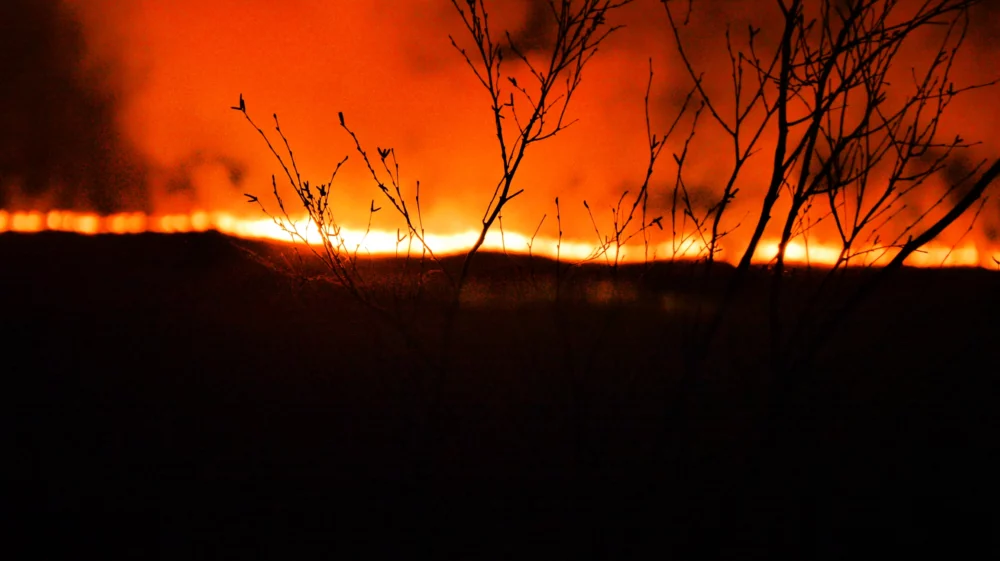
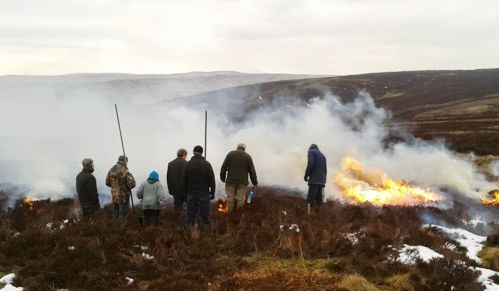
The Defra initiated peatland project (BD5104) investigates different heather management possibilities on blanket bog and their impact on plant biodiversity, carbon sequestration and water regulation. The project ran initially from 2011 to 2016 and was extended by various funders with an anticipated end date of 2032. The project is currently funded (until 2026) by both NERC and the Moorland Association.
Photo: Tom Holmes / SEI
2012–2023
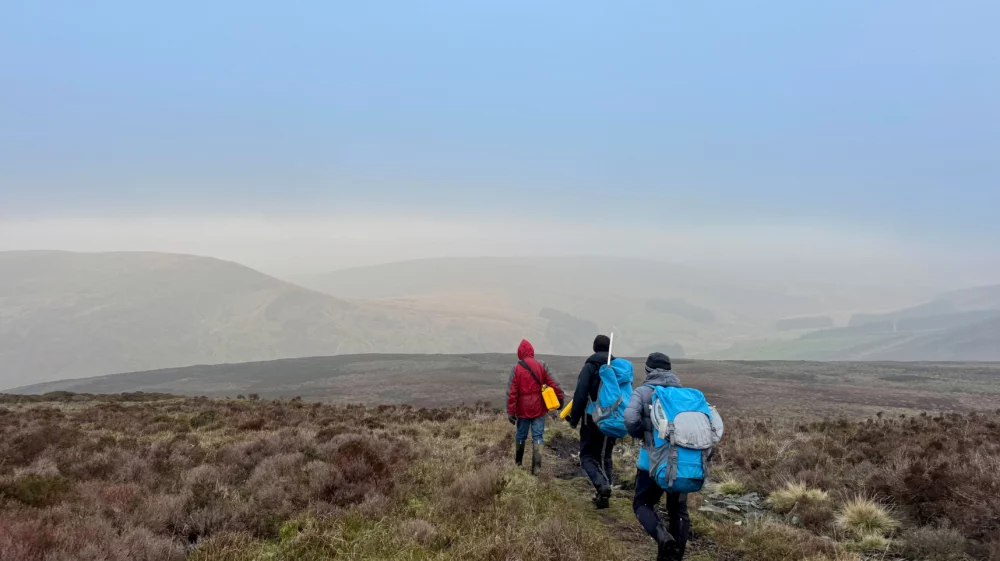
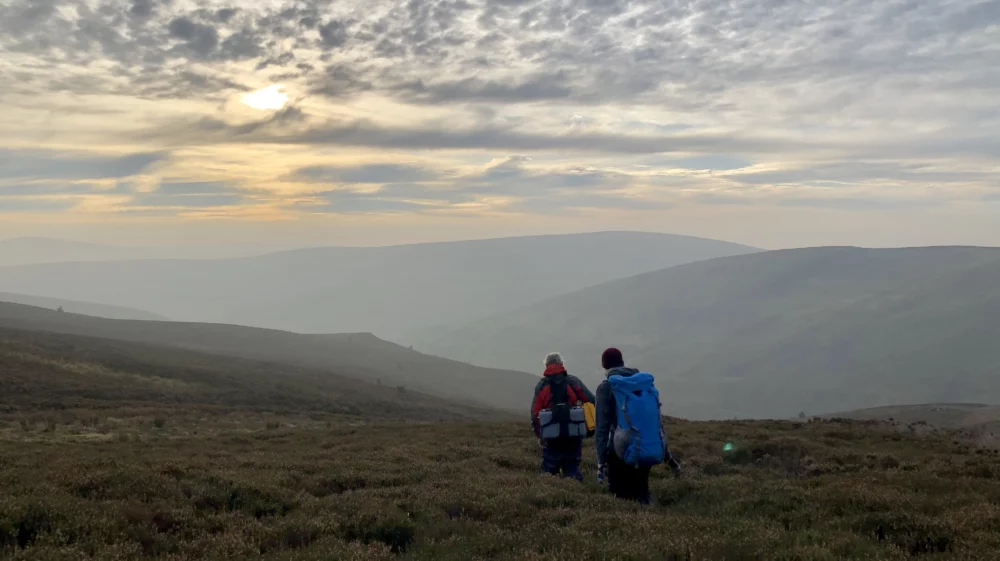
In 2012, Defra initiated the Peatland-ES-UK (Peatland Ecosystem Services UK) project to investigate impacts of heather burning versus alternative cutting or no heather management across three sites. The study is based on a paired catchment design, comparing burning to cutting and also includes fully replicated plot-level comparisons to assess no management options and assess brash impacts. Management change was only started after one year of initial monitoring to capture generic differences between plots and catchments before experimental management interventions.
This is the only such Before-After Control-Intervention (BACI) study to investigate management impacts holistically, capturing not only impacts on carbon but also on greenhouse gas emissions, water storage and quality and biodiversity aspects.
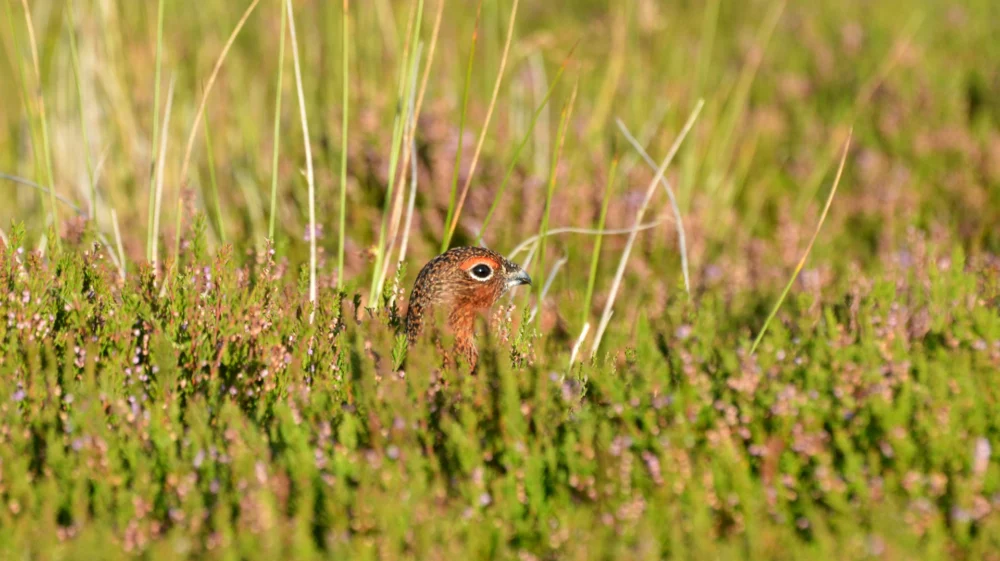
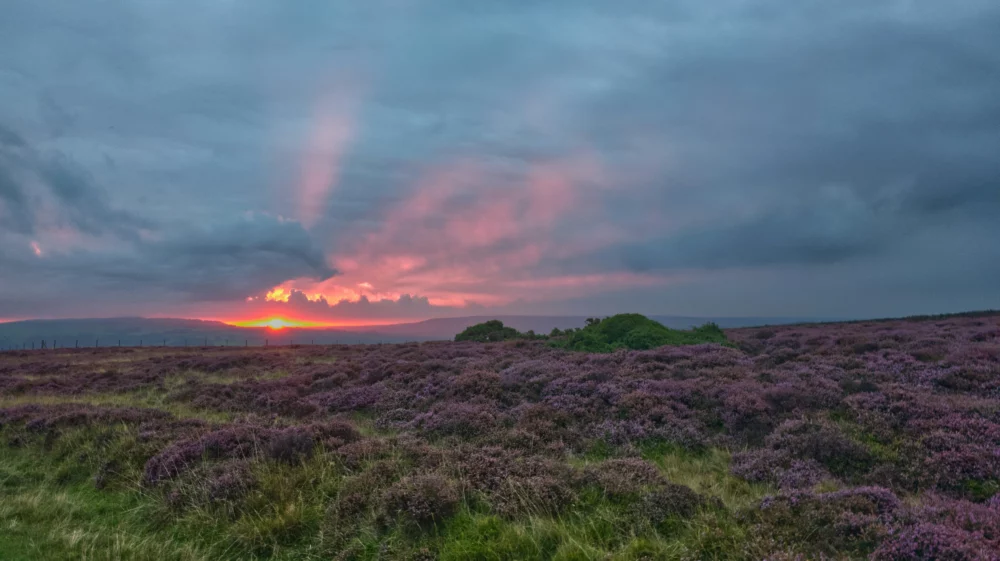
Heather moorlands are a globally rare habitat, of which much is located in the UK. Many of these upland areas consist of blanket bogs, a type of peatland which accumulated up to several meters of peat. The reason for this peat formation is the slow decomposition of organic matter under cold and wet climate. These ecosystems are not only vital stores of carbon but also harbour rare biodiversity. However, these habitats and their ecosystem functions are increasingly under threat by climate change. As climate warms and rainfall patterns change, this changes the naturally cold and water logged conditions. In addition, past drainage to improve the land for agriculture and grazing has caused much degradation of these peatland habitats, causing loss of carbon and biodiversity. Moreover, an often contentious issue is the management of heather for red grouse. This historic management consists of rotationally burning small areas of heather to rejuvenate the vegetation and improve grazing nutrition. The resulting patchwork of growth stages with varying vegetation compositions provides important habitats for many plant and animal species.
More recently, there have been many claims about negative impacts of heather burning on carbon, biodiversity and water aspects. However, many of those claims are not supported by robust science. Most studies were too short (i.e., often less than 3 years) to capture anything but transient disturbance effects and too small scale (i.e., plots of a few square meters) to capture overall landscape scale impacts. Moreover, many studies were Space for Time studies, comparing management impacts across separate locations, often under different climatic and drainage conditions. Importantly, such studies cannot provide robust information on direct management impacts as findings are confounded by other factors such as often differences in climate and drainage explain observed differences.
Journal article / A total ban on controlled burning is unproductive: alternative heather management planning should be site-specific and include a robust comparison with burning.
29 September 2025 / About Climate services, Land use and Public policy
Journal article / Active moorland management can enhance nutrients in heather and cotton-grass, with benefits for birds, grazing animals and carbon uptake.
7 November 2025 / About Ecosystems
Journal article / Sampling dominant Sphagnum moss from relatively flat positions in autumn or early winter offers a simple but effective strategy to gather testate amoebae.
10 November 2025 / About Ecosystems
Journal article / These tiny microbial species could offer insights into the success of peatland management strategies.
14 November 2025 / About Ecosystems
Journal article / Artificial light improves confidence in the measurement of ecosystem exchange rates under limited light conditions.
17 November 2025 / About Climate services and Land use
Journal article / This paper critically reviewed a UK government advisory agency's publication which aimed to synthesise evidence on prescribed fire for peatlands management.
16 May 2023 / About Ecosystems and Public policy
Media coverage / In an interview with the BBC, SEI's Andreas Heinemeyer discussed moorland management following the Yorkshire fires.
19 August 2025 / About Pollution
Feature / Andreas Heinemeyer contributed to a recent briefing for the UK parliament, drawing on his expertise in peatland management.
20 May 2024 / About Ecosystems
Press release / A major study has provided answers on how to tackle the impacts of climate change and biodiversity losses on carbon-rich peatlands.
23 January 2023 / About Climate policy, Land use and Public policy
The Peatland-ES-UK project is further supported by Yorkshire Water Services, United Utilities, the Heather Trust, the Moorland Association, the Law Family Charitable Foundation, and the British Association for Shooting and Conservation.
Press release / A major study has provided answers on how to tackle the impacts of climate change and biodiversity losses on carbon-rich peatlands.
23 January 2023 / About Climate policy, Land use and Public policy
Journal article / Greater understanding of soil microbiota influence on peatland resilience to perturbations associated with land use and climate change is required.
5 January 2021 / About Ecosystems and Land use
Other publication / The study examined the evidence gap regarding alternatives to burn-rotation management of heather dominated UK blanket bog on carbon, water and biodiversity.

27 March 2020 / About Ecosystems, Land use and Water resources