Editor’s choice
The Support for NDC Implementation in the Waste Management Sector in Senegal and Cote d’Ivoire project (UNEP NDC Waste project) aims to assist Cote d’Ivoire and Senegal implement their Nationally Determined Contributions in the waste sector, through the support of the development of policy measures and capacity building to facilitate emission reduction in the waste sector.
2018
Côte d’Ivoire and Senegal have identified waste as one of the key sectors to achieve their NDCs. Though the waste sector emits less Green House Gases (GHG) compared to other sectors such as energy, agriculture and land-use change, it offers enormous opportunities of emission reduction and job creation for the populace. Côte d’Ivoire committed to reduce 28% of its GHG emissions by 2030 with 2% from the waste sector, and Senegal committed to reduce 13% of its total emission by 2030 with 50% from the waste sector. Both countries have targeted compost and biogas as means to fulfil their commitments. However, the pathways to achieve these targets in the waste sector are not clearly defined in their NDCs. There is a policy gap on compost and biogas development which need to be addressed. Cote d’Ivoire and Senegal have also identified capacity building as a priority in the implementation of their NDCs.
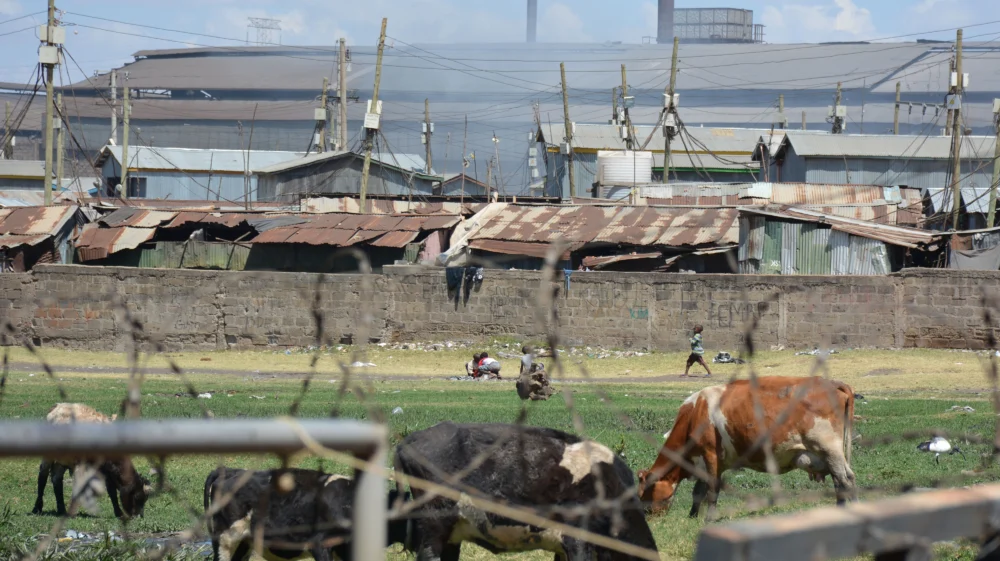
Photo by Johanna Ong on Unsplash
The Support for NDC Implementation in the Waste Management Sector in Senegal and Cote d’Ivoire project (UNEP NDC Waste project) aims to assist Cote d’Ivoire and Senegal implement their Nationally Determined Contributions (NDCs) in the waste sector, through the support of the development of policy measures and capacity building to facilitate emission reduction in the waste sector. The project also aims to support a pilot plant for composting and/or biogas in each of the two countries and to create co-benefit opportunities by improving people’s health, contributing to food security and creating jobs.
The objective of this component is to provide countries with political and regulatory standards for a proper production of compost and biogas while respecting the environment.
Component 1 includes 5 sub-activities:
This component aims to train waste pickers on dumpsites, in collaboration with NGOs and other specialised structures in the area, to convert them into composting and biogas sectors. Experts on GHG inventories in the waste sector will be trained on appropriate methodologies for emission calculation, including black carbon. NDC experts will also be trained on Monitoring, Reporting and Verification (MRV) system development for the waste sector
This component comprised four sub-activities:
The pilot projects will serve as a demonstration of the application of the policies, standards and technical trainings provided in components 1 and 2. The project will reinforce existing initiatives to fill the gap in order to achieve optimal results, both on the environment, health, agricultural productivity and job creating.
Component 3 comprises 2 sub-activities:
This component seeks to facilitate the overall project implementation led by UNEP and support the dissemination of the results of the project. To this end, regional experience sharing workshops will be organized with other countries in West Africa. The Economic Community of West Africa States (ECOWAS) and the International Organization of La Francophonie (OIF) will be involved in promoting the results of the project.
UNEP Africa Office partnered with SEI Africa Centre to implement the UNEP NDC Waste project in Senegal and Cote d’Ivoire between June 2018 and February 2021. The project is implemented in partnership with the Solid Waste Management Coordination Unit in Senegal and with the Climate Change Directorate under the Ministry of Environment and Sustainable Development in Cote d’Ivoire.
The project is funded by the Government of Canada through Environment and Climate Change Canada.
Feature / A new initiative aims to build Somalia's first national air quality governance system, laying foundations for monitoring, data and policy.
20 May 2026 / About Cities and Short lived climate pollutants
SEI brief / What have seven years of research revealed about aligning climate action and sustainable development?
19 May 2026 / About Climate policy, Public policy and Sustainable Development Goals
Media coverage / Climate experts and development partners have called for a unified national approach to methane reduction
19 May 2026 / About Food and agriculture and Pollution