This report analyses the net-zero commitments of the world’s top 50 steel producers. Less than half of them have targets to reach net-zero emissions by midcentury, and even fewer track the full scope of emissions produced by their business, jeopardizing the sector’s ability to meet long-term climate aims.
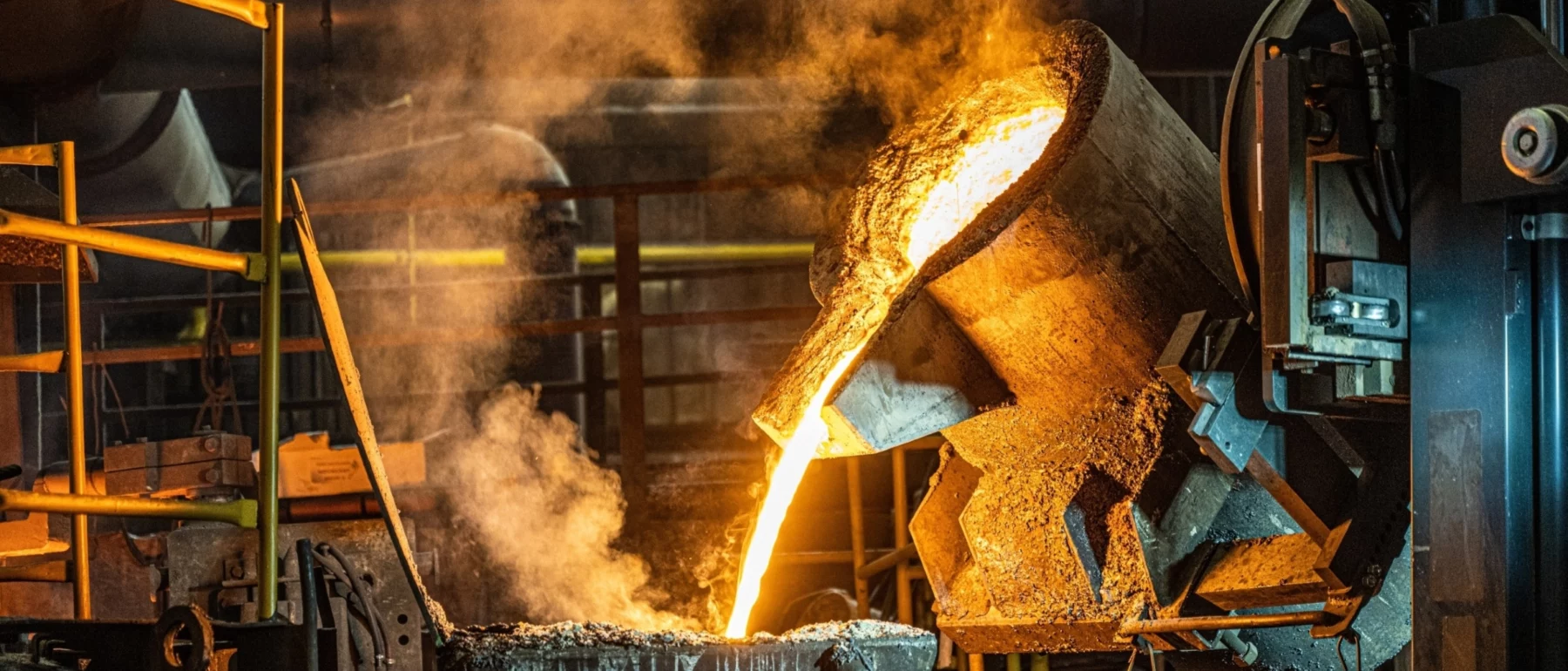
Less than half of the world’s top steel producers have targets to reach net-zero emissions by midcentury, and even fewer track the full scope of emissions produced by their business, jeopardizing the sector’s ability to meet long-term climate aims, finds a new report from Global Energy Monitor and the Leadership Group for Industry Transition.
The analysis of the top 50 steel producers — which rely more heavily on higher-emission steelmaking technologies than the global industry average and are responsible for more than 60% of the sector’s emissions — follows the latest production ranking provided by the World Steel Association.
The steel sector accounts for an estimated 7–9% of direct global greenhouse gas emissions, and the International Energy Agency has said that CO2 emissions from heavy industries need to drop 93% in order to reach net-zero emissions by 2050.
As of September 2024, half of the top 50 steel producers still lack a net-zero target: 16 companies have not stated a net-zero target in their public reporting, and 9 companies have provided no information on climate targets at all. Five companies have targets to reach net-zero after 2050.
Seventeen companies have set a 2030 emissions reduction goal, 3 fewer top 50 producers than in the 2023 update. Two of these companies removed their 2030 goals, while one reduction is due to the shift in rankings of the top 50 steel producers. Conversely, 10 companies have now established milestones between 2030 and 2040, an increase of 5 companies compared to 2023.
Only 15 of the top 50 steel producers have specified the emission scopes they plan to address in order to reach their net-zero targets. Scope 1 emissions refer to those resulting directly from the production process, Scope 2 emissions refer to those from purchased electricity and steam, and Scope 3 are indirect emissions resulting from supply chain activities such as coal mining and shipping.
Just four companies have included measures to address Scopes 1, 2 and 3 in their plans. Three of these companies aim to achieve net zero by 2050, while one plans to reach this goal before 2050.
Project / The Leadership Group for Industry Transition (LeadIT) aims to enable the transition of heavy industry towards net zero carbon emissions by 2050.
Other publication / The report highlights new techniques for improving sustainability; co-designed business models; practical guidance on EDI strategies and other insights.
Feature / Kenya has launched its first National Bioeconomy Strategy, becoming one of a small number of African countries with a dedicated national bioeconomy strategy.
Other publication / This report focuses on how clay, one of the world's oldest construction materials, has the potential to drive a lower-carbon future for the cement industry.