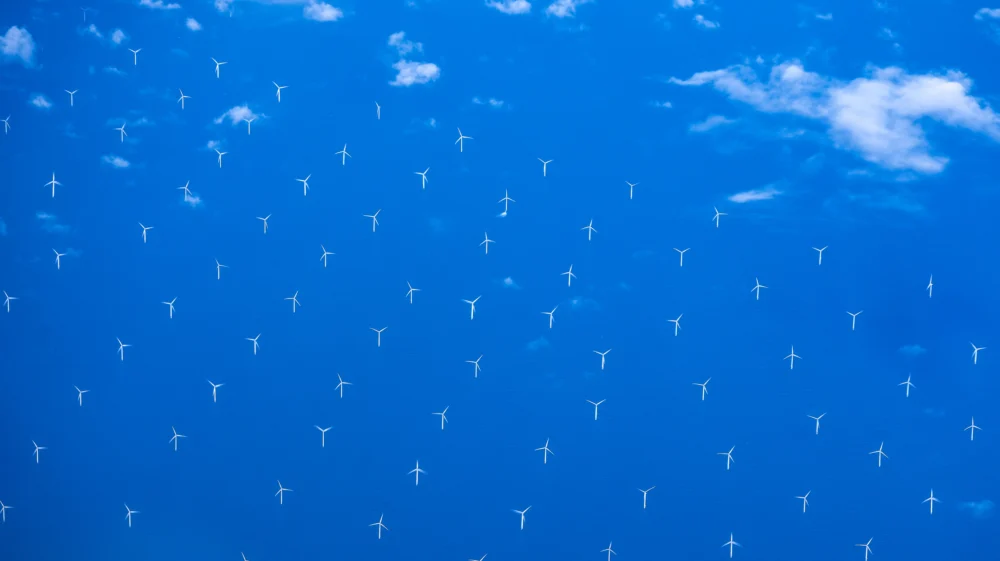
Using qualitative document analysis, the study assesses how environmental and economic objectives are reflected in planning procedures and translated into practice across offshore wind, fisheries and shipping.
There is growing expectation within the European Union (EU) that Marine Spatial Planning (MSP) – the public process for allocating marine space among competing uses – can support environmental restoration and economic development through the Ecosystem Approach (EA), which seek to balance ecological, social, and economic objectives.
This article examines how effectively MSP implements the EA in practice, using Sweden’s Baltic Sea plan as a case study. Building on Malawi Principle 3 of the Convention on Biological Diversity, the analysis assesses policy coherence across governance levels (global and EU policies to national planning) and across key sectors (offshore wind, fisheries, and shipping). A qualitative document analysis is used to evaluate alignment in terms of rhetorical ambitions, planning procedures, and actual operationalisation.
The findings show that Sweden’s MSP reflects EA principles in policy discourse but lacks strong procedures and tools to manage ecological trade-offs in practice. Monitoring systems remain weak, ecological targets are limited, and legal authority to reconcile sectoral conflicts is constrained. Across sectors, sustainability goals are articulated but coordination mechanisms are insufficient. Offshore wind benefits from strong political support but fragmented permitting. Shipping is promoted as climate-efficient, yet ecological impacts receive limited attention. Fisheries emphasise socio-economic resilience but are weakly integrated with spatial planning and conservation measures. Overall, Sweden’s MSP demonstrates rhetorical alignment with the EA but limited operational capacity to balance competing sectoral interests with ecosystem integrity. These challenges mirror broader EU trends, suggesting that MSP remains symbolic unless cross-sectoral coordination, adaptive monitoring, and legal accountability are strengthened.
Project / Mistra Co-Creating Better Blue (C2B2) is a collaborative project for a more sustainable blue economy in Sweden.
SEI report / The report presents agricultural mitigation measures adoptable under Swedish conditions and with sufficient evidence for operationalization in the VCF dashboard
Press release / Berget AI releases an open-source method for calculating carbon emissions of every individual AI request, developed with SEI, WattTime and Klimatkollen.
Event on 10 December in Stockholm / Experts from SEI, FOI and Stockholm University discuss the governance challenges of critical minerals for the energy transition.