This study examines a staged co-creation process implemented across four pilot regions in Europe to engage diverse citizen groups in shaping soft adaptation measures.
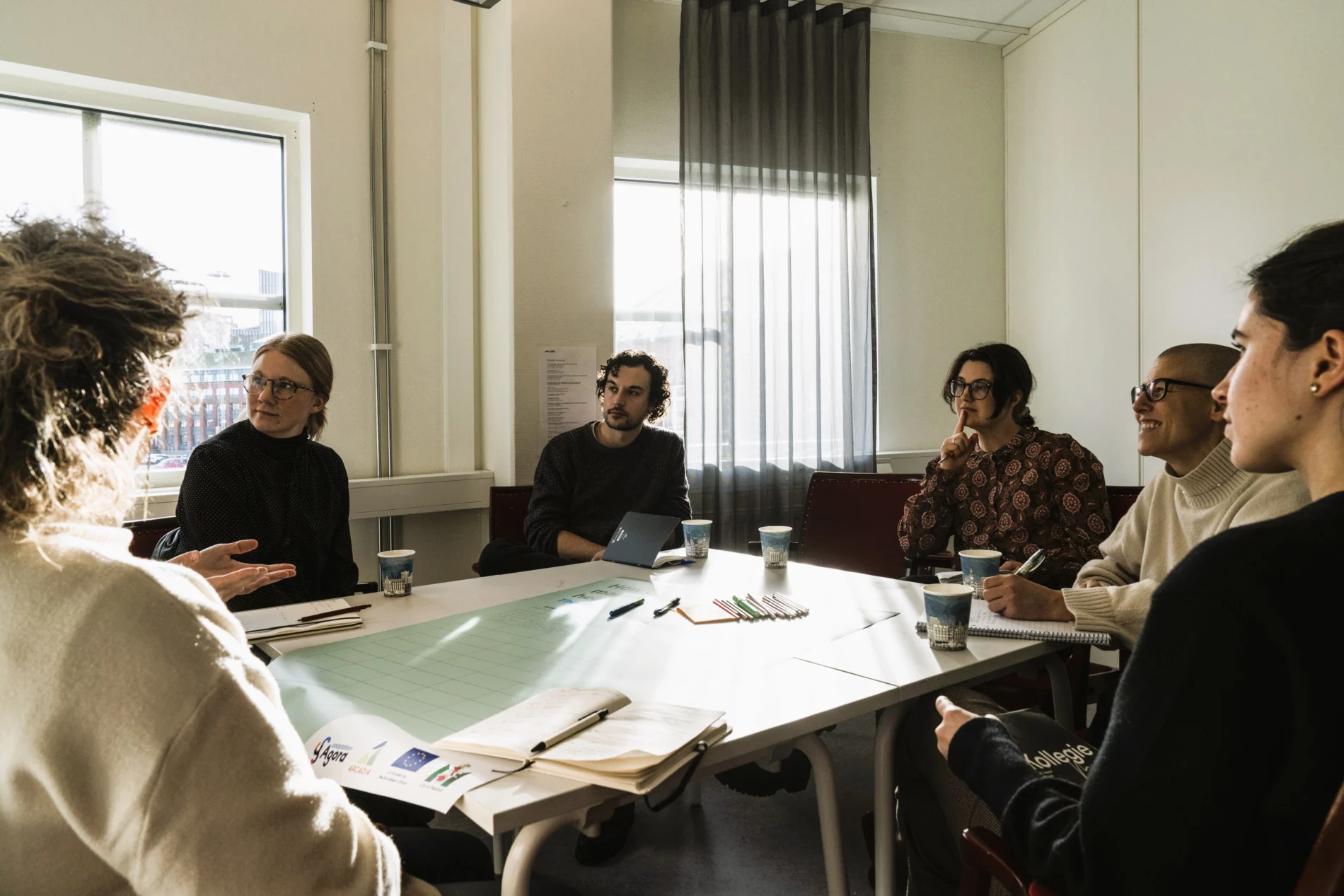
Co-creation workshop in Malmö, 2025. Photo by Pierluigi Giorgi.
Climate change impacts in Europe are intensifying and disproportionately affecting vulnerable populations. While adaptation strategies increasingly acknowledge the value of public participation and citizen science, there remains a gap in inclusive, evidence-based approaches that engage diverse citizen groups in shaping soft adaptation measures.
This study examines a staged co-creation process implemented across four pilot regions (Aragón, Dresden, Malmö, Rome). Using a structured, adaptable sequence (stakeholder mapping, inception workshops, target-group focus groups, and multi-stakeholder co-creation) it engaged youth, working populations, multicultural communities, and citizens experiencing vulnerabilities to generate locally relevant, feasible, and just solutions.
Thereafter, a cross-case synthesis of outputs across pilots and target groups was conducted. Results from cross-case analysis showed that participants converged on a recurrent suite of four soft adaptation measure typologies across sites and target groups:
These typologies reappeared across sites and target groups, but participants also specified context-dependent design features shaped by local climatic, physical, socio-cultural, and institutional conditions.
Regarding the process, three features enabled effective outcomes: continuity (to build trust and iterate), socio-culturally tailored formats, and facilitation that lowered participation barriers. Key constraints were time and resource limits, coordination and responsibility gaps, communication accessibility issues, and representation gaps.
The approach offers a practical example of how co-created proposals can be linked to implementation pathways (clarifying actors, resources and likely barriers) and how transferable procedures, including engagement sequences and transparent prioritization steps, may be adapted to existing institutional roles and processes. Embedding such citizen engagement processes in municipal policy and budget cycles, and supporting low-cost, distributed actions through schools, workplaces, housing associations and civic partners, suggests one possible route towards more equitable, actionable climate adaptation.
Team Leader: Cities, Communities and Consumption; Senior Research Fellow
SEI Headquarters
Project / Adaptation AGORA will support the adaptation to climate change by leveraging and step-forwarding best practices, innovative approaches and policy instruments.
Press release / Berget AI releases an open-source method for calculating carbon emissions of every individual AI request, developed with SEI, WattTime and Klimatkollen.
Media advisory / Experts from SEI will be at CBD COP17 in Yerevan from 19–30 October and are available for commentary and analysis.
Journal article / Quantitative measures combined with free-text boxes in surveys can provide rich insights into the impact of citizen science activities on participants.