Wildfires, amplified by climate change, emerged in Sweden in the 2010s. These events exposed gaps in Swedish national preparedness and caused public debates. Largely absent from the debates, however, were the effects that the fires had on indigenous Sámi and their reindeer herds.
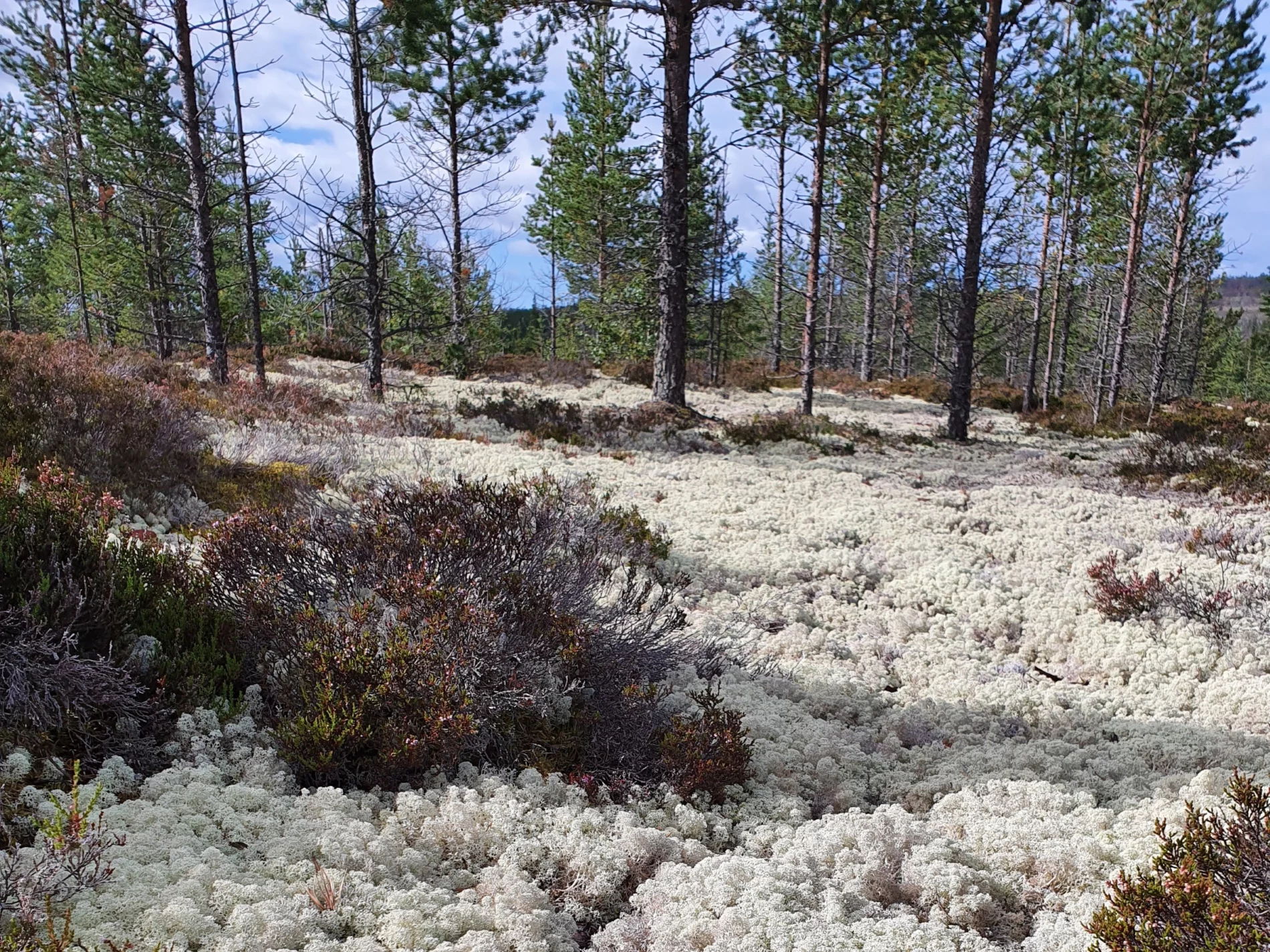
Example of lichen-rich grazing grounds, once typical of the Trängslet winter pastures.
Photo: Annette Löf / SEI
In this paper the authors discuss wildfire from the perspective of mapping and boundary-making. How they understand loss induced by wildfire is closely related to landscape practices and perspectives. But not all practices and rights-bearers are recognized in wildfire management. Drawing on a major fire event in Sweden in 2018, the authors contrast the official reports of the forest fire with a narrative-based account from affected Sámi reindeer herding communities. The study broadens the conception of how to map and understand the impacts of wildfire and contributes novel empirical findings on how reindeer herders perceive and navigate these emerging fire landscapes. The authors illustrate stark differences in how fire boundaries, both temporal and spatial, are understood and recognized depending on landscape perspective and practice. Their study calls for reconsidering Swedish wildfire and landscape management so that it can become more inclusive of multiple perspectives of human-landscape relations and values.
Press release / Berget AI releases an open-source method for calculating carbon emissions of every individual AI request, developed with SEI, WattTime and Klimatkollen.
Press release / As El Niño intensifies across the Amazon, new research in Science highlights the urgent need to better protect the region’s remaining forests from disturbances.
Past event / SEI joins the Climate Week in New York to highlight global leadership and finance solutions for accelerating the transition to net zero industry.