This chapter in A Research Agenda for Landscape Studies of Planning explores how wildfires expose underlying social and environmental conflicts in landscape governance. It highlights how fire disrupts landscapes both physically and emotionally, challenging perceptions of landscapes as neutral spaces and revealing contested values and power asymmetries in planning processes.
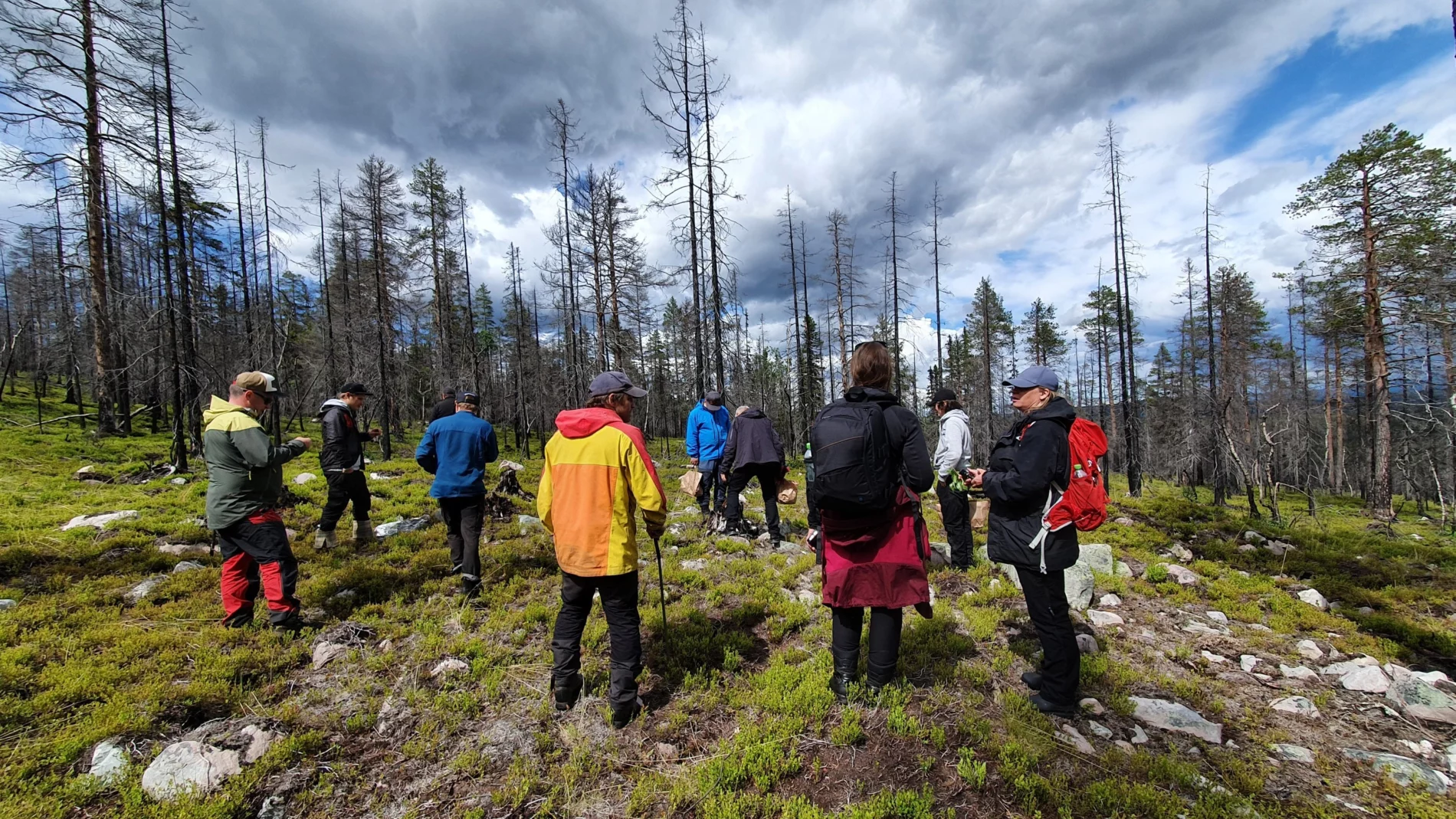
Field visit to a past wildfire site near Sonfjället with a range of experts including Sámi community members and herders, Sámi archaeologists, and ecologists. Through walking the post-fire landscape together, participants explored wildfire impacts on Sámi lands, including the loss or exposure of cultural traces such as scarred trees and old hearths. The visit supported learning and co-production of knowledge, especially in areas where official documentation of Sámi heritage sites remains limited and fragmented.
Photo: Annette Löf / SEI
Since the mid 2010s, forest fires have increased in frequency and severity, reshaping landscapes globally. While often viewed as merely physical disruptions by outsiders, for those intimately connected to these landscapes, fire causes disruption to access, tarnishes memories, and severs emotional ties. Drawing on two Swedish cases, this chapter reveals how fires unveil historical conflicts and ignite new tensions. The first case explores the clash between regional and national conservation efforts and local landscape values post-fire. The second delves into the subordination of Sámi herding communities’ values, usurped by the landscape of foresters. As climate-induced landscape changes escalate, understanding fire’s role in exposing embedded conflicts becomes crucial for landscape planning. This chapter underscores the need to research extreme landscape events such as fires in order to reveal underlying tensions, challenging the notion of landscapes as neutral spaces and urging a deeper examination of their complexities.
A Research Agenda for Landscape Studies of Planning explores the complex and contested role that landscape plays in planning. It promotes theoretically driven, pluralistic research to enrich understanding of the landscape-planning interplay, examining how the broader discipline of landscape studies can complement and critique the dominant field of landscape science.
Journal article / Using a simulated Swedish food supply network, this research explores how agricultural losses caused by drought affect food distribution and consumer demand.
Past event / SEI joins the Climate Week in New York to highlight global leadership and finance solutions for accelerating the transition to net zero industry.
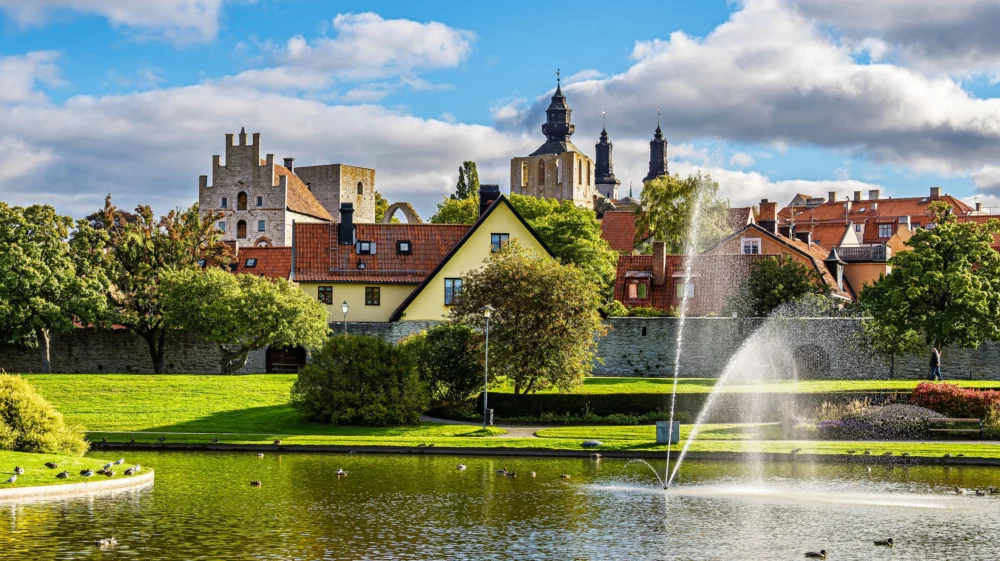
Past event / Join SEI experts for the annual Swedish political forum in Visby, as they share their insights on security, AI, climate, energy, oceans and industry transition.