Recognizing soil health as essential for food security, ecosystem services, and social equity, this systematic map protocol explores evidence on the connections between intersectional gender inequalities and soil health.
Taherpur, Bangladesh - November 05, 2019: A woman empowerment through agriculture, improve livelihood. A young woman is self-independent through framing, Bottle gourd cultivation in her lands.
Soil health is the foundation of food and is crucial for agri-food system sustainability, ecosystem health, and for social justice, particularly in the context of increasing land degradation. Traditionally studied within natural sciences, soil has sometimes been considered an inert medium for crop production but with increasing recognition of its ‘living’ nature and its own ecosystem. More contemporary definitions emphasize soil’s vital role in supporting ecosystem functions and services and human civilisation. In addition, within the social sciences, soil and soil-human relations are being re-thought through the lens of feminist soil care ethics as well as human and more-than-human relations. These concepts highlight the agency of soils, and the diverse spiritual, emotional and ruptured connections and knowledges existing and changing between humans and soils that are deeply gendered. A large evidence base demonstrates broad-scale gender inequalities that intersect with other factors of social difference. This literature examines inequalities in relation to land allocation, farm labour, access to resources including information and services, and more. However, less evidence exists on how gender inequality affects soil health, and vice versa, and on how new conceptualisations of human-soil relations are situating and advancing feminist thinking in this area.
Through this research, a systematic mapping will be conducted to map this evidence base and answer the following research question: What evidence exists on how intersectional gender (in)equalities and soil health impact each other? The secondary research questions are: a) how are soil-human dynamics situated in the broader feminist political ecology and economy and the more than human ethics of care? b) Are there identifiable patterns, parameters and matrices in the relation between soil health and intersectional gender inequalities?
A systematic mapping will be conducted on intersectional gender inequalities and soil health in peer-reviewed and grey literature in English, French, and Spanish. This mapping casts a wide net with broad search terms and limited parameters (e.g., not time bound) to be inclusive to plural forms of knowledge. All relevant full text articles will be subject to data coding and meta-data extraction. Using the coding framework, the relevant data will be extracted from each study into a charting table pre-populated with the bibliographic data for each study. This will enable the authors to provide an overview, synthesis and analysis of the intersectional gender and soil dataset, alongside other important features of the studies.
This systematic mapping will map the evidence base and identify gaps in peer-reviewed and grey literature on the relation between intersectional gender inequality and soil health. This synthesis is vital for informing evidence-based decision-making and developing a critical research agenda on gender and intersectionality in soil health.
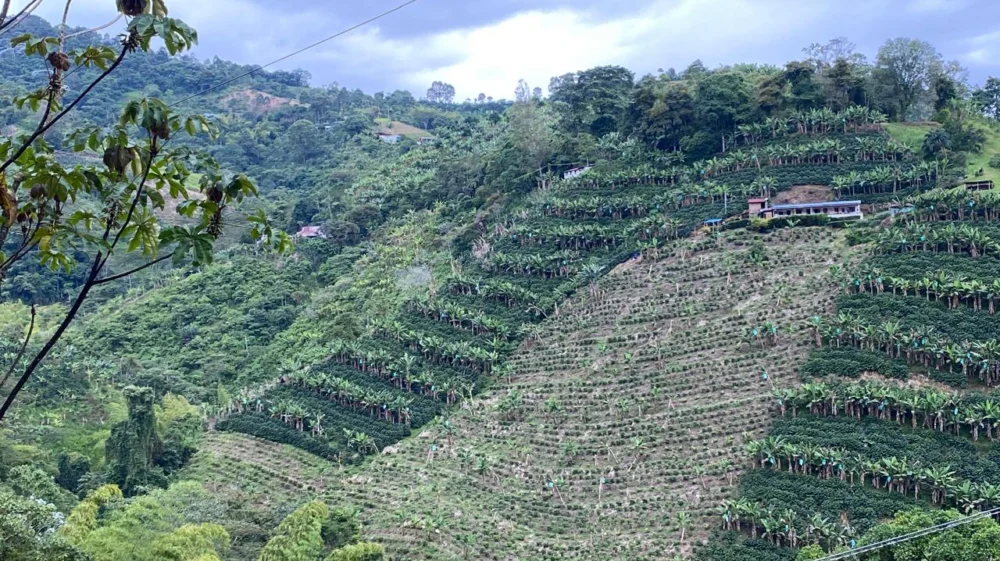
Feature / Coffee grower José María González Salazar is trying to preserve trees and crystal clear water through agroecology and multifunctional landscapes.
Journal article / This research maps evidence on how physical and transition climate risks affect real estate valuations, drawing on 130 academic and grey literature sources.
Project / This project seeks to inform planning on lithium mining in the Americas that minimizes its negative social and environmental effects.