Calculations from the DO3SE (Deposition of Ozone for Stomatal Exchange) model contributed to this study which assessed the impact of ozone exposure on the ability of trees to sequester carbon.
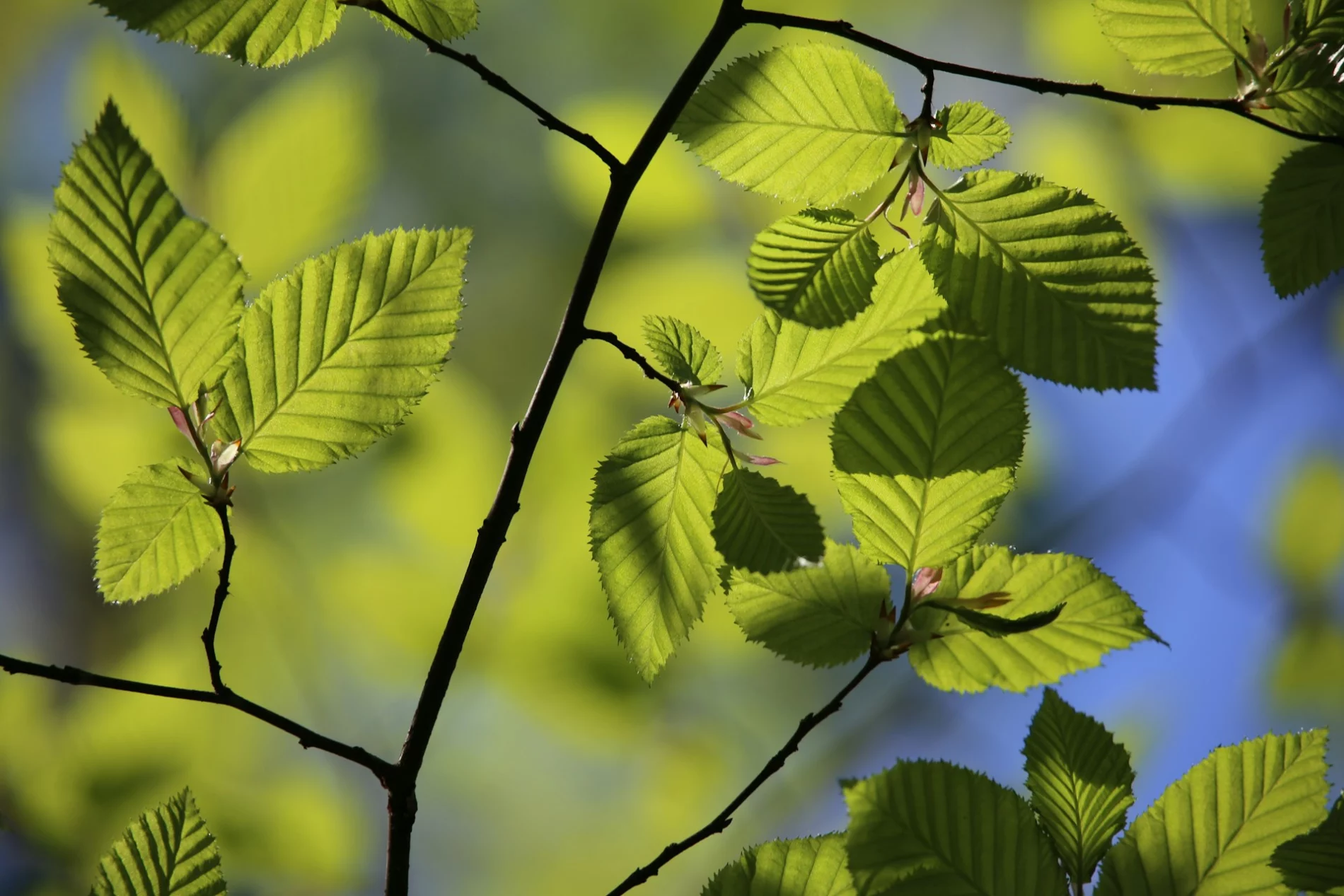
Ozone pollution can lead to physical damage of leaves and cell membranes.
Photo: Julia Weihe / Unsplash
Tropospheric ozone (O3) has been found to harm the health of trees, damaging leaves, cell membranes and reducing biomass. This has a significant impact on a tree’s ability to sequester carbon.
In this paper, researchers estimated the annual accumulated ozone uptake for European forest trees for the years 2008-2012. Using a combination of models, including the DO3SE tool developed within SEI, they estimated annual forest stock changes with current ozone levels and in the absence of ozone. Estimates also accounted for species-specific information collated into broad European coniferous and deciduous forest types.
The results showed that the critical level for negative ozone impacts was exceeded in all areas of Europe with only a few exceptions. The researchers found that ozone exposure had the greatest impact in coastal mid-latitude Europe, including the UK and extending to southern Norway, mid-Sweden and Finland. Ozone exposure was less severe for trees in the Iberian Peninsula and other Mediterranean coastal regions.
Overall, the study found that the absence of ozone exposure could increase carbon stored in living European forests by 31%.
Press release / As El Niño intensifies across the Amazon, new research in Science highlights the urgent need to better protect the region’s remaining forests from disturbances.
Feature / Trase identifies the leading coffee trading companies and estimate where traders and markets source coffee from within key coffee-producing countries.
Press release / New data from Trase reveals that the majority of the coffee imported globally comes from companies that supply the European market.