This article examines how knowledge co‑production in urban climate adaptation can reinforce vulnerability. Using a case study in Malmö, the authors find that even well‑intended collaborative processes may reproduce power imbalances and sideline perspectives. Through a lens of epistemic injustice, it is highlighted how some forms of knowledge are privileged to others. The study emphasizes the importance of critically reflecting on how adaptation projects are designed and whose voices are heard.
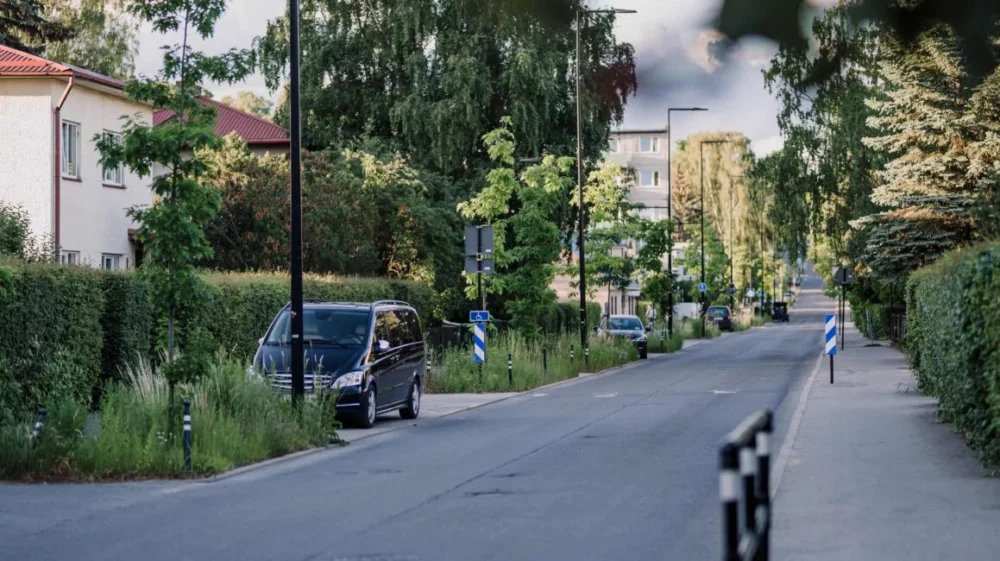
Urban area in Malmö. Sweden.
Photo: Mathilda Englund / SEI
Although knowledge co-production is gaining traction in urban adaptation, reporting on its failures, tensions, and unintended consequences remains limited. This lack of evaluation constrains opportunities for learning and improvement. This paper applies the concept of epistemic injustice to evaluate unintended consequences arising from knowledge co-production in urban adaptation. It draws on a two-year knowledge co-production process in Malmö, Sweden, focused on co-exploring urban heat vulnerability. Using a mixed-methods approach, the evaluation triangulates data from participant observation, unstructured interviews, and project documentation.
While the process succeeded in many respects, the evaluation identified seven unintended consequences with implications for epistemic injustice. These include the reinforcement of territorial stigmatization; prejudicial stereotypes; intra-neighborhood inequalities; token participation; credibility excesses; and power imbalances. The paper concludes with four key recommendations for future knowledge co-production: embrace transparency around tensions and trade-offs; treat knowledge co-production as a political and moral undertaking rather than a technical exercise; reframe vulnerability as structural and relational rather than individual; and integrate monitoring, evaluation, and learning.
Team Leader: Cities, Communities and Consumption; Senior Research Fellow
SEI Headquarters
Project / Adaptation AGORA will support the adaptation to climate change by leveraging and step-forwarding best practices, innovative approaches and policy instruments.
Past event / In this CHILI seminar, Smriti Safaya presents findings from a scoping review of educational, behavioural, and communication interventions to improve school air.
Journal article / This article maps consumer carbon footprints by urban density in Europe, revealing what drives the changes.
Project / The project develops a national street space standard with uniform quality requirements for liveable, safe, accessible and sustainable urban space in Estonia.