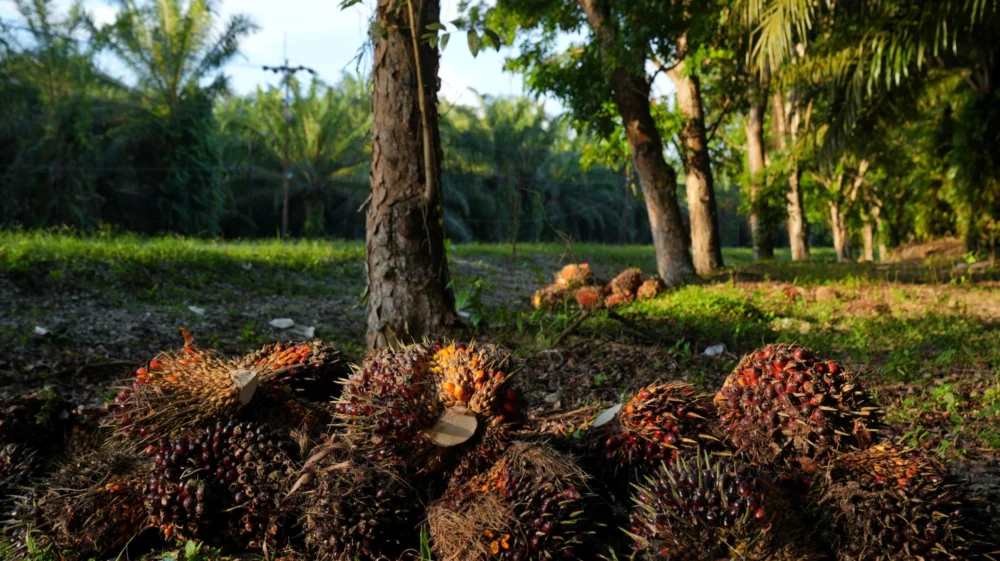
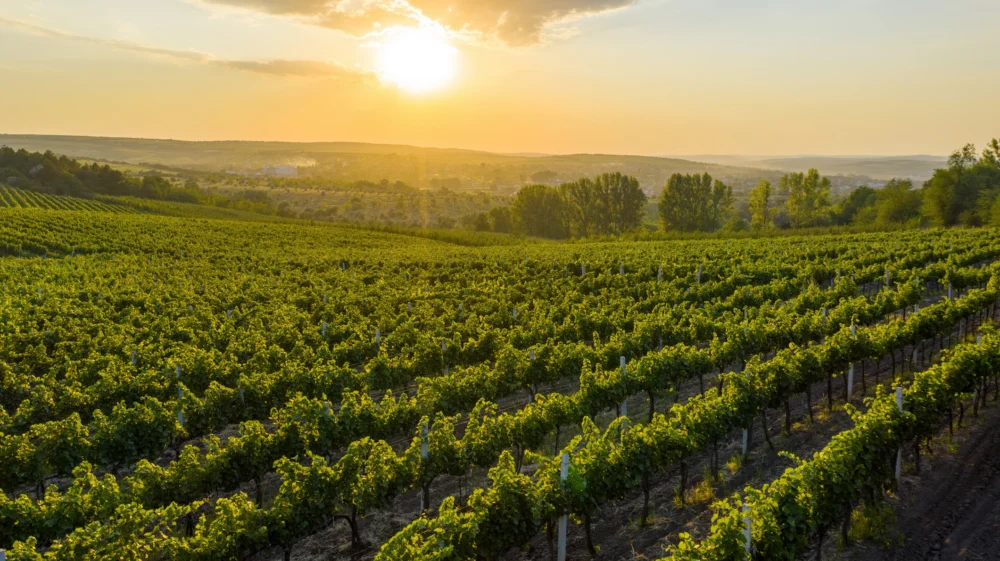
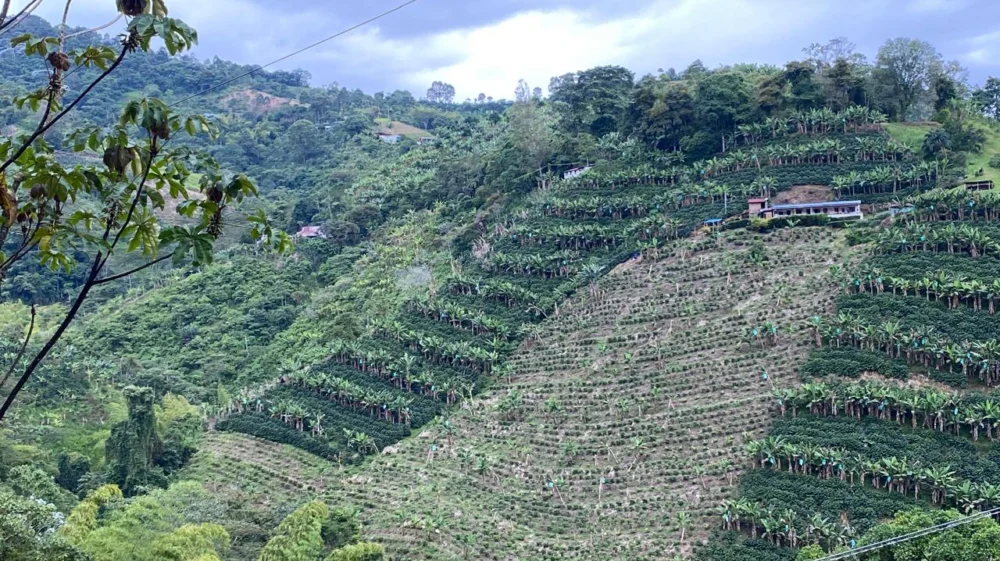
This study examines how farms of different sizes contribute to the production of forest-risk commodities covered by the EU Deforestation Regulation (EUDR). It explores the implications for EUDR implementation and how policies can support forest conservation while protecting smallholder livelihoods.
Deforestation remains a critical challenge despite increasing global attention. Voluntary and market-based initiatives have proven insufficient to reverse this trend. In response, the European Union introduced the Deforestation Regulation (EUDR), requiring information for several forest-risk commodities (e.g. palm oil, soy, rubber, cocoa, and coffee) to enforce deforestation-free standards across these supply chains.
One important barrier to effective implementation is the limited understanding of farmers operating in forested landscapes. Most existing agri-food system models evaluate deforestation risk at the national scale, overlooking differences between landholding types, limiting targeted policy insights. The authors evaluate how different farm sizes contribute to the production of EUDR-listed crops within forested landscapes, using spatial datasets on crop distribution, forest cover, and farm size. They find that small-scale farms (<2 ha) are responsible for a large share of forest-linked production: 91% for rubber, 81% for palm oil, 53% for coffee, and 60% for cocoa. These crops are produced mainly in countries where traceability and compliance pose major challenges. In contrast, soybean production in forested areas is dominated by large-scale farms. They identify regions where smallholders may face high risks of exclusion from EU supply chains due to EUDR compliance across Indonesia, Vietnam, Thailand, and Côte d’Ivoire.
These findings highlight the need for targeted support to smallholders in these countries, including investment in data collection, certification systems, and land tenure security. These findings also reveal a misalignment between the EUDR’s country benchmarking classification and actual deforestation exposure, indicating that the current country classification approach of the EUDR needs revision. These findings highlight the importance of understanding which types of farms are affected by policies such as the EUDR and guiding targeted support to ensure that forest conservation initiatives do not come at the cost of smallholder livelihoods.
Project / A Horizon Europe project strengthening the evidence base on food supply chain impacts by improving open data, models and real-world uptake.
Press release / New Trase data analysis highlights the need for stronger supply chain transparency as domestic demand grows and export data gaps widen.
Feature / SEI’s support on water reuse and farm-subsidy reform highlights what is at stake: rural livelihoods, food production and the natural resources people depend on.
Feature / Coffee grower José María González Salazar is trying to preserve trees and crystal clear water through agroecology and multifunctional landscapes.