Photo: Tony Lam Hoang / Unsplash
Our research recognises that disaster risk and development are closely linked: it is development processes that largely determine who and what is exposed to risk as well how much, and how effectively they can respond. SEI works to integrate disaster risk reduction with equitable, sustainable and resilient development.
611 results / 57 of 68 pages
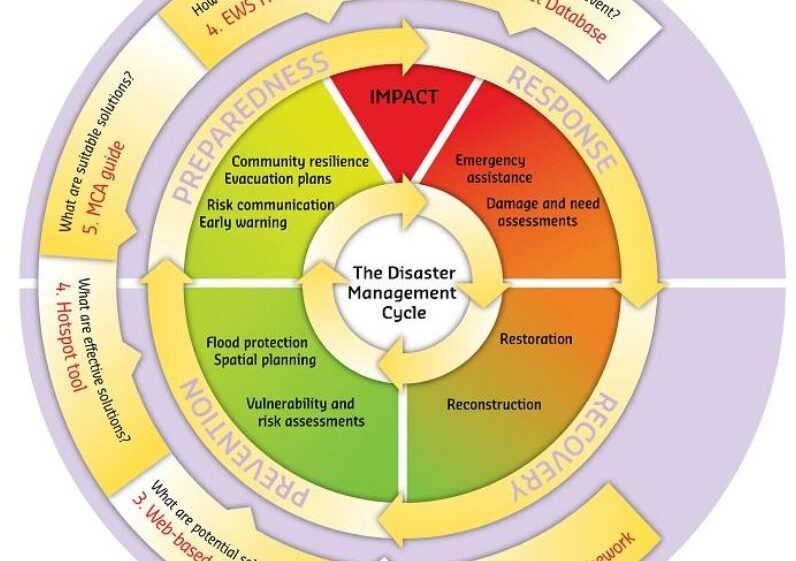
Perspective / Viewing disaster risk reduction as an integrated chain of actions could help cities mitigate and adapt to climate risk and prevent our coasts from washing away.
Journal article / Summary of the International Symposium on Integrated Governance of Large-scale Disaster and Economic Risks, held in Qianhai, Shenzhen, China, May 2017
Journal article / Presents a participatory method for generating locally relevant scenarios of future change nested in global climate. With results from the Barents region.
Feature / As vulnerability to disaster in Asia increases, the SEI Asia centre will boost the contribution of science to tackling risk and meeting international targets.
SEI brief / This brief outlines key trade-offs in decision-making on development and DRR at various governance levels
SEI brief / The Reducing Disaster Risk Cluster, based in the SEI Asia Centre, is a multi-disciplinary group of professionals with backgrounds in social and physical science
Perspective / Indonesia has invested in restructuring its governance institutions to transform its disaster governance system from focusing on post-disaster response.
SEI brief / This policy brief highlights the lessons-learned from the RISC-KIT project and provides recommendations relevant to the Sendai Framework and EU Floods Directive
Other publication / This book is a unique, transdisciplinary summary of the state of the art of disaster risk reduction (DRR) in Indonesia