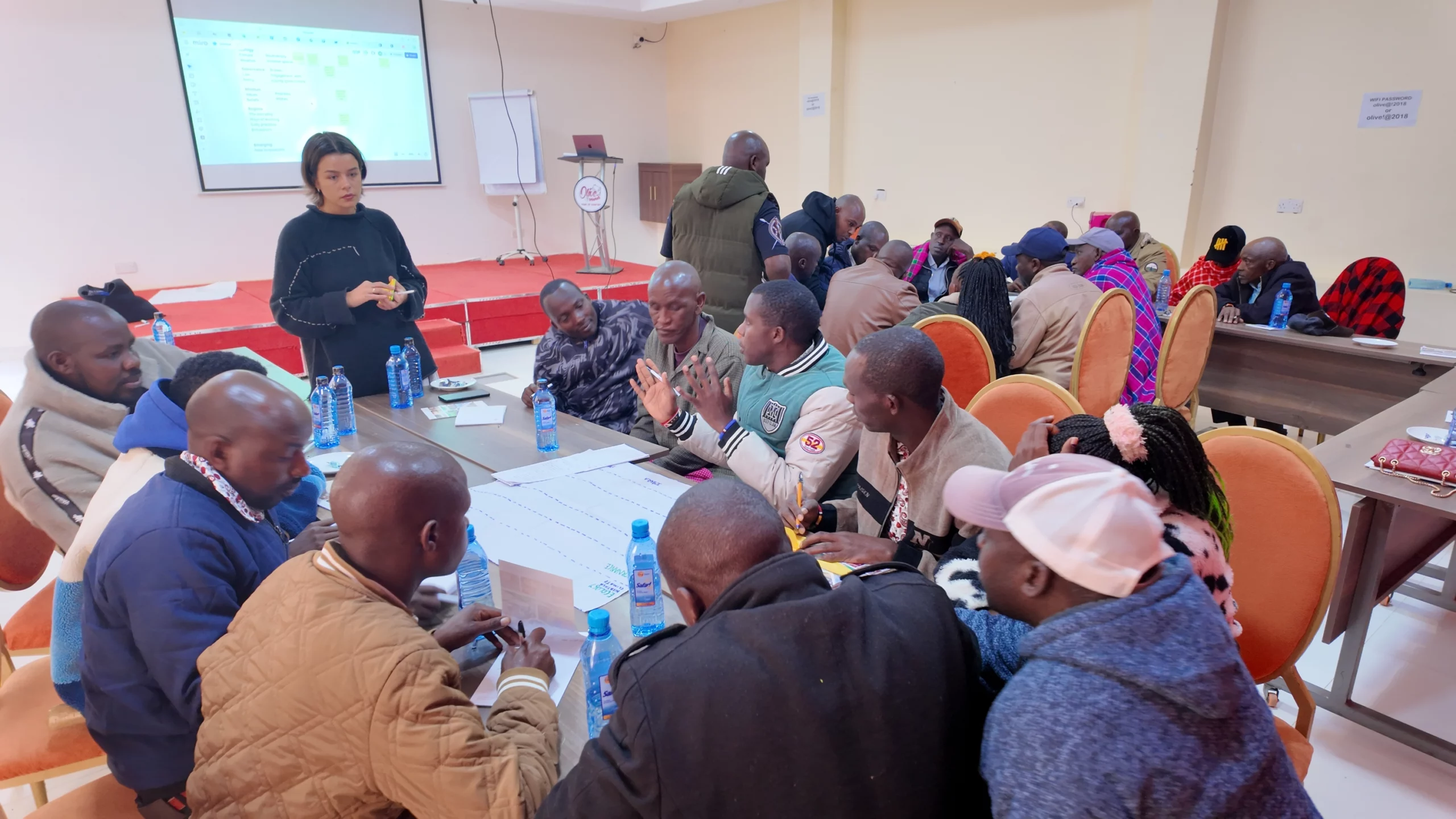
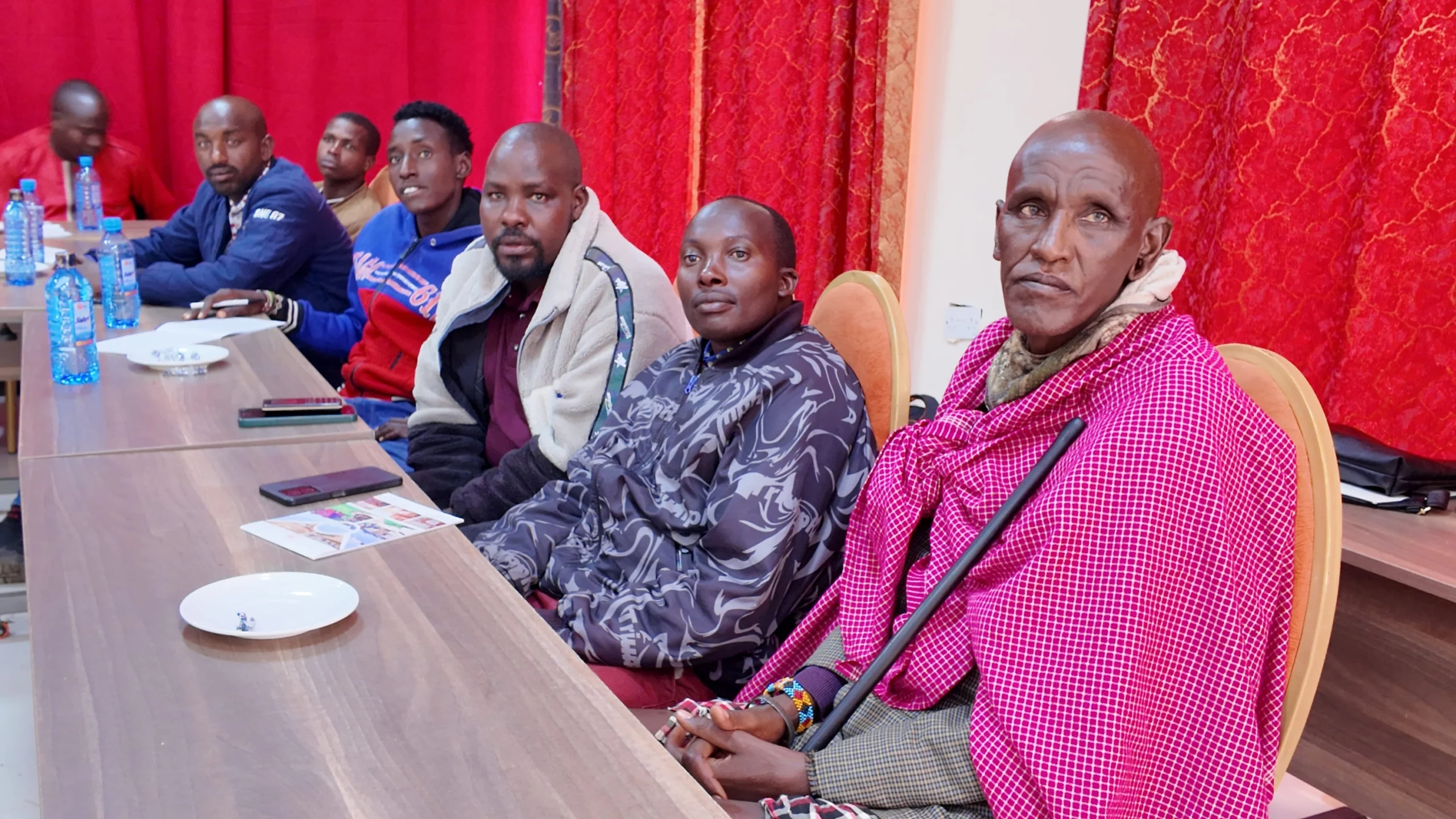
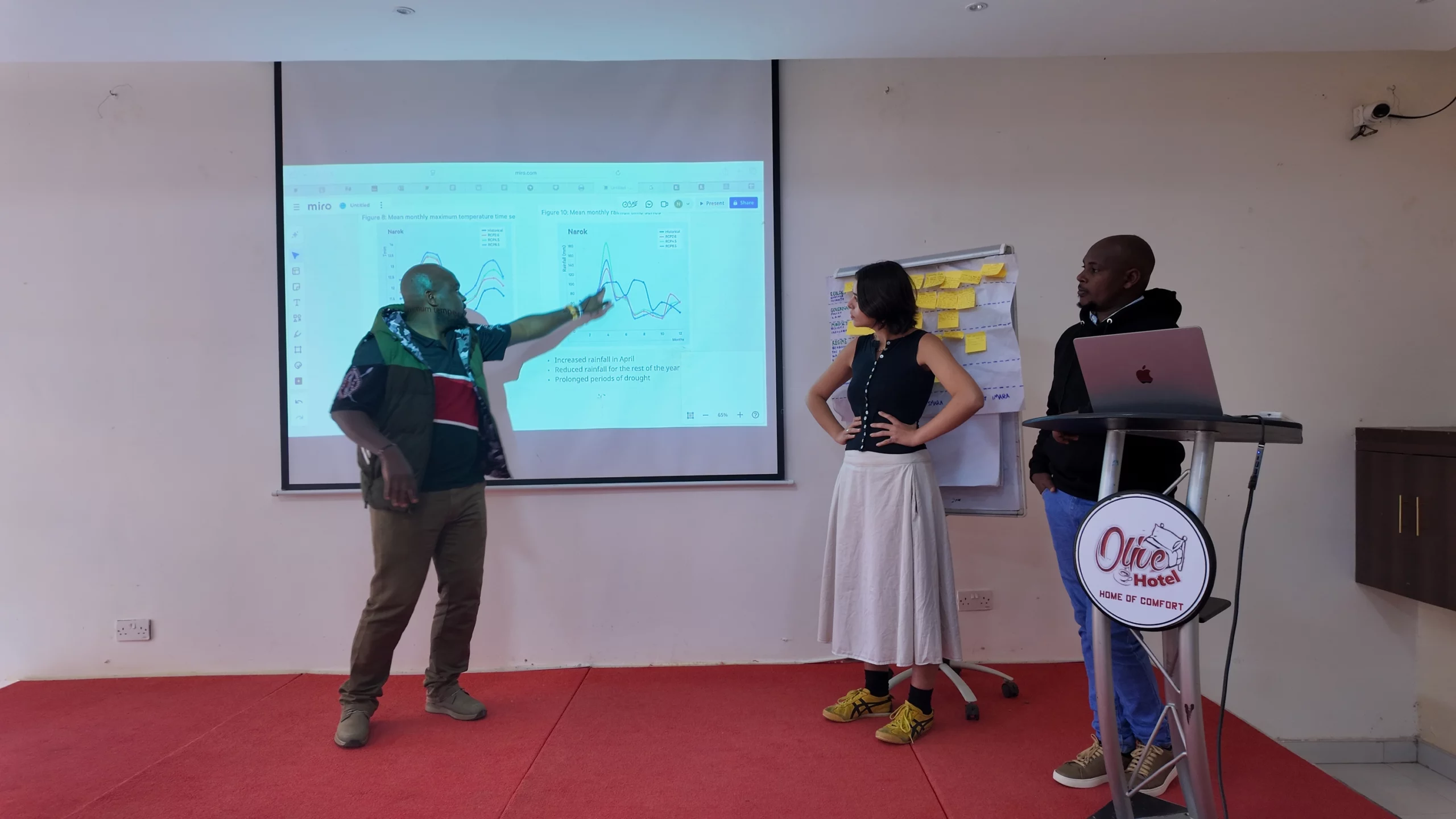
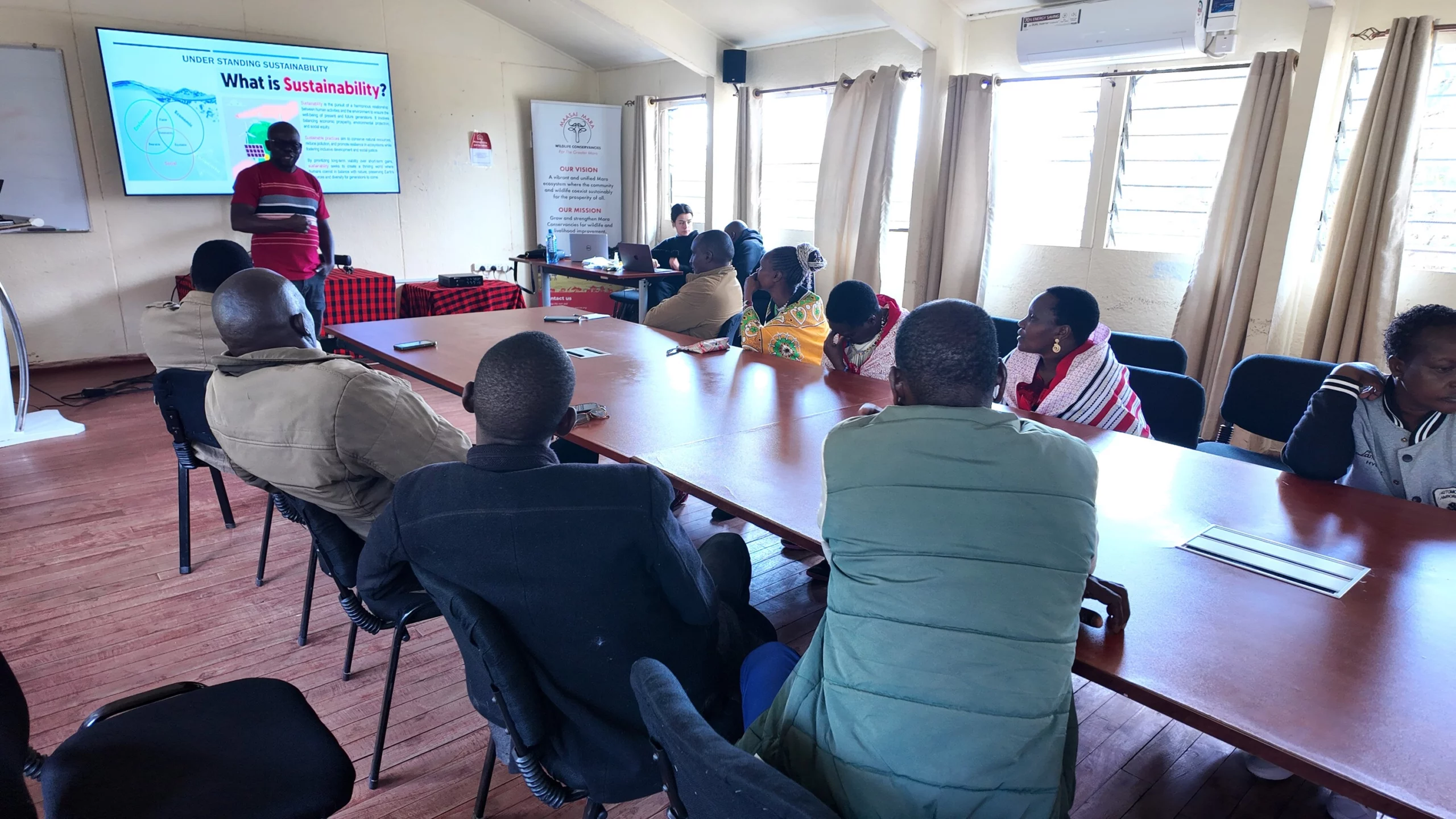
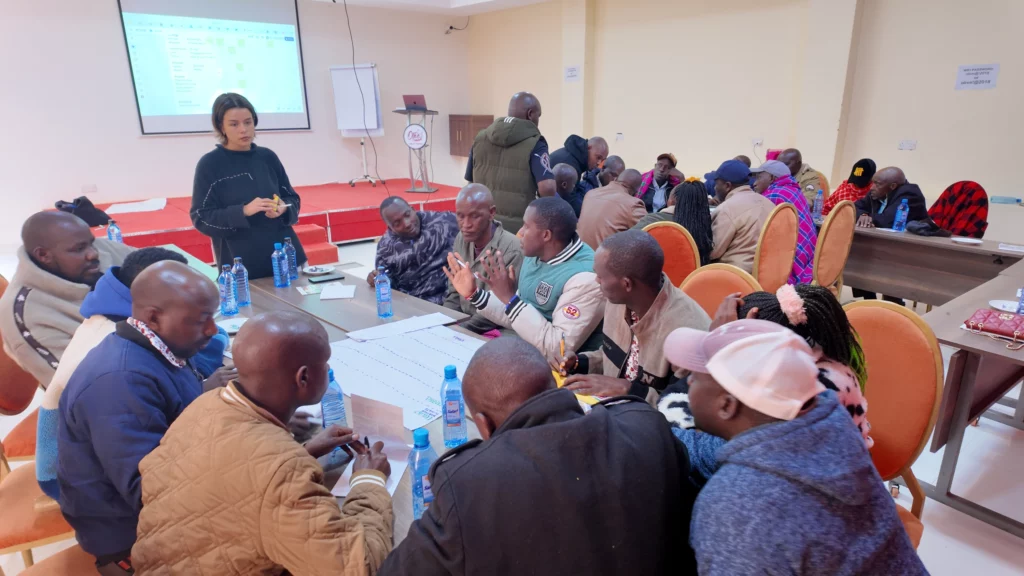
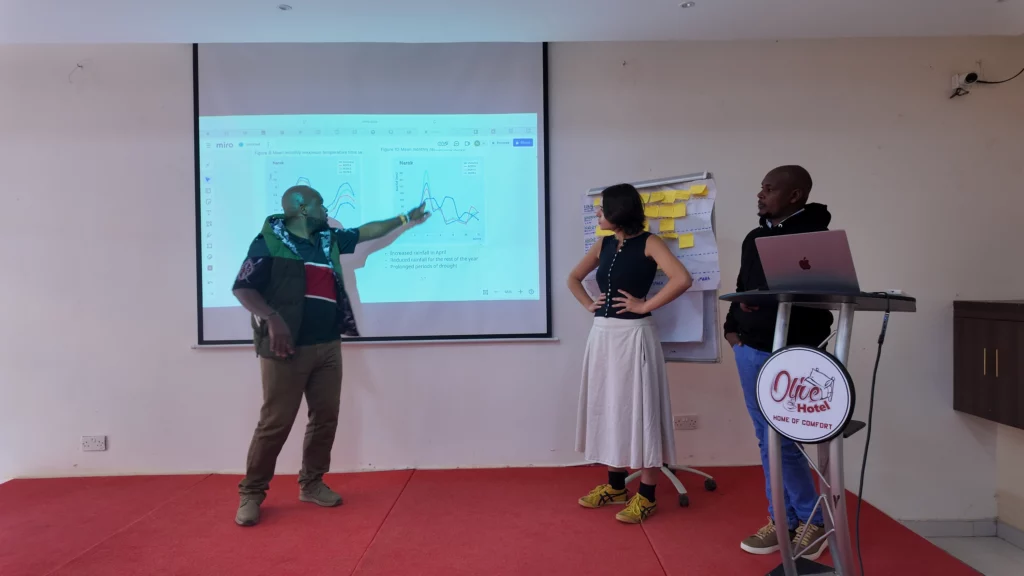
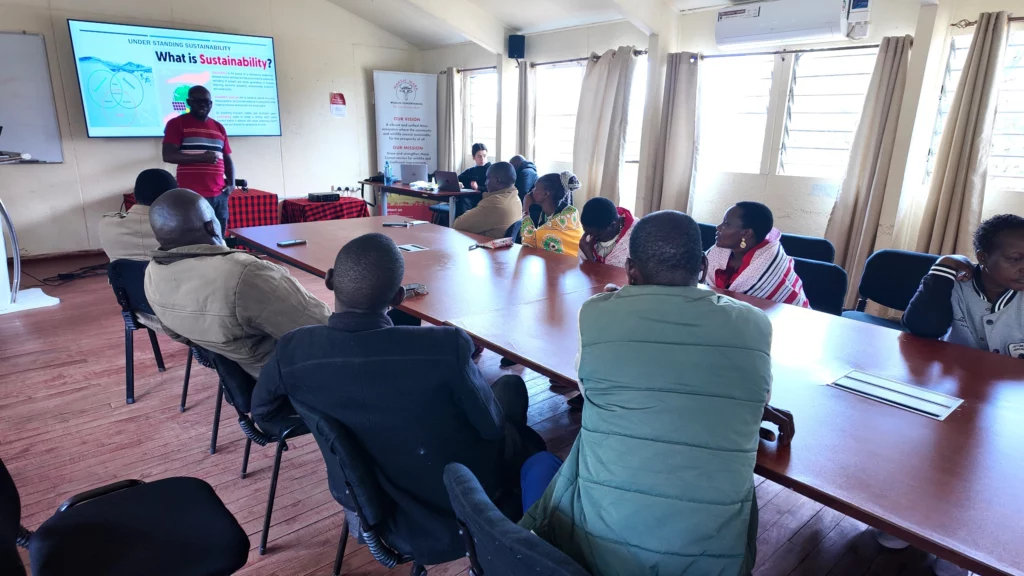
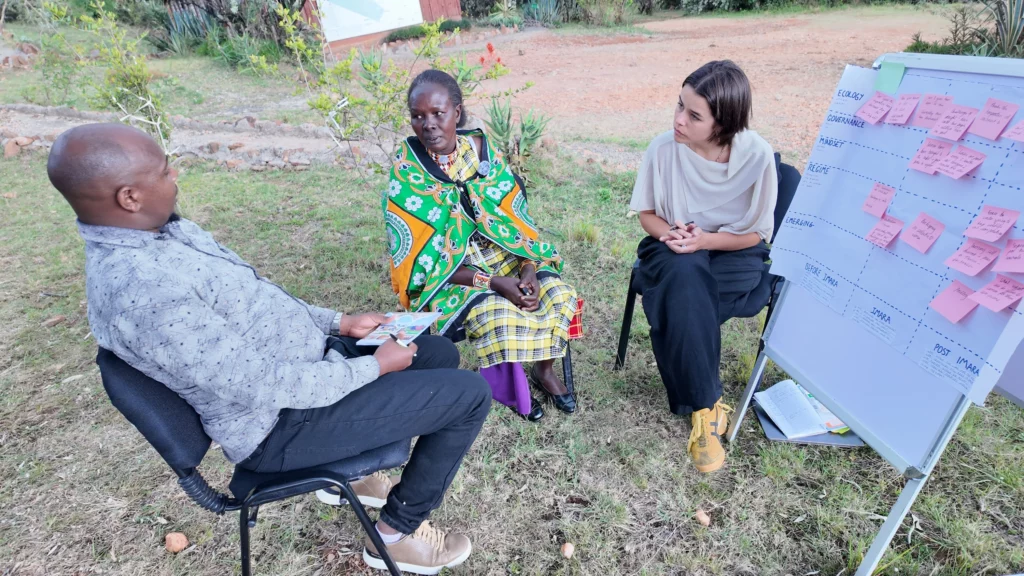
A sustainability workshop led by SEI’s Alphayo Lutta, Natascha Ng, and Jared Otieno from the Water Resources Authority trained community members to manage water projects more effectively, helping ensure the projects deliver long-term benefits.
The Integrated Management of Natural Resources for Resilience in the ASALs (IMARA) program is a consortium initiative that works to enhance the resilience of marginalized households to climate change-related shocks through diversified livelihoods and sustainable natural resource management.
Narok County, Kenya, gateway to the world-famous Maasai Mara National reserve, and home to the culturally rich Maasai community – is also a land facing immense climate pressures. Amid the breathtaking savanna grasslands and wildlife, pastoralist communities have for generations measured their wealth and strength by the size of their livestock herds. But as the climate shifts and the land grows less predictable, they are discovering that survival and prosperity demand new ways of living and earning a livelihood.
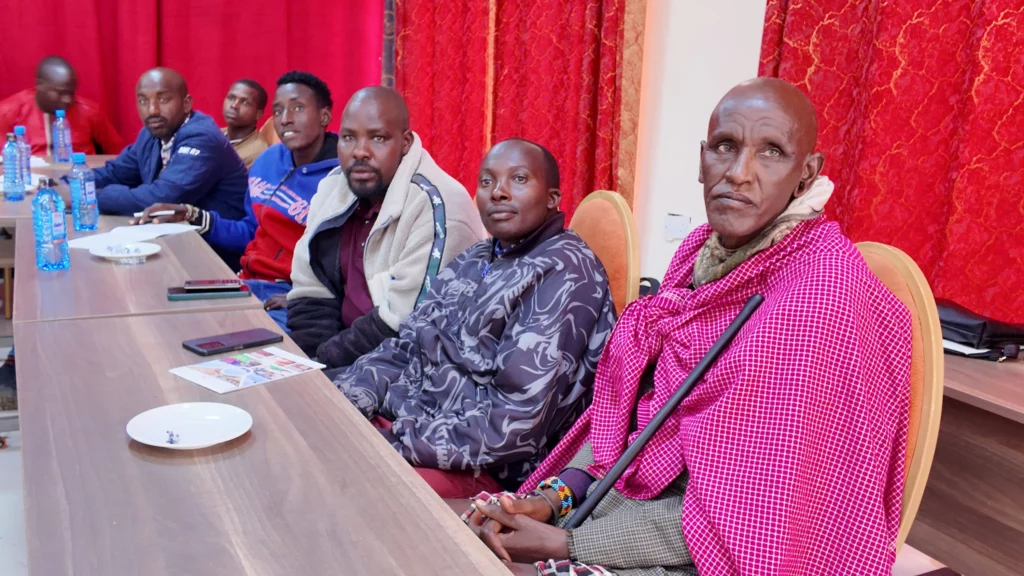
From 11-15 August, community representatives gathered for a sustainability training focused on ensuring that water projects such as boreholes, storage tanks, taps, dams, water pans and protected catchments continue to provide safe and reliable water while protecting the environment. Participants explored issues ranging from pollution prevention, water efficiency and ecosystem restoration to governance, financial sustainability and accountability. A strong emphasis was placed on environmental and social safeguards, ensuring that every project benefits the entire community, women, men and youth alike.
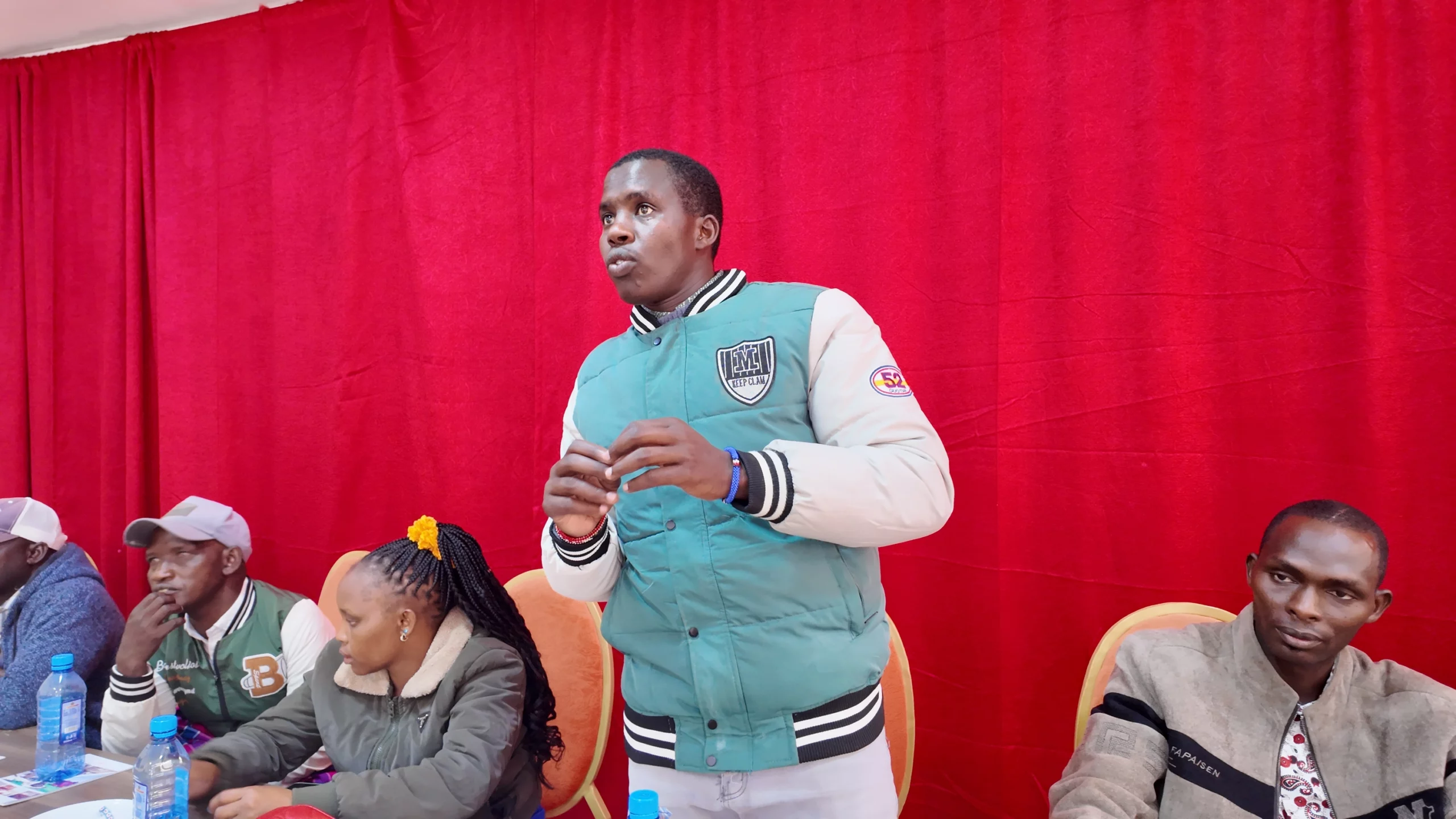
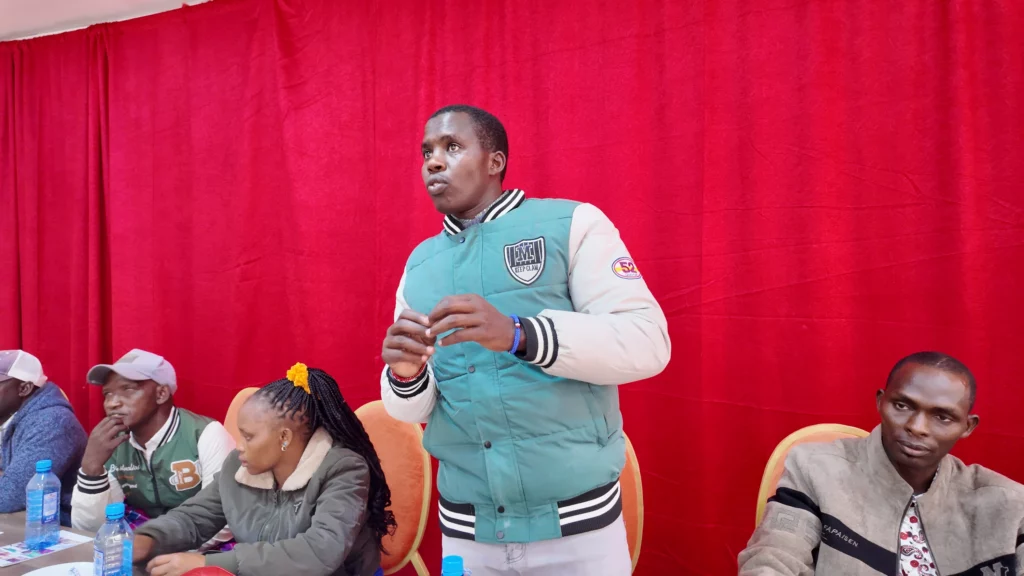
Including women and youth in all decisions makes our families stronger. I’m happy to be included in this training.
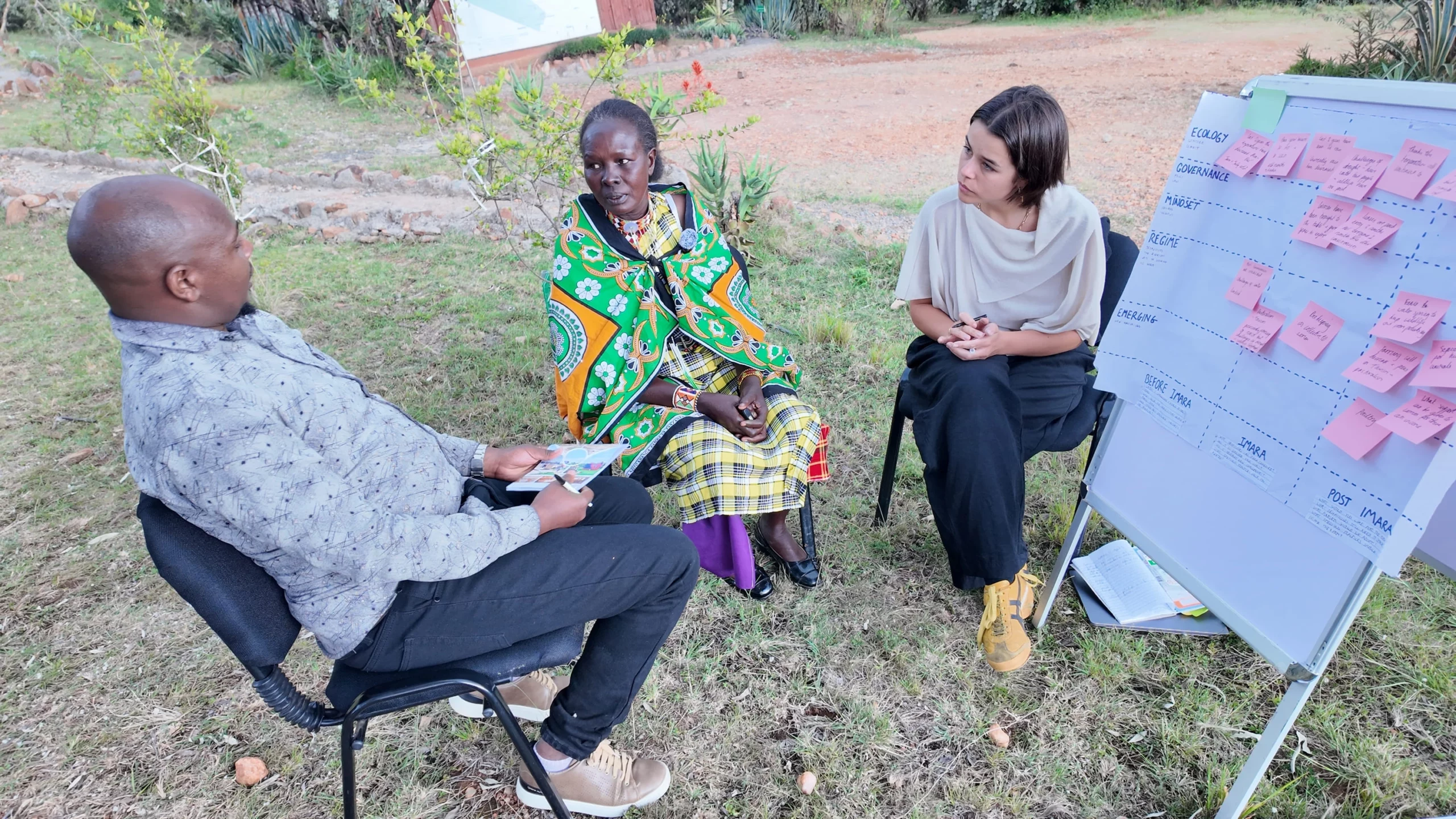
Using a design-thinking approach, participants also mapped their past, present, and possible futures. Design thinking, a human-centered methodology for problem-solving, encourages creativity, collaboration, and practical solutions. Together, we evaluated interventions and strategies aimed at preventing maladaptation. This exercise not only empowered members to envision sustainable pathways and make informed decisions for long-term resilience but also sparked powerful reflections on their role in shaping a better future. As Sintiyo Ole Pempa from Olosing’ate observed, he realized “how climate change can work against us, and how past, present, and future mapping helps us plan better.”
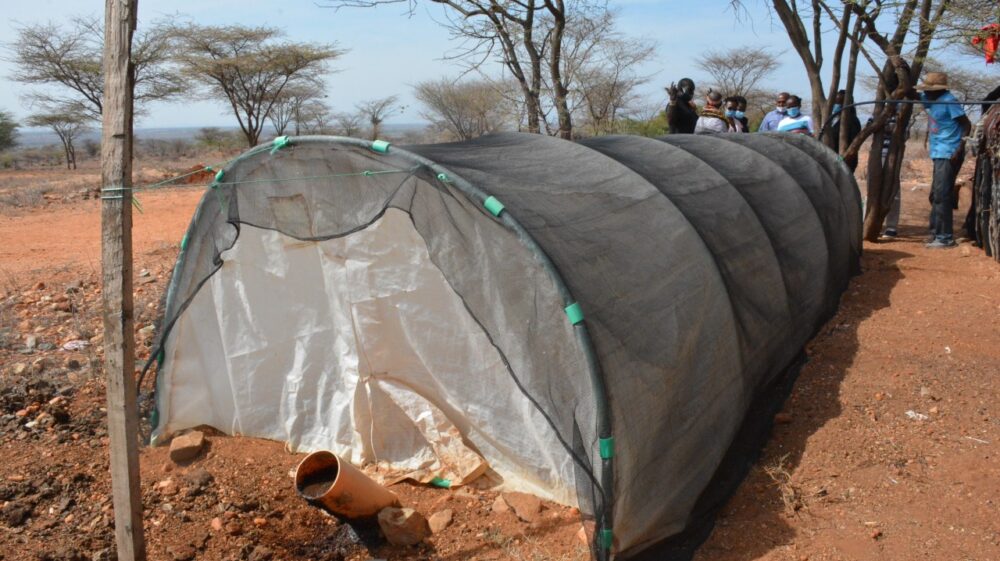
Predominantly a pastoralist community, residents have traditionally relied on livestock for their livelihoods. But through this project, they have begun exploring other sources of income and ways of improving their quality of life, such as irrigation farming made possible by new water storage solutions like dams and harvesting systems.
This transformation has also had a profound impact on women. In the past, they walked long distances to fetch water from rivers. Now, with water sources closer to their doorsteps, their burden has been eased, freeing time and energy for other aspects of family and community life. As Sointa Ene Lenkai from Iseneto shared: “Including women and youth in all decisions makes our families stronger. I’m happy to be included in this training.”
The conversations did not stop at water management. Community members reflected on how their mindset has shifted since the project began. Wealth, once defined only by the number of cattle owned, is now seen in terms of diversified assets, from poultry and beekeeping to beadwork and sustainable land use. Governance practices have also evolved. Where decision-making was once dominated by a few, mostly men, communities are now drafting by-laws, creating policies and ensuring inclusive participation.
Benchmarking for exposure is important. It opens our minds.
This training was used to build on existing governance practices, providing communities with more in-depth knowledge and practical tools such as water user associations, leadership structures, and group legal frameworks (including constitutions and by-laws), to strengthen ownership and accountability.
As Julius, a participant, reflected: “We have not heard of these things before, but now we know that rules cannot be passed without consent. Governance is key.”
Margaret Lengume left the training eager to apply her new skills, saying: “I’m happy for this workshop. I’ve learnt how to clean solar panels that were once covered in dust and not working. I’ve also learnt about water harvesting and watershed conservation. This is good for us.”
Others echoed the value of exposure, exchange and peer learning. William noted: “Benchmarking for exposure is important. It opens our minds.” The week ended with a sense of gratitude and determination. Peter Kaelo summed it up best: “From where we started and as we continue, we will go and teach and give advice to our other groups back home and things will go well.”
Project / The IMARA program aimed to increase the resilience of marginalized households to climate-change-related shocks.
Media advisory / Experts from SEI will be at CBD COP17 in Yerevan from 19–30 October and are available for commentary and analysis.
Media advisory / SEI invites journalists to a media briefing where its experts will share their perspectives on key topics ahead of the UN Biodiversity Conference (COP17).
Past event / The SEI-hosted Adaptation Research Alliance, with support from SEI Africa, will host the workshop to connect adaptation research with policy and practice.