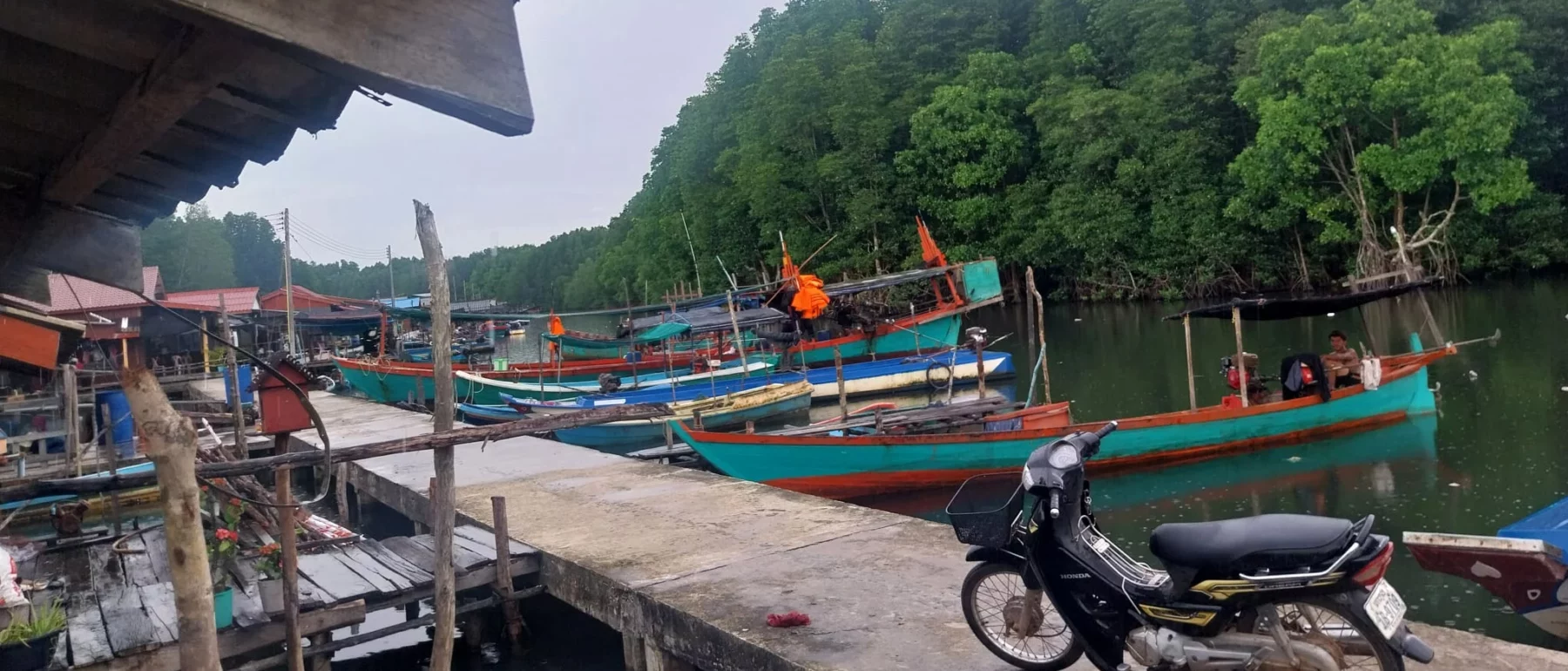
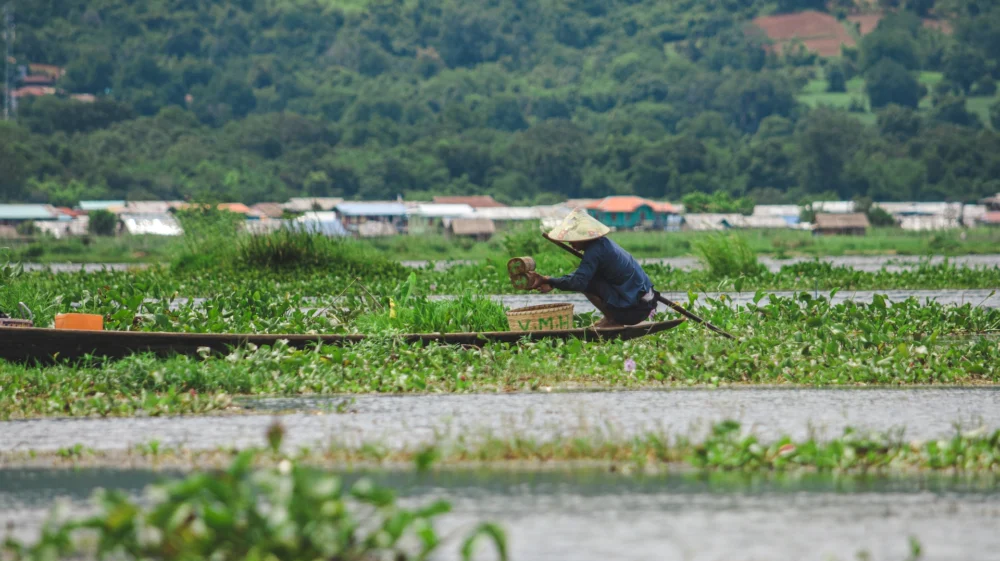
In Cambodia, traditional crab and mussel farming has sustained coastal livelihoods and conserved ecosystems for generations. Today, these practices are being branded as “nature-based solution” by global institutions. SEI’s fieldwork highlights the gap between policy labels and lived reality, raising the question: when livelihood practices get rebranded for international agendas who truly benefits and who gets left behind.
A recent field visit to coastal Cambodia by SEI researchers revealed that many initiatives currently branded as NbS are, in fact, longstanding traditional livelihood practices.
Researchers met aquaculture farmers in two communities in Cambodia: mud crab farmers in Sihanoukville and green mussel farmers in Koh Kong province. While the farming techniques applied in both communities are now circulating in high-level discourse as nature-based solutions, the communities implementing these practices every day, have never even heard of the term. These communities have developed and refined these practices over generations, with knowledge being passed down by families as part of everyday livelihood, rather than through formal programs.
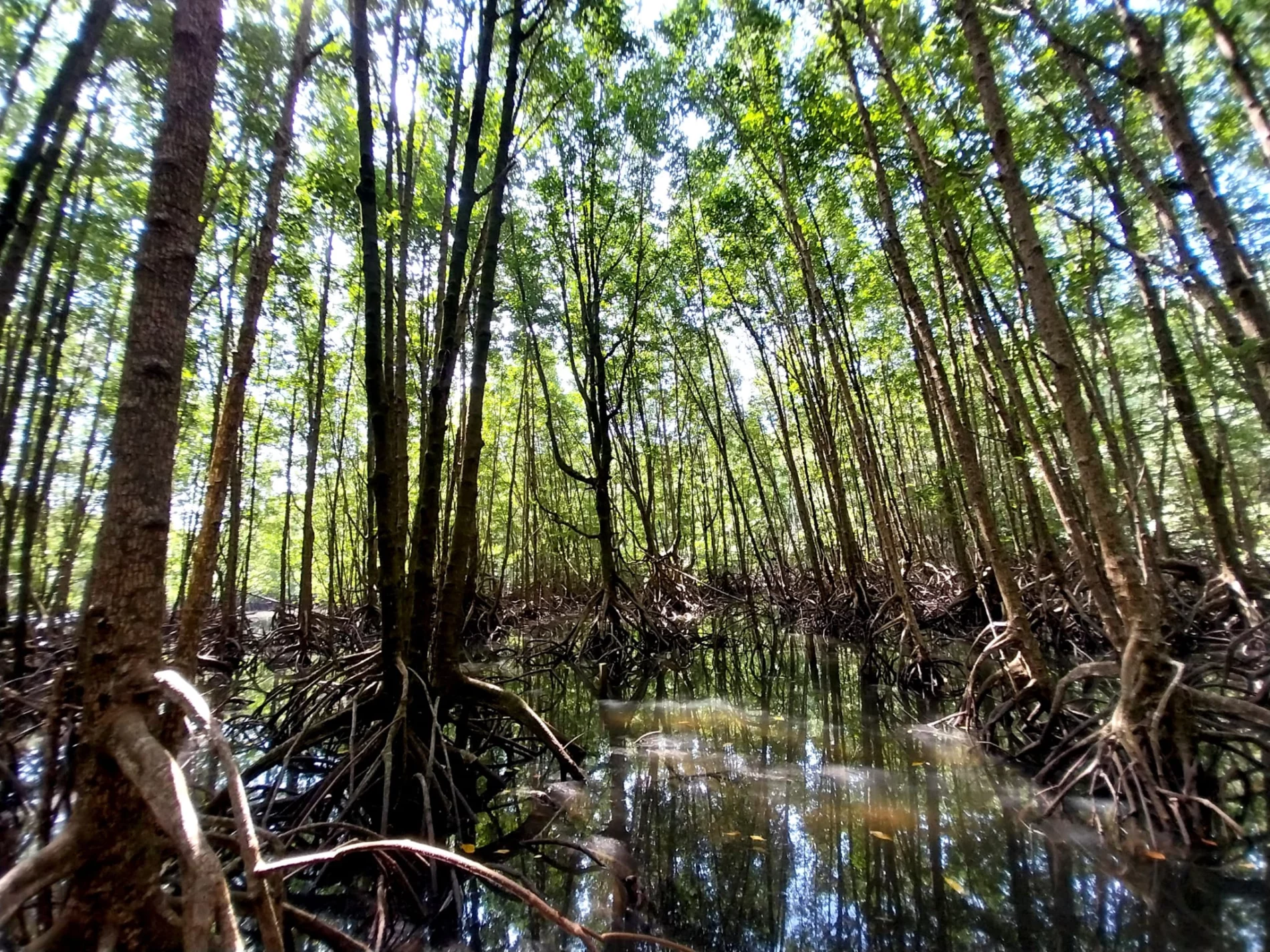
In Nea Sat Chalong community in Sihanoukville, farmers raise mud crabs among the mangroves in a silvofishery system often labelled as NbS as for enhancing mangrove protection and biodiversity. Yet for farmers, it is not a newly designed environmental intervention, rather it is a time-tested livelihood strategy.
When asked how they learned, nearly all described learning through family observation not formal training or climate adaptation programs. The practices evolved from lived experiences and livelihood necessity.
The farmers’ awareness about ecological conservation emerged from their lived recognition that ecosystem degradation threatens their livelihood security.
The mangrove and crabs help each other. If we destroy the mangroves, we destroy the crabs and we have no income. I did other types of farming before this, but this makes the most.
A mud crab farmer in Sihanoukville, Cambodia
Mangroves in Sihanoukville, Cambodia. Photo: Cynthia Crouse.
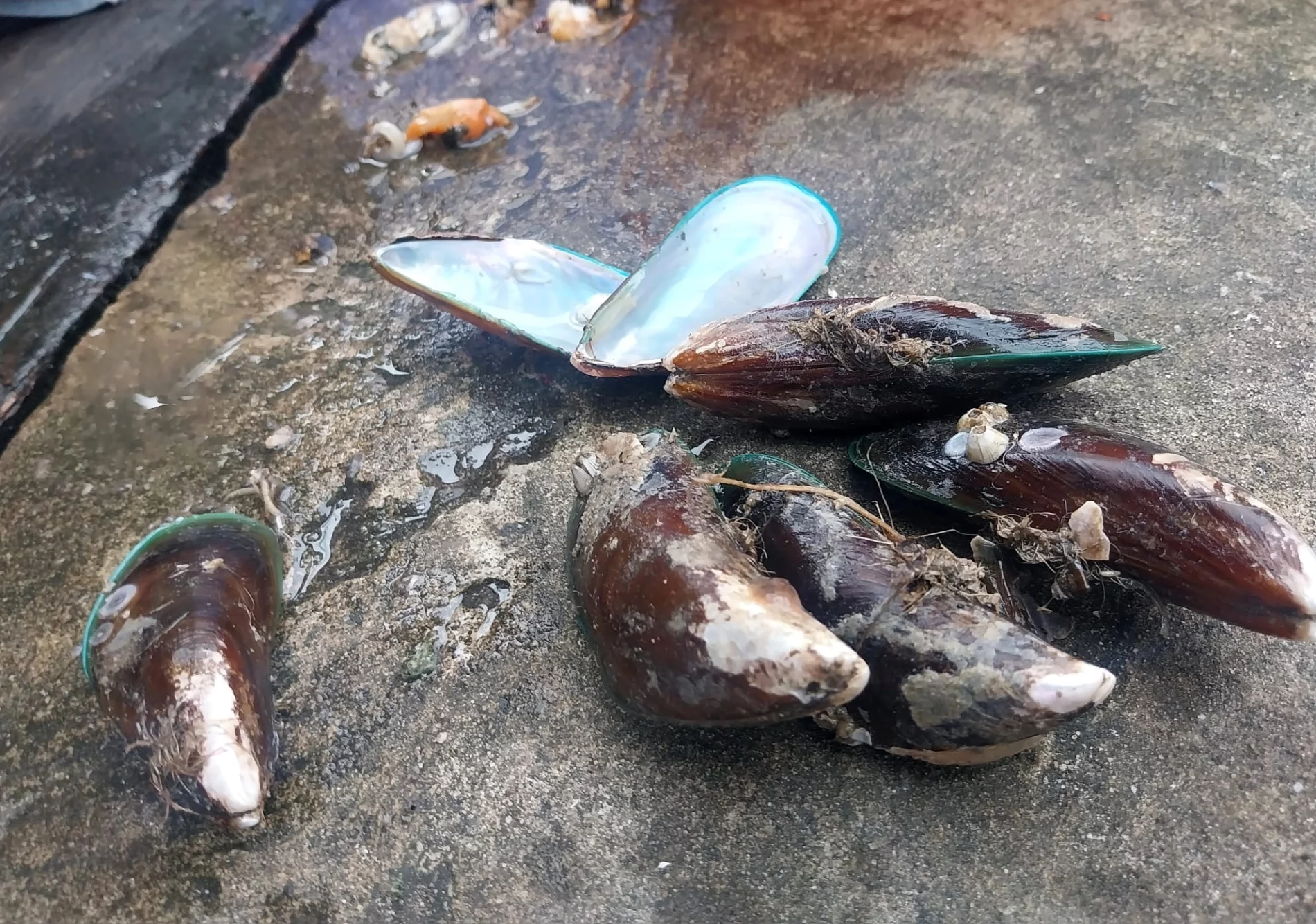
Similarly in Peam Krasam community in Koh Kong, green mussel farmers use a longline method, widely regarded in technical literature as sustainable and supportive of coastal defense.
The farmers adopted this technique not through formal training nor had they ever heard the term “nature-based solution” but through family connections and observing neighbours’ success. Some had experimented with other methods, such as using a singular pole with a string wrapped around it but found more productive in collecting mussels. Their dominant motivation remains livelihood security.
Mussel farming also helps protect the water system .... The network of poles acts as a natural barrier that discourages illegal fishing and conserves the marine environment within the sanctuary.
A green mussel farmer in Peam Krasam community, Koh Kong, Cambodia
Green mussels collected in Peam Krasam community in Koh Kong. Photo: Cynthia Crouse.
Others, however, described government restrictions on cutting trees for stakes. The Ministry of Environment has limited the number of wooden stakes allowed to be cut to reduce deforestation. The MoE’s priority is the forest, not the coastal ecosystems.
As with the mud crab community, farmers do not describe their work as NbS but livelihood security.
The term “Nature-based Solutions (NbS)” was first coined by the World Bank and the International Union for Conservation of Nature (IUCN) in 2009, defined as actions that protect, restore, and sustainably manage ecosystems to address societal challenges while providing human well-being and biodiversity benefits.
Since then, NbS has been promoted for climate adaptation, biodiversity and development and shaped funding flows, research agendas, and development priorities. Organizations like FAO and IUCN, now publish extensive guidance to promote its uptake. NbS now functions not only as a technical concept but as a powerful policy tool for conservation.
However, many initiatives now categorized as NbS, especially in agriculture and aquaculture, are not new. Integrated fish and rice farming dates back 2,000 years in China, while silvofishery systems, integrating mangrove and fish cultivation, originated in Vietnam and Indonesia. By labeling these practices as new aquaculture interventions, NbS frameworks often ignore the longstanding livelihood strategies grounded in local, traditional knowledge and lived experiences.
While reframing as NbS can bring visibility, legitimacy, and potential funding, it risks stripping value from the communities that developed these practices, even if unintentional. Many experts recognize that effective NbS should draw upon traditional and local knowledge and work alongside Indigenous peoples and local communities, however, this rebranding process raises a critical question: who truly benefits?
The answer lies in the power to define. Small-scale farmers view these practices as everyday survival based on necessity, intergenerational learning, and adaptation to local environmental conditions.
In contrast, NbS frameworks privilege scientific terminology, donor priorities, and institutional expertise. Defining a practice as “NbS” requires institutional authority, policy literacy, and analytical distance – resources that are often unevenly distributed. When vulnerable residents’ long-term knowledge of living and working in these spaces is often invalidated by planners in favor of outside experts who exercise material and symbolic power. When NbS planning fails to recognize and integrate local knowledge, it reproduces existing power asymmetries, privileging external expertise while marginalizing the those who have long managed these ecosystems for generations. NbS this operates not merely as a technical intervention but as a site of contestation over whose expertise counts and who controls resources.
For NbS to move beyond branding, initiatives must shift power, not just terminology. They must ensure that farmers whose livelihoods sustain and depend on ecosystems shape the agenda, influence the rules, and share materially in the benefits.
The research is part of the Innovating for equity in nature-based solutions in aquaculture food systems in Asia-Pacific (I4E) project, an IDRC funded project part of the AQUADAPT portfolio.
Project / The I4E project aims to promote inclusive and resilient nature-based aquaculture solutions in the Asia-Pacific region.
Journal article / This article explores gender-differentiated lived experiences of fisherfolk in a changing climate in Kurigram, Bangladesh.
Past event / This photo exhibition will showcase images by fisherfolk communities in Bangladesh.
Press release / Amplifying the voices of fishing communities to advance inclusive, climate-resilient resource governance across South Asia.