Ahead of the 20th International Conference on Community-Based Adaptation (CBA20), which took in Manila from 11 to 14 May 2026, Indigenous and local aquaculture producers from across the Asia-Pacific came together to reflect on the future of aquaculture nature-based solutions. Their message to CBA20 was for governments, researchers and NGOs to recognize local leadership, knowledge and the lived experience of communities.
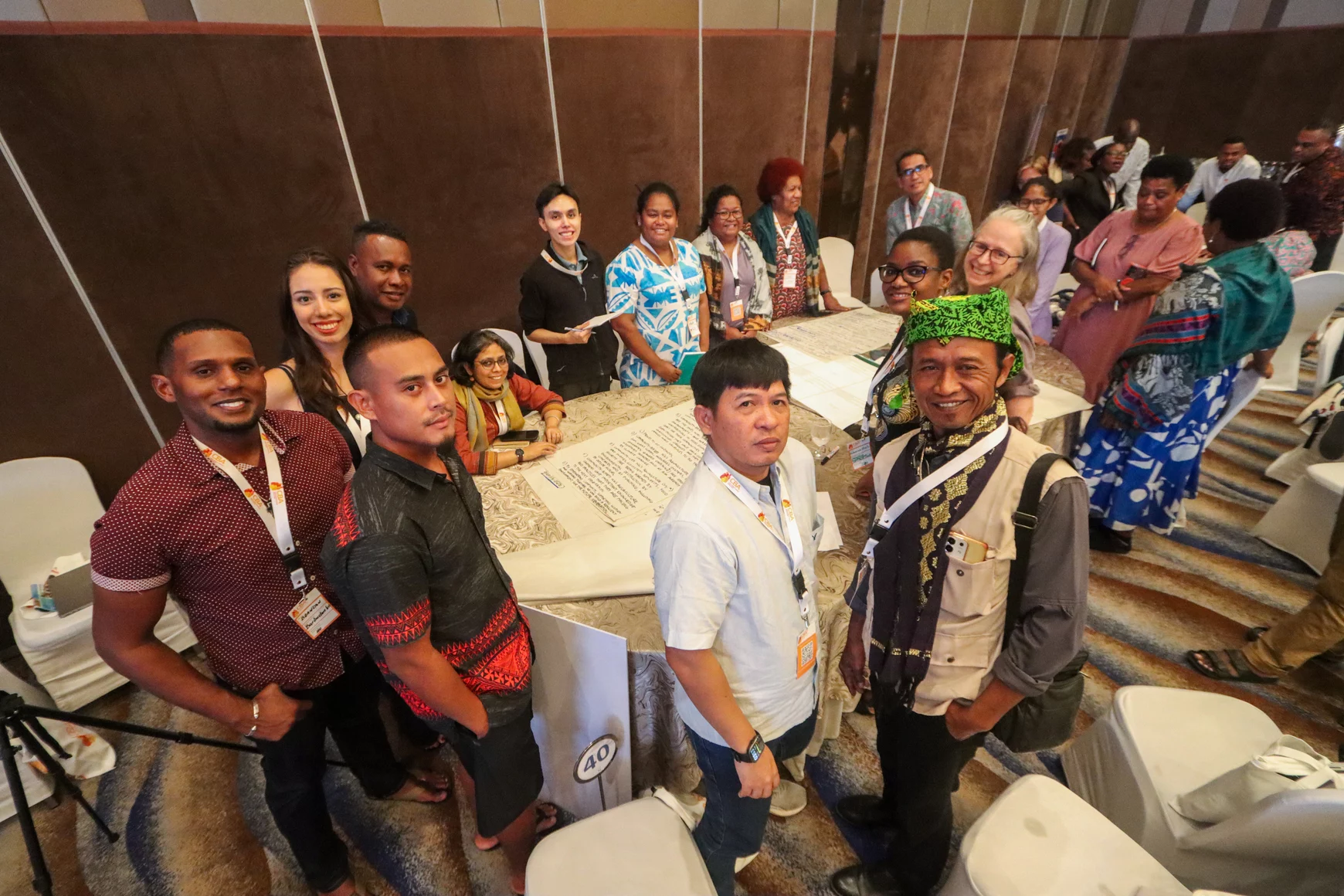
Aquaculture producers Sera Baleisasa, Tarusila Veibi, Katarina Baleisuv, Wilfred Luiramo, Hendro Supeno, and Patricia “Patty” Kloulechad attend the 20th Community Based Adaptation Conference in Manila, Philippines.
Photo: JB Del Rosario III.
Aquaculture nature-based Solutions (NbS) are increasingly promoted across the Asia-Pacific as pathways to climate resilience, biodiversity conservation and sustainable livelihoods. Indigenous Peoples and Local Communities (IPLCs) are already practicing many of these approaches on the ground.
Yet those same communities are too often missing from the conversations shaping aquaculture NbS. Policies, research agendas, and development projects continue to be designed with limited input from the communities whose knowledge, labour, and stewardship sustain these systems. It is a missed opportunity to draw on the lived experience of the people who know these ecosystems best.
Ahead of the CBA20, the Innovating for Equity (I4E) project brought together six Indigenous and local aquaculture producers from Fiji, Solomon Islands, Indonesia, and Palau to reflect on a simple question: What do governments, researchers and NGOs need to hear if aquaculture NbS are to be truly equitable and effective?
Over two days, they shared stories of their livelihoods, the challenges they face and the futures they hope to build. Together, they developed a collective set of priorities, which they later presented during CBA20. Their messages offer a vision for aquaculture NbS that can genuinely recognize local leadership, knowledge and lived experience. As Hendro Supeno, an Indonesian shrimp farmer and mangrove conservationist, said: “We need to voice these messages at stakeholder level and community level. These messages must travel far beyond the conference room.”
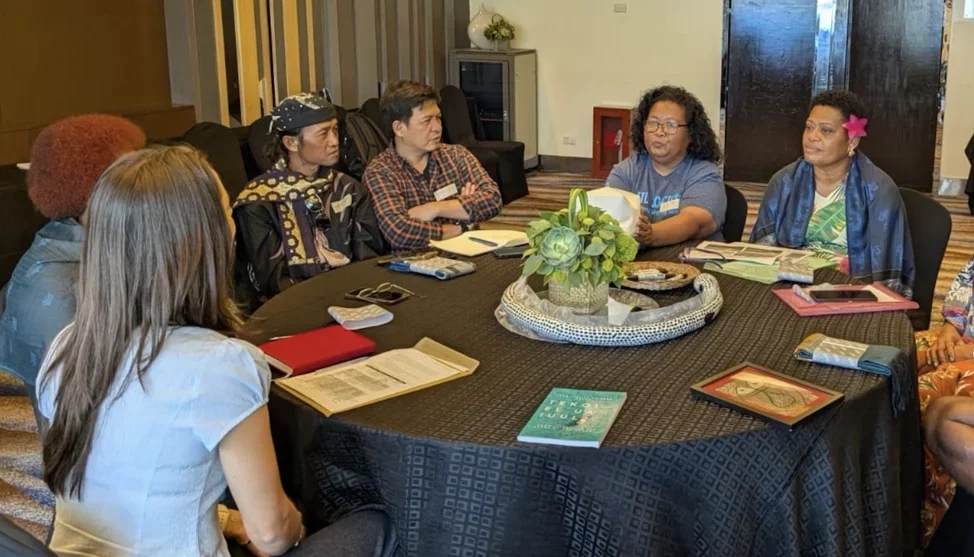
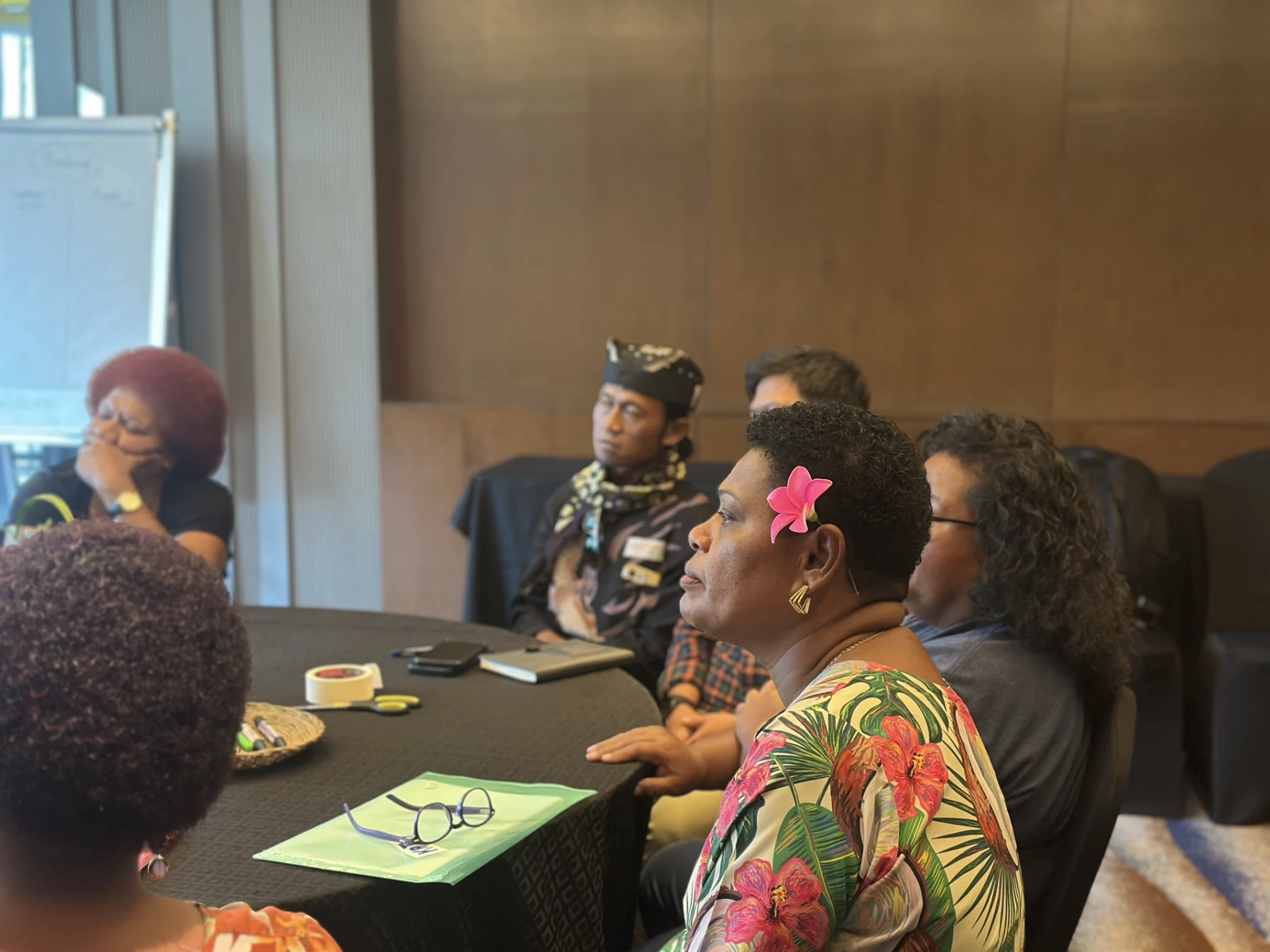
Aquaculture producers sharing their experiences before the 20th Community Based Adaptation Conference in Manila, Philippines.
Photo: Melissa Gonzalez Hinostroza / SEI Asia.
One refrain emerged throughout every conversation: healthy ecosystems and healthy communities cannot be separated.
Participants described themselves not only as aquaculture producers but also as caretakers of aquatic ecosystems. These ecosystems are not simply places where food is produced; they are homes, sources of identity, and the foundation of livelihoods.
As Tarusila Veibi, Fijian mud crab farmer, reflected: “If we take care of our oceans, our oceans will take care of us.”
There was pride in their work and the responsibility they carry. Katarina Baleisuv, a Fijian tilapia farmer, said: “I’m proud to be a farmer, and I salute that.”
They also emphasized that communities are already passing this knowledge to the next generation, ensuring that Indigenous and local practices continue alongside changing environmental conditions.
Us Fijians, we are passing our knowledge to the next generation… that's one way we share love.
Sera Baleisasa, a Fijian seagrape farmer
The conversations also highlighted the mounting threats to community-led aquaculture across the Asia-Pacific.
Participants spoke of climate impacts, industrial pollution, poaching, and the increasing uncertainty of sustaining sea-based livelihoods.
“Some of us are feeling the brunt of climate change which is not our making,” said Wilfred Luiramo, a seaweed farmer from the Solomon Islands.
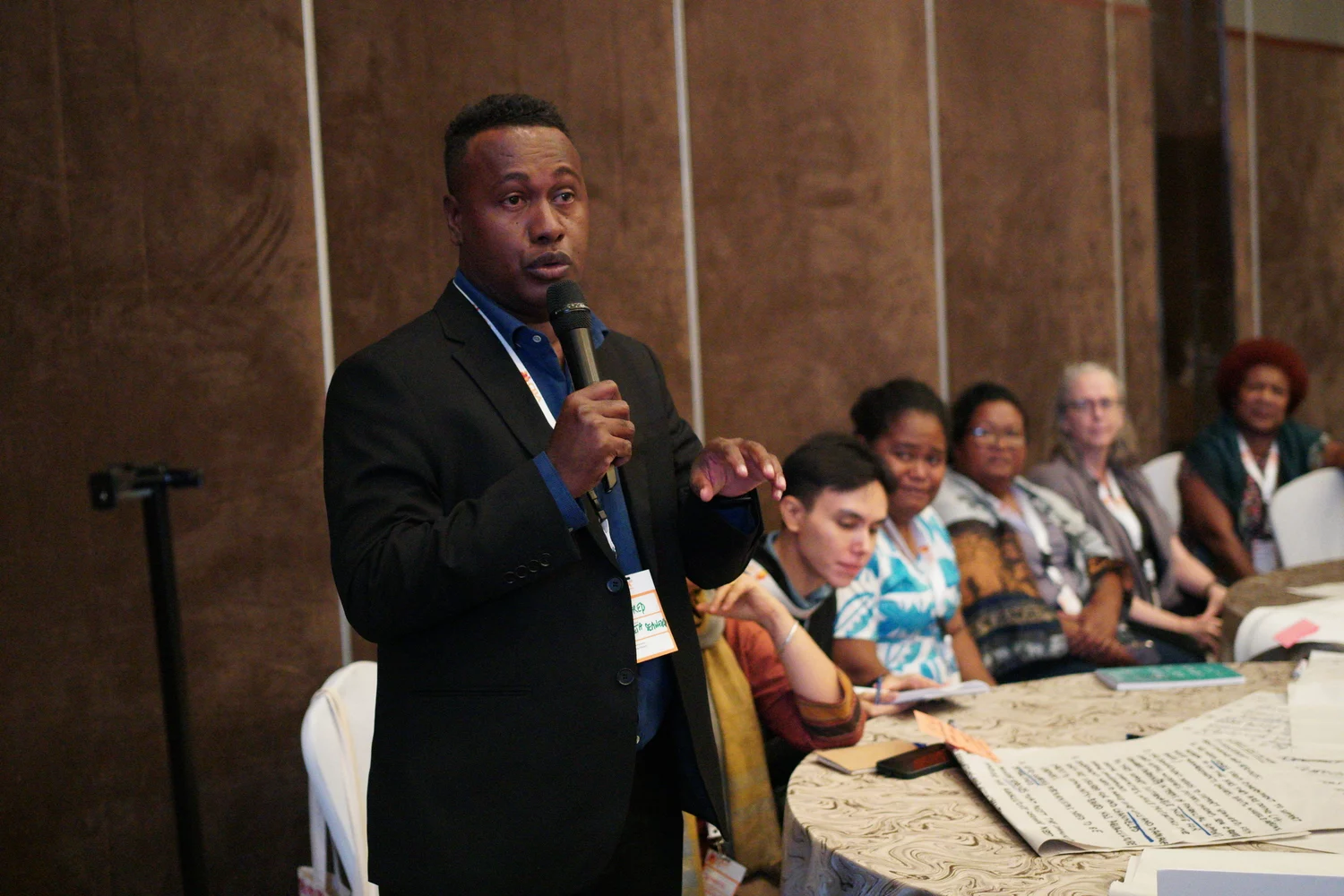
Wilfred Luiramo, Seaweed Farmer from Solomon Islands, speaking at CBA20.
Photo: JB Del Rosario III.
Despite these pressures, there was solidarity and a determination to keep adapting.
Rather than focusing only on problems, participants articulated practical actions to strengthen community-led aquaculture NbS.
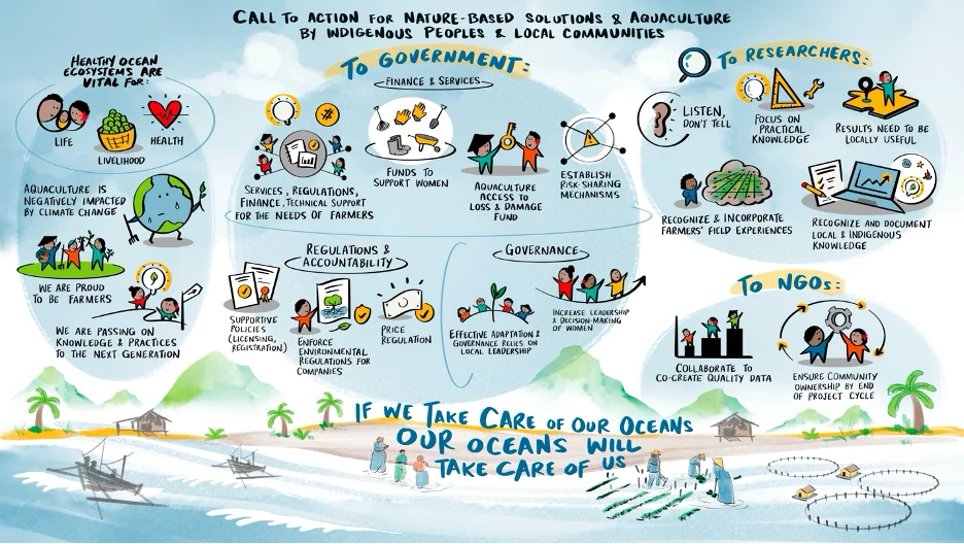
Participants called for direct government investment in community-based aquaculture through financial support, secure land tenure, risk-sharing mechanisms, timely technical services, and stronger coastal protections.
Climate finance, including Loss and Damage funds, must reach communities directly, they insisted. Environmental regulations must curb destructive practices of large-scale industries. Patty Kloulechad, Palauan clam farmer, stressed: “I think they need to consider loss and damage alongside aquaculture loans. Some people lose their farms but still have to pay back the loan.”
Most of all, participants urged for adaptation to be done with communities not for them.
As Sera Baleisasa asserted: “Tell the government to come down and listen to the grassroots level.”
Katarina Baleisuv echoed this sentiment:
We need the government to come to our level, to see through our eyes what we are doing and what we are feeling.
Katarina Baleisuv, a Fijian tilapia farmer
Participants also highlighted the need for greater participation and leadership of women in adaptation planning and decision-making, recognising the central role women already play in aquaculture.
Participants also challenged researchers to rethink how research is conducted.
Too often, they argued, studies extract knowledge from communities without giving anything useful back. “The reports are not practical because they are not in the context of the communities,” Wilfred Luiramo noted.
Participants called for research that is practical, locally grounded and rooted in farmers’ lived experiences. Indigenous knowledge must not simply inform research; it must be recognised, valued, and properly acknowledged as Indigenous knowledge.
As project partner Rosi Batibasaga reminded the group: “We are the secondary researchers when we come into a community.”
On the role of NGOs and development organisations, their message was equally clear.
Projects should not disappear once the funding ends. Instead, they should build partnerships for lasting capacity and community ownership, strengthen networks, and leave communities more confident and better equipped to carry on.
A visual summary of calls to action to governments, researchers and NGOs.
Photo: Tofu Creatives.
Perhaps the most important outcome of the gathering was not a single recommendation but the realisation that many of these experiences were shared. Before arriving in Manila, participants represented different countries, communities, and aquaculture livelihoods, from farming seaweed, fish, shrimp, mud crabs, giant clams, and pearl oysters to harvesting sea grapes and conserving mangroves.
By the end of the week, they had developed a collective set of priorities for the future of aquaculture NbS.
As Tarusila Veibi reflected:
Yesterday we were nine communities. Today we are one.
Tarusila Veibi, Fijian mud crab farmer
For those of us working in research, policy, and practice, these messages are a reminder that equitable NbS are not just about protecting ecosystems. They are about recognizing, respecting and learning from the people who have long cared for them. The question now is not whether these voices have been heard, but whether they will shape the decisions that come next.
Project / The I4E project aims to promote inclusive and resilient nature-based aquaculture solutions in the Asia-Pacific region.
Past event / The SEI-hosted Adaptation Research Alliance will lead the knowledge nexus theme at the Community-based Adaptation (CBA20) conference in Manila.
Event on 20 September – 27 September in New York / SEI joins the Climate Week in New York to highlight global leadership and finance solutions for accelerating the transition to net zero industry.
Past event / Join SEI and CUSRI in building knowledge and connecting research to policy for Thailand's sustainable climate adaptation.