part of Environment and policy in Asia and Series: how El Niño is shaping a planet in crisis
In this episode of SEI Asia’s podcast series on Environment and Policy in Asia, we spoke to aquaculture farmers in Fiji and Solomon Islands who are already confronting the consequences of El Niño coming on top of a changing climate.
This is the first of a five-part perspective series by experts across SEI highlighting the multifaceted effects of the 2026–27 El Niño.
00:00 – 00:24
Welcome to SEI Asia’s podcast on environment and policy in Asia. In this podcast series, we invite experts to discuss the many critical and complex environmental challenges in Asia, and how to find solutions through policy and partnerships.
00:34 – 01:04
Rajesh: Welcome to this episode of the SEI Asia podcast on Environment and Policy in Asia. Today, we’re joined by Katarina and Wilfred to talk about the critical issue of aquaculture and nature-based solutions. Indigenous and local communities are already practicing aquaculture and nature-based solutions, but too often they go missing from the conversations that shape them. Policies and research agendas are designed without the very people who know these ecosystems best.
01:05 – 01:30
Rajesh: So we wanted to reflect on one simple but powerful question. What do governments, researchers and NGOs need to hear if aquaculture, nature-based solutions are to be truly equitable and effective? So it is my privilege to welcome today Katarina and Wilfred to join us in this episode of the SEI Asia podcast series. Welcome Katarina and Wilfred.
01:31 – 01:35
Rajesh: And could you kindly say a few words about yourselves, especially where you’re from and what you do?
01:36 – 01:48
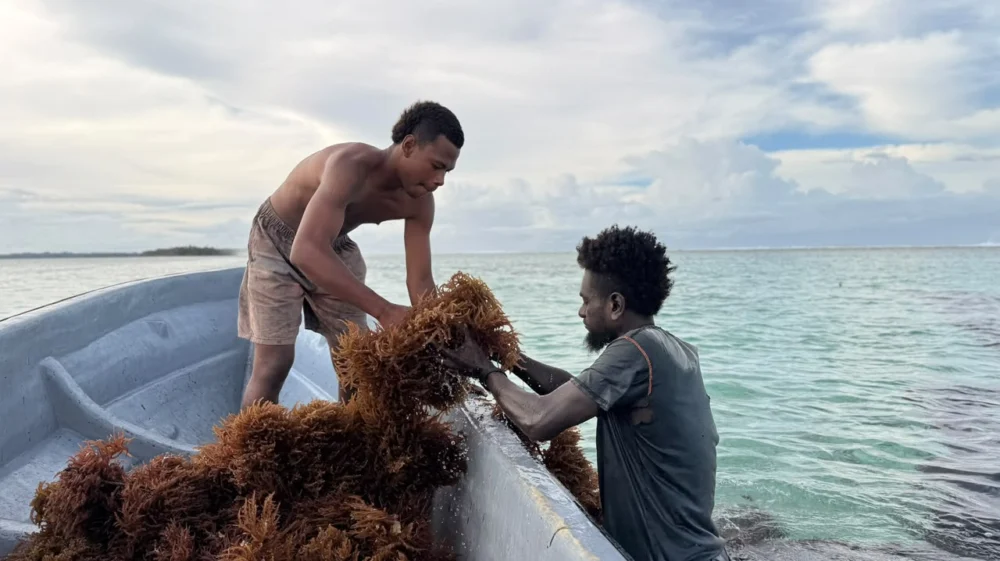
Wilfred: Thank you. My name is Wilfred Luiramo. I am from Solomon Islands and currently I am the founder and owner of Haleto Seaweed Farmers and then we are doing seaweed farming in our community.
01:49 – 01:53
Rajesh: Thank you very much Wilfred. And Katarina, could you say a little bit about where you are and what you do?
01:54 – 02:27
Katarina: Thank you so much. My name is Katharina Mbalesuwa. I am a full-time aquaculture farmer and I’m recently awarded Tilapia Farmer of the Year in Fiji National Agriculture Symposium. And also I’m a Fiji Itauke and operate the only tilapia incubator hatchery here in Fiji and also employ aquaculture nature-based system and recycle water from our tilapia to for our commercial vegetable farm here in Fiji.
02:28 – 03:06
Rajesh: Thank you very much Katarina and Wilfred. That gives us a little glimpse into what you’re doing and where you are from and we’ll get more into that. So let’s start with the first question. Katarina can respond to this. You have talked about not just being farmers or producers, you’re also caretakers of aquatic ecosystems. You also talked of ecosystems that are not just places where food is produced, but it’s a home, it’s a source of identity and of course the foundation of your livelihoods. Can you tell us a little bit about this perspective for our listeners? What do you mean when you are saying ecosystems are not just places where food is produced, but a source of identity, home and the foundation of livelihoods?
03:07 – 03:52
Katarina: For me as an indigenous Fijian woman, this is a natural role. I come from a culture where sustainability and looking after our environment and also listening to it is important. In our villages and communities, we farm and fish sustainability. We always think about the next generation and not greedy to take everything. In our community, we plant a fish, plant together, fish together and eat together. No one is left behind. So we’re very involved in the lives of one another and also celebrating the birth and the major of the milestone, even death in our Fijian customs.
03:53 – 04:45
Katarina: We have many myths and legends that are connected to nature. Even our identity includes fish, animals, trees and birds. Yeah, I had so much to explain, but definitely this is just the main thing I would like to share. And yes, another one is when it comes to climate change, the impact of the community, life of our government listens. They also work with a partner to help communities that are affected by that. And I think it is also sometimes hard for us as a farmer and community members to clear and know what we are impacting for the climate change because there is so much science about it. For us, we are close to what we farm, fish and eat. So when we experience challenges that are new of us, maybe that’s because of the climate change.
04:46 – 04:53
Rajesh: Can we go to Wilfred? What is, in your experience as a seaweed farmer, Wilfred, what is your perspective?
04:54 – 05:41
Wilfred: Yes, thank you. As a seaweed farmer, for me, caretaker of the ecosystem means like we have to understand that the ocean and the environment is not only for us today, but we as citizens have the responsibility to ensure the next generation and the generation after can benefit from it. And through seaweed farming, we learned that our livelihood depends entirely on a healthy ocean and ecosystem. Without a healthy ocean or without a healthy ecosystem, the livelihood of islanders or coastal communities will be facing a lot of challenges. So protecting the marine ecosystem means also that we are creating income for our people and also building a resilient future for our citizens.
05:42 – 06:02
Rajesh: Thank you, Wilfred and Katrina. Can I go a little bit into, say, your personal life, for example, your experience from your daily work? Maybe, Wilfred, we can start with you this time. In your daily work, you talk of your connection to the ecosystem, right? In your daily work, can you tell us an example as a seaweed farmer when you feel that connection and express it to our listeners?
06:03 – 06:40
Wilfred: Yes, thank you, Rajesh. What really tells me a story about this connection is that when I, as a farmer, visit the farm site and see how the clean ocean responds to the plants, the growth of plants, it tells a story that seaweed is not just a crop. It becomes a commodity of life for our people. So, for me personally, seaweed is a tool where people use or it is a rural currency where people use to earn income, send their kids to school and meet household needs.
06:41 – 07:19
Wilfred: Also, looking at seaweed in a broader sense, it tells a story of the previous generation because our previous generation engaged in seaweed farming and now the generation that we are now also engaged in seaweed farming. So, it is a story of a generation and I am hoping we will continue the story of the seaweed stories to our next generation and to ensure that despite the challenging impact or negative impact of the changing climate, we will continue to respond through our resilient approaches and methods through farming.
07:20 – 07:27
Rajesh: Thank you, Wilfred. That was very inspiring. Katarina, do you have a similar story that can touch our listeners from your daily experience?
07:28 – 07:45
Katarina: For me, as a full-time farmer, I think it is very powerful, but the change requires the right people at the timing and the system. That is not easy. It takes time, patience, and resources, but I am excited that people can work together.
07:46 – 08:08
Rajesh: Good. That was going to be my next question to both of you because both of you have mentioned climate change impacts on communities and the changes that are happening. You also talked previously about governments not listening or not listening enough and you’ve called on governments to move closer to communities Katharina, tell us a little bit about that. What do you need from governments that you’re not getting right now?
08:09 – 08:34
Katarina: For us, we farmers, we need to work together with the government, but sometimes we have a gap in there between farmers and the government, like governments are finding it hard to come down. They are struggling. So, especially during this time, climate change. So, we need to fix that gap and try to work together and to overcome the challenges we have, as farmers.
08:35 – 08:41
Rajesh: So, Katharina, when you say they should come down, is that meaning they should visit the communities more often? What would you like them to do?
08:42 – 09:09
Katarina: When it comes to climate change impact and community life, our government needs to listen because sometimes the government, they think they are on that level. So, if we need to fill that gap, they need to come down and work together as the farmers. So, they also work with other partners to help the communities. So, we can come to and fill the gap that side. So, I hope we need to work together as the government, with the government.
09:10 – 09:22
Rajesh: I understand. So, there is a gap of understanding and maybe they don’t meet you often enough, which means they don’t listen to you often enough. They don’t get your perspectives. Is that something that, Wilfred, that is also happening in your community?
09:23 – 10:05
Wilfred: Yes. Our call to the government would be much on policy. At the moment, in the aquaculture sector in Solomon Islands, in Solomon Islands, we have the national aquaculture policy. But in my view, I feel that there needs to be a standalone seaweed policy or Kaffa Ficus policy that basically deals with seaweed. One of the reasons why I raised this issue is because, like Katharina said, there is a gap between the government and the people. And through the gap, there are processes which delays the response of government to engage actively with the seaweed farmers.
10:06 – 10:37
Wilfred: So, our call to the government is to ensure through the policy, we need to put together local knowledge, seaweed farming knowledge, and at the same time, scientific-based research knowledge to be put together and find a way forward because there are very experienced seaweed farmers around the country, but they lack technical knowledge on how to ensure we properly handle seaweed plants. And then we have to ensure we have good quality seaweed.
10:38 – 11:07
Wilfred: So, a policy in place, a good engagement among stakeholders, the private sector, seaweed farmers, and the government, or even the exporters, and then we will start to connect the dots. At the moment, while there are gaps, we are in a transition. And Solomon Islands government is supporting the industry. So, I am hoping in the next five to 10 years, there will be some positive outlook for that industry. Thank you.
11:08 – 11:53
Rajesh: Thank you very much. It’s an excellent, positive note, because all your efforts, I hope, will have some impact on the government’s efforts. I want to talk now, as we talk of getting people and governments to work together, we want to also talk about the solidarity among your communities, because I saw the messages from the CBA, where you talked a lot about how all the communities are getting together. Tell us a little bit about that, Wilfred, the sense of solidarity and that your challenges and hopes are all very deeply connected together, among different aquaculture systems as well, from seaweed, to fish, to shrimp, to mud crabs, you seem to have a wonderful sense of solidarity. Tell us a little bit about that, and how that can help you to advocate for change.
11:54 – 12:47
Wilfred: Our solidarity has been a defining factor for our communities engagement industry. People and the community, including our elders, work together trying to raise these issues with key stakeholders, government, NGOs, and we ask them, this is what the seaweed industry really needs to ensure we build the industry. So, through our solidarity, it sends a message that we managed to have that seaweed farming in our community for around 40 years. If we are divided or having different opinions, I think seaweed will not continue in our community after 40 years, when it was first introduced in Solomon Islands, because the current Carvaficus that we are farming now is foreign to us. It was taken from Asian country to Solomon Islands.
12:48 – 13:11
Wilfred: So, it sends a message, when there is no government intervention over the years, the solidarity and the strength of our rural people continue to just keep engaging in farming, even there is no commercial engagement, or even there is no exporter or no buyers, but they continue to ensure at least we keep this commodity alive.
13:12 – 13:18
Rajesh: Thank you. And Katarina, would you like to also share your perspective on the sense of solidarity and how it can affect change?
13:19 – 13:48
Katarina: We interact with other farmers in communities with respect and open minds. And I think it’s very powerful working together in my other communities. And not only that, for my Fiji side, we always happy to change requirements and the right people in the timing and the system. That is not easy, but it takes time and patience and the resources.
13:49 – 13:56
Rajesh: Katharina, if you have a message for governments, what would be one message to your government?
13:57 – 14:30
Katarina: Okay, like for me in Fiji, just a message to the government, like we need to work together. We really need to work together with my government. Because like for me as a farmer, I know most of my rural farmers are left behind. And like their voice are not heard. For their voice to be heard, we need to be strong, work together with our field officer, government officer at our ministry.
14:31 – 14:40
Rajesh: And before I go to Wilfred, if you have a message for researchers, what would you be wanting to tell them? One message for researchers.
14:41 – 15:36
Katarina: For researchers need to speak to us very simply and clearly for our researchers. Sometimes they confuse us with all their technical. They also need to learn from us. Our traditional knowledge fishing is just as available and has more wisdom than science. They need to also to be more humble and not to think that we know nothing. They also need to be open to learn from us. They need to come back to us and tell us what’s the result of the work. So we know what their findings are. They hardly go do that. Universities need to teach their students how to interact with farmers and communities with respect and an open mind. Thank you.
15:37 – 15:44
Rajesh: Wonderful, thank you. Wilfred, can I go to you? One message for the government and one message for researchers.
15:45 – 16:44
Wilfred: Yes, thank you. My message to the government is investing in aquaculture means investing in the people. And to researchers, work with the community, spend more time engaging community to understand the real challenges we experience. Because sometimes researchers just get information from their focal points and then we do not know or we do not realize that their focal points are collecting data on a random basis. So if researchers can spend more time with the people in every different aquaculture activities or other sectors, they will understand better what the problem is. And if we can understand the problem, we will know how to fix the problem. If we don’t understand it and then our reports and data will not reflect what we wanted to fix. Thank you.
16:45 – 17:03
Rajesh: Thank you. Thank you so much, both of you. I have one last question on climate change, because I am also keen that listeners know the impact of climate change on their daily lives. So can we start, Wilfred, give us one or two big impacts of climate change on seaweed farming.
17:04 – 17:54
Wilfred: Climate change creates a massive setback to seaweed farming. The recent example is in April this year, we experienced tropical cyclone Mayla and it destroyed all of our farms. It destroyed every seaweed farms. That’s one. The other thing is during the changing weather pattern, the normal low tide period is around June. But then for this year, we still experience low tide from June, July and August. And this is too much for the ecosystem and even the seaweed. So the more we have a long period of dry water or low tide, the seaweeds are more exposed to sunlight, and it really affects their growth.
17:55 – 18:01
Rajesh: Thank you, Wilfred. Katarina, what is your biggest impact about climate change on aquaculture?
18:02 – 18:38
Katarina: Aquaculture, we’re finding totally a big change as a farmer. Now we’re finding out that our pond has been drying when it’s very hot season. The water is getting lower when we find out in our pond. And not only that, when it comes to rain, we are flooded. Like most of the time, pond, some of our pond flooded. And really affects us in farming, in tilapia farming. And can see some of our tilapia are dying out just because of too much heat. If it comes to hot weather, it affects our fish also.
18:39 – 18:50
Rajesh: Both of you are aware of the future El Niño, right? They’re talking that in October onwards, El Niño will happen. Do you have any perspectives on that? Are you preparing for somehow for that?
18:51– 19:35
Wilfred: Thank you, Rajesh. I think for us, we are already in the El Niño season for Solomon Island. So it has been declared already. But yeah, in terms of our resilient approach, we have organized our farmers. And should there be some seriousness in the El Niño, especially dry weather or no rain for a longer period of time, we already have something reserved, especially water tanks. Because you know, in the islands, we rely heavily on water tanks for drinking water. So that is one thing. The other thing is for seaweed farming, our planning is that if this current changing weather pattern continues and did not come back to normalcy over a certain period of time, we have to ensure we plan to look at some options.
19:36 – 20:35
Wilfred: And one of the options is we have to encourage our seaweed farmers to start look to agriculture for short term basic needs. So that is why I am attending this training with the custom garden in Solomon Islands to encourage our farmers to start engaging some sort of farming while we are in this very challenging period. Because if the changing weather pattern continues for the next three to four months or even five months, it will be a very challenging thing for the livelihood of our farmers. So we have to ensure we resort to some small-scale farming, planting cabbage, eggplant, tomatoes, and all this. So for those of us in the islands, we don’t have much options, but we are resilient. So when we wanted to achieve something or we wanted to respond to these challenges, we come together, sing one song and then we act on it. Thank you.
20:36 – 20:41
Rajesh: Katarina, would you like to say something about El Niño and how you are preparing for it in your community?
20:42 – 21:37
Katarina: For me, I’m encouraging my few fellow farmers to stand by and to [be] ready. If we like this climate change, we already have our boreholes. Boreholes means underground water, which is we dig it and we have a standby for that, this climate change. And not only that, for those who are finding it next to the nearby creek, they fill up water to fill up their water on a standby pond. So it can pass water to their pond in case of this drought. So we are standby on that. And not only that, like we are fine also with this, we are trying to do vegetable farming to a part, because just we want to do a recycle on what’s called water that we have in the pond to make use of it also. So we want to rotate with my fellow farmers.
21:38 – 22:08
Rajesh: Thank you, Katarina. That sounds very positive. And I hope El Niño does not affect your communities too much. And I hope you’re all resilient enough and we wish you all but we’re also here ready to support as much as we can. Thank you so much, Wilfred and Katarina. It was very brief. I wish we could have gone on. But I think we have had a glimpse into your lives, into your perspectives, and also the wonderful things that you hope to achieve, especially working together with governments and researchers. Thank you so much, Wilfred. And thank you so much, Katerina.
22:09 – 22:10
Wilfred and Katarina: Thank you. Thank you so much.
22:11 – 22:38
Thank you for listening to SEI Asia’s podcast on environment and Policy in Asia. For more information on these topics, guests and our work, please visit our website on www.sei.org.
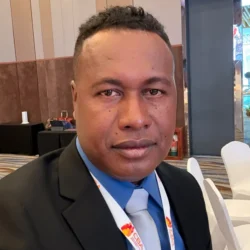
Wilfred Luiramo
Founder of Haleta Seaweed Farmers in Solomon Islands
“El Niño is already here,” said Wilfred Luiramo, founder of Haleta Seaweed Farmers in Solomon Islands.
El Niño is now firmly established across the tropical Pacific and expected to strengthen through the end of the year. For Wilfred and for Katarina Senabu, a tilapia farmer in Fiji, this means preparing for prolonged drought and shifting rainfall and weather patterns. These shifts come on top of other climate-related shocks already affecting their farms.
In April, Tropical Cyclone Maila destroyed every seaweed farm in Wilfred’s community. More recently, the low-tide period has extended well beyond its usual window.
The normal low tide period is around June, but this year, we still experience low tide in June, July, and August. For seaweed, any prolonged exposure to sunlight really affects their growth.
Wilfred Luiramo, founder of Haleta Seaweed Farmers in Solomon Islands
In Fiji, Katarina has observed similar disruptions in their tilapia ponds.
Our pond has been drying when it’s very hot season. The water is getting lower. But when heavy rain follows, the opposite problem occurs: We are flooded. Some of our tilapia are dying out just because of the heat.
Katarina Mbalesuwa, a tilapia farmer in Fiji
For farmers whose livelihoods depend on stable water conditions, El Niño is a direct threat to food production and income.
Both farmers are responding with community-led adaptation measures. In Solomon Islands, Wilfred said farmers have organized and reserved water supplies.
“Should there be some seriousness in the El Niño, especially dry weather, or no rain for a longer period of time, we already have something reserved, especially water tanks,” he said.
Because island communities rely heavily on water tanks for drinking water, these reserves serve both households and farms.
Wilfred also said that seaweed farmers may need to diversify into short-term agriculture to make up for the shortall in income from seaweed.
“We have to encourage our seaweed farmers to start look to agriculture for short-term basic needs,” he said, mentioning crops such as cabbage, eggplant and tomatoes. “For those of us on the islands, we don’t have much options, but we are resilient.”
Katarina is pursuing a similar strategy in Fiji: “I’m encouraging my few fellow farmers to stand by and to be ready.”
Their preparations include boreholes to access groundwater during periods of climate-related water shortages.
Farmers near creeks are also filling standby ponds so that water can be transferred to production ponds during droughts. In addition, they are integrating vegetable farming and recycling water from their tilapia systems.
Solidarity remains a central strength. Wilfred noted that seaweed farming has continued in his community for around 40 years, even without consistent commercial or government support.
Collective action, he explained, has allowed farmers to raise issues with stakeholders and sustain the industry.
“When we wanted to achieve something, or we wanted to respond to these challenges, we come together, sing one song, and then we act on it,” he said.
Both farmers emphasized that adaptation cannot be left to communities alone. Katarina called for a stronger partnership with government.
We really need to work together with the government.
Katarina Mbalesuwa, a tilapia farmer in Fiji
She explained that many rural farmers are left behind and their voices are not heard so their knowledge about the local ecosystems is not factored into policy decisions.
“In order for their voice to be heard, we need to be strong, work together with our field officer or government officer at our ministry,” she added.
Wilfred called for policy reform. He said that existing gaps between government and communities delay responses to farmers’ needs. A comprehensive policy, he said, should combine local knowledge, seaweed farming expertise, and scientific research.
But governments are not the only ones with a responsibility; researchers need to step up, too.
Katarina asked researchers to communicate clearly and to recognize the value of traditional knowledge.
“They also need to learn from us,” she said.
Our traditional knowledge of fishing is just as valuable and has more wisdom than science. They also need to be more humble and not to think that we know nothing.
Katarina Mbalesuwa, a tilapia farmer in Fiji
She stressed the importance of returning research findings to communities.
“When they interview us for things, they need to come back to us and tell us what’s the result of the work, so we know what their findings are,” she said.
Wilfred similarly urged researchers to spend more time in communities.
“Work with the community, spend more time engaging the community to understand the real challenges we experience,” he said.
He cautioned against relying solely on focal points that may collect data on an ad hoc basis.
“If we can understand the problem, we will know how to fix the problem,” he added. “If we don’t understand it, then our reports and data will not reflect what we wanted to fix.”
As El Niño conditions intensify, the experiences of Katarina and Wilfred underscore a broader point: Effective climate adaptation requires listening to those who know the ecosystems best.
Farmers are already preparing, innovating and organizing. But locally led adaptation does not mean adaptation should be locally borne. Governments and researchers must now match their commitment with meaningful engagement, supportive policy and respectful partnership.
Media coverage / SEI's Rajesh Daniel and Melissa Gonzalez spotlight how aquaculture farmers are grappling with El Niño and climate change.
This podcast episode was supported by the Innovating for Equity (I4E) Initiative that aims to promote inclusive and resilient aquacultural nature-based climate solutions (NbCS) in the Asia-Pacific region.
Project / The I4E project aims to promote inclusive and resilient nature-based aquaculture solutions in the Asia-Pacific region.
SEI podcast / Trust-based philanthropy in climate adaptation is not just about changing funding mechanisms, but about fundamentally reimagining power relationships.
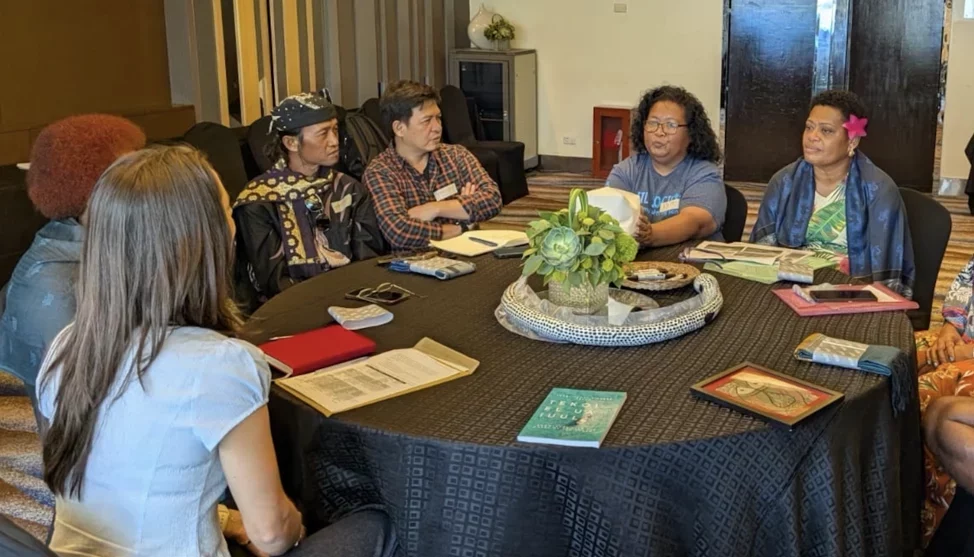
Perspective / Indigenous and local aquaculture producers reflected on the future of aquaculture nature-based solutions (NbS) at CBA20.
Perspective / This piece looks at the gap between policy labels and lived reality when livelihood practices are branded as nature-based solutions.