As over half the population depends on groundwater during the dry season, experts and stakeholders at a national dialogue pushed for urgent regulatory action and policy to manage over-extraction, climate stress and fragmented data, which could pose serious challenges to the country’s water security in the future.
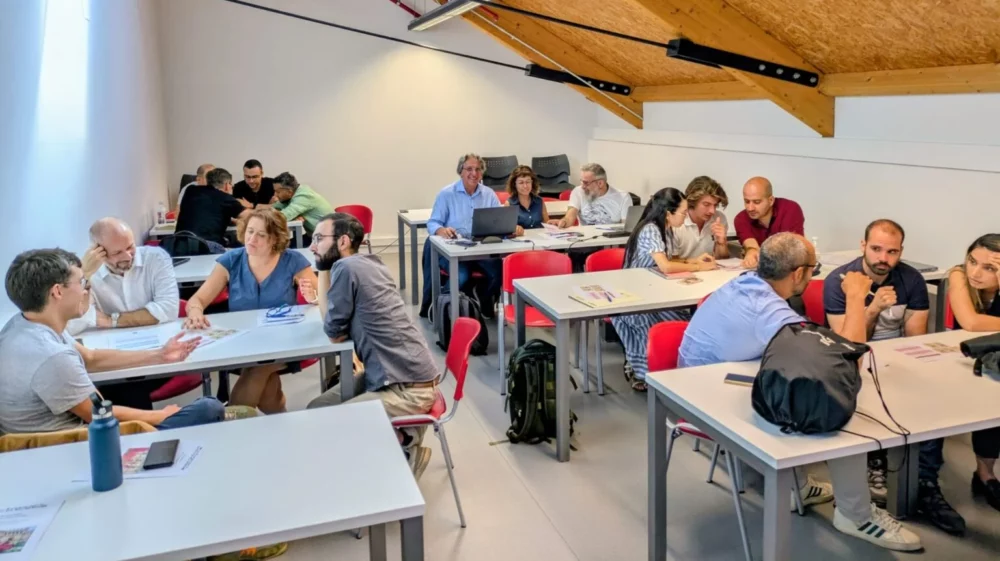
Policy Dialogue on Groundwater Governance for Climate Resilience in Siem Reap, Cambodia on 11 June 2025. Photo: SEI Asia.
Cambodia is heavily dependent on its groundwater resources, which serve as a vital source for rural and urban water supply, irrigation and industrial use, with over 50 percent used for drinking in the dry season. Excessive extraction of groundwater with a lack of strong regulatory frameworks pose serious challenges to the country’s future water security.
A national dialogue took place in Siem Reap on June 11, 2025, co-organized by Department of Water Supply and Sanitation (DWSS) under Ministry of Water Resources and Meteorology (MOWRAM), Stockholm Environment Institute (SEI) and Asian Institute of Technology (AIT). The platform brought together government officials, researchers, civil society representatives and development partners to discuss solutions and promote sustainable groundwater management.
Dr. Chayanis Krittasudthacheewa, SUMERNET & MTT Programme Director and Deputy Director of SEI Asia, highlighted the urgency of developing a national groundwater management framework to guide Cambodia through the increasing challenges of climate change and limited water resources due to excessive extraction.
Groundwater governance in Cambodia remains challenged, fragmented and with limited regulatory framework and institutional capacities. Recognising this gap, the MoRAM has taken very important steps in initiating the development of a national groundwater management framework for the first time in the country.
Dr. Chayanis Krittasudthacheewa, SUMERNET & MTT Programme Director and Deputy Director of SEI Asia
So far, three rounds of consultations have been held to gather input for the framework, which is still in draft form. Dr. Chayanis stressed that the initiative aims to strengthen the science-policy interface, encourage inclusive governance, and enhance resilience through regional cooperation and policy-relevant research.
Feature / Key messages from the second Joint Steering Committee (JSC) meeting on water-related collaboration between ONWR and SEI Asia on 20 August 2026
Feature / The European Union recently recognized TRANSCEND, an interactive water planning approach supported by SEI.
Project / Horizon Europe project advancing innovative, participatory approaches to water management and climate adaptation under deep uncertainty.