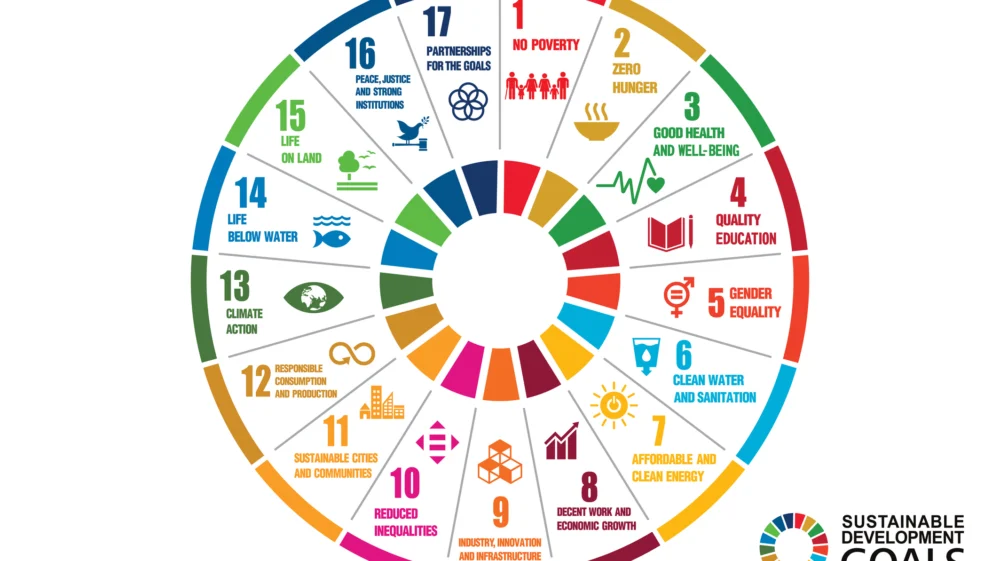
In Nature Communications, an international group of over 50 scientists presents three key focus areas at the science-policy interface to help implement the agreement made by world leaders at the Summit of the Future, held in New York in September. The agreement calls for bold, ambitious, accelerated, just and transformative actions to achieve the Sustainable Development Goals.
The article is based on a workshop held at the Rudolf Agricola School for Sustainable Development, University of Groningen, in the Netherlands, with participants from various countries representing researchers and policymakers.
“Due to silo approaches, the integrated and indivisible principles of the SDGs are facing implementation challenges,” argues Dr. Prajal Pradhan, assistant professor at the University of Groningen and the lead author of this study. He continues, “Now, SDG implementation strategies must be changed. To break the silo approaches, we offer three foci at the science-policy interface to support implement the integrated and indivisible nature of SDGs .”
Nina Weitz, Team Leader for Global Goals and Systems at SEI and Senior Research Fellow, Henrik Carlsen, SEI Senior Research Fellow and Therese Bennich, SEI Research Fellow, co-authored the article and contributed at the international workshop.
The advancements made for understanding interactions among society, economy, and environment is an important outcome of the SDGs. As we approach the post-2030 agenda, leaders must leverage this knowledge and prioritize scientific evidence to make sure effective, integrated solutions can follow.
Nina Weitz
One of the key challenges highlighted in the article is addressing trade-offs, such as balancing economic growth with environmental sustainability. The experts provide policymakers with guidelines for navigating these trade-offs, helping them create sustainable and equitable strategies. The article also stresses the need for collaboration and inclusivity. Successful implementation of the SDGs requires input from diverse stakeholders, including scientists, policymakers, and local communities. The experts call for more inclusive decision-making processes incorporating these perspectives to create better, more sustainable outcomes.
While the 2030 deadline for the SDGs is fast approaching, the experts also offer a long-term vision, providing policymakers with insights that go beyond 2030. By planning for the challenges and opportunities that will arise after 2030, policymakers can ensure that sustainable development efforts continue in the decades to come. As a contribution to implementing agreements at the Summit of the Future, the three foci equip policymakers with new insights to accelerate SDG progress. By embracing these foci, governments worldwide can ensure a safer, more sustainable, and equitable future. The experts call for urgent, systemic action as the window to meet the 2030 goals narrows.
Our three foci offer policymakers means to implement the integrated and indivisible nature of the SDGs. By understanding the complex interactions between different SDGs, we can develop coherent strategies that balance economic, social, and environmental goals. This approach allows us to leverage synergies while addressing trade-offs, ensuring accelerated SDG progress by 2030 and beyond.
Dr. Prajal Pradhan
Sustainable development requires a deep understanding of the interconnectedness between human activities and environmental systems. By incorporating systems thinking and evidence-based solutions, we can design policies that not only address immediate challenges but also create long-lasting benefits for both people and the planet.
Prof. Klaus Hubacek, co-author and Professor at the University of Groningen
Nina Weitz, Team Leader for the Global Goals and Systems team at SEI and Senior Research Fellow ([email protected])
Dr. Prajal Pradhan, Assistant Professor at the University of Groningen and Lead Author ([email protected])
Journal article / Guidance for policymakers in balancing economic growth with environmental sustainability through a systemic approach, collaboration and inclusivity.
Journal article / Researchers develop a method to indicate where countries are headed for SDG progress if historical patterns of interaction between the goals continue.
Collection / Discover how SEI is transforming global sustainability and operationalizing the SDGs through innovative methods and tools.