How can the world accelerate action to halt and reverse biodiversity loss despite growing geopolitical instability, economic uncertainty and rising pressure on ecosystems? SEI research shows that addressing biodiversity can offer critical solutions to many pressing challenges – here are five potential gamechangers for the Biodiversity Conference COP17.
The 17th meeting of the Conference of Parties (COP17) to the Convention on Biological Diversity will be held in Yerevan, Armenia, 19–30 October 2026. For the first time, the Biodiversity Conference will assess global progress towards the 23 targets of the landmark Kunming–Montreal Global Biodiversity Framework (KMGBF), adopted four years ago.
The conference will also continue dialogues on mobilizing finance, strengthening links between biodiversity and climate, advancing the rights of Indigenous Peoples, local communities and women, and emerging biodiversity credit markets. With negotiations taking place against the backdrop of one of the most turbulent geopolitical periods since the Cold War, COP17 raises difficult questions about how countries can sustain long-term environmental cooperation during an era of fragmentation, insecurity and competing political priorities.
“We need to update our understanding of biodiversity. It is not a niche environmental issue – it is foundational to food security, water security, climate resilience and long-term prosperity,” says SEI’s Engagement Director Annika Markovic. “More people are beginning to understand these links. The next step is turning that understanding into action, policies and investments that can deliver change at scale.”
SEI supports this process through research on the role of biodiversity from multiple perspectives, helping countries, communities and businesses make science-based decisions. An important takeaway is that biodiversity action can help societies address many of today’s most pressing challenges. Ahead of the Biodiversity COP, SEI experts highlight five reasons to elevate biodiversity on the global agenda.
As climate shocks and supply chain disruptions become more frequent, biodiversity is also gaining attention as part of broader resilience and preparedness discussions. “Protecting ecosystems is not only about conserving species; it is also about reducing systemic vulnerabilities and strengthening the capacity of societies to cope with uncertainty and change,” explains Karina Barquet, who leads the Water, Coasts and Ocean team and SEI’s global policy engagement for Ocean and Biodiversity.
Climate change, environmental degradation and geopolitical instability are increasingly exposing the fragility of the systems societies depend on for food, water, energy and livelihoods. Biodiversity plays a critical role in maintaining the functioning and adaptability of these systems. Diverse ecosystems help regulate water flows, maintain soil fertility, support pollination, reduce erosion and buffer societies against floods, droughts and coastal impacts.
“Transforming supply chains is no longer only about sustainability commitments; it is becoming central to how countries and companies manage environmental risk, trade relations and long-term resilience,” explains Jonathan Green, Deputy Director of SEI York.
Global production and trade are deeply intertwined with biodiversity loss. Agriculture, mining, forestry and fisheries continue to drive ecosystem degradation across many regions of the world, often through supply chains that disconnect production from consumption. At the same time, governments, investors and companies are facing growing pressure to understand how ecosystem risks threaten long-term economic stability, food security and access to resources.
As discussions on biodiversity finance and biodiversity credits gain momentum ahead of COP17, attention is increasingly shifting towards transparency, accountability and corporate responsibility across global markets.
As water stress intensifies across many regions, freshwater biodiversity is becoming increasingly important for climate adaptation, water security and societal resilience. “Freshwater ecosystems are fundamental to both biodiversity and human wellbeing, but they remain severely under-prioritized in global policy and investment agendas,” explains Laura Forni, SEI’s Water Program director.
Rivers, lakes and wetlands are among the most threatened ecosystems in the world, yet freshwater biodiversity often receives far less political and financial attention than forests or oceans. Pollution, over-extraction, infrastructure development and climate change are accelerating the degradation of freshwater systems that societies rely on for drinking water, agriculture, energy production and disaster protection.
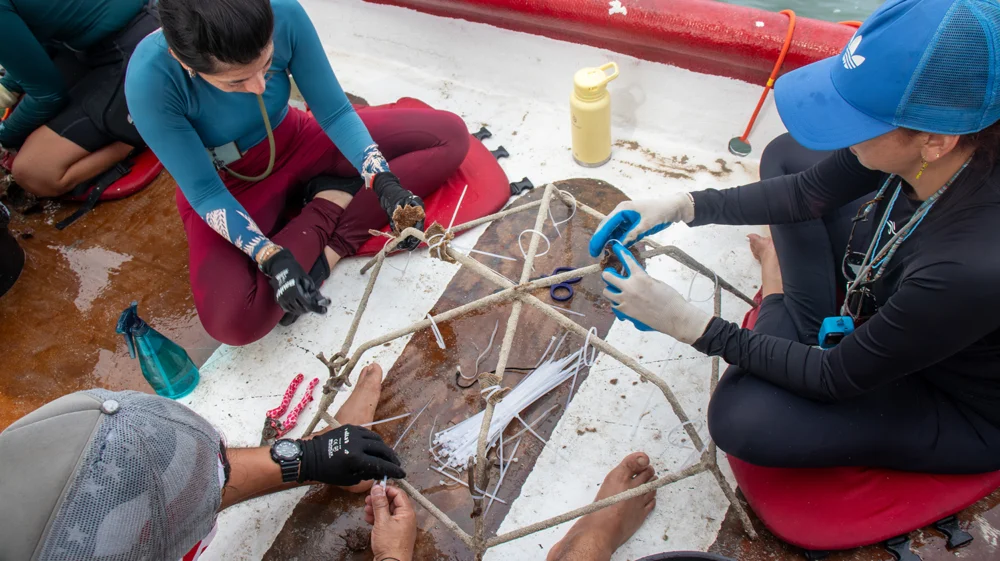
“Marine and coastal ecosystems provide some of the clearest examples of how biodiversity protection, climate adaptation and local livelihoods can reinforce one another when governance systems are aligned,” explains Lucia Licero, Research Associate at SEI Latin America. Protecting and restoring ecosystems such as mangroves, wetlands, corals and seagrasses can simultaneously support biodiversity, strengthen coastal protection and improve the resilience of coastal communities.
Marine and coastal ecosystems are under growing pressure from climate change, pollution, habitat destruction and overfishing. Yet many biodiversity strategies and action plans still focus primarily on terrestrial ecosystems, despite the critical role marine and coastal systems play for climate regulation, food systems, livelihoods and disaster risk reduction.
Global biodiversity targets will ultimately depend on what happens at the local level, which is also the theme of the International Day for Biological Diversity 2026, on 22 May. While international agreements set direction and ambition, implementation depends on whether municipalities, local communities, businesses and regional authorities have the capacity, resources and governance structures needed to act. Questions around equity, participation and access to finance are therefore becoming increasingly central in biodiversity negotiations.
In the lead-up to COP17, there is growing recognition that implementation gaps – rather than lack of global ambition – may be the greatest obstacle to achieving the Global Biodiversity Framework. As host of COP17, Armenia has signalled that implementation will be at the centre of the conference, with “Taking Action for Nature” as the official motto. At the same time, it remains a challenge to determine what the actual outcomes are since monitoring is often difficult, and it may take years before the impact is measurable. Many aspects of the status of ecosystems are too complex for straightforward answers.
“The real significance of COP17 will be measured not only in negotiating rooms, but in how global biodiversity commitments will shape everyday decisions on forests, water, urban green spaces, traditional knowledge and rural livelihoods,” says Sasa Solujić, Head of the Environmental Policy and Strategy Team at SEI Headquarters, which is implementing the Green Agenda for Armenia, Moldova and Ukraine project.
The host country Armenia is a rich and unique biodiversity hotspot. Its recent ratification of the Nagoya Protocol signals a link between biodiversity, fairness, governance of genetic resources and respect for traditional knowledge, notes Solujić. “But the real test is whether biodiversity becomes part of local decision-making in ways that people can see and benefit from,” she says. “The challenge is no longer only defining global biodiversity goals, but building the institutions, finance, evidence and local ownership needed to translate them into politically feasible, socially equitable action – long after the COP spotlight has moved on.”
Tool / Trase enables governments, companies and others to address the environmental impacts of supply chains.
Project / The Resilient Coasts Caribbean Sea project operates "living labs" for coastal ecosystem management using nature-based solutions.
Project / Green Agenda supports Armenia, Moldova and Ukraine in their efforts to achieve climate neutrality through green transition.
Perspective / Conservationist policies could be more effective if they respected the spiritual beliefs that already guide forest use, preserve biodiversity and livelihoods.
Press release / Berget AI releases an open-source method for calculating carbon emissions of every individual AI request, developed with SEI, WattTime and Klimatkollen.
Feature / Three SEI living labs in Colombia, Cuba and the Dominican Republic show how community-led restoration can revive the Caribbean’s coastal ecosystems.