This year, SEI researchers have been providing training on WEAP and SWAT tools to engineers and hydrologists from Iraq’s ministry of water resources. Participants recently shared their feedback with the WICER project team.
As part of the broader Water Innovation for Circularity and Enhanced Resilience (WICER) project, the training was delivered by researchers at SEI’s centres in Sweden, the US and Thailand. The WICER project aims to contribute towards enhanced water security, by way of improved water management and resources circularity.
“We are the first people in the Ministry to be trained on this software,” said one participant, reflecting on the importance of this milestone for the institution. As the first generation of ministry staff trained in SWAT and WEAP under this partnership, these engineers’ experience represents a significant step forward in building institutional capacity for data-driven and climate-resilient water planning in Iraq.
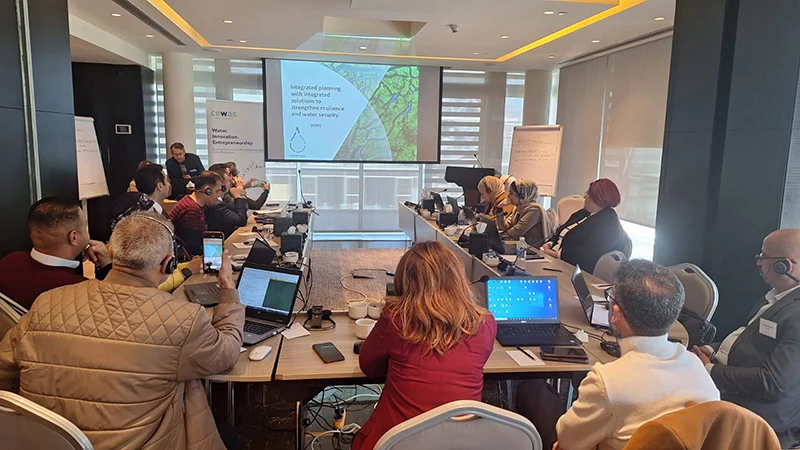
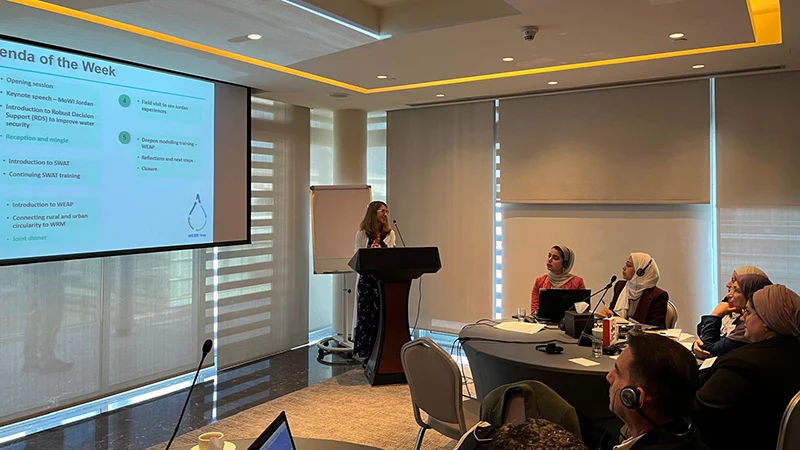
SEI’s Kim Andersson presents on integrated water planning during the regional WICER training.
Photo: SEI.
Iraq faces mounting water stress driven by climate change, upstream water use, and outdated infrastructure. Strengthening in-house modelling capacity is a critical step toward improving integrated water resource planning in the country.
SWAT and WEAP provide complementary capabilities: SWAT provides models of catchment-scale hydrology and land-water interactions, while WEAP allows for scenario planning and water allocation strategies. Their combined use supports a system-level understanding of trade-offs and long-term planning decisions.
The training brought together a group of engineers from Iraq’s Ministry of Water Resources, primarily from the Strategic Studies Department, as well as units involved in hydrological data, modelling, and planning. These professionals play a vital role in shaping Iraq’s long-term water management strategies.
The training offered hands-on sessions with applied exercises, case-based discussions, and real-time guidance from instructors on how to use SWAT and WEAP. Participants also gained exposure to international experiences through a visit to Jordan to explore the application of such tools in contexts of water scarcity.
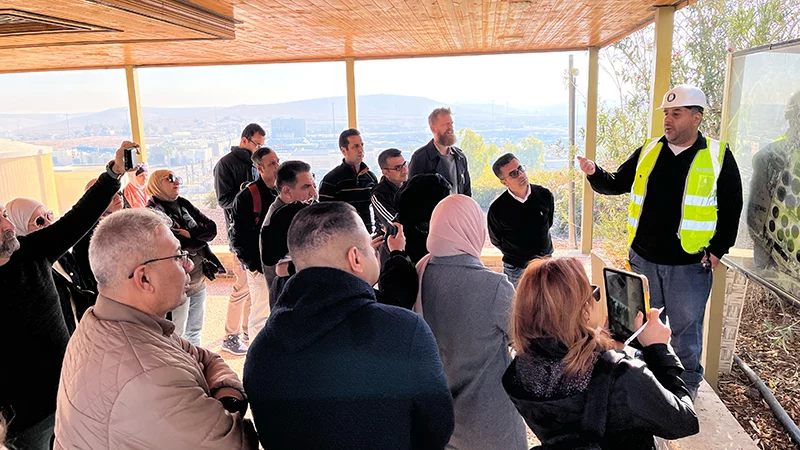
Participants learn about water reuse infrastructure during a guided site visit in Jordan.
Photo: SEI.
Oversight and strategic direction were provided by Hatem Hameed, Director General of the Department of Planning and Follow-up at the Ministry. The training was made possible through the support of Dr. Nahla Abd Abaas, and through the coordination efforts of Tuqa Hakeem, who helped facilitate communication and logistics between SEI and the Ministry.
Participants emphasized both the opportunity and the responsibility that came with this being their first formal introduction to such modelling systems. “The initiative itself was excellent,” said Raghad Sami, based in the Minister’s Office, who holds a master’s degree in hydrology and water management from Newcastle University (UK). “Training engineers on these programs is a major benefit.”
The course “helped bridge the gap between theory and practice in water resource management”, said Maryam Odaa, a engineer at the Strategic Studies Department in the water ministry who holds master’s degree in water resources management and a PhD candidate at Universiti Sains Malaysia. “Once we learned to use SWAT and WEAP, we became able to apply them across any basin in the Tigris and Euphrates”, said Odaa.
The Ministry uses a variety of models, including Powersim and several models developed by the US Corps of Engineers, such as HEC-HMS and ResSim. While these models are similar, the ministry engineers found WEAP and SWAT to be relevant. “If we apply these models to other basins, it will make many things easier in the future,” added Odaa.
“It opens the door to regional cooperation in water management,” said Zainab, an engineer from the water ministry’s Strategic Studies Department. “These models will help us design better projects and inform decision-makers with real data. This was a very valuable opportunity for us to access this kind of software, train ourselves, and continue to grow.”
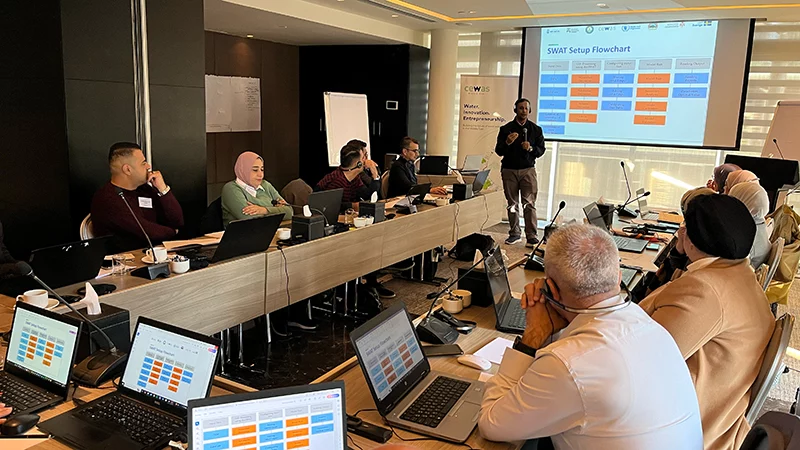
SEI’s Uttam Ghimire leads a technical session on setting up the SWAT model during the WICER regional workshop.
Photo: SEI.
SEI’s Annette Huber-Lee opens the WICER regional training, outlining the week’s agenda and goals.
Photo: SEI.
For many participants, the international nature of the training was an added value. Working with SEI’s global team allowed Iraqi engineers to connect with experts and peers in Thailand, the US, and the broader Middle East.
The engineers gave feedback on how to improve the training and said they would welcome more. “We strongly support a second training round,” with deeper local case studies and expanded participant reach, said Sami, one of the participating engineers. “We now clearly know our strengths and weaknesses and what we need to build on.”
Sami and the other engineers also noted that they needed more time to engage with the models, which can manipulate a large amount of data and can take time to learn from a beginner level. “Our team is supposed to spend six to seven months working on developing the Al-Azim Basin study using SWAT and WEAP,” she said. “Once we finish SWAT, the output is supposed to go to the WEAP team to build scenarios. So I hope next time the training period is more complete.”
SEI researchers hope that this partnership marks a meaningful beginning, not just for the use of new tools, but for building a community of practice around water modelling in Iraq. “It’s not just about training people on software,” said Anette Huber-Lee, senior scientist at SEI’s US centre and course trainer. “it’s about creating long-term collaboration, where Iraqi engineers lead the way in adapting and applying these tools to their unique challenges.”
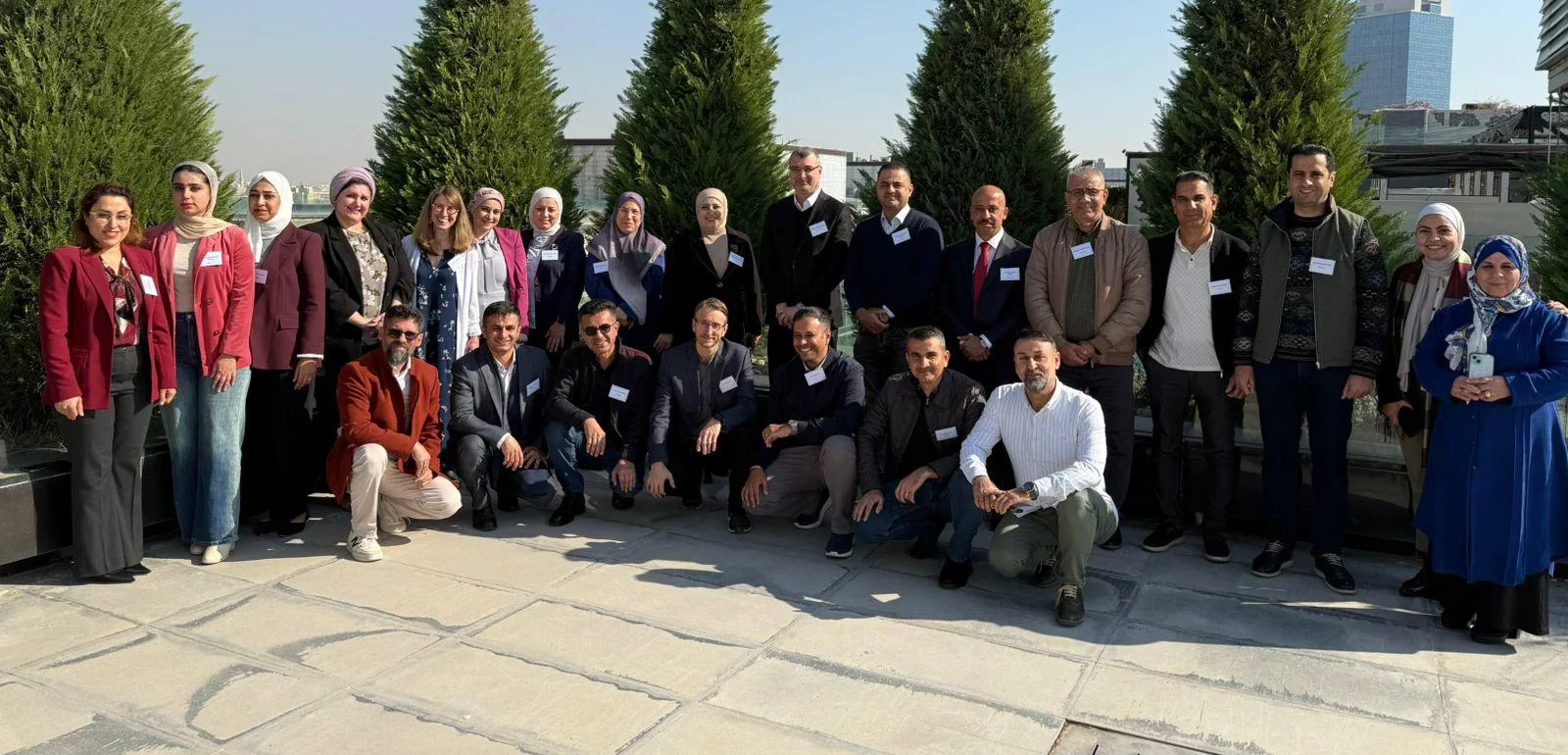
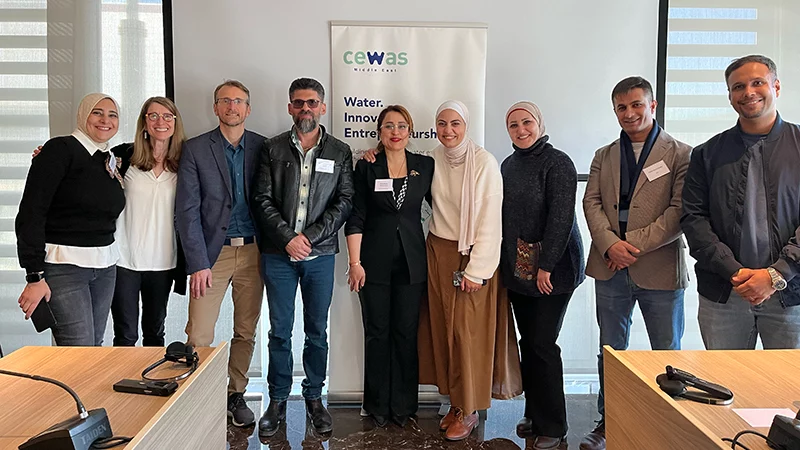
SEI team and participants from the regional WICER training gather for a group photo.
Photo: SEI.
Looking ahead, the momentum generated through this training lays the foundation for deeper technical exchange and peer learning within the Ministry and beyond. As Iraq continues to grapple with complex water challenges, building internal capacity to use integrated tools like WEAP and SWAT will be crucial for turning data into action. The engineers who participated in this training now carry forward not only new technical skills, but also a shared vision of evidence-based, collaborative water governance.
Tool / The Water Evaluation and Adaptation Planning tool (WEAP) provides a comprehensive and user-friendly framework for policy analysis in water resources planning.
Project / The WICER project in Iraq tackles water security challenges through innovative water management, circularity promotion, resource recovery and capacity building.
Feature / As the WICER project comes to a close this month, SEI sanitation and water resource experts answer a few questions.
Feature / SEI is working with Iraq's Ministry of Water Resources to tackle the country's water crisis through various capacity strengthening and research actions.
SEI report / This assessment of urban sanitation and waste management in Basrah City identifies service gaps, evaluates current practices, and explores opportunities.