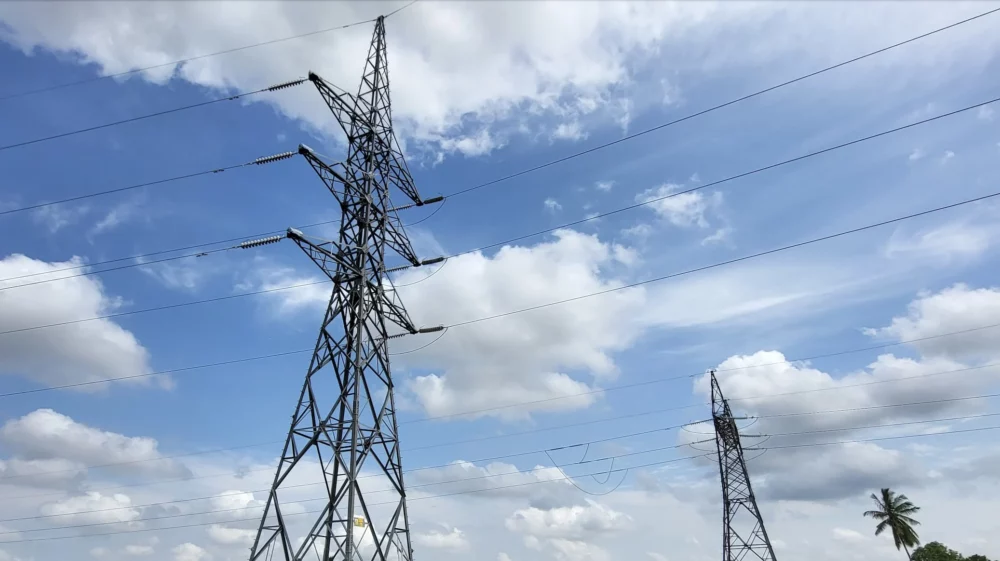
East African countries are seeking to build utility-scale renewable energy projects to expand access to electricity, support local economic growth and contribute to global climate goals. What measures can help overcome obstacles to securing the finance needed to expand their renewable energy supplies?
Renewable energy projects in East Africa face significant financial risks: volatile economic conditions, including currency fluctuations, inflation and high levels of sovereign debt. Yet, there are also recent examples of successes in building utility-scale, renewable energy projects in East Africa.
What can be done to accelerate the building and operation of more renewable energy projects? Can efforts to mitigate investors’ financial risk play a role in helping to move renewable energy projects forward?
As part of ongoing research to understand how to attract more finance for sustainable development to low- and lower-middle-income countries, SEI and partners organized a technical workshop in Nairobi that brought together financiers, regulators, private-sector developers, representatives of development banks, and others with hands-on experience of working with these issues East Africa. The aim was to tap their insights about prevailing barriers, and to share and spark ideas about financial tools and policy levers that can help overcome the obstacles faced in East Africa. The workshop was organized by the Electricity Sector Association of Kenya, the Swedish Embassy in Nairobi and SEI centres in Africa, Stockholm and the US.
“These events create a rare environment where professionals can openly share their experience in financing projects – the obstacles they faced, the solutions they found, and what can be learned from them going forward,” said SEI Research Fellow Daniel Duma, who leads SEI’s Finance for Sustainable Development Program.
The workshop included a field visit to Kipeto Wind Farm, where participants explored renewable energy projects firsthand. SEI Senior Scientist Miquel Muñoz Cabré underscored the added value of fieldwork: “When visiting projects, even with renewable energy professionals, everyone seems to learn something they did not know before.”
Risk-mitigation instruments provided by development finance institutions play an essential role in addressing investment obstacles in low- and lower-middle-income countries. Tools such as guarantees and insurance products help protect investors and can improve lending terms. Even though these instruments are rarely triggered, they provide crucial reassurance to investors, enabling projects to move forward.
However, participants in the workshop acknowledged that these tools alone cannot fully overcome larger economic challenges. The best risk mitigation continues to be good governance, transparency, sound planning, and competitive procurement. Macroeconomic instability, particularly in countries with high levels of sovereign debt and currency depreciation, remains a major obstacle. National utilities, whose payments are often linked to the US dollar or the euro, find it challenging to meet their obligations, further complicating financing for renewable energy projects.
As suggested by workshop participants, one approach that offers promise is devising risk-mitigation measures that are systemic rather than based on a given project. One example of such a risk-mitigation program is Uganda’s GET FiT, (Global Energy Transfer Feed-in Tariff program), jointly developed by the Government of Uganda, its Electricity Regulatory Agency, and the German development bank KfW. The program is designed to leverage private investment into renewable energy-generation projects in Uganda. Such programs create a stable investment environment by integrating financial, regulatory and technical support. However, building the institutional capacity and governance structures needed to support such solutions can take many years.


Kenya has demonstrated that it is possible to attract finance for renewable energy, as evidenced by the Lake Turkana and Kipeto wind projects and the Malindi and Eldosol solar plants. However, renewable energy development in East African region has experienced a stop-start pattern, with periods of intense activity often followed by slowdowns, driven both by insufficient planning and fluctuating investor confidence. The long lead times required for project development further exacerbate this, leaving countries vulnerable to periods of overcapacity or undersupply.
The workshop participants emphasized the importance of more stable and consistent, long-term planning and investment environments to reduce the gaps in energy capacity.
African power pools, which integrate electricity grids across neighbouring countries, may help, participants said. Significant developments in the region suggest that there is considerable potential to optimize energy distribution and address periods of excess supply and low demand. At the same time, however, measures must be undertaken to address the limits of transmission capacity and the large distances that must be covered.
Project finance depends on long-term cash flows from utilities. However, many utilities in the region are suffering financially, with many in worse situations today than five years ago. Some are embarking on corporate turnaround programs. For example, the Green and Resilient Expansion of Energy Program for Kenya (a joint project of Kenya Power and Lighting Company Limited and the World Bank) is intended to put the company on a path to financial sustainability. For some utilities, new models of renewable energy deployment including the leasing of pre-assembled modular re-deployable photovoltaic panels may be an option to help mitigate some risks.
The long and arduous process of developing one renewable energy project should make follow-up projects simpler by ensuring enough learning and creating more familiarity with the various instruments and approaches. Thus, the processes for new projects may become faster and more straightforward.
Most publicly backed lenders (development finance institutions and multilateral development banks) have a development mandate beyond their capital preservation and return objectives. This means that they are likely to tolerate higher levels of risk, especially in tested technologies and models.
Risk- mitigation products – such as those offered by the African Trade & Investment Development Insurance, the World Bank Group, African Development Bank, the German development bank KfW, and the Swedish International Development Cooperation Agency – can help provide comfort to investors who need to follow their prudential rules.
The workshop itself provided provided a platform for stakeholders to exchange ideas, explore innovative approaches and develop strategies that may be more effective in attracting financing for utility-scale renewable energy in East Africa. These on-the-ground perspectives from the region will be incorporated into ongoing SEI’s research and policy proposals.
One-SEI program / Our mission is to help accelerate the allocation of capital to sustainable economic activities.
Project / This research project explores the effectiveness of financial risk mitigation in attracting private investment in renewable energy in sub-Saharan Africa.
Media coverage / SEI experts illuminate the successes of renewable energy development in sub-Saharan Africa with a message: keep going.
Feature / The research highlights innovative financing models and policy frameworks needed to make green hydrogen-based ironmaking viable in lower-income countries.
Project / This project provided Norad with a synthesis of existing evidence on the effectiveness of development cooperation in the energy sector.