The third UN Ocean Conference, which concluded on 13 June, underscored the urgent need for innovative financing and capacity building to address ocean challenges. During the event, SEI launched a community of practice on coastal resilience, envisioned as a trusted and ongoing space for peer-learning and collective regional influence.
Global leaders welcomed the conference as proof that multilateralism remains effective. A joint political statement was adopted, and several initiatives were announced, including USD 25 million in new contributions to the Global Fund for Coral Reefs (GFCR). However, the conference did not produce the bold financial commitments many had hoped for – despite the significant investments needed to safeguard the ocean.
Delegates from low-income and low-lying countries, including island states, emphasized the direct link between marine conservation and climate resilience. This intersection is also central to SEI’s research: healthy marine and coastal ecosystems serve as the first line of defence against climate-related impacts such as storms, sea-level rise and saltwater intrusion.
Yet, many delegations expressed frustration. They lack access to essential adaptation funding, and support from wealthier countries often is mismatched with local needs.
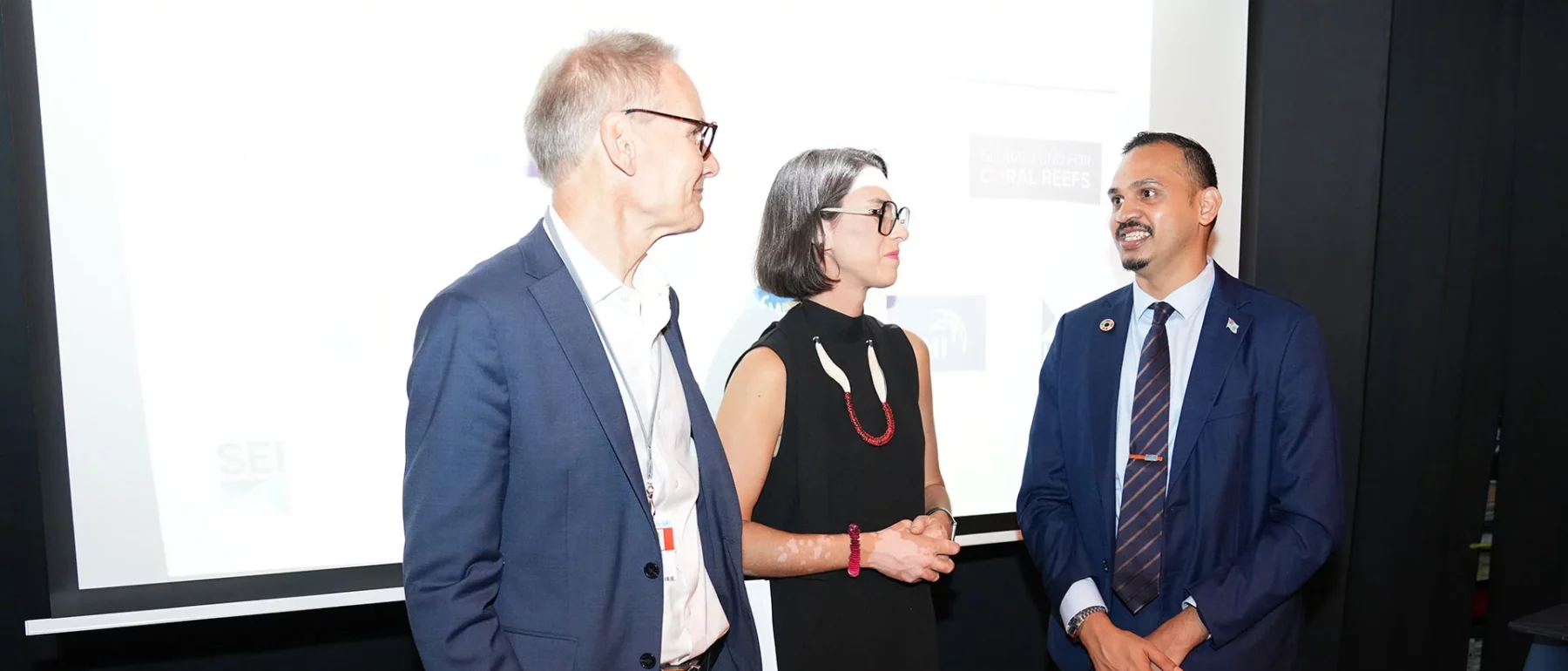
To explore alternatives, SEI organized the side event Enhancing coastal resilience for a thriving blue economy. One of the keynote speakers, Dr. Sivendra Michael, Permanent Secretary for Foreign Affairs of Fiji, shared his country’s firsthand experience. Fiji was the first country to relocate a community due to climate risk back in 2012, and is now in the process of evacuating its eighth. Still, rebuilding housing and critical infrastructure to be more robust is both time-consuming and costly – and vulnerable to being destroyed in a single storm.
The international community has pledged support to the most climate-vulnerable countries, but Dr. Michael described a “maze of financial pipelines” where it can take seven years to get a project approved. “A thriving blue economy does not happen by accident, but only through a shift in the financial system so that it becomes more predictable, fast and accessible,” Michael said.
He also pointed to inefficiencies in traditional capacity-building efforts, where international experts are brought in for costly trainings that often yield little lasting impact. A year later, trained staff may have moved on, and momentum is lost. He called for better collaboration approaches for technology transfer and institutional building that help with staff retention.
Echoing Dr. Michael’s concerns, Erik Korsgren, Head of the Climate and Environment Unit of the Swedish International Development Cooperation Agency (Sida), emphasized the value of long-term institutional partnerships built on trust and mutual respect. Sida, he noted, prefers this model over short-term training initiatives. Sweden and Fiji share a long tradition of collaboration, having co-hosted the first UN Ocean Conference in 2017.
Korsgren stressed that official development assistance alone cannot bridge the vast financing gap in marine protection and coastal resilience. More private and institutional investment is essential. Sida is working with credit guarantee programs to mobilize investment and address perceived risks.
Maria José Gonzalez, Executive Director of the Mesoamerican Reef Fund, shared compelling examples of private investment in reef protection through partnerships with institutions like the Global Fund for Coral Reefs. Coral reefs are the backbone of local economies and critical to shielding coastal communities from climate impacts. Gonzalez emphasized the need to link conservation with secure livelihoods, stating that communities must get the chance to develop and monitor the protection of their local areas.
“We need more investment in sustainable small-scale fisheries, local development plans and alternative livelihoods,” Gonzalez said. Together with the Global Fund for Coral Reefs, she is exploring a parametric insurance model that would compensate small-scale fisheries for income lost due to bad weather.
Tuukka Castrén, Acting Practice Manager for the Environment Global Unit of the World Bank, found this model promising. He stressed, however, that inclusive approaches are needed to ensure that marginalized groups are not left behind, even as private sector involvement grows. Looking to other sectors such as forestry, he encouraged expanding blue finance beyond carbon credits.
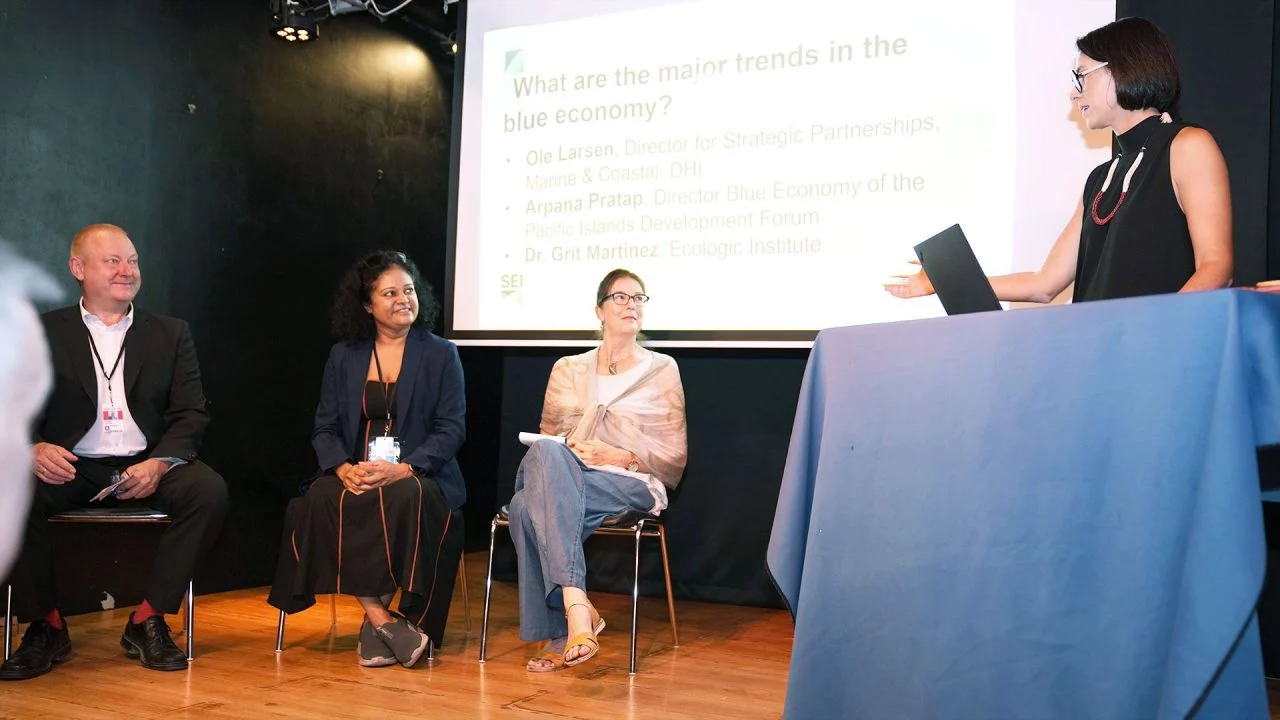
The private sector can also enhance ocean governance. Ole Larsen of consultancy DHI highlighted how private data can strengthen risk management and offer new models for insurance and financing – such as pension fund investments – as climate risks intensify.
Arpana Pratap, Director Blue Economy of the Pacific Islands Development Forum, called for improved data and knowledge sharing across regions. But, she cautioned, “it must be locally led and driven by local needs, a small country like Fiji cannot manage engagement with too many actors.”
During the event, Pratap introduced voluntary commitments for a proposed Pacific Countries Marine Spatial Planning and Sustainable Blue Economy Cooperation Center, inviting partners to engage. The Forum is also following the development of SEI’s new community of practice on coastal resilience – an idea first raised at last year’s SIDS4 conference, in discussions between SEI and its partners.
Coastal and island states in Latin America and the Caribbean face many of the same challenges… yet their efforts are often fragmented and isolated.
Karina Barquet, SEI
SEI is now launching the community of practice, initially focused on Latin America and the Caribbean. “Coastal and island states in Latin America and the Caribbean face many of the same challenges – rising sea levels, intensifying climate risks, degraded marine ecosystems and underfunded adaptation plans – yet their efforts are often fragmented and isolated,” said Karina Barquet, who heads SEI’s Water, Coasts and Ocean team. “A community of practice can create a trusted, ongoing space for shared learning, capacity exchange, and collective influence.”
The community of practice will maintain close contact with Pratap and other regional actors to enable cross-regional learning. “Anyone interested in shared learning, capacity exchange and collective influence related to coastal resilience, is welcome to join forces with us” said Barquet.
Marine pollution is another growing threat. In the SEI-led side event Turning the tide: governing marine pollution from source to sea, SEI’s Charlotte Wagner interviewed Bethanie Carney Almroth of the Scientists’ Coalition for an Effective Plastics Treaty and Jodie Roussell of Nestlé and The Business Coalition for a Global Plastics Treaty. They described the intense behind-the-scenes negotiations taking place during the conference to pave the way for a plastics treaty, with formal talks set to resume in August.
But plastics are just one part of the problem. The other speakers addressed often-overlooked pollution threats. Pär Larshans, Sustainability Director Ragn-Sells, drew attention to phosphorus runoff from agriculture. Tomas Brodin of the Swedish University of Agricultural Sciences described how the use and production of pharmaceuticals both contribute to pollution. Sonja Koeppel, Secretary of the Water Convention at UNECE, emphasized the need for stronger pollutant governance to address these issues and presented new guidelines on source-to-sea governance. In addition to highlighting these challenges, speakers also shared key technical, data-driven and governance solutions to support more effective action.
Janne van Eerten, Global Public Affairs Manager at The Ocean Cleanup, called for stronger policy measures to prevent pollutants from reaching waterways – but also emphasized the importance of removing existing pollution to give ecosystems a chance to recover.
Summarizing the conference, Karina Barquet noted that many themes were well-known from other international policy processes but that too little action is taken.
“The UN Ocean Conference was a powerful reminder that we already know many of the solutions – from community-led adaptation to innovative finance and governance models – we just need to scale them with urgency and equity, commented Karina Barquet.
Through its new community of practice and continued convening role, SEI aims to help coastal and island communities move from being recipients of support to co-creators of solutions – solutions that are not only viable but truly transformative.
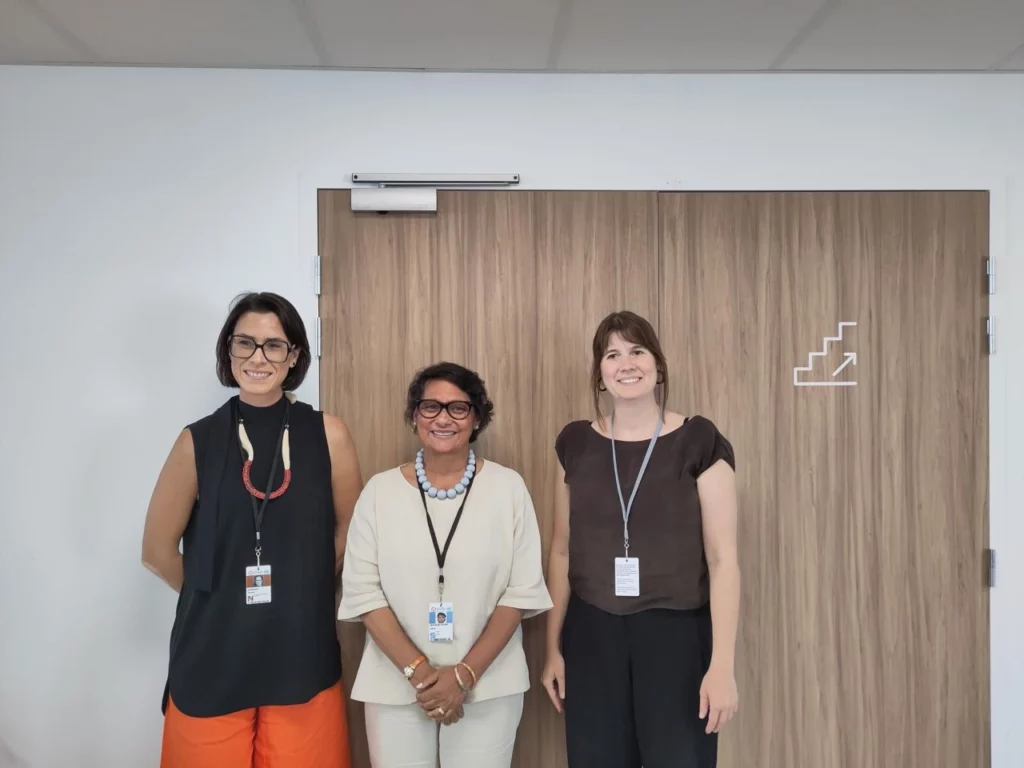

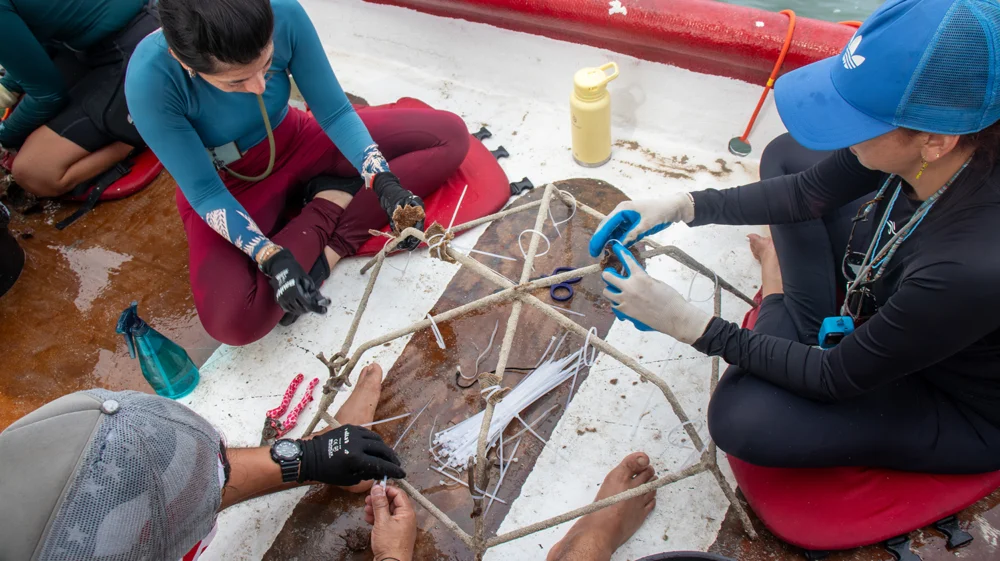
Feature / Three SEI living labs in Colombia, Cuba and the Dominican Republic show how community-led restoration can revive the Caribbean’s coastal ecosystems.
Journal article / Using a simulated Swedish food supply network, this research explores how agricultural losses caused by drought affect food distribution and consumer demand.
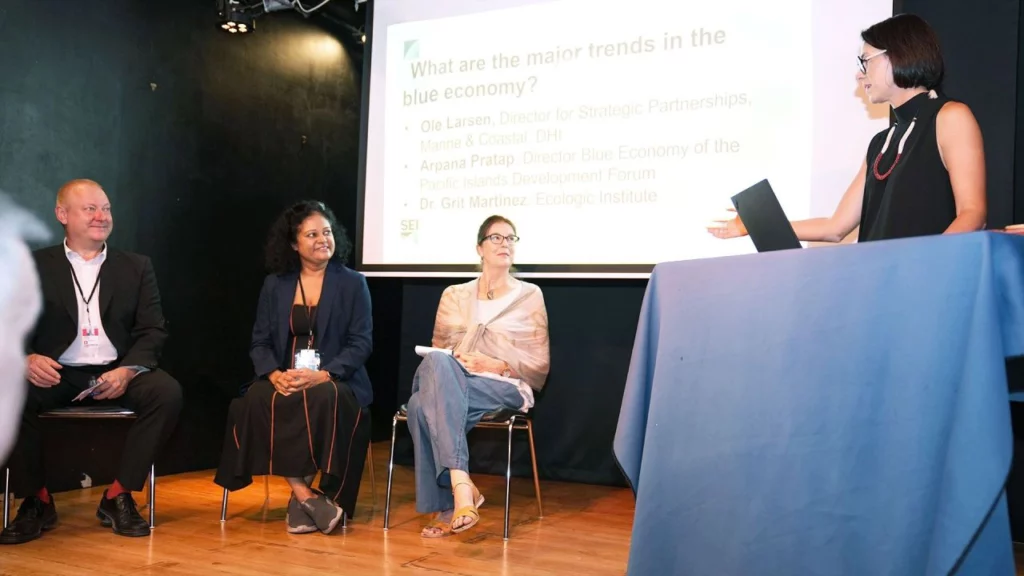
Feature / Mangroves are returning to Montecristi, where an SEI-led living lab is piloting a comprehensive restoration approach.