part of Renewable energy
Start readingSEI researchers have spent years studying how the Indigenous communities of La Guajira, Colombia perceive the wind energy projects proliferating across their peninsula.
To ensure local residents’ views are included the decision-making process, SEI worked with the Wayuu Indigenous people to develop Anajia Guajira, a mobile app that empowers users with information about burgeoning projects in their area and means of providing feedback.
Renewable energy initiatives should involve the local communities they impact. That’s why, this year, SEI co-created the Anajia Guajira mobile application with the Wayuu Indigenous people of Colombia’s La Guajira Peninsula: to empower local communities facing wind power development in their region.
As pressure mounts across the globe to overcome barriers to renewable energy deployment, energy transitions cannot succeed without support and significant participation from local communities. Even when technological, financial, and regulatory barriers to renewable energy deployment are surpassed, a smart solution is quickly rendered ineffectual without participation from local communities in decision-making.
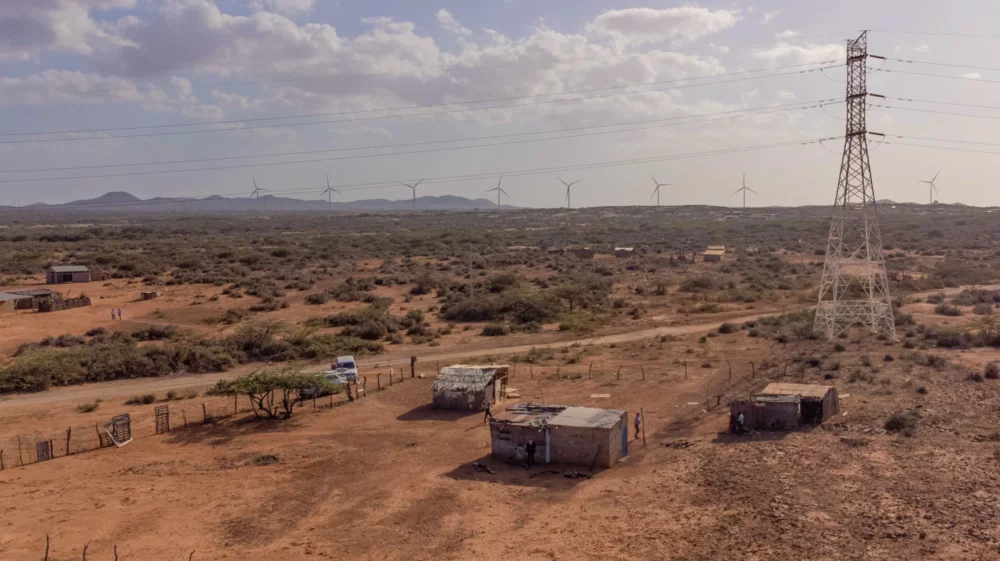
La Guajira is home to one of the world’s greatest sources of untapped onshore wind potential. Accordingly, the national government has set La Guajira at the center of its clean energy goals. However, since most of these projects are located in the collective lands of the Wayuu Indigenous people, project developers must reach agreements with communities within the legal framework of the Prior, Free and Informed Consent (FPIC), which is integrated in Colombian legislation. Given the history of neglect and exploitation from the fossil fuel industry, local community members lack trust with national government actors and the private sector.
Anajia Guajira is a key component of SEI’s multipronged approach to empowering local communities in La Guajira with the information, skills and tools they need to shape key energy decisions in their region. Anajia Guajira, co-created with the Wayuu Indigenous people, is an interactive mapping tool bridging communication and information gaps between Indigenous communities, government officials and wind developers.
The tool visualizes geospatial data crucial for social acceptance of onshore wind energy development on Indigenous lands. It includes communication, decentralized data validation, and citizen science components to enhance inclusive and transparent renewable energy deployment. The tool is designed for local communities and optimized for mobile users with low connectivity. By displaying where new wind energy development projects are located and their proximities to critical infrastructure and areas of cultural significance, the application empowers community members with the necessary information to advocate for their interests during engagements and interactions with companies and governments.
Image: Anajia Guajira / SEI
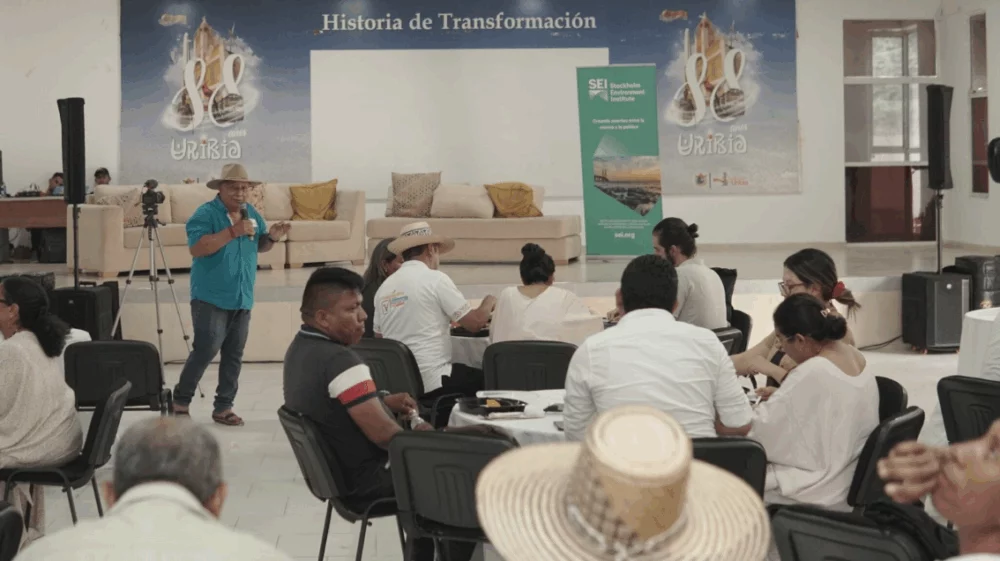
To build an effective tool, we centered community participation from the application’s inception. Early stakeholder consultation began in June 2024, with a workshop with Wayuu community members to determine priority content to include in the tool, as well as sensitive content to exclude from the application. To identify persistent data gaps and customize the tool to user needs, the team engaged in ongoing consultations with both a local network of Indigenous leaders and the Mining-Energy Planning Unit of Colombia (UPME). Strong relationships within local communities also allowed our team to act as a trusted contributor to UPME’s Geovisor mapping platform, a trusted public data resource for energy development in the region. Furthermore, collaborators at Tufts University generated a novel dataset of geolocated water resources in the region that was validated by local contributors in La Guajira.
Ongoing touch points with community members were critical during the development process. Inputs collected from Wayuu community members informed initial application design to ensure the product was tailored to community needs. After completing an initial prototype of the application, about 20 local leaders beta-tested the tool, providing feedback on how to fine-tune the content and improve user experience. In response, our team built out several requested features and modified various components of the app. Finally, after an extended period of ideation and consultation with native speakers of the local Indigenous language, Wayuunaiki, the initial group of users voted on the tool’s name Anajia Guajira, meaning “Observatory Guajira”. Involving the community in the naming process fostered a stronger sense of ownership and ensured that the name would be meaningful and culturally relevant to its intended users.
To support continued community participation with the Anajia Guajira app, we implemented several user-centered features tailored to local needs and constraints. Recognizing limited internet connectivity and laptop access in the region, the platform was designed for mobile users and optimized for low-bandwidth use, offering offline capabilities to ensure accessibility in areas with poor or intermittent internet access.
The app also includes several interactive and citizen science features to invite user input, including data validation, geolocated photos (of wind turbine construction status, for example), testimonials, and feedback on how to improve the app’s functionality. Additionally, a WhatsApp group was created to serve as a complementary communication channel, allowing users to stay connected, share insights and receive updates in a familiar and widely used format.
Building upon existing relationships and community connections can help establish mutual understanding and foster long-term trust between communities and organizations like SEI, and finding allies in respected community leaders can help build support among the broader community.
The Anajia Guajira application development process provides insights that can be applied to renewable energy deployment more broadly. Primarily, it underscores how truly inclusive energy development requires a proactive and community-centered approach that includes multiple and ongoing points of contact with local communities.
Engaging local stakeholders early and consistently is essential to ensure that their needs are understood and their concerns effectively addressed, which is integral for a truly just transition where renewable energy systems are deployed in a manner that is fair, inclusive, and equitable for impacted communities. Building upon existing relationships and community connections can help establish mutual understanding and foster long-term trust between communities and organizations like SEI, and finding allies in respected community leaders can help build support among the broader community.
It’s also critical to consider context-specific user needs, such as limited internet access in regions like La Guajira or privacy and safety concerns, to ensure that tools and platforms are genuinely accessible and effective once they leave the figurative lab and are launched into the community. Iterative testing with target users, followed by adjustments based on their feedback, can strengthen the relevance and usability of an energy solution. Finally, forming partnerships with local governments, universities, and community organizations enhances both outreach and insights, making inclusive energy efforts more effective and sustainable by bringing a wide array of knowledge and expertise to the table.
Participatory approaches lay the foundation for mutual benefits between communities and the energy projects they host, fostering positive outcomes across environmental, social, and renewable energy systems. Inclusive development of renewable energy projects encourages more equitable and socially beneficial outcomes by ensuring impacted communities are represented in the very decisions that affect their daily lives. Furthermore, participatory approaches help build social acceptance and trust which, by reducing resistance and assuaging fears, is critical to ensuring smooth and effective project implementation and operation.
In La Guajira and beyond, inclusion is a necessary step to ensure the success and longevity of individual renewable energy projects and the industry at large. A thriving renewable energy sector not only reduces greenhouse gas emissions but can also support sustainable livelihoods, improve public health, and strengthen resilience to climate change. In this sense, ensuring the success of inclusive renewable energy projects ultimately contributes to a more equitable, prosperous, and sustainable future for people and the planet.
Tool / Anajia Guajira is a mapping and communication platform to foster a just transition to renewable energy in La Guajira, Colombia.
Program / This programme aims to build a collaborative platform to accelerate renewable energy deployment in La Guajira.
Project / This project aims to steer renewable energy development in La Guajira towards more equitable and socially beneficial paths.
Feature / This story conveys SEI's fieldwork in La Guajira exploring the social acceptance of wind energy among Indigenous Wayuu communities and key challenges.
Feature / An SEI program is strengthening Wayuu capacity to advocate for their interests in wind energy project development and related infrastructure.
Feature / Learn more about SEI's efforts and research regarding the social acceptance of wind energy projects in La Guajira, Colombia.