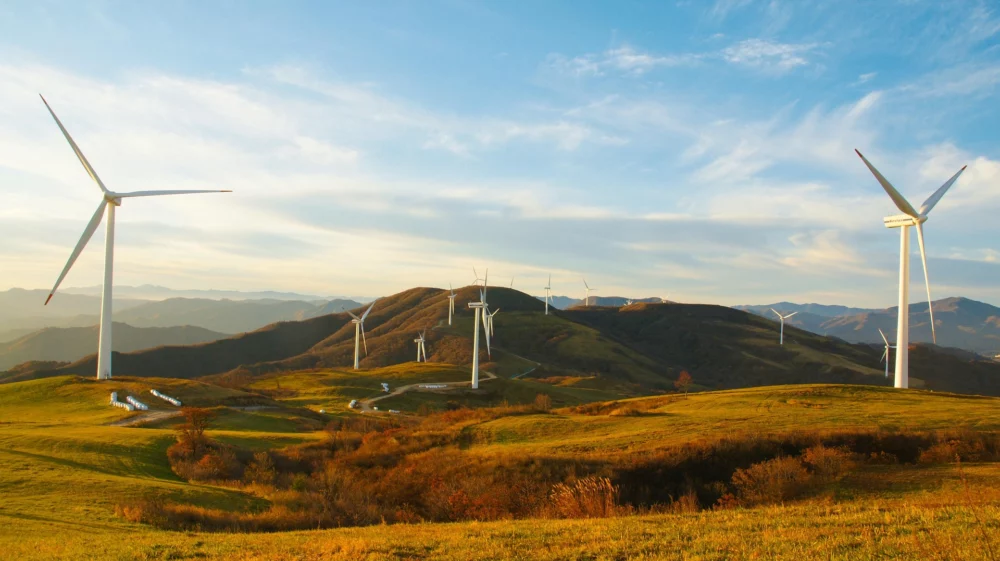
La Guajira, a region with great natural and cultural wealth, has witnessed a growing interest in the implementation of wind projects. IDEAR aims to steer renewable energy development in La Guajira towards more equitable and socially beneficial paths.
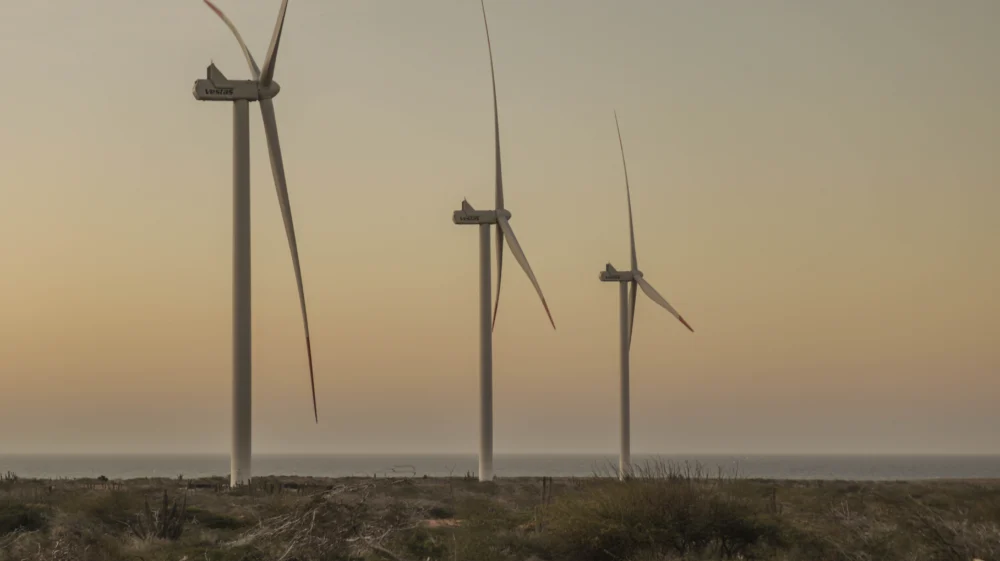
Wayuu settlement in Uribia, La Guajira. In the background, Guajira 1 wind park.
Eduar Monsalve / SEI
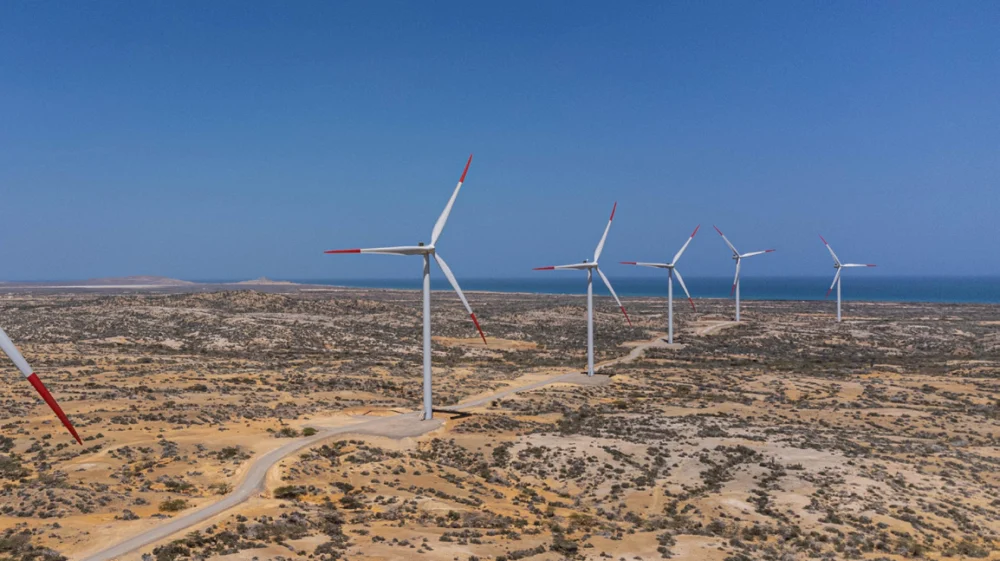
Colombia is at a critical moment for renewable energy expansion, particularly in La Guajira region. La Guajira has an untapped world-class wind resource. There, about 30 wind farms are projected to be built in the next years (over 40 wind farms by 2034), along with new overhead high-voltage power lines and other necessary infrastructure. La Guajira is also home to the Wayuu Indigenous Peoples, representing over half of the region’s population, and many wind projects and related infrastructure overlap their territory.
As in many parts of the world, the implementation of wind projects in La Guajira presents high potential for social conflict, given justice and equity concerns over aspects including social and cultural impact management, benefit-sharing, conflicts over land use and the legitimacy of consultation processes. These issues have led to project delays and cancelations caused by various blockades and protests. The Colombian national government is committed to the continued development of wind energy in La Guajira and reach agreements that allow projects to move forward, in alignment with the Just Energy Transition Roadmap.
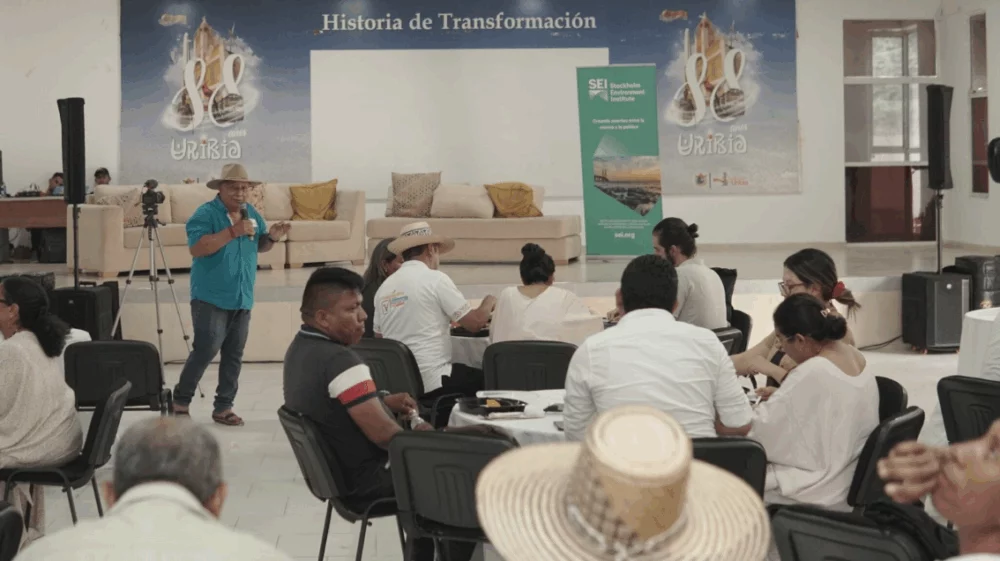
SEI has carried out extensive research and fieldwork on this topic in La Guajira, including visits to communities surrounding wind park locations, workshops with members of indigenous communities, interviews with industry associations and key developers, meetings with local, regional, and national government representatives, and a literature review of each of the projects in their different phases. Our findings point to a series of enabling factors for social acceptance of wind energy projects in La Guajira, including facilitating information access and identifying and strengthening regional institutional capacities and participants in consultation processes.
IDEAR consists of 4 components:
SEI
Feature / This story conveys SEI's fieldwork in La Guajira exploring the social acceptance of wind energy among Indigenous Wayuu communities and key challenges.
Feature / An SEI program is strengthening Wayuu capacity to advocate for their interests in wind energy project development and related infrastructure.
Feature / SEI researchers explore the experiences and challenges of community advisors, who play a vital role in advancing a just energy transition.
Feature / Learn more about SEI's efforts and research regarding the social acceptance of wind energy projects in La Guajira, Colombia.
Perspective / Anajia Guajira allows community members of La Guajira, Colombia, to give direct feedback on planned wind energy projects in their neighborhoods.
Media coverage / SEI Research Associate José Vega talks to Bloomberg on challenges in wind energy development in La Guajira, Colombia.
Tool / Anajia Guajira is a mapping and communication platform to foster a just transition to renewable energy in La Guajira, Colombia.
SEI report / The authors identify enabling factors of social acceptance for wind energy projects and, more broadly, of a just energy transition in La Guajira.
Project / This project aims to steer renewable energy development in La Guajira towards more equitable and socially beneficial paths.
Past event / This virtual Q&A session 3 June will detail the aims of a new group seeking renewable energy and electrical grid solutions that benefit people and nature.
Feature / Trase identifies the leading coffee trading companies and estimate where traders and markets source coffee from within key coffee-producing countries.
Press release / SEI researchers publish analysis on whether “rights of rivers” initiatives have led to environmental protections.