At the Bangkok Climate Action Week, SEI Asia is leading sessions to explore research and innovative solutions to tackle the climate crisis.
As the US retreats from providing climate leadership – gutting science funding and withdrawing support to renewables – a climate leadership vacuum has emerged. Who will step up?
Asia, a region that is already one of the most affected by climate change is now emerging at the forefront of climate action. Countries like China and Vietnam have invested heavily in renewable energy and almost every country in Asia has adopted net zero strategies.
But as humanity rapidly approaches the critical global warming threshold of 2C (with the more ambitious target of keeping warming to below 1.5C likely being breached within the next five years) the time for grandiose promises and announcements is over. We now need action and implementation.
The Bangkok Climate Action Week (BKKCAW) from 28 September to 4 October provides an excellent opportunity to move beyond words to implement innovative solutions to urgently tackle the climate crisis in a socially equitable manner.
Tackling the climate crisis needs transitions in all sectors, from carbon intensive technologies and practices to low carbon ones.
In the energy sector, we need to phase out harmful fossil fuels and invest in low-carbon energy sources that generate jobs and allow ordinary people to band together to invest in and benefit from renewable energies. Progress surely has been made, but the energy system in Asia is still built for fossil fuels and doesn’t allow flexibility and decentralization as our sessions at the BKKCAW will show.
While progress in the electricity sector has commanded the headlines, other sectors like industry, agriculture or transport are less advanced on their transition journey. During the BKKCAW, SEI is investigating barriers to sustainable transport in another session.
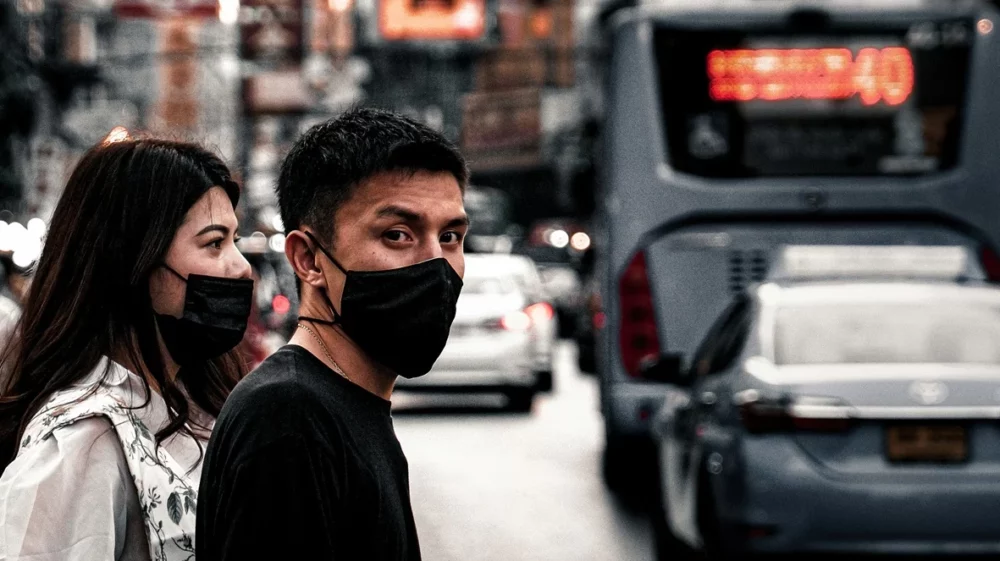
Besides energy and transport, we have to fundamentally rethink urban development as cities consume the vast majority of the world’s energy and account for over 70% of global CO2 emissions. While rates of urbanization are levelling in many higher-income countries, around 90% of future urban growth is projected to take place in cities in Asia and Africa, further straining scarce resources and services. The solutions are there: making cities more walk- and bikeable, expanding public transport, greening surfaces and facilitating circularity and proper waste management are all needed to battle congestion, urban heat and (air) pollution and ensure cities are healthy and sustainable both now, and in the future. In addition, all of those changes need to be accomplished in a socially fair and just manner, as this session at the BKKCAW explores.
Another big challenge is the agricultural sector, where low-carbon innovation is lagging behind compared to other sectors. Most rural communities lack crucial access to information on climate mitigation and adaptation options. Sustainable water management is urgently needed since water stress, unsustainable water management and extreme weather events such as droughts and floods are increasingly putting people’s livelihoods at risk, a focus of this session explores.
All these transitions need a lot of money. The IMF estimates that to reach net zero by 2050 in the Asia- Pacific, up to $1.1 trillion USD investment annually in low carbon technologies and practices are needed. But only $300 billion is currently earmarked. How do we close this shortfall of $800 billion? And how could climate finance be mobilized by adopting better climate finance policies is the topic of our event on Friday.
But while these challenges look daunting, they can be overcome. Indeed, some of the climate solutions such as harnessing the sun and wind for power have been known for ages, including more traditional knowledge of environmental stewardship. Also, while money seems to be lacking in public finances, huge private wealth is still being created in Southeast Asia, a region that is becoming increasingly unequal where the top 10% own 50% of the wealth. This is exactly the reason why just and equitable transitions are needed because those who consume and pollute the least due to lower economic status are oftentimes the most affected by climate change.
One of the biggest barriers to change is not the lack of solutions but the current generation of political and private sector leadership because of their entrenched interests and vested power (and money) in an old, unsustainable economic system.
This is why turning to young voices and their ideas is important to tackle the climate crisis. It will be their planet, their future – hence they should be the ones shaping it using their imagination and ideas to go beyond the despair of today to the hope of tomorrow. This is why, at the BKKCAW, SEI will feature a pitching session by of young change makers showcasing their innovative ideas to tackle the climate crisis.
Past event / Bangkok Climate Action Week (BKKCAW) is a regional climate gathering activating the power of people to drive meaningful change from 28 September to 4 October.
Perspective / In this Asian Development Bank blog, Gary Haq argues that air pollution crosses borders in Asia, so countries must cooperate regionally to address it.
Feature / At the Bangkok Climate Action Week 2026, SEI Asia will showcase research and build pathways for climate action through science, dialogue, and engagement.
Feature / Key messages from the second Joint Steering Committee (JSC) meeting on water-related collaboration between ONWR and SEI Asia on 20 August 2026