The 2025 European Climate Change Adaptation conference set a goal of making adaptation efforts smarter and faster, aims that can only be achieved through collaboration and trust. Could game play be a way to begin to restore needed trust that has waned worldwide?
Trust is waning in foundational institutions worldwide – in governments and political parties, in public health, technological innovation, and democracy itself. This trend has been said to represent “a dangerous breakdown in the very bonds of cooperation that hold complex societies together”.
The sophisticated technologies that power campaigns to deliberately misinform are helping to sow mistrust at a precarious time. If the world is going to reckon with intertwined climate, environment and development crises, people cannot afford to lose faith in knowledge or their willingness to collaborate. Success hinges upon our ability to work together
At such a time, how can people cultivate the trust needed to collaborate?
We have one idea about how to begin: Play!
Our premise of using play is based on years of work on climate, environment and sustainable development challenges worldwide that deliberately brings together people of all kinds: those from different places, in different professions, with different (or no) scientific expertise, of different backgrounds, and from different walks of life.
For years, we and others in our organization, Stockholm Environment Institute, have worked to help diverse people in academia, government departments, the private sector, and community organizations work their ways through processes intended to help establish enough trust in one another to make key decisions in the interest of all. These processes set the stage to make better decisions, to help improve efforts to adapt to and prepare for the impacts of climate change. Our work aims to foster fair, practical and beneficial decision-making that brings together key ingredients: scientific understanding, budget constraints, political realities and the human experience. To this end, we play games.
“Gamification” – the technical term for using games as an engagement tool – is not new. It is used for all manner of learning in all kinds of circumstances: in primary school classrooms, to formulate regional water plans, and in military training for international entities like the North Atlantic Treaty Organization (NATO). For our purposes – addressing climate risks – these “serious games”, as they are sometimes called, offer a way to practice, and to fail, so that shortcomings can be addressed before they cost lives. We have also found that they are a place where trust can flourish.
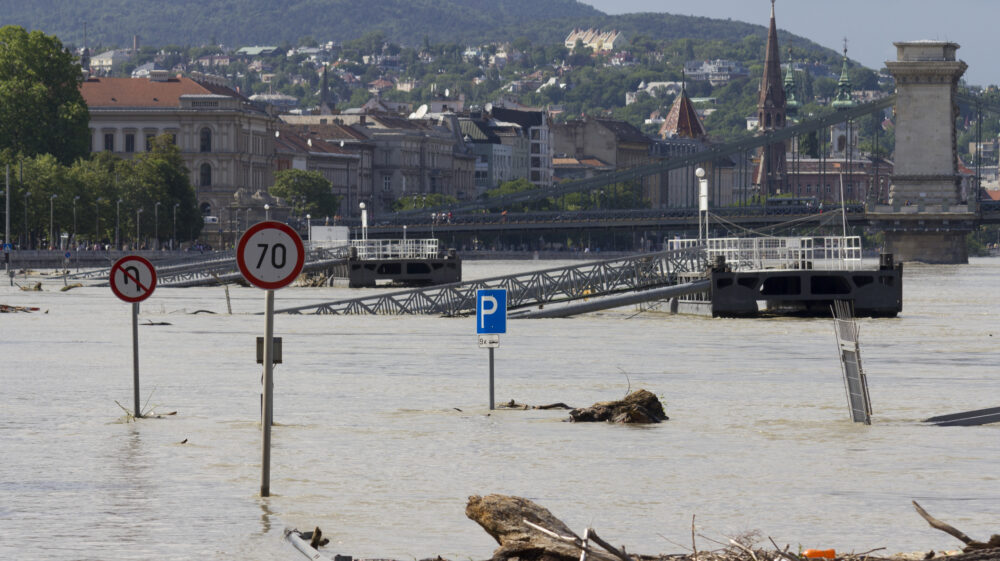
We use this approach in our recent work in the EU DIRECTED project. For example, we played a tabletop game in Germany with teams of engineers, regional planners, emergency responders, adaptation experts and other stakeholders confronting a disaster. We based this tabletop exercise on a real emergency: the extreme floods in Western and Central Europe in 2021, which led to the deaths of more than 180 people and damages of more than EUR 3 billion in Germany alone.
In our exercise, random chance cards arrive, continuously compounding players’ risks and ramping up the pressures. Paper slips also keep coming, delivering new data to the point of overwhelm. Players on teams must swap roles – to experience the same situation in a different position. In this particular game there are no formal winners or losers, but there are degrees of success and failure. Players must work together if their team is to have a chance of understanding what is happening and competently managing the unexpected.
As in board games, so in life. People in difficult times face uncertainty that cascades, often merely by chance. Rigid government bureaucracies and departmental silos quickly break down. Ideology takes a back seat. In an emergency, it doesn’t take long to see the value of quick thinking, actions that go beyond stated procedures, and the need to rely on others. When they work together, they can and often do discover a common purpose – the comradery in the chaos.
To be sure, when we initially propose playing a board game, officials often respond by saying, “We are not here to play games.” We understand this reaction. Managing a real emergency is not a game. Crises are a serious business, with health, economies and lives at stake.
All the same, officials who have this reaction as the game begins tend to see things differently at its end. When the game concludes, players have a better sense of how prepared they are for a real crisis. But they also have new insights into the importance of firm connections and human understanding. In gameplay, individuals and institutions learn to trust one another – a first step in finding a vision they share for a future and working together to help make this vision possible.
The theme of this year’s European Climate Change Adaptation conference was to foster “smarter, faster and more systemic adaptation”. These are important goals, ones we can only achieve through the collaboration borne of trust.
Game on!
Project / The EU Horizon project DIRECTED aims to improve the governance and management of climate disasters across multiple civil society and emergency agencies.
Feature / SEI uses a tool known as serious games to test water management policies and promote communication among local communities.
Journal article / Read about the toolkit of games for building learning on resilience among urban low-income communities.
Journal article / SEI researchers and Corpocaldas address the challenges of multi-stakeholder participation in watershed management using serious games.