On International Migrants Day, Clare Steiner emphasizes the urgent need to centre feminist mobility justice in climate adaptation planning, calling for community-led research on intersecting injustices shaping human mobility in a changing climate.
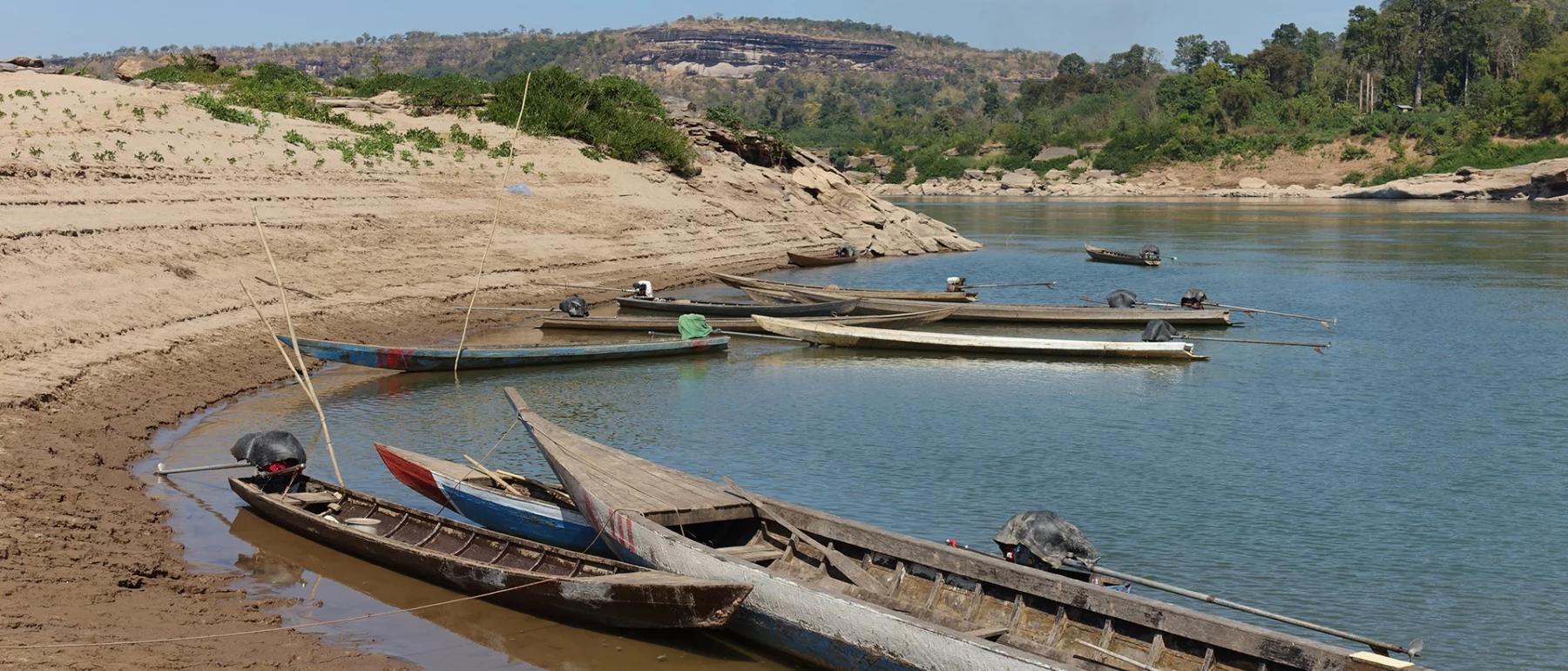
15 years ago, in Nong Khai province, Thailand, Ormbun Thipsuna sold papaya salad (som tam) at Chommanee Beach along the Mekong River to locals and tourists visiting a popular recreational area. At that time, the water levels were normal, and it was common to see people using nets to catch fish while children worked and played on the beach. However, around 2011, the water levels started to be unusual, resulting in irregular flooding and drought. She and other villagers believed these changes were related to the construction of hydropower dams on the Mekong and sought to generate evidence to support their claim.
She and others in Mekong communities engaged in Thai Baan (villager’s) research to document daily river fluctuations and loss of land since the opening of Xayaburi Dam. They found that income declined significantly from reduced fish catch and that vendors, like herself, lost regular business from loss of land. In some cases, they found this total annual loss amounted to 200,000 Thai baht for the household.
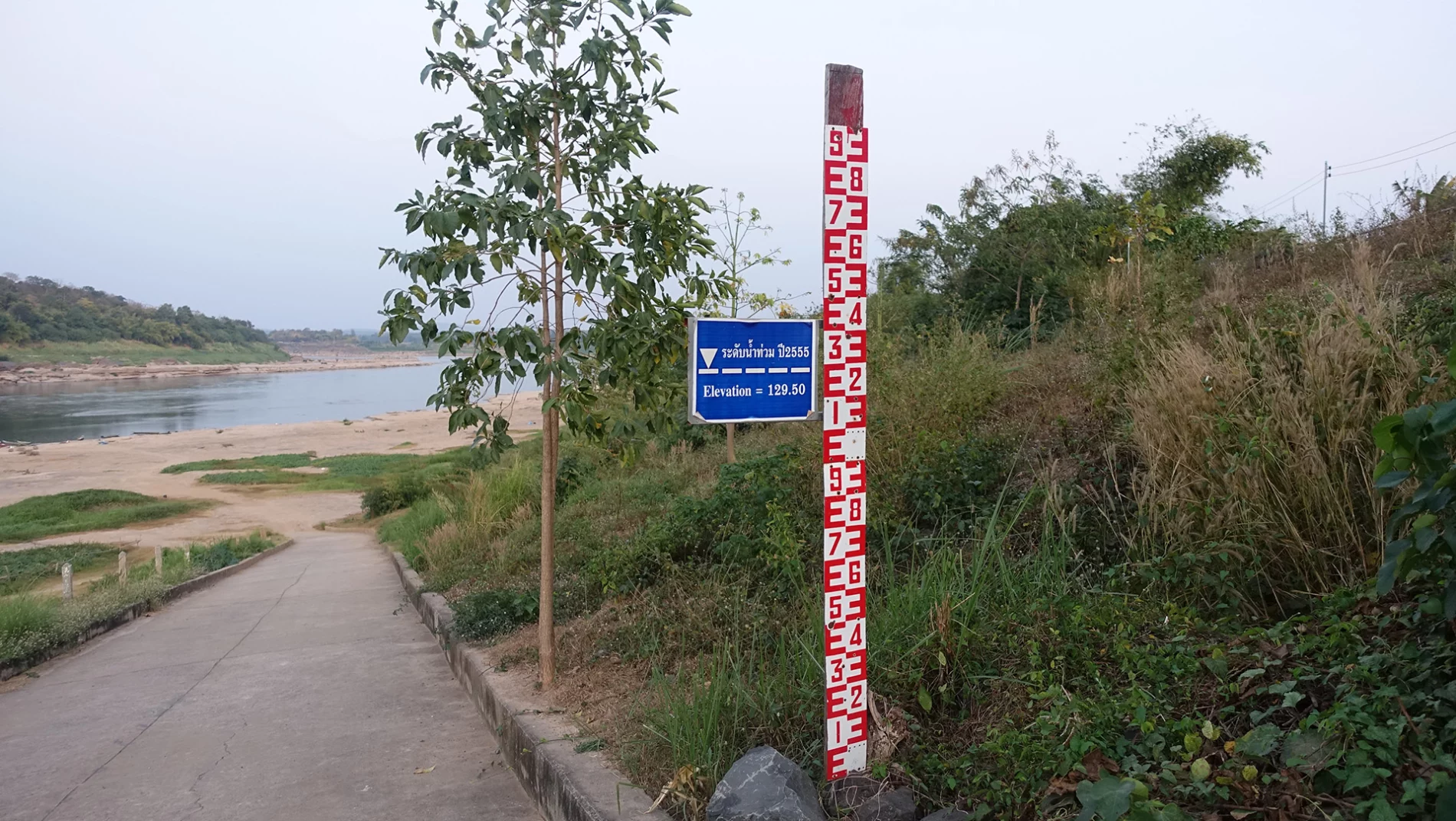
A tool for measuring the water level of the Mekong developed in response to irregular water flow in Ubon Ratchathani province in Northeastern Thailand
Photo: Clare Steiner / SEI.
The researchers also found that strategies to limit land collapse prevented locals from accessing the river. This particularly impacted women who were earning their living from collecting small aquatic life and vegetable farming along the river. These findings supported a 2012 lawsuit against the Electricity Generating Authority of Thailand (EGAT) who were financing the construction of Xayaburi Dam in Lao PDR. However, this case was ultimately dismissed in 2022 as the Thai court argued the power purchase agreement with Lao PDR did not directly impact Thai people along the Mekong.
Today, these same communities are increasingly feeling pressure not just from upstream hydropower development, but also from slow-onset environmental changes. “Adaptation is becoming even harder,” Thipsuna describes, “For example, the soil was already not as fertile because of sediment loss, and now the weather is also hotter…[and] the frequency of the rains is changing.” She finds these challenges together result in stunted and lost agricultural production, further limiting available adaptation options.
As a community-based researcher, Ormbun Thipsuna is very interested in the issue of migration, especially for nearby Thai communities most reliant on riparian livelihoods. She believes out-migration is accelerating the loss of local wisdom and disruptions in family structures, as men and youth often leave to find new work, often in precarious industries like construction and other forms of wage labour, while women may remain behind to find strategies to adapt to these changes.
First commemorated by the United Nations in 2000, International Migrants Day is observed each year on 18 December to acknowledge the contributions of migrants to society, promote awareness of existing challenges they face, and explore ways to advance the rights of migrants and their families.
Ormbun Thipsuna’s story, told in an interview conducted in October 2024 as part of SEI’s Migration and Mobility Programme initiative, draws attention to how environmental and climate injustices intersect with broader inequalities to shape adaptive capacities and migration patterns. It also demonstrates a gap in involving communities in documenting these processes and engaging around how these issues may be resulting in less visible forms of climate-related migration and displacement.
Addressing these complex challenges requires not only technical solutions, but a fundamental shift in how displaced and migrant populations – alongside those at risk of displacement – are positioned within climate resilience efforts.
Despite progress over the years, significant gaps remain in addressing the root causes of unsafe migration and displacement, especially as communities face compounding risks related to climate and environmental impacts. To address these gaps, SEI has carried out research documenting disproportionate risks migrants face in a changing climate – particularly highlighting how these impacts reinforce gender and social inequalities, affect child and youth development, and contribute to unsafe migration trajectories – to inform policy development for safeguarding rights and protections across global, regional, and national scales.
A feminist mobility justice framework emphasizes the power and social inequalities underlying climate-related migration and mobility. Rooted in feminist political ecology, this framework recognizes human mobility – whether forced or voluntary – as shaped by intersecting socio-economic, political, cultural and environmental injustices with the potential to erode climate resilience and deepen inequalities over time. By conceptualizing human mobility as an issue of justice, we can support the development and implementation of policies that not only address immediate risks, but work to dismantle structural injustices and promote inclusive mobility outcomes for marginalized communities.
To date, countries have fallen short of their commitments to recognize and address injustices of disproportionate climate impacts shaping human mobility. Only 14 percent of Nationally Determined Contributions (NDCs) contain concrete provisions addressing displacement, and National Adaptation Plans (NAPs) rarely mention internally displaced persons and refugees as beneficiaries of adaptation despite most acknowledging climate change is affecting human mobility. As a result of exclusion, climate strategies may inadvertently amplify risks for the communities – or worse, directly undermine their climate resilience.
After COP29, these shortcomings are also apparent in the lack of global commitment to adaptation and loss and damage financing. According to a UNDP report, climate finance has averaged a meagre 8 USD per person within fragile and extremely fragile states, while non-fragile states received an average of 161.7 USD per person. The funds have also been primarily dispersed to cities, leaving resource-dependent, rural areas without adequate support. This imbalance raises questions about whether the mobilization of adaptation funds through the USD 300 billion annual goal set during COP29 will reach the most at risk for adverse climate outcomes – or simply target the most risk-averse.
As demonstrated by Thipsuna’s work and other local efforts to seek accountability for environmental injustices, participatory action research, including villager’s research, is valuable in documenting losses and scaling up science-based advocacy at higher policy levels. These approaches not only highlight overlooked consequences of loss and damage, such as symbolic and cultural losses associated with environmental changes, but also actively shift power dynamics in the process of knowledge co-production. This challenges hierarchies that have contributed to uneven climate impacts and democratises the process of agenda setting.
While Thipsuna clearly sees the connections between livelihood loss and migration in the Mekong communities, she finds that there is limited research regarding these more gradual out-migration dynamics. Investing in interdisciplinary, community-based research that bridges feminist, environmental and mobility justice efforts can reveal the complex ways in which injustices are shaping decisions to move and stay. Understanding mobility outcomes as products of (in)justice can support justice-oriented policies that transform underlying causes of adverse mobility outcomes and support growing demands for accountability, effective remedy and reparations in a changing climate.
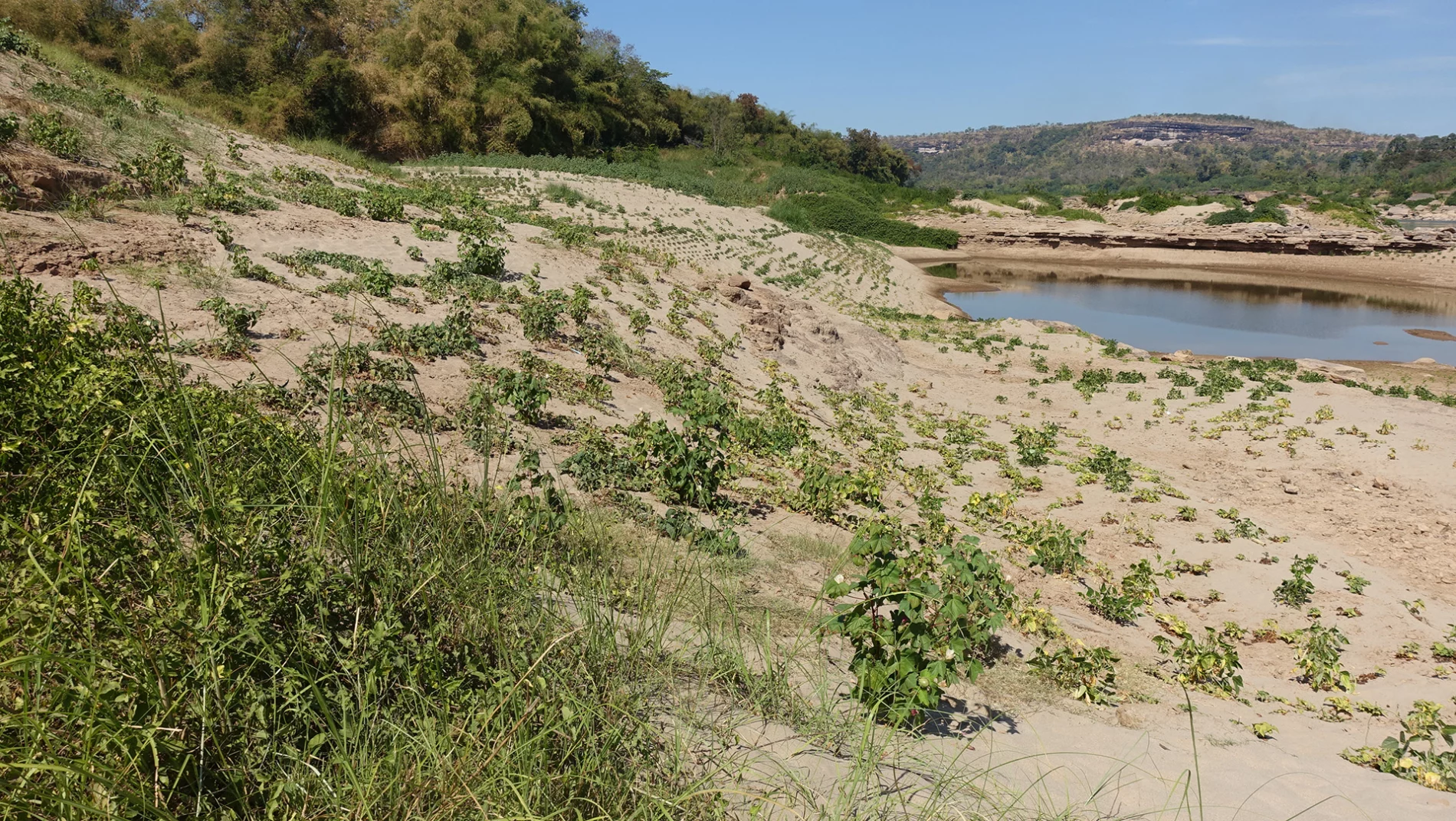
Riverside garden along the Mekong River in Thailand
Photo: Clare Steiner / SEI.
Thank you to Ormbun Thipsuna for her insights and to Ladawan Sondak for support in organizing and translating the interview. Visit ComNet Mekong for more information on their research.
Feature / Explore key messages on building climate resilience in the Mekong Region from SEI Asia’s Mekong Environmental Resilience Week 2025
Past event / The event will explore water–energy–climate interlinkages while addressing interconnected regional challenges and celebrate the 20th Anniversary of SUMERNET.
SEI report / This report synthesizes insights from projects supported by SUMERNET 4 All to reduce water insecurities in the Mekong region.