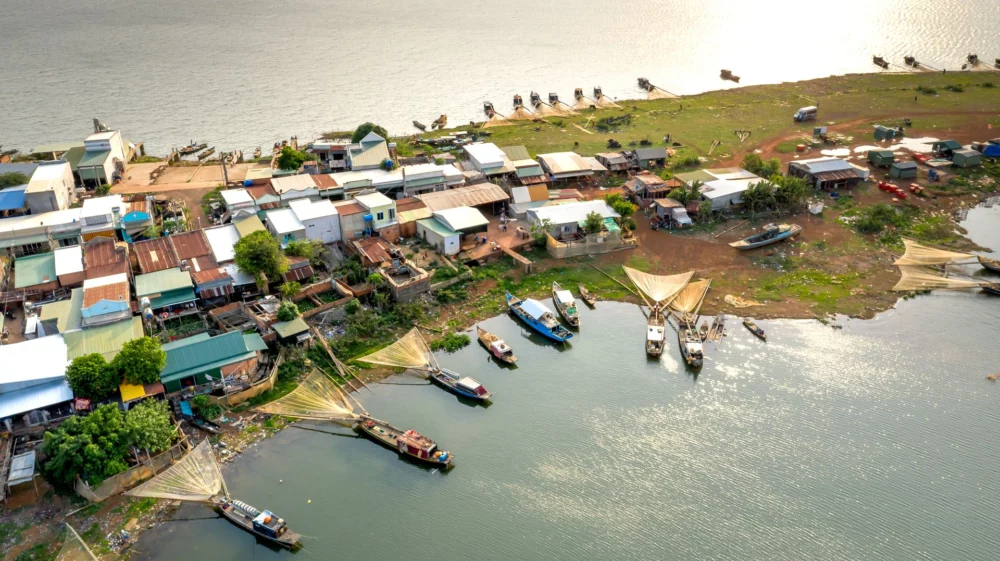
Linking six countries in Southeast Asia, the Mekong region faces a range of sustainability policy challenges and opportunities, from regional cooperation around water resource management to agricultural transformations, forest protection and sustainable industrialisation. Most of SEI’s work in the Mekong region is coordinated by SEI Asia.
87 results / 1 of 10 pages
Feature / SUMERNET was founded with long-term funding from Sida, to strengthen the Mekong Region’s evidence-based policy for sustainable development.
Past event / Join SEI experts at Mekong Forum 2026, featuring the technical sessions, exhibition, and innovation pitches.
Past event / SEI Asia will be leading the panel discussion on youth leadership at Mekong-Lancang Cooperation Week 2026 on 25 March.
Tool / This tool supports in monitoring and analysis of riverbank erosion, shoreline change, and wetland dynamics using satellite-based earth observation data.
Feature / Explore key messages on building climate resilience in the Mekong Region from SEI Asia’s Mekong Environmental Resilience Week 2025
Past event / The event will explore water–energy–climate interlinkages while addressing interconnected regional challenges and celebrate the 20th Anniversary of SUMERNET.
SEI report / This report synthesizes insights from projects supported by SUMERNET 4 All to reduce water insecurities in the Mekong region.
Feature / Effective from September 2025, Jürisoo will bring her extensive leadership experience alongside professional and personal connections to SEI Asia.
Program / SUMERNET Partnership for a Long-term Climate-Resilient Mekong through Just and Sustainable Transitions