Editor’s choice
Editor’s choice
Europe is the fastest-warming continent in the world. The summer of 2024 was the warmest on record, with deadly heatwaves from Spain to Scandinavia. Cities, with their dense infrastructure and limited greenery, bear the brunt of these rising temperatures. In Estonia – a country more often associated with mild summers – heatwaves now cause an estimated 36 premature deaths each year in its five largest cities alone.
New data from Tallinn and Pärnu shows how urban design can amplify or reduce heat, offering lessons that extend far beyond Estonia’s borders.
In recent decades, the most intense heatwaves in Estonia’s recorded history have all occurred: 2010, 2014, 2018, 2021 and 2022. While the last three summers brought shorter heatwaves to Estonia, record-breaking heat has been observed elsewhere in Europe. This year, for example, polar areas in Norway, Sweden, Finland and Russia exceeded 30˚C on an unprecedented number of days, while Portugal and Spain recorded over 46 °C in June.
An early analysis by Imperial College London estimated that between 23 June and 2 July this year, 2,300 people died in 12 major European cities due to extreme heat – with 1,500 of those deaths attributable to human-caused climate change.
In Estonia, prolonged exposure to high temperatures – whether outdoors or in overheated homes, offices, hospitals or care facilities – exacerbates respiratory and cardiovascular conditions and increases the risk of heatstroke. Vulnerable populations, such as the elderly and those with pre-existing health concerns, are most at risk. These pressures hit hardest when healthcare capacity is already reduced during the summer holiday season.
Urban areas are particularly susceptible to heatwaves due to a phenomenon known as the “urban heat island effect”. Buildings, roads and other hard surfaces trap heat during the day and release it slowly at night, keeping temperatures higher than in surrounding rural areas.
Across Europe, tens of thousands of excess deaths are registered during extreme heatwaves, such as those in 2003 (western Europe) and in 2010 (eastern Europe). Recent summers – including 2022 and 2023 – have hardly been less severe.
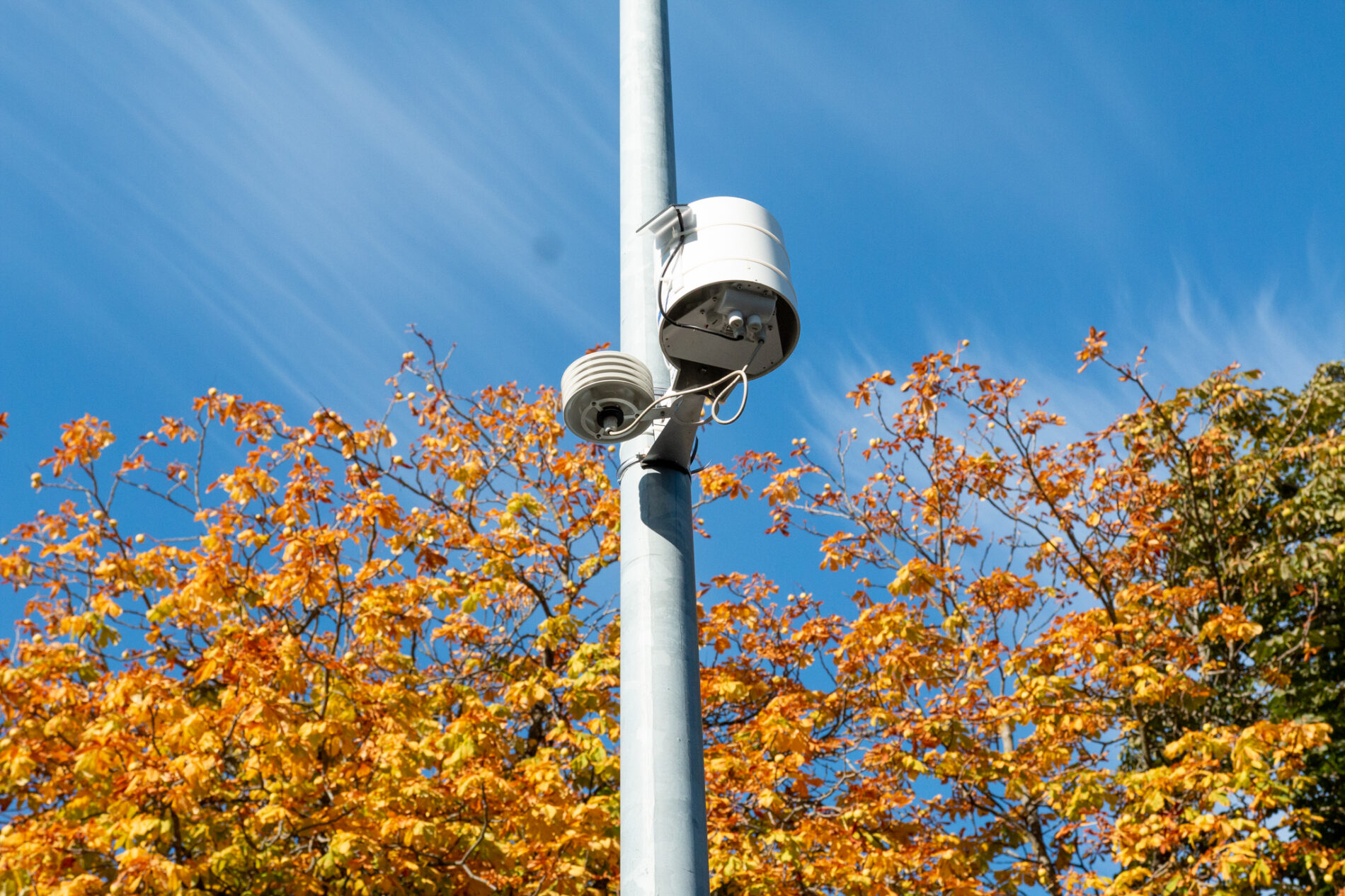
In Tallinn and Pärnu, SEI Tallinn has installed weather sensors on lampposts across different neighbourhoods. These sensors continuously monitor temperature, humidity, and – in Tallinn – precipitation, allowing researchers to compare microclimates across the city. Findings are clear: areas dominated by “grey” infrastructure such as buildings, roads and industrial sites, are significantly hotter than greener, more vegetated zones, especially during nighttime.
Weather sensor in Tallinn.
Photo: Anette Parksepp / SEI
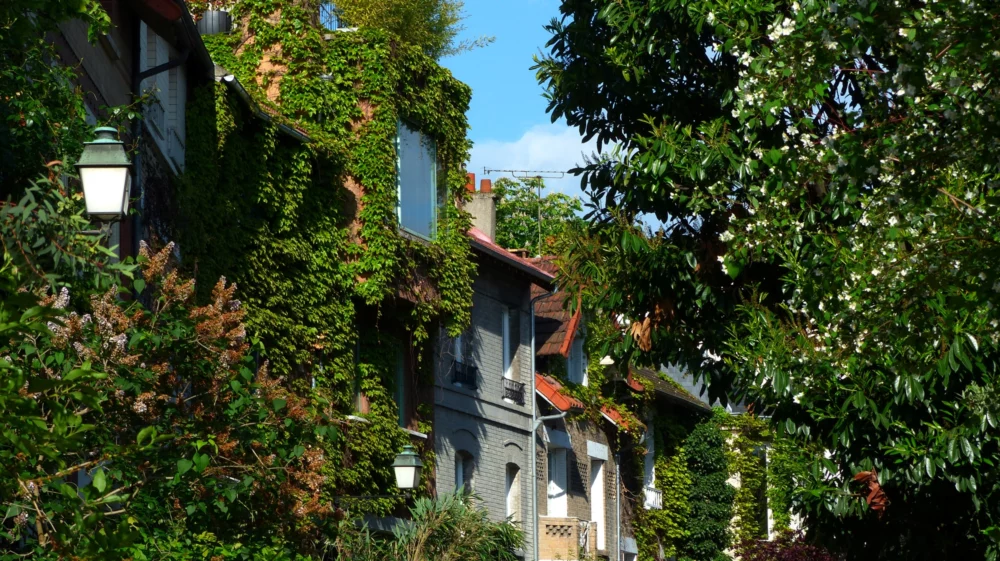
Vegetation offers shade, reduces surface temperatures and cools the air through the process of evapotranspiration. Tallinn’s “Pollinator Highway” – a 13km-long green corridor from the outskirts of the city into the city centre – provides a striking example of the important role green spaces play during heatwaves.
During the hot summer of 2022, heavily built-up areas recorded 8-12 “tropical nights” (nights when temperatures do not fall below 20 degrees), while greener areas saw between 0 and 8 such nights. At one sensor near Kalev Spa in Tallinn’s Old Town, average nighttime temperatures from June to August were 2.5˚C higher than those at the official weather station in greener outskirts. On clear, calm nights, differences were even greater.
The recently extended Pollinator Highway is a prime example of how urban planning can incorporate green infrastructure to create more climate-resilient cities. By transforming an old railway track into an accessible public green space, Tallinn has not only created a pleasant recreational route but also a functional cooling corridor. Even near the city centre, microclimate data show temperature and humidity levels comparable to those outside of the city. This is a testament to the cooling power of trees and plants, and highlights the urgent need to preserve, nurture and expand such green spaces in urban areas.
Making our cities climate-resilient is an opportunity to create greener, healthier and more liveable cities. Real-time weather and climate observations in places where people actually live, work, move and sleep, can inspire better planning and practical solutions on community-level.
Cities across Europe are showing that climate adaptation can be beautiful, community-centred and life-enhancing:
In Estonia, real-time, high-resolution weather information is already helping citizens and visitors to plan ahead. Seaside areas in Pärnu and Tallinn often benefit from cooling breezes, while inland built-up districts with grey infrastructure can be several degrees hotter on the same day.
On 18 April this year, for example, much of Tallinn saw summery temperatures above 25˚C – but at Stroomi Beach, the sea breeze held temperatures to just 8˚C. Mapping variations in real-time can help public services tailor health-related responses and allocate resources more effectively during heatwaves.
Europe is heating up. We have the data and proven solutions to make cities greener, cooler and fairer. We must apply this knowledge to build urban spaces that not only withstand a changing climate, but actively improve lives – not just in Estonia, but in cities everywhere.
See the live weather data from SEI Tallinn’s sensor networks and compare the differences in green, grey and blue urban spaces:
Andreas Hoy
Senior Expert (Climate Systems and Energy Policy Unit)
Project / Regions4Climate will implement innovative actions to enhance climate resilience within the real-life environments of partner regions.
Project / B.Green aims at improving urban planning by developing a tested new green infrastructure planning concept into the pre-planning process in Helsinki and Tallinn.
Project / ClimVis aims to prepare a tailored implementation concept of a transnational, multilinguistic visualisation tool of observed and projected climate information.
Past event / This event will explore digital platforms that could help cities implement nature-based solutions and solve urban adaptation challenges on local level.
Feature / See artikkel selgitab, kuidas tekivad linnades kuumasaared, miks need on olulised ja kuidas need mõjutavad kõige haavatavamaid inimesi.
Project / The project makes the hidden heat risks of climate change visible and helps young people and communities better understand urban heat islands and their effects.