We are only five years away from the 2030 deadline to deliver on the promise of “clean water and sanitation for all”. Yet climate change, limited financing, political uncertainty and widening inequalities continue to undermine progress. For the 3.4 billion people still without safely managed sanitation, that promise feels increasingly distant.
The 2025 World Toilet Day theme, “sanitation in a changing world,” reflects the urgency of adapting water, sanitation and hygiene (WASH) services to conditions fundamentally different from those for which most were designed.
This global theme lands at a moment of significant change. Climate-resilient water and sanitation have moved from technical discussions into the centre of global negotiations. At COP30 in Brazil, Sanitation and Water for All (SWA) launched an updated Definition to climate-resilient water, sanitation and hygiene services, signalling a sector-wide shift: resilience is no longer about building infrastructure that can withstand disasters. It highlights how resilient WASH services can reduce disease outbreaks, protect water resources, secure water for agriculture, and keep schools and health facilities operating during extreme climate events. It also brings attention to the wider co-benefits that resilient sanitation provides for other sectors like health, education, food, environment and economy.
This is a shift SEI has long argued for: a move from infrastructure-centric planning to systems thinking that considers governance, behaviour, risk, equity and long-term climate pressures.
The 2025 Sector Ministers’ Meeting organized by the SWA global partnership reinforced the urgency of redesigning WASH services for a rapidly changing world – one that in which most sanitation services are still built for a climate and a society that no longer exist.
The outcome, the Madrid Commitment on Water Security, Sanitation, & Climate Resilience, was endorsed by 26 countries and 22 international organizations. It recognizes water and sanitation as human rights and as foundations for climate resilience, environmental protection, gender equality and economic development.
The Commitment challenges governments to align and integrate climate-resilient WASH into national climate strategies. It encourages better integration of the SDGs, the Paris Agreement and the Sendai Framework to improve coherence and unlock climate finance.
Importantly, it emphasizes the role of strong political leadership and cross-ministerial coordination – something has repeatedly identified as a major bottleneck in sanitation progress. In many countries, water resources management, sanitation, climate policy and disaster risk reduction remain siloed, limiting the potential for resilient and efficient solutions.
The dialogues in Madrid signalled a turning point. The Commitment urges countries to include climate-resilient WASH projects into National Adaptation Plans (NAPs), Nationally Determined Contributions (NDCs), national development plans and disaster management frameworks.
While 61% of NAPs prioritize water supply, only 37% include sanitation as a climate priority. This gap undermines resilience efforts. Addressing it requires stronger inter-ministerial coordination, investment in institutional capacity, improved data and monitoring and the development of pipelines of climate-resilient WASH projects.
Most importantly, it highlights the need for political leadership at the highest level to sustain long-term progress and close the persistent financing gap for sanitation. Financing agencies such as the Green Climate Fund and the Adaptation Fund can play a key role in enabling this shift by supporting countries to develop bankable sanitation projects that respond to future climate risks.
If countries implement these commitments, sanitation could shift from being a downstream vulnerability to a central pillar of national climate resilience.
One dimension that deserves far more attention, especially under the 2025 World Toilet Day theme, is circularity. Most sanitation services follow a linear model: extract water, use it once, mix it with waste and flush it away. This is increasingly unsustainable in a century marked by water scarcity, climate uncertainty and resource depletion.
A circular approach offers a more resilient alternative. Recovering water, nutrients and energy from sanitation flows can reduce pressure on freshwater sources, lower dependence on synthetic fertilizers, reduce emissions from waste management and enhance soil and food system resilience.
SEI research has shown that resource recovery not only decreases environmental pollution but also strengthens local economies by transforming sanitation by-products into valued resources rather than waste.
Circularity is where sanitation become one of the most overlooked climate solutions. By closing loops, countries can reduce water use, limit raw material extraction and build resilience to climate shocks – while also expanding access to safe sanitation.
If the world is serious about climate resilience, why do we keep choosing sanitation services that flush away water, nutrients and energy, systems designed for a different era, when circular solutions offer a pathway to protect water, reduce extraction and build resilience at the same time?
For sanitation to fulfil its potential, it must be treated not only as a development priority but as a climate strategy. The commitments made this year offer a starting point. The next five years will determine whether they become meaningful change – or another promise at risk.
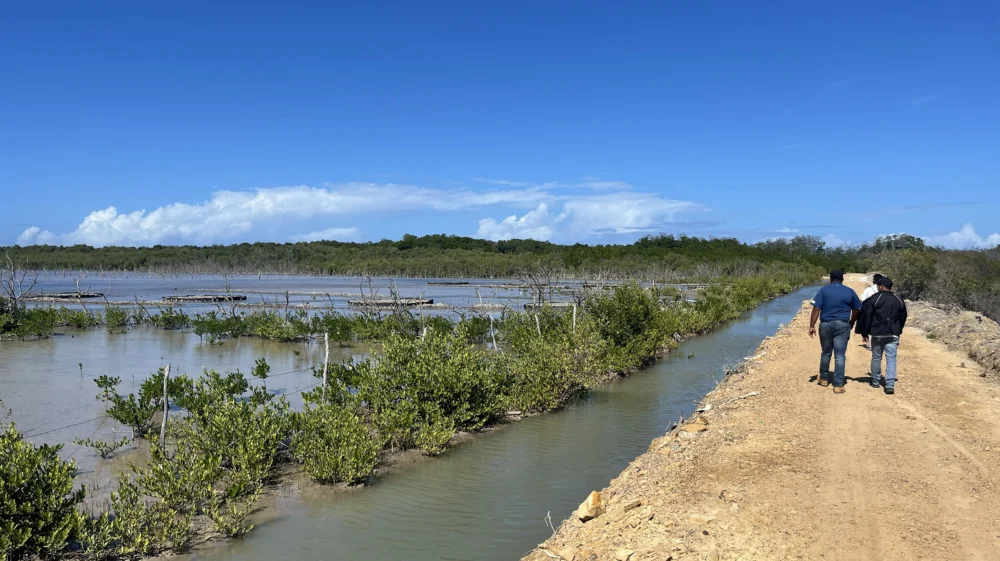
Feature / Mangroves are returning to Montecristi, where an SEI-led living lab is piloting a comprehensive restoration approach.
Feature / SEI US introduces a new research program focused on climate forecasting and capacity building.
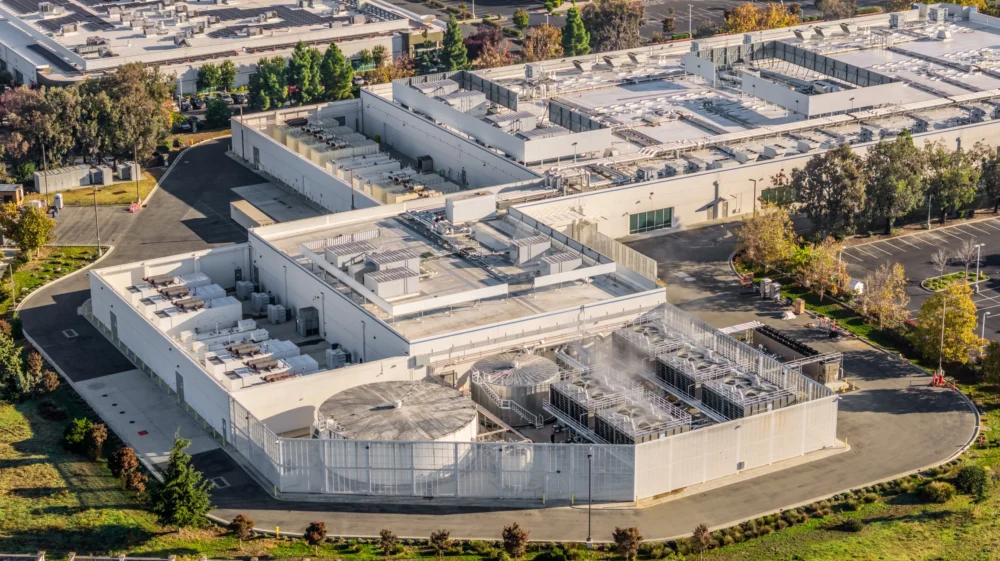
Project / This project uses geospatial analysis and public engagement to determine how data centre siting in California affects vulnerable communities' water security.