part of Power in balance
As climate impacts intensify, financing climate adaptation is becoming just as important as how much money is available. Global climate finance flows now exceed USD 2 trillion annually, yet only a small share — roughly USD 65 billion — is directed towards adaptation, far short of what developing countries need to protect lives and livelihoods. Behind these numbers lies a deeper challenge: climate finance systems are still not designed to reach the people most exposed to climate risk.
Power in Balance Episode 4: Inclusive Climate Finance
00:00:04 Introduction
Welcome to Stockholm Environment Institute’s Power in balance, Conversations on Sustainability and Justice, where we explore how power imbalances create and sustain social and environmental inequalities in the light of intensifying environmental, biodiversity, and climate challenges.
What can we do to tip the scales for a more balanced, just, and sustainable transition?
00:00:29 Introduction
“When we are talking about inclusive climate finance, the whole idea is to develop and implement tailored financial strategies that increase the ability of vulnerable populations to respond quickly and resiliently to disasters.”
“We need to design financing mechanism policies and plans involving local communities through co-produced design processes.”
“It’s not only the question of finance alone; it’s a question of empowering these people and have their voices heard.”
“If we truly want to enable transformations and address injustices, we need to be looking at things beyond their 4-year projects and their 4-year funding.”
00:01:17 Charmaine
We have just come back from COP 30 in Belem, Brazil, and one message is clearer than ever. Financing will determine who wins and who gets left behind in the fight against climate change. Global climate finance flows now exceed 2 trillion U.S. dollars per year, but only a fraction of that, roughly around 65 billion USD, goes to adaptation. It’s very far from the 284 to 339 billion USD that developing countries need annually to stay resilient, according to the 2025 Adaptation Gap Report.
00:01:58 Charmaine
So, in today’s episode of Power Imbalance, we ask who really gets the money and who doesn’t?
I am your host, Charmaine Caparas from SEI Asia, and we are joined today by 2 guests who bring global and local perspectives on inclusive climate finance.
00:02:17 Charmaine
First, we have Janne Parviainen, a research fellow at SEI Oxford who works at the intersection of disaster risk reduction in climate change adaptation. His research looks at how to improve the equity outcomes of climate finance while working with international financiers to strengthen mechanisms for financing locally led adaptation.
00:02:48 Charmaine
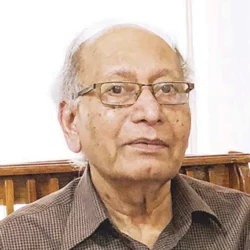
And joining us from Bangladesh, Dr. Mustafa Kamal Mujeri, Executive Director of the Institute for Inclusive Finance and Development, who has decades of experience working with rural financial systems and community institutions.
I want to first look into the big picture: the promise and the pitfalls of climate finance and the gap between global ambition and local access.
00:03:18 Charmaine
My first question is for Janne. When we talk about climate finance, what do we really mean and who, in your opinion, has more access to it than others?
00:03:28 Janne
Thanks, Charmaine. That’s a complex question nowadays because climate finance mechanisms are growing increasingly complex. So, there are a lot of funders, obviously financiers, multilateral development banks and arms of the UNFCCC like the Adaptation Fund and Green Climate Fund, who fund action at different levels. And it can be applied to by national governments; it can be applied to by local actors and NGOs, non-government organizations. But the pathways that through which people can apply to these things for are often quite complicated and there’s multi layered application processes, which then brings us to the question of who can apply to these things.
00:04:15 Janne
I’ll talk about this a bit later as well, but it’s usually institutions with significant resources and capacities, not only to write reports and meet reporting requirements, but also to manage injections of finance. And as I said, I’ll talk about the capacities a bit later. But yeah, there’s a lot of things going on and a lot of skill required to actually apply for them.
00:04:38 Charmaine
My next question, Dr. Mustafa, why do you think there is such a mismatch between the money that is available and the actual needs of the communities on the ground?
00:04:50 Dr. Mustafa
Thank you. Most of the resources which are available at the global level, they are mostly directed to mitigation, and adaptation is usually less important. Now if you look at even at the country level, like for instance in the case of Bangladesh, which is one of the most climate change vulnerable countries in the world. If you look at the adaptation and from the perspective of the country level, we again see very similar kind of disparity in the available funds from the perspectives of the poor and disadvantaged and most vulnerable population groups and the powerful groups in the society.
00:05:35 Dr. Mustafa
This disparity is probably rising overtime. So that is the natural cause of, and impact of the disparity in power at the political and social levels. It is a reflection of the society in which we are living at the moment, which is a very unequal society from the ground’s perspective, as well as the country’s perspective.
00:06:00 Charmaine
From your experience, Dr. Mustafa, on your projects on the ground, how has this disparity affected the ability of those vulnerable groups to adapt on climate change effects and build their resilience against it?
00:06:18 Dr. Mustafa
I think let us see first as we have been talking about inclusive climate finance at the vulnerable level. So, what is the perspective of these poor and most vulnerable population groups who live in the hot spots of climate change impacts in our countries, in the South, in the 3rd world countries like Bangladesh. Now basically when we are talking about inclusive climate finance, I think the whole idea is to develop and implement tailored financial strategies that increase the ability of all poor and disadvantaged low-income vulnerable populations to respond quickly and resiliently to disasters.
00:07:05 Dr. Mustafa
We need to develop and design financial products and services that would support these target groups living at the grassroots level, at the hot spot of climate change impacts in managing and responding effectively to disasters emanating from climate change.
00:07:26 Dr. Mustafa
And this should cover at least three impact pathways. This one is of course resilience. I think the second is adaptation and third is transition. So, we have to see the perspective from the totality of the perspective of these people.
00:07:46 Charmaine
We will get that a little bit later, but now I think I want to kind of zoom out again and ask Janne, from your research on locally led adaptation, how do institutional structures and procedures limit those who can access finance? That is one question, and second, are we measuring the right things when we talk about the success of climate finance projects?
00:08:12 Janne
Excellent, thanks Charmaine. I’ll try and check all the first one and then carry on to the second. So firstly, that is an excellent question, and I encountered this often on the field and doing field work.
Firstly, I started talking about requirements for report writing and writing applications for financing. That is a skill in itself that local level actors, local communities don’t often have. They require technical language; they requiremultipage proposals and work packages and all sorts of components that there’s a specialist skill that also researchers struggle with. It’s not only local actors, but also from a researcher’s perspective.
00:08:50 Janne
It is difficult, especially now that climate finance is sort of eroding slowly and it’s increasingly competitive. And then there are also institutional barriers in terms of implementation. So, depending on sometimes it’s national level, sometimes it’s municipal or provincial level, even without getting to the local level, the capacity is required to handle injections of finance that are sometimes measured in millions. That also takes significant skill and resources, and there is very limited effort to build capacities at sub national levels in particular to manage this.
00:09:27 Janne
And then if we look at the local level, I feel like financiers; they often want to get money to the lowest appropriate level as it is called, but there’s limited trust toward local communities to actually manage these injections.
But this is framed as an issue that is simply a matter of power imbalances, and people keep talking about it in research, but specific pathways as Dr. Mustafa was mentioning developing financial strategies and mechanisms to address these problems. Those I haven’t seen yet. There are some isolated efforts to build capacities of local actors and organizations, but it’s quite rare.
00:10:07 Janne
In reality, you go and ask a few questions of what would you like to happen in your community, and these are often processes that select people who already have power at the local level, ignoring let’s say it’s an informal settlement, vulnerable groups, these people, they don’t get consulted as a part of these processes. Maybe it’s human nature: people approach people they already know.
That means that we’re sidelining entire groups with specific needs in terms of adaptation and in terms of resilience, and they get overwritten from proposals.
00:10:39 Janne
Oftentimes if we think through the lens of the multilateral development banks and big institutions: they want to measure things like growth, productivity, job creation.
But if we measure the success of adaptation, we need to be looking at individual communities, individual lives. The success of adaptation is very unique and contextual.
00:11:02 Charmaine
Actually, in SEI Asia, we have a new regional initiative called ICCAP, which is the inclusive climate finance for vulnerable communities in Asia Pacific. And actually Dr. Mustafa is one of our resource persons for that project.
So, this project looks at how climate finance can flow more effectively to rural banks, cooperatives, and community organizations. It’s an attempt to sort of rethink the last mile of climate finance, and it connects directly, I think, to what we’re discussing today.
00:11:37 Charmaine
So, Dr. Mustafa, since you are one of our key people when we are developing the ICCAP project, my question is this. Where does climate finance tend to stop, and why does it not reach the community level?
00:11:55 Dr. Mustafa
For instance, when we are working in Bangladesh at the grassroots level, what do you find? There are many disconnects that exist. If we take, for example, inclusive climate finance, one important thing is that we should be poverty and inequality sensitive. When we have, say, poverty reduction efforts at the grassroots level, they are not really connected with the climate change adaptation measures. So, there is a disconnect between the two.
00:12:31 Dr. Mustafa
Another kind of disconnect is that we are taking some kind of adaptation measures at the grassroots level, but they are not connected with the poverty reduction efforts. So, they are taken up rather separately. So, there is no integration at the grassroots level.
So that brings into the issue that when we have to adopt adaptation measures at the grassroots level, the most important thing is to derive synergies between the two so that we can integrate this climate change adaptation efforts with the poverty reduction efforts. This should be taken up in a manner that we can conceive them in a totality so that the efforts are brought about into the whole.
00:13:18 Dr. Mustafa
Another kind of disconnect that we can see in the picture of that there is not adequate coherence and coordination among the relevant institutions at the grassroots level as well as at the national level, so that he can’t really support the local initiatives which have been traditionally developed over the years by the people themselves, advocate people. So, I am just giving some of the examples why these efforts are not bringing about the desired impact of the most vulnerable communities.
00:13:54 Dr. Mustafa
Similarly, what is important is to mainstream disaster and climate change resilience and adaptation in the development agenda of our countries.
“What is inclusive climate finance?” This very much restricted definition is used. We need to define this more comprehensively so that the efforts and the problems that the poor and vulnerable population, they can be brought into the definition.
00:14:23 Dr. Mustafa
Unless we can bring them into the mainstream of our development agenda, then probably the issues that we are facing at the moment from the perspective of this poor and vulnerable population would not be solved.
It’s not only the question of finance alone. It’s a question of empowerment, empowering these people and have their voices heard at the national level. In case of climate disasters, they are the best consultants who lead there at the grassroots level.
[Interlude]
00:15:07 Charmaine
Now it’s sounding to me that it’s even more complex than when we first started ideating this podcast.
So, from what I’ve heard from the both of you, big chunk of the challenge is really on procedures, how the current systems that we have are not built to flow more systematically or directly to the communities that we want to help.
00:15:34 Charmaine
There’s also an issue on policy coherence on regulations. And so, my next question is for Janne. How can these systems evolve to be more responsive to the actual financing needs at the grassroots level?
00:15:52 Janne
Thanks, Charmaine. There’s a lot of things that could happen and should happen, and I probably I’m not on top of all of those, but I can definitely answer based on my experience. First links to what Dr. Mustafa said about, well, local people being the best consultants and the experts of their context. Obviously if you live with flooding and drought hazards and you’ve lived there for your whole life, the best needs to be done rather than some expensive paid consultant that’s just paratroopers in.
00:16:21 Janne
So, in that sense, the first obvious change that we need to make is the way that we write proposals and the way that projects get designed. And that goes back to the sort of procedural equity, which means inclusive, fair, and transparent processes. And it brings most vulnerable groups, marginalized communities into the process where projects are being designed. That is a one way of guaranteeing that their needs get reflected by the time it comes to implementation. And the backdrop to this is that people are consulted, yes, and they get asked through different surveys or interviews what would you need in your community.
00:16:49 Janne
But this is not representative of needs of all the people in the community and it’s not sort of a co-produced process of writing a proposal where the people are given a proper legitimate grounding and a stake in not only in the project itself, but in the process of writing it. And then it comes to implementation and maintenance. People again need ownership of finance. It’s not only something that a national government can manage and give bits and pieces for thisand that is that people themselves need to feel that they can use this, you know, in the ways that they deem important.
00:17:29 Janne
And this goes back to the capacities they will also need—the capacities to manage these injections of finance. But the feeling of ownership is really important for sustaining adaptation because if you don’t feel that you are in control of what you want to do with your plot of land, for instance, that’s never going to work. And how you can finance your own actions.
00:17:48 Janne
From the side of institutions and let’s say national governments, the issue of coherence is right; we tend to funnel financing. So, this bit is for adaptation, and these are the things that you can use it for. This bit is for development, and these are the things you can use it for. This bit is for disaster risk reduction, and these are the things you can use it for. The problem is that then each of them has different reporting requirements; they often do similar things at the same time. It’s sort of dispersed.
00:18:19 Janne
And like Dr. Mustafa said, development goals and ambitions are inseparable from adaptation. So, poverty reduction, building resilience, safe housing, safe job, basic services, all of these things reduce climate risk in the long term.
So financiers, institutions, actors at the national level, we need to be able to design financing mechanism, policies and plans that connects all of these things and are working towards the same things whilst involving local people, local actors, local communities through co-produced design processes. And this is a big, big shift to the way that institutions operate. Because we need to be keeping in mind that this, this adaptation, it connects global actors, regional actors, national level actors, sub national level actors, but we need them all to be pulling the same rope.
00:19:13 Charmaine
You mentioned good initiatives that are already on the ground and maybe you could highlight one in one of your work. I know you have done it in the Caribbean or in Latin America.
00:19:24 Janne
Yes. So, in the Caribbean we did a project assessing the procedural and distributive equity of adaptation finance and this was in Namibia and Antigua.
I was working on the Antigua case study and there was a lot of good efforts to, for instance, manage the finance in a way that it hands ownership to local organizations such as churches, and they got the funding, and they could decide what to use it for.
00:19:53 Janne
Mostly it was hurricane shelters and retrofitting the churches to be able to manage emergencies. Also, they had micro loan programs so community members could apply to financing to retrofit their housing and install solar panels.So very sort of decentralized initiative, whilst also funneling significant finance to things like improving road works, improving bridges and floodways so communities can be better protected.
00:20:24 Janne
The issue there is because we have good initiatives, but as I said, there’s room to improve. The issue is that some churches that had significant capacity, they had board members, they had trained project management staff, they hadconstruction consultants. Obviously, these churches can cope with major projects really well.
But if you have a church, for instance, who only has one pastor and it doesn’t have a big board and it doesn’t have project management capacity, then building a hurricane shelter is substantially more difficult.
00:20:58 Janne
In that sense, before the money is given out, the capacities need to be assessed and matched. Sometimes you need to develop capacities to be able to manage a project. Sometimes it’s just simple as that to guarantee success. And the other thing is that sometimes you build a floodway, and you build a bridge, but it doesn’t necessarily meet community needs. It’s not in the right place.
00:21:23 Janne
I’m not saying that this is the case in Antigua but flooding in ways that is often unanticipated. And you can’t model it and map it. But if you ask the local communities, they know exactly where the water is going to run. But if they weren’t asked, you’re not going to get that, and you then you’ll have a bridge in the wrong place or a floodway in the wrong place.
00:21:41 Janne
And then it comes to the issue of micro loans. They were very deemed very useful by the people who got them. But also, they had an application process and some people, they had never had a loan before. So, they felt this was intimidating, like they could not apply because they did not have the skills to apply for a bank loan. So again, it goes back to the procedures like how do we design these things to meet community needs?
00:22:05 Charmaine
Thank you so much, Janne. Dr. Mustafa, in your experience, are there really promising models or pilots of locally led adaptation finance projects that your organization has been involved in?
00:22:20 Dr. Mustafa
The microfinance sector itself has been quite vibrant in Bangladesh since 1971 when the country got independence. Since then, these microfinance institutions have been working along those lines, but obviously they are our limitations of the micro sector.
For instance, in the microfinance sector, they have a crisis of funds. They have climate resilience integrated into their efforts. Micro loans are given to disaster-affected people. They have disaster funds to support the resilience-building efforts of the targeted communities and targeted populations and households and so on so forth.
00:23:06 Dr. Mustafa
But the constraint is that when the macro level, when the supportive framework is not there, then these micro efforts that can’t really work properly. So, there is a disconnect between the micro and the macro level.
00:23:24 Dr. Mustafa
So, this is also an important disconnect that holds back the efforts at the micro level and efforts of some micro finance institutions and other community-based organizations who work for the benefits of these people in terms of resilience building and adaptation efforts and so on and so forth. So, the challenge really is that we need an integrated framework.
00:23:51 Dr. Mustafa
There has to be some structural changes within the system itself in their countries development programs where these integrations at the institution level, at the programmatic level and policy levels have to be linked and awareness building has to be there so that we don’t really see developments of different types in terms of separate silos.
00:24:17 Charmaine
So, my next question is that the problem, the potential solutions, some examples of successful or promising projects, you’ve both talked about it. And so now my question is who needs to take the first step?
00:24:37 Charmaine
I know that there are so many actors in the whole climate finance landscape. There are the multilaterals, there’s the government, local organizations, there’s intermediaries. Who needs to take the first nudge? I even forgot to mention there’s also like a lot of us doing research and showing the science to back all of the decision making. And so, in order for us to have a more coherent, a clearer direction, who needs to take the first step, in your opinion?
00:25:12 Dr. Mustafa
I think it is kind of a joint responsibility. I think all the ecosystem actors, they really need to think together, not separately.
00:25:23 Dr. Mustafa
As we see, the reality is that there is a separation, so this distance has to be closed down and all these ecosystem actors at the local level, at the national level, at the international level, at the research level, all the ecosystem actors, they have to come together and develop a strategy around the common vision for climate finance with clear roles and responsibilities for all to ensure the effective implementation. It’s a joint responsibility because the implementation would require the participation of all the ecosystem actors.
00:26:05 Dr. Mustafa
So, this effort is not going to happen probably by itself. So there is a need to kind of sensitise these issues through research and other sensitization efforts and bringing about examples of successes so that the people – particularly the policymakers and the ecosystem actors as a whole – they get sensitised and they come together so that a holistic effort can be realised and developed and implemented. And that can bring a basic structural change in the efforts that we are currently implementing in isolation.
[Interlude]
00:27:03 Charmaine
Just a reflection coming from what Dr. Mustafa just said, and we all need to come together and make a conscious decision that this is our way forward.
We have just come from the COP30 event and supposedly this is the time where all of the governments come together. They think through this, all of the actors in this ecosystem are supposed to be in there, and all of the voices should be heard.
00:27:32 Charmaine
But the reactions coming from this conference is that, you know, there wasn’t really any real commitments from a lot of the governments. And so now we are put in this limbo of like, so what’s happening next? Like we are aware that there is a funding gap, but there is no strong direction or strong commitment that we are going in this direction and we all agree that this is how we’re going to do it.
And so, Janne, for your question like what this your reaction or maybe your recommendation given all of this?
00:28:06 Janne
Yes, I feel like we need to be abandoning illusions that COP is where the change happens. I mean, decisions can be made or not made, but where the action is, it happens on the ground, and it needs to be implemented. And no matter how many conversations you have about what needs to happen next, things need doing.
00:28:25 Janne
I feel like financiers and funders, in particular, they also need to be stepping up, and they need to be willing to respond to evidence to what is being presented and what is being discussed. I feel like there has been at least a bit of a reluctance to engage with these discussions at national and global levels because it is complex and it’s difficult. And it is easier to do a hundred million development plan in the way that you’ve always done it, so to say, or an adaptation plan rather than it is to actually rethink how you engage local communities and rethink the entire process of how you are approaching it.
00:29:04 Janne
That said though, there are indications that things are changing. Financiers are increasingly willing to talk about locally-led adaptation despite the current global landscape that is challenging to say the least. So, there is an indicationthat the financiers are open to these conversations and that they’re coming to tables to discuss how can we better finance local action, local adaptation and what are the barriers and what sort of evidence do we need?
00:29:32 Janne
So, SEI is hosting an evidence symposium in Bangkok next year, designed to pull together evidence on locally led adaptation best practices, what works, what doesn’t, so we can then figure out how to finance it in the future and how can we scale up from pilots to bigger action.
00:29:51 Charmaine
Thank you. So final reflections from the both of you. How could we better connect inclusive climate finance to justice and long-term resilience? Dr. Mustafa, maybe you could start.
00:30:06 Dr. Mustafa
The point remains that when the society is unequal, when they talk about justice, long term justice, it cannot come at the climate change level. It has to come at other levels as well because we live in a world where the society, the global society, the national society, even the local society are deeply divided in terms of power, in terms of financing, in terms of access to services and everything else. So, in an unequal society, justice cannot be brought about at one level until and unless the whole ice is broken.
00:30:53 Dr. Mustafa
We can’t address everything all at one time. I think reasonable justices can be brought about if we really take the right actions and find out what are the most effective solutions.
We have to be very aware that solutions differ. It is not like you use the same kind of effort to bring about change in each and every community. The communities they do differ; the countries differ. Like the national level efforts differ, everything differs.
00:31:30 Charmaine
Thank you, Dr. Mustafa. Janne?
00:31:32 Janne
Thanks. Yeah. So, when we talk about justice, we need to be understanding that injustices, they’re born out of decades and centuries, not only of sometimes discrimination or religious persecution or colonialism, the sort of burden of history that we carry and we’re trying to solve.
And our approach to fixing them tends to be short projects of four- or five-year projects. And if wr really truly want to instigate change, we need to be looking back in history like Dr. Mustafa just said, and committing to a process of change.
00:32:07 Janne
We need more research; we need to know how dynamics operate at the local level, but also at the national level and even within multilateral development banks. So, we need to be committing time to that research. But the way to do it is, again, actually to involve the people. They are experts of their local context.
00:32:25 Janne
Because if we truly want to enable transformations and address injustices, we need to be looking back in history. Why have we not still managed to address them after all this time? After how many years, 60-70 years of decolonial research, decolonial programming? We still have these issues.
So it is a time for funders and researchers to be a bit introspective I think and commit to looking at things beyond their four-year projects and their four-year funding.
Dr. Mustafa Kamal Mujeri
Executive Director at the Institute for Inclusive Finance and Development in Bangladesh
In the latest episode of Power in Balance, SEI’s podcast series on sustainability and justice, we explore inclusive climate finance through the perspectives of two experts working at different ends of the system: Janne Parviainen, Research Fellow at SEI Oxford, and Dr. Mustafa Kamal Mujeri, Executive Director of the Institute for Inclusive Finance and Development in Bangladesh.
Janne describes a climate finance landscape that has grown increasingly complex. Funding flows through multilateral development banks, climate funds, and national governments, yet accessing it requires technical expertise, institutional credibility, and the ability to manage large sums of money. “It requires institutions with significant resources and capacities,” he explains, “not only to write reports and meet reporting requirements, but also to manage injections of finance.”
For communities living on the frontline of climate impacts, these barriers are often insurmountable. Dr. Mustafa points to the mismatch between global finance and local needs that reflect deeper inequalities in power and representation. “This disparity is probably rising over time,” he notes, observing how even in highly climate-vulnerable countries like Bangladesh, adaptation finance tends to favor more powerful groups, leaving poorer communities with limited support
Inclusive climate finance, Dr. Mustafa argues, must go beyond simply reallocating funds.
The goal is to develop and implement tailored financial strategies that increase the ability of poor and vulnerable populations to respond quickly and resiliently to disasters. It means designing financial products and services that work at the grassroots level, while integrating climate adaptation with poverty reduction, livelihoods, and long-term development.
Dr. Mustafa Mujieri, Executive Director, Institute for Inclusive Finance and Development
Climate finance is ultimately a question of justice: who is protected, whose knowledge counts, and who has the power to decide how resources are used. Without addressing these underlying dynamics, even well-intentioned funding risks reinforcing the very inequalities it aims to reduce.
Both guests emphasize that current systems often treat adaptation, development, and disaster risk reduction as separate silos — each with different rules, timelines, and reporting requirements. This fragmentation not only reduces effectiveness but also erodes local ownership.
The success of adaptation is unique and contextual. If we measure success only through growth or productivity, we miss what adaptation actually means for individual communities and lives.
Janne Parviainen, Research Fellow, SEI Oxford
So, what needs to change?
Both agree that the answer lies in shifting power. Climate finance must be designed through co-produced processes that involve communities not just as beneficiaries, but as decision-makers. Dr. Mustafa stresses that it’s not only a question of finance, but also of empowerment— ensuring communities’ voices are heard.
Achieving climate justice, they caution, cannot happen within short project cycles or isolated pilots. It requires long-term commitment, institutional reform, and a willingness— from funders, governments, and researchers alike— to rethink how climate finance reaches the communities who are most exposed to climate risk.
This episode highlights our work on the Inclusive Climate Finance for Vulnerable Communities in the Asia-Pacific (ICCAP) project funded by the International Climate Initiative (IKI). It is part of the Power in Balance series, a podcast about sustainability and justice, anchored upon SEI’s work on Gender Equality, Social Equity and Poverty (GESEP).
Project / This project promotes an inclusive climate finance ecosystem for climate adaptation and mitigation in the Asia-Pacific region.
Project / The project investigates procedural and distributive equity in decentralised adaptation finance under the Green Climate Fund’s EDA programme
Journal article / Drawing on policy reviews, surveys and interviews, the research explores challenges in addressing interconnected climate risks across regions and sectors.
Media advisory / SEI invites journalists to a media briefing where its leading experts will share their perspectives on the major themes shaping COP31.
Feature / Three SEI living labs in Colombia, Cuba and the Dominican Republic show how community-led restoration can revive the Caribbean’s coastal ecosystems.