part of Environment and policy in Asia
In this episode of SEI Asia’s podcast, Environment and Policy in Asia, we talk with Dr. Kanongnij Sribuaiam about drafting Thailand’s groundbreaking legislation to empower citizens in the battle against air pollution.
00:00 – 00:24
Welcome to SEI Asia’s podcast on environment and policy in Asia. In this podcast series, we invite experts to discuss the many critical and complex environmental challenges in Asia, and how to find solutions through policy and partnerships.
00:35 – 01:02
Rajesh: Welcome to this episode of SEI Asia Podcast on Environment and Policy in Asia. Today we are very happy to be joined by Dr. Kaneungnich Sribuaim, also known as Achan Noi, to talk about the critical issue of air pollution. In particular, we will discuss her work advocating legislation for clean air and the Thailand Clean Air Act. Thank you very much Achan Noi for joining us in this SEI Asia podcast series.
01:03 – 01:05
Achan Noi: Thank you very much for inviting me to join this podcast.
01:06 – 01:09
Rajesh: Can you please introduce yourself briefly for our listeners?
01:10 – 01:33
Achan Noi: Yes, my name is Kaneungnich Sribuaim. I’m the full-time faculty member at Faculty of Law, Chulalongkorn University. Also, I’m the co-founder of Thailand Clean Air Network. We are a think tank working on the clean air issue. So the latest work of our group is to propose the very first Thailand clean air bill.
01:34 – 01:47
Rajesh: Thank you very much Achan Noi. And before we get to the core part of this episode, which is about the legislation, I’m sure our listeners would like to know a little bit about your motivation. Can you please tell us about why you got into this area of work?
01:48 – 02:23
Achan Noi: Well, the problem of air pollution in Thailand have been kind of very much in crisis a long time ago, particularly couple years ago on the PM 2.5 that we got the very critical level. And I, as the lawyer on environment and I have some experience on doing research, teaching and doing the proposal for other countries around or for the legislation and the draft of law of some countries.
02:24 – 02:51
Achan Noi: So I feel that it’s time for Thailand to move on from the air pollution topic to how to manage the clean air. So that’s why we ended up by having such a work on clean air issues and particularly on how to use the law as one solution, that’s why we ended up by having such a study and finally have the draft of Clean Air Act.
02:52 – 03:08
Rajesh: So Thailand does not have a Clean Air Act at present. And as you mentioned, your work is one of the drafts. So kindly tell us about the philosophical thinking behind your draft. What makes your draft distinct or different from other drafts?
03:09 – 03:46
Achan Noi: As you mentioned that right now we have 7 different draft of Clean Air Act and one of these seven is our citizen-led clean air bill drafted by our group, the Thailand Clean Air Network or Thai CAN. We propose quite different from the other six drafts in terms of philosophical background, since the air pollution, and also I’ve emphasized on how to step up from air pollution only, but also to achieve the clean air is very sophisticated issue.
03:47 – 04:26
Achan Noi: It’s about the structural problems of the country as the tip of iceberg that require innovative legal mechanisms. For example, I can use the right-based legislation to design the right to clean air, which is one type of environmental human rights. The second one is how to design the new law to have higher integration among different ministries and stakeholders for managing more effective law enforcement and by designing the regulatory body.
04:27 – 04:57
Achan Noi: The third one is to restructure the power proportion between the state and the citizen by adding more bottom up or horizontal structural power through the so-called “home management.” That’s why we are not by having the three main points that particularly required to be maintained along the way to the whole process of consideration in the parliament.
04:58 – 05:28
Achan Noi: The first one is we must maintain the establishment of the right to clean air for health in this new law. The second one is to restructure the existing organizations from silos to be more integration with effective regulators and the third point is to establish the economic incentives to work together with the legal punishment of command and control.
05:29 – 06:21
Achan Noi: We call “the carrot and stick”, which must be introduced and integrated in the body of this new law. We have these three important points that our draft tried to convince other committees within the so-called “extraordinary parliamentary committee” considering on the clean air bill, which means that all the proposed the seven drafts must be sitting to in the same committee and discuss together, study together and try to incorporate all the main values of the seven drafts into only one final law at the end.
06:22 – 07:01
Achan Noi: So I have been appointed as the first Deputy Chairperson of this committee while there are 39 members of the committee, 13 out of 39 come from citizens who proposed the draft so it means that we try to maintain the content and the principles that we see as very important and try to convince the other partners within the same committee to put these core values within this new law. So the new Clean Air Act should have at least these three issues.
07:02 – 07:22
Rajesh: Thank you, Achan Noi. That is very clear. There is a clear citizen-led effort and there is a clear emphasis on the right to clean air in terms of especially health. Just a follow up on that, you mentioned there are 7 drafts. Is yours having the most emphasis on these aspects or all of them have some kind of emphasis but yours is the strongest?
07:23 – 08:12
Achan Noi: The three issues I proposed, the first, which is right to clean air for health only our draft that is written explicitly and in the full length, the others not really touch upon. They put some words but not really elaborative enough like ours. For the restructure of the organization, the cabinet draft tried to do somewhat similar, but at the very superficial level, not really go to the in depth enough to touch on the pinpoint and for the last one, the carrot and stick issue. The cabinet drafts also put some, but still at the superficial level.
08:13 – 09:02
Achan Noi: I can tell why the cabinet have some similar issues with us because at the beginning of that draft they used our copy as the model, but the way they put it in elaboration is not that in deep as much as our draft so well it’s a good sign that the cabinet draft and the citizen draft have something on the same direction, but the matter is now how to dig it deep enough to touch upon the pinpoint level or to crash on the point that finally this law can actually go through to the solution.
09:03 – 09:21
Rajesh: So just for our listeners who are not of course aware of the legal labyrinth in Thailand, you are in a committee. There are 7 drafts. Will the committee’s objectives be to eventually come up with one of the seven or can you cherry pick different nice sections and make a draft?
09:22 – 10:02
Achan Noi: Let me explain the process. After this, what will happen is once the special committee finished our work, we will finally have only one draft, and we’ll submit it into the full session of the members of parliament or MP meetings for consideration so that they will discuss over of this draft. Again, hopefully there will not be some surprise, like some kind of kick out of the meeting, but they might have some questions to ask on some specific issues, but that’s normal.
10:03 – 10:59
Achan Noi: But finally, they will discuss all over and they will vote. Once they vote “pro” for our draft, then what will happen? The draft that is voted by the MP room will go to the senate and the senators will discuss over on the draft that was sent from the MPs. And they might have set up a special committee to study again and hopefully, they will agree [on the draft]. And if the special committee finish the study, then they report to the senate again. And finally the senate will discuss over and vote. If the senate vote for this act then we’ll go to the process and announce as the law.
11:00 – 11:06
Rajesh: Oh, that’s an excellent summary of the process. Just a quick follow up on that Achan Noi, how long do you think roughly all this will take?
11:07 – 12:27
Achan Noi: That’s a good question, because right now there is some groups of people try to speed up the the whole process that I’m talking by asking our committee to work quickly and try to be able to submit it before the senators of this parliament [session] will be retired. Because, I think by mid-May this year, the senator will finish the session. So we’re not concerned about that at all because under Thai law, once the recent senators finish their date of office, it doesn’t mean that they cannot work. They can work. They can consider the legislation fully until the new senator comes. For us, we don’t get panicked in terms of don’t be too much hurry that the quality of the discussion and the study in the whole process gets destroyed. So we believe that the time should be spent much enough, carefully enough for the good quality of the law.
12:28 – 12:53
Achan Noi: So we cannot tell for how long. Some laws might take like one or two years, some other laws might take very short period because of very special circumstance or whatever, so I cannot tell for how long but the scenario is that they should maintain the quality as well as the length of time.
12:54 – 13:01
Rajesh: Thank you for that, because we don’t want to get too much into the legal process, but that’s nice to have an idea that there is a kind of a time frame and hopefully they might all be done by the next pollution season in January.
13:02 – 13:08
Achan Noi: And I agree that the pollution season comes almost the whole year now.
13:09 – 13:11
Rajesh: This is true. That is very true. It’s no longer three months now.
13:20 – 13:49
Rajesh: Excellent, so we will move now to what you have already said. You mentioned citizen-led bottom-up structural process, structural power and right-based legislation. It’s clear from what you’re saying that your draft is very much focused on people and people’s rights and people’s rights to health, which also means then your draft has been participatory. Can you tell us a little bit about how the participatory process of your draft has worked? Because I’m sure that’s a very strong point in your own draft.
13:50 – 14:29
Achan Noi: Yes, that’s the strong point. I agree. Actually, our mission is on educating people of the rights of citizens: rights to life, rights to health, rights to environment, rights to clean air, as the implication of how all these human rights can be exercised in particular. So the rights to initiate the bill is also one example, you know as a process of our group as a small think-tank take initiative in drafting the law and the bill and propose the bill to the parliament and collect all the supporters from voters.
14:30 – 15:18
Achan Noi: These are the very good example of how the public participation or how the owner of the sovereignty exercises their rights right from the beginning of the whole process, so during the process of law-making in the parliament, it also exercised the example of how the voters from outside the parliament can [assert their] voice loudly. For example, I’m a citizen. I sit in the committee, and I got appointed by the votes from the committees to be the first deputy chairperson, while other citizens in our group also get a significant position in this meeting.
15:19 – 15:55
Achan Noi: So this is good enough to demonstrate for the public outside the parliament of how citizen can exercise that rights outside the parliament and inside the parliament. And how to put pressure on the content of law as well and not to be made as greenwashing by some kind of, for example, too rush to make a law or just having one law with the name on the paper that this is “Clean Air Act”, but actually it’s not for the merit of clean air.
15:56 – 16:34
Achan Noi: After the law is made, it’s also a good exercise of how to monitor the effectiveness of law enforcement of this new law. So it’s the continuing learning process of the whole community of the Thai citizen by having Thailand Clean Air Network as a think tank to facilitate to be the advocate, the group of people for other Thais to learn more and become more active citizen in joining our group and doing somewhat for the next steps to come.
16:41 – 17:04
Rajesh: That actually leads us very nicely to my last question, but a very important question is about vulnerable people, vulnerable communities, marginalized communities, people without power, and especially people without power and being affected by air pollution. I just also want to highlight that our colleagues in SEI have been working on air pollution topics, with the special emphasis on vulnerable and marginalized communities, especially outdoor workers.
17:05 – 17:20
Rajesh: So could you tell us Achan Noi to go a little bit of specifics on the draft itself, how will your draft benefit these groups of people who suffer the most from air pollution but yet cannot do as much because they have to earn their daily livelihoods out there?
17:21 – 18:03
Achan Noi: Yes, ours citizen-led draft is concerned a lot about the two facets of the clean air and health dimensions so we always say clean air for health or rights to clean air for health. We identified this special group of vulnerable groups as the groups of citizens who must be concerned and be protected more particularly and more in detail. Among these vulnerable groups are children, pregnant woman, elderly patients and also outdoor workers.
18:04 – 18:44
Achan Noi: Among these groups, we not only focus on the environment aspect but also on the health aspect, because the two things must not be separated from each other; environment and health. However, some people are worried about our law will be the burden for poor people, how they gonna do for their livings or they need to work outside, for example. Of course, we do have certain studies before we draft this law. But one thing that we have to consider and talk about is the issues like poverty.
18:45 – 19:15
Achan Noi: There is the multi facet with various factors. Not only one piece of legislation can cure all the dimensions of this very complicated and structural problem. So what this law can do is to work together with other existing laws and not only laws actually, but other instruments like economic incentives and things like other social dimensions as well.
19:16 – 19:41
Achan Noi: So most existing laws focus on the curative basis but not at the beginning of the cause of the problem. This law will focus more on the preventive or the source of pollution. Thus, we will maintain the things that have been missing from the jigsaws of the whole spectrum of the country.
19:42 – 20:31
Achan Noi: Most laws focus on the final station of the problems like once people get been the victims, then we how we can cure them or how we can compensate them, etc. But this law is going to do somewhat at the beginning or at the first station: how to prevent before all those damages comes. This is very complicated but let me give you some examples of how we can explain this to our strategic partners like labor union and workers federation who are very strongly support us how to work together and pinpoint these vulnerable groups on these particular groups into the law.
20:32 – 20:58
Achan Noi: The State Enterprise Workers Relations Confederation, the Freedom Rider Union or the Council of Thailand’s Occupational and Environmental Patient Group network also helped us when we study the draft law. We get all the problems and all the issues from them, and that’s why we drafted this law to support that point.
20:59 – 21:30
Rajesh: Thank you. It’s very heartening to note that not only will there be very strong legislation soon, but also that it’s legislation that’s very focused on vulnerable people and marginalized communities. I think we have finished the questions we had for you. But if you have anything to add or do you think you wanted to elaborate on something or I missed asking, this is an opportunity for you to do so.
21:31 – 22:00
Achan Noi: The citizen-led bill with initiative rights of voters is very uncommon in this country, so our world is very challenging, very new and maybe shocked by the conventional parliamentarians. At the same time, people outside the parliament and ordinary citizens also learn too little about this initiative and how to exercise citizens’ rights in different ways.
22:01 – 22:52
Achan Noi: So this is a good test of participatory democracy in Thailand whether it’s appeared only in books or can we really make it come through in real life. We’ll see. I cannot guarantee what the result of this new Act: whether it going to be kicked out or at certain stage of the consideration of the parliament. Will it be successful? Will we have the so-called Clean Air Act inside, [but] empty? Or will we have the good law, the real Clean Air Act that have good quality with the issues inside of this law? We’ll see.
22:53 – 23:17
Rajesh: Indeed, we shall wait and see because, as you said, you’re not just working to draft a law, you’re also working to raise awareness. And I guess sometimes awareness also has to start with the MPs themselves. Many of them may be conventional and maybe, as you say, shocked by what you’re proposing. But we have to see it in a positive light because there are so many people involved, and you’ve made it so participatory that I think it will succeed. Let us hope so.
23:18 – 23:20
Achan Noi: Thank you, hopefully.
23:21 – 23:30
Rajesh: Hopefully indeed Achan Noi. So, let us end on a positive note. Thank you once again for coming to join us on this SEI Asia podcast.
23:31 – 23:32
Achan Noi: Thank you very much.
23:33 – 24:08
Thank you for listening to SEI Asia’s podcast on environment and Policy in Asia. For more information on these topics, guests and our work, please visit our website on www.sei.org.
Despite Thailand’s many efforts, air pollution remains persistent and dangerous, posing severe health risks, particularly for vulnerable populations like children, older people, and those with respiratory conditions.
The country’s rapid urbanization and industrialization have contributed to the proliferation of pollutants, ranging from vehicle emissions and industrial fumes to agricultural burning and construction dust. Meanwhile, every dry season from December to May, the widespread burning of crop residues and agricultural waste to clear land and prepare fields spreads a toxic shroud across Southeast Asia, adding to the toll on air quality and public health.
In this episode of the SEI Asia Centre podcast series, Environment and Policy in Asia, we talk with Dr. Kanongnij Sribuaiam, a faculty member at the Faculty of Law, Chulalongkorn University and co-founder of Thailand Clean Air Network. This think tank has drafted Thailand’s first-ever Clean Air Act.
Kanongnij Sribuaiam
Associate Professor of Law
This is an excerpt of a podcast conversation with Dr. Kanongnij Sribuaiam for the SEI Asia podcast series Environment and Policy in Asia.
Dr. Kanongnij or Achan Noi, as she’s known to her colleagues, got motivated to fight for clean air some years ago when the problem of Particulate Matter (PM) 2.5 became a critical threat to public health in Thailand. PM2.5 refers to fine particles with a diameter of 2.5 micrometers or smaller, which can penetrate deep into the lungs and even enter the bloodstream, leading to a wide range of health problems.
Given her knowledge of environmental law, she was keen to explore how the law can be used to improve air quality. She co-founded the Thailand Clean Air Network, or Thai CAN, which has recently proposed an innovative draft legislation for air quality.
At present, Thailand has seven different drafts legislating for clean air. One of these is the citizen-led clean air bill drafted by Thai CAN.
According to Achan Noi, The Thai CAN draft has a clear philosophical difference from the other six drafts, emphasizing the right to clean air as an environmental and human rights issue.
The right to clean air for health is written explicitly and in detail in our draft; the other drafts do not touch upon [this critical issue].
Kanongnij Sribuaiam, Co-founder, Thailand Clean Air Network
The draft legislation also focuses on monitoring and enforcement mechanisms to ensure compliance with air quality standards. As Achan Noi explains, more is needed to design legislation around the right to clean air. The second way the Thai CAN draft is different is it is intended “to have higher integration among different ministries and stakeholders for managing more effective law enforcement and by designing a regulatory body.”
The heart of the draft bill is its focus on people’s participation. Achan Noi explains that it is not enough to draft legislation; it is crucial that the pivotal role of communities in combating air pollution is recognized and that the draft legislation incorporates innovative measures to engage citizens at every level.
Achan Noi stresses that promoting public awareness and empowerment has to be at the core of efforts to tackle air pollution through targeted educational campaigns and community outreach programs so that citizens understand the detrimental effects of air pollution on health and the environment. This deeper understanding can empower people to take meaningful action.
Actually, our mission is to educate people about the rights of citizens: the right to life, to health, to the environment, to clean air, … these have implications for how all these human rights can be exercised .... Our small think tank is taking the initiative in drafting the law and, proposing it to parliament while collecting supporters. We show how citizens can exercise those rights inside and outside the parliament.
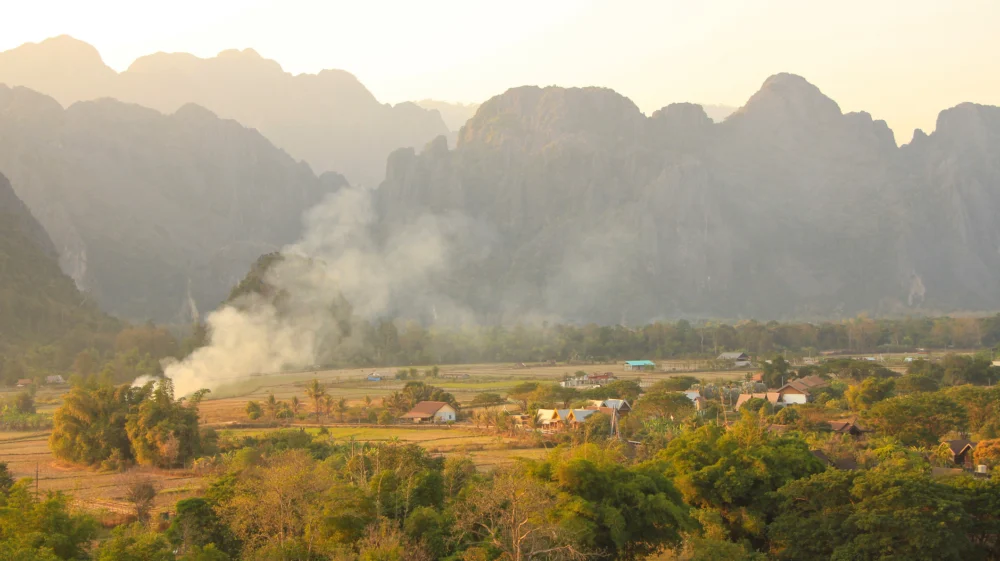
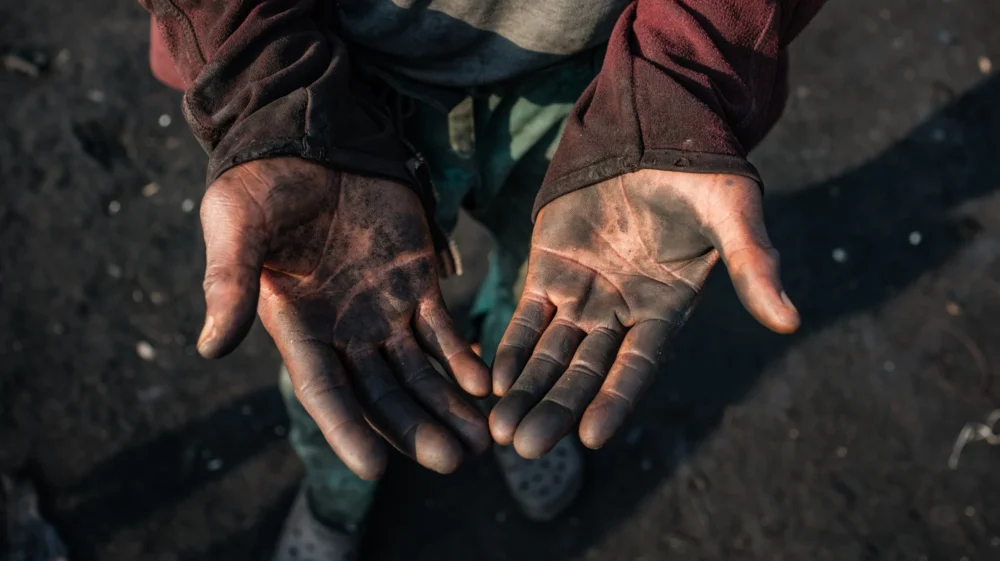
Air pollution has no borders as it spreads a blanket of “regional haze.” Every year, the burning of fields in Myanmar and Lao PDR affects northern Thailand, while the smoke from burning in Thailand spreads across Malaysia and Singapore. While its effects are regional, some groups and individuals bear a disproportionate burden, ranging from low-income communities without proper ventilation and air purifiers to factory workers, outdoor workers, and street vendors in crowded cities.
Air pollution often exacerbates existing social and economic inequities, perpetuating further inequality and ill health cycles. Achan Noi is keen that the draft air quality legislation protect vulnerable groups of people to address this inequity.
Our citizen-led draft is concerned about the two facets of clean air and health. We always say clean air and the right to clean air for health. We have identified special groups of vulnerable people who need protection, such as children, pregnant women, elderly patients, and outdoor workers.
SEI Asia’s podcast series Environment and Policy in Asia focuses on current and critical environmental challenges in Asia and emphasizing policy actions.
The podcast encourages dialogue on policy and practice about sustainable development in Asia. The podcast series aims to provide a platform for SEI Asia’s researchers to highlight their work, with the communications team as the host.
Media coverage / SEI Asia's Diane Archer shares insights with HaRDstories about the Clean Air Bill in Thailand.
Project / Lao PDR is developing its first National Clean Air Strategy, drawing on emissions data, mitigation analysis and health benefits to guide action.
Feature / Discover how air quality research since the 1990s has shaped policy and highlighted the health, economic and social benefits of addressing air pollution.