part of Environment and policy in Asia
As Thailand, Vietnam and Cambodia expand their investments in natural gas and liquefied natural gas (LNG) infrastructure to meet growing energy demand, we ask a leading energy expert: is natural gas a genuine “bridge” to a clean energy future, or a barrier that delays meaningful decarbonization?
00:00 – 00:24
Welcome to SEI Asia’s podcast on environment and policy in Asia. In this podcast series, we invite experts to discuss the many critical and complex environmental challenges in Asia, and how to find solutions through policy and partnerships.
00:34 – 00:52
Rajesh: Thank you very much, Tarek, for joining us in this SEI Asia podcast series, Environment and Policy in Asia. In this episode, we want to explore matters relating to the energy transition in the Mekong Region, and in particular, your work focusing on the role of natural gas in the transition to clean energy.
00:53 – 00:59
Tarek: Thanks very much, Rajesh. I’ve listened to a few of your podcasts and so it’s a pleasure to be here sitting on the other side of the recording this time.
01:00 – 01:20
Rajesh: Excellent. So, before we get into the topic as such, we also know you’ve been involved for many years in research and policy engagement on renewable energy and the clean energy transition. So tell us a little bit about your own work for our listeners. How did you come to land in this particular area of work?
01:21 – 02:49
Tarek: AMPERES and the wider Alluvium group, which AMPERES is part of, was founded to improve the way society deals with complex and interconnected issues of community and nature. And when we started in the Mekong about 10 years ago, I actually started about 20 years ago, but the company started 10 years ago, the most complex sustainability issues facing the Mekong were all focused around the energy sector. So we realised we had to engage in a positive way in this sector if we’re going to have an impact on sustainability. As listeners would know, many countries in the Mekong relied on, and still rely on, fossil fuels for energy security. So that’s like Thailand, Vietnam and Cambodia. And many countries also relied on abundant hydropower resources for both energy security and for economic export. And so both of these choices imbue the region with significant adverse environmental and social impacts. Coal and gas cause carbon emissions, and especially in the case of coal, leads to deteriorating air quality.
And both also cause significant environmental damage in their processes of mining and extraction. And of course, as we all know, hydropower fragments and regulates river systems, cutting the transport of water and sediments and fish, which has been the basis of the immense productivity and biodiversity of the Mekong system, and the basis for many millions of livelihoods. So for me, engaging constructively in the energy sector has been a cornerstone of our work because it’s the entry point for sustainable decision making.
02:50 – 03:02
Rajesh: This is so true. Energy is such a cornerstone of development in the Mekong Region. That gives us a good window to jump into the Mekong Region and the topic of clean energy transition, which we want to focus on.
03:03 – 04:26
Tarek: All these three countries, Cambodia, Vietnam and Thailand are building gas infrastructure, but for three quite different reasons. But I think before we jump into the country specifics, I think we need to think a little bit about what energy transition means. Energy transition is massively disruptive. And we cannot forget this. In all Mekong countries, like most countries around the world, our energy systems have evolved over many decades at a time when fossil fuels were the common or the predominant option.
And this means that our systems engineering, our markets, our policies, our industry sectors have all evolved to calibrate towards a technology mix that we are now working hard to replace with a cleaner technology. So that kind of transformation is massive. It’s a big effort and all countries are struggling with this.
And I think we must not forget that there are stakeholders within this old system who are not so enthusiastic about the change. They have a vested interest to continue in business as usual. So when we consider transition trajectories of Mekong countries and the role that gas is playing to enable or inhibit that transition, we need to keep that scale of disruption that is needed in mind and also understand that the current energy sector actors who stand to gain or lose out by this transformation, we need to know who they are and what they’re gaining or losing.
04:27 – 04:59
Rajesh: In this episode, we also wanted to focus on the natural gas question. Because one of the most consequential energy policy questions facing the Mekong is about in particular, Vietnam, Thailand and Cambodia, investing heavily in natural gas and LNG infrastructure as a bridge to a clean energy future. So from your own research and work, Tarek, can you give us a kind of a broad strokes picture of this bit of the transition, but also this investment in LNG and natural gas?
05:00 – 07:27
Tarek: In Thailand, gas is not a breach. It’s the incumbent system. So if you look at work from, say, the Centre for Strategic and International Studies, gas-fired power accounts for about nine and a half gigawatts of EGAT, 16.3 gigawatts of capacity, and it’s projected to make up 74 to 81 percent of contracted PPA capacity between 2025 and 2030. In Vietnam, the incumbent is actually coal and hydro. It’s not gas. And there’s a growing and significant share of wind and solar in the mix in Vietnam. So the share of gas today is actually very small in Vietnam. The Power Development Plan No. 8 targets 22.5 gigawatts of LNG-fired gas capacity compared to 1.6 gigawatts of actual capacity that’s on the ground.
So Vietnam’s gas question is, can we increase 14 times the amount of gas over the next five years? That’s a pretty big question mark, to build that amount of capacity, to build the supply chain infrastructure that’s needed in those very short timeframes. And I guess the high ambition for gas is more in Vietnam than other countries because of an important fact, which is it’s the power sector that is growing the fastest. It’s a country where the power system in Vietnam was about the same size as Australia’s national electricity market. By 2030, so that’s just seven years later, the power system is projected to have doubled. So doubling of capacity in seven years is a massive task. And Vietnam’s strategy is sort of one of all hands on deck and by any means necessary, use whatever technologies that can contribute to that. And that’s why we’ve seen Vietnam experiment with solar and wind so successfully in recent years, because they just need those gigawatts on the ground. And why they’ve explored things like gas recently, and even things like nuclear, it’s not off the table in Vietnam. Because that drive to keep up with demand is so intense and so clear and present.
And then maybe finally, just to turn to Cambodia, Cambodia is quite different to the other two, because of its scale, it’s much, much more than Vietnam and Thailand. The challenge is to replace coal, which is increasingly more difficult to build, with gas, which is seen as a cleaner baseload fuel, as they say. So that’s the sort of the goal in Cambodia.
07:28 – 07:39
Rajesh: Is there an argument to say that, let us say these three countries are actually looking at natural gas and LNG infrastructure as a bridge to a clean energy future or not? Can you clarify that?
07:40 – 08:40
Tarek: Yeah, in my opinion, I don’t think so. In Thailand, gas is the destination already. And gas is not a clean fuel. So Thailand has really no ambition in power planning to move away from gas as a sort of a dominant source of fuel. So that’s a lock-in of a carbon technology. In Vietnam, gas is sort of seen as a multi-pronged approach to build as much capacity as soon as possible. To avoid the situation in the sort of the 1990s when they had lots of blackouts. So it’s not a transition to renewables as such. It’s a keep up with demand strategy in Vietnam. And in Cambodia, it’s sort of seen as a choice between the lesser of the evil. So, it’s increasingly difficult for countries like Cambodia to build out coal power stations because of the requirement for external or, you know, foreign investors. So coal is becoming more difficult in that environment. And gas is, it seems, still possible. I would say that that’s the difference between the three countries.
08:41 – 08:51
Rajesh: So there are some similarities, some differences. So given this context, Tarek, what do you think is the realistic renewables pathway for these countries?
08:52 – 09:30
Tarek: I think the future of renewables in any of these countries really relates to the conditions in the markets of these countries. In an open and level playing field, renewables, so that’s solar and wind and increasingly solar and batteries as well, so we’ve firmed up with batteries, are the cheapest sources of electricity available. So if it was in a sort of a cost competitive market, you would see renewables winning, even in the Mekong countries. Where you see other technologies sort of winning, you know, reflects, I think, the influence of other factors that distort the market dynamics.
09:31 – 09:33
Rajesh: Can you explain what would be these other factors that distort?
09:34 – 10:26
Tarek: Well, I think some of these countries that we’re talking about, like Vietnam, for example, and Cambodia, you don’t have price discovery and competitive market environments. Or, you know, whether they’re wholesale market environments. And in Vietnam’s case, also retail market environments. So you don’t have that kind of price discovery that allows price to determine the solution. And you have a whole suite of not just policy, but industry dynamics that favour larger scale power systems and incumbent generators of electricity. So for example, state-owned enterprises have been supported a lot in the past because they delivered power when it was uneconomic, when the market couldn’t have done it. And now they continue to deliver power and help countries meet energy security targets, even if they’re not the most competitive option.
10:27 – 11:00
Rajesh: The direction seems to be that, one, the transition is going to be difficult, not just because of the fuels involved, or at least the sources, solar, wind and batteries. But also intense interest, the lack of open market competition. And also these, let us say, legacy enterprises, state enterprises are still there. They cannot be removed that easily. They have 30, 40-year histories of people being employed in them, right, and being part of power structures. In your view, where are the windows or pathways of opportunity for these countries to move into renewables?
11:01 – 12:42
Tarek: I think it is part of the broader political economy mix of the Mekong Region. I think we should also say that some of these state-owned enterprises are leading some of the efforts in renewables as well. So there are, for example, in Vietnam, groups like EVN, Electricity Vietnam, that is starting now to play a sort of a significant role in rooftop solar deployment. So it’s not a one-dimensional story here, but it is a complicated story. I think the most important thing in terms of transition is we have to recognize that the decisions that we’re going to be making today, if we think about where the Mekong countries are, will set the trajectory for the power systems for many decades to come. So Mekong countries have either recently or are about to transition from least developed country to lower middle-income country, which means that they’re industrializing or have industrialized relatively recently. And that means per capita energy use is increasing dramatically. Energy intensive industries are scaling out across the country and becoming more and more important for their economies. And in these environments, countries are having to make decisions today about generation, and power grids, and power systems that will determine the nature of the power system for the life of these assets, which is generally 15 to 40 years, that sort of timeframe. So it’s really important that the decisions that these countries make to scale out their power systems and to enhance them, we do so with these kinds of sustainability considerations in mind, not just continue on with business as usual.
12:43 – 12:53
Rajesh: Can you give us a quick, similarly broad stroke picture above these three countries, because they have embarked on renewables to a certain extent. How far and how promising [is the transition to renewables]?
12:54 – 14:29
Tarek: Yeah, so I think all three countries that we’ve been sort of focusing on have had some pretty good experiences, important experiences with renewables, with clean energy. Vietnam is a country that in the period 2017, when they first introduced their first feed-in tariff policy to 2020, when they terminated the policy, they implemented about 16 gigawatts of solar, rooftop and utility scale solar in that time. In the space of 18 months to two years, they got 16 gigawatts of solar capacity, not only approved, but built, commissioned and generating electrons. Thailand also had a feed-in tariff policy earlier than Vietnam in the mid-2014, 2015, that sort of timeframe, nowhere near the same scale. But it added some megawatts of capacity before it was also kind of cancelled, demonstrating that it can work and that there is appetite for these kinds of technologies in both Thailand and Vietnam.
Cambodia’s first competitive solar auction was for about 60 megawatts of capacity at the National Solar Park. It was an auction process, so they got 26 bidders. And the winning bid was at about 3.8 or 3.9 cents per kilowatt hour as a sort of the lowest bid. So when you compare that to, kind of, where electricity tariffs are in the region, which are more like 7 to 10 cents per kilowatt hours, that was a pretty competitive bid. So all countries have demonstrated that renewables can work. The question is, do we have the right ingredients and the right enabling environment in place to allow these things to scale?
14:30 – 14:37
Rajesh: Going back to the core theme of our episode. Can you tell us why you call it “gaslighting the energy transition” in the Mekong Region?
14:38 – 16:04
Tarek: Yeah, I think obviously the term gaslighting has a very specific meaning socially, and sort of using it as a bit of a pun in this case. And the main reason for it is because gas is often promoted in our region as a transition fuel. It’s a stepping stone towards [a] cleaner energy future, a stepping stone away from coal, a stepping stone towards renewables. But there’s a sort of a perception that we have to go through gas to get to this clean future. And I think it’s a bit disingenuous, this approach. Because often the role of gas, and the kind of the preference for gas, is an effort to extend or continue business as usual way of managing our energy systems. And to avoid making decisions today that might push us closer towards a renewable future and lock in what are some of the incumbent decisions that we see favouring fossil fuels. So really, it’s a sort of a term to invert on its head, this idea of transition fuel. It’s not a transition fuel, I see gases locking in the region to a longer legacy of fossil fuels than it needs to. And it avoids the kinds of system transformations that we started talking about earlier in the piece that would be needed. That we should be doing today. So that we don’t have this lock in and we don’t have this 20, 30, 40-year legacy of reliance on fossil fuels to come.
16:05 – 16:18
Rajesh: Tarek, earlier, you said in Thailand, it’s not so much a bridge, but it’s incumbent. In Thailand, the situation is that they’re not using it as a step, they’re just trying to keep it as long as possible. Would that be the correct description?
16:19 – 17:54
Tarek: Yes, correct. I think across all of our Mekong countries, their energy systems or the energy sectors have grown up with a common strategy, which is building our energy systems based on the cheap domestic resources that’s available. Most countries would do this. If you’ve got an abundance of a resource, you use that first, because it will be cheaper, it creates economic opportunities in your country, you’re creating jobs and all those kinds of things. So in Thailand, that cheap domestic resource is gas. So from the 1980s onwards, gas in the Gulf of Thailand was sort of the energy source around which the whole gas power system is built. And that’s both the power, the engineering side of things, the infrastructure, but also the markets and all those kinds of arrangements; they were all built up around gas. Then in around 2010, so production from the Gulf of Thailand and Myanmar, there were some imports coming from Myanmar at that time, they started to drop a little bit, they fell. And of course, demand in Thailand is still growing. And so Thailand sought other options to meet its power demand. And that included imports from Laos in terms of hydropower, but it also included the LNG imports, which is now pretty significant in terms of the entire power system. So the big challenge for Thailand is to transform the system that was built for, and works really well, for gas, towards decarbonised options.
17:55 – 18:06
Rajesh: There’s a certain urgency, isn’t in terms of climate change, the need to go for decarbonised options. And do you think this question, the gas versus renewables decision has to be made urgently?
18:07 – 18:29
Tarek: I think there’s more work to do. What is most promising in Thailand is the role of civil society. I think Thailand has a very active civil society sector. And there are energy consumers who are really advocating and looking for their options in terms of renewables. And that’s a powerful voice in this space, which I think can have a big impact and is starting to have a big impact.
18:30 – 18:42
Rajesh: Moving a little bit towards Vietnam, you mentioned the 22.5 gigawatt LNG target by 2030. How realistic is that? And then does that entrench Vietnam even more within the LNG option?
18:43 – 20:01
Tarek: I think adding 22.5 gigawatts of capacity by 2030 of gas is not really realistic. And one of the interesting points is it’s not really the political will that is the main constraint. The financing side of it, the supply chain side of things, you know, building out the infrastructure for LNG ports, all these things just can’t happen in the timeframes that they need to in Vietnam. If we look at some of the numbers in Vietnam, we see that that target of 22.5 gigawatts of capacity plus is coupled with, you know, 14.9 gigawatts of domestic capacity. So developing gas fields in Vietnam, the same way Thailand in the 1980s, put that together, a pretty substantial piece of the power development plan’s targets. And they’re jumping up from 1.6 gigawatts of LNG capacity at the moment and 8.3 gigawatts of domestic gas capacity. So either doubling or 14 times increase in those two numbers.
There are others like the IEEFA (Institute for Energy Economics and Financial Analysis], which assesses Vietnam to likely miss these 2030 targets by the order of 25 gigawatts of capacity. So it’s sort of growing consensus, I think, that this is really unrealistic for Vietnam to expect that capacity in the short timeframes.
20:02 – 20:15
Rajesh: Maybe we can move into policy pathways, Tarek. If you were to think of, say, one to two important actions that, say, these three countries could take right now, from your own research, what would that be?
20:16 – 23:04
Tarek: I think if we pick the top three, I’d say the first one is a strong and consistent policy commitment to decarbonisation. I think all of the countries in the Mekong Region rely on the private sector to be a proactive actor in this space, foreign investors, local investors investing in the generation infrastructure or the grid transmission lines. And those kinds of long-term investments require a bit of political certainty. So if countries give strong signals, saying like, for example, a renewable energy commitment backed up by the laws and the regulations and so on of that country, then it gives a stable environment for investors to move into that space, and to make financial commitments to engage, build solar farms and build large batteries and do all those kinds of things.
I think the second most important thing is market reform so that we allow price discovery in the markets of the Mekong countries. And price discovery really means setting a level playing field so that all technologies compete on a like-for-like basis in terms of price. You’re providing a kilowatt hour of electricity, you’re providing a megawatt of capacity, do so on a like-for-like basis. If the market is set up in that way, I think you will accelerate. It could be one of the most important steps to accelerate the energy transition. And then I think the third in my top three probably would be about accounting for all the costs. So every technology, of course, has a direct cost that we understand in terms of cost to produce something or the cost to buy something. But every technology also has a mix of environmental and social costs that at the moment go unaccounted for or uncounted. And it’s those costs because they’re uncounted, they’re paid for by somebody else. For example, you build a hydropower station and you disrupt the fisheries, local fishermen lose their livelihood. They’re paying for that cost that isn’t factored into the electricity sector transaction. So a proper accounting of all costs, all social and environmental costs in the decision-making would go a long way as well to accelerate a just clean transition.
In many countries, take Australia where I’m based as an example, the separation of the market from the direct control of government is it being part of that process of enabling price discovery. So it’s not all in the sphere of the political realm, but it’s having these independent institutions and that allow for transparency and accountability and a bit of separation from the levers of influence and power that comes from industry and government as well.
23:05 – 23:11
Rajesh: Can you also talk a little bit about the costs of the transition in terms of labour loss, jobs, the upskilling and so on?
23:12 – 26:14
Tarek: So the earlier point that we were talking before was that the energy sectors have evolved to take advantage of domestic resources. Countries that have lots of gas like Thailand, they built their system around gas because they could use that local resource and they have created an economy around that gas industry. And the same for coal in Vietnam. Vietnam has a domestic coal industry. Same for hydropower in Laos. I think we can note two points on this.
One is that the countries are changing as their demand grows quickly. Thailand is more reliant on imported LNG gas. Vietnam is more reliant on imported coal. And that imported energy has less of an economic upswing for the countries. And they come also with a range of more complicated, more risky geopolitical risks. Because as we’ve seen in the closing of the Strait of Hormuz, this has caused spikes in prices of LNG gas, and disruptions to supply chains and some countries still getting access to LNG, and others finding it more difficult to get access. And all of these things make for a more complex picture of economic risks that you have to take into account as well as these kinds of considerations. Yes, we have the positive benefits of any energy sector industry in terms of generating jobs and so on. But we also have these other geopolitical risks that are pushing and pulling the benefits in different ways and changing the calculus for Mekong countries as to what is the right mix for us.
I think all countries show signs that we should be positive for, and we should be celebrating. We’ve talked about some of those, Rajesh, in terms of the large deployment of solar and wind in Vietnam, some of these early auctions in Cambodia for solar, and also some of the kind of the more community-based activities in solar that Thailand has been experimenting with as well. So I would say community, but also the consumer, side of things. I think there’s also another thing to be positive for: is some of these big energy consumers, the industrial sector, they have an appetite for decarbonisation, that is both economic but also, more importantly, about reliability.
There’s concerns about reliability, and there’s concerns about economic and concerns about environment all mixing together. So that you see groups like IKEA in Vietnam, for example, who are really aggressively pushing decarbonisation of their facilities and practices and leading the way. And many others that we work with in, you know, in Saigon High Tech Park, for example, you know, they’re looking at decarbonisation at the industrial park. So there are these other actors that are stepping forward. And often these actors are, you know, working on their trading to the EU, and there’s an appetite for clean decarbonised production in the EU markets as well.
26:15 – 26:25
Rajesh: Excellent. Thank you so much, Tarek, for joining us in this podcast series and sharing your insights on the energy transition in the Mekong Region. And look forward to talking with you again.
26:26 – 26:27
Tarek: Yeah, thanks very much, Rajesh.
26:28 – 26:46
Thank you for listening to SEI Asia’s podcast on environment and Policy in Asia. For more information on these topics, guests and our work, please visit our website on www.sei.org.
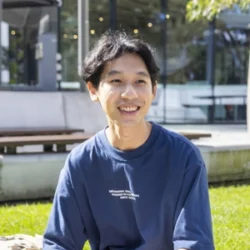
In this episode of the SEI Asia podcast series “Environment and Policy in Asia”, we speak with Tarek Ketelsen from AMPERES (part of the Alluvium Group), an energy specialist whose work focuses on the renewable energy transition.
As the economies in the countries of the Mekong Region expand, industries grow and electricity demand rises, the governments of Cambodia, Thailand and Vietnam face mounting pressure to secure reliable and affordable energy.
Natural gas, often promoted as a cleaner alternative to coal, has become an increasingly attractive option – and a supposed stepping stone towards renewable energy. But is gas really the bridge to a low-carbon future that it is made out to be?
Ketelsen challenges the assumption that natural gas is necessarily a transitional fuel, arguing that current investments risk prolonging the Mekong Region’s dependence on fossil fuels.
There's a perception that we have to go through gas to get to this clean future. I think it's a bit disingenuous.
Tarek Ketelsen, Mekong Technical Lead at AMPERES
Ketelsen explains that while Thailand, Vietnam and Cambodia are all expanding their gas infrastructure, they are doing so for fundamentally different reasons.
Thailand represents the most entrenched case. “Gas is not a bridge. It is the incumbent system,” says Ketelsen.
Decades of investment in domestic gas resources have shaped the country’s power infrastructure, markets and institutions. As production from the Gulf of Thailand and imports from Myanmar have declined, Thailand has increasingly turned to imported LNG – along with continued investment in hydropower dams in neighbouring Laos – to meet growing demand.
A recent opinion piece in the Bangkok Post reported that Thailand’s LNG imports nearly doubled from 829 million standard cubic feet per day (MMscfd) in 2021 to 1,628 MMscfd between January and July 2026, as Myanmar pipeline gas fell by about 41%.
“Thailand has really no ambition in power planning to move away from gas as a dominant source of fuel. So that’s a lock-in of a carbon technology,” says Ketelsen.
Vietnam’s situation is different. Its electricity system has traditionally relied on coal and hydropower, not gas, though wind and solar capacity has grown in recent years. However, its Eighth Power Development Plan targets 22.5 gigawatts of LNG-fired capacity by 2030 – a fourteen-fold increase on the current 1.6 gigawatts.
“Adding 22.5 gigawatts of capacity by 2030 of gas is not really realistic,” he notes, given the enormous financing, infrastructure and supply-chain requirements involved. Building LNG terminals and the associated infrastructure within such a short timeframe will be challenging, particularly as Vietnam’s electricity system is projected to double in size over a relatively brief period. The Institute for Energy Economics and Financial Analysis (IEEFA) estimates that Vietnam is likely to miss its 2030 targets for LNG and domestic gas-fired power by a combined 25 gigawatts.
Cambodia’s case is different again: it sees natural gas as an alternative to coal. With new coal power plants becoming harder to develop, gas is seen as a cleaner baseload fuel. But Ketelsen points out that this is choosing “the lesser evil” rather than pursuing a genuine renewable energy transition.
Over decades, the region’s energy systems have evolved around fossil fuels, with engineering, markets, policies and industries all designed around existing fossil fuel technologies. With many vested interests, change is not easy. “There are stakeholders within this old system who are not so enthusiastic about the change,” Ketelsen says.
Decisions made today about power generation, transmission networks and fuel supply can shape national energy systems for 15–40 years. Investing heavily in gas infrastructure therefore carries the risk of locking countries into long-term fossil fuel dependence, potentially making it harder and more expensive to shift towards renewables.
This is particularly concerning when renewable energy technologies are becoming increasingly competitive.
Solar and wind, increasingly supported by battery storage, are already the cheapest sources of electricity in markets where technologies compete on a level playing field.
Tarek Ketelsen, Mekong Technical Lead at AMPERES
The challenge is that countries such as Vietnam and Cambodia lack competitive electricity markets, while well-established industry and political structures tend to favour conventional large-scale power systems over newer alternatives.
“You don’t have that price discovery that allows price to determine the solution,” he says.
State-owned enterprises, which have historically played an important role in ensuring energy security when markets could not deliver, remain influential in the region. Some are now leading renewable energy efforts, but Ketelsen notes that they continue to be supported even when they are ”not the most competitive option”. Changing established institutions and market arrangements is a complex undertaking.
Despite these challenges, Ketelsen identifies promising developments in the region.
Vietnam, following the introduction of feed-in tariff policies in 2017, installed approximately 16 gigawatts of rooftop and utility-scale solar capacity between 2017 and 2020. Thailand has also experimented with feed-in tariffs, while Cambodia’s first competitive solar auction attracted 26 bidders, with a winning bid of around 3.9 US cents per kilowatt-hour – well below regional electricity tariffs of 7–10 cents.
In Thailand, an active civil society and energy consumers advocating for renewables are a powerful voice in this space.
Tarek Ketelsen, Mekong Technical Lead at AMPERES
Major industrial consumers, including IKEA in Vietnam and businesses in Saigon High Tech Park, are “aggressively pushing decarbonization”, driven by both economic and reliability concerns.
Ketelsen sees these developments as important opportunities to reshape the region’s energy future. The transition is not simply about replacing one fuel with another, but about transforming the policies, markets, institutions and investment decisions that are at the core of energy systems.
These examples show that renewable energy can work at scale. The question is whether governments can provide the right mix of policies and economic incentives to facilitate the transition.
Ketelsen identifies three priorities for accelerating the transition: a strong and consistent government commitment to decarbonization, market reforms that allow different energy technologies to compete fairly, and better accounting of the full environmental and social costs of energy production. Market reform, he says, means ensuring “all technologies compete on a like-for-like basis”.
The third priority is particularly important. The costs of energy generation extend beyond the price of electricity. Hydropower, for example, can disrupt fisheries and river ecosystems, affecting the livelihoods of communities that depend on them. He emphasizes the need for “accounting for all the costs”, including environmental and social impacts that are currently borne by communities rather than factored into electricity sector transactions. Similarly, the transition away from established energy industries must consider workers, employment and the need for new skills.
Energy security also needs to be understood in a changing geopolitical landscape. Growing dependence on imported LNG and coal exposes countries to international price volatility and supply disruptions, potentially undermining the economic and security arguments used to justify fossil fuel investments.
In Ketelsen’s view, treating natural gas as a bridge to clean energy actually delays the changes needed for a genuine transition. The governments in the Mekong Region have an opportunity to invest in renewable energy, reform electricity markets and ensure that the social and environmental costs of energy production are properly recognized.
Ketelsen’s message is clear: the choices made now will either lock in fossil fuel dependence or set the region on course for a clean energy future that does not compromise its climate, environment and communities.
This podcast episode was supported by the Mekong Thought Leadership and Think Tanks Network Program (MTT), SEI Asia.
Tarek Ketelsen
Mekong Technical Lead at AMPERES
Visakone Thammavong
SUMERNET PLUS Fellow (2026-2027) at SEI Asia
Program / This three-year program will develop clear and actionable evidence-based solutions to water, energy, and development challenges in the Mekong Region.
Other publication / The 9th ASEAN Energy Outlook explores three energy scenarios through 2060, six policy directions and pathways to strengthen regional energy security.
Past event / The event will explore water–energy–climate interlinkages while addressing interconnected regional challenges and celebrate the 20th Anniversary of SUMERNET.
Other publication / SEI experts and tools inform this ASEAN Centre for Energy roadmap plotting the route to net zero emissions in Lao PDR.