ICCAP is focused on advancing climate adaptation by achieving a triple bottom line:
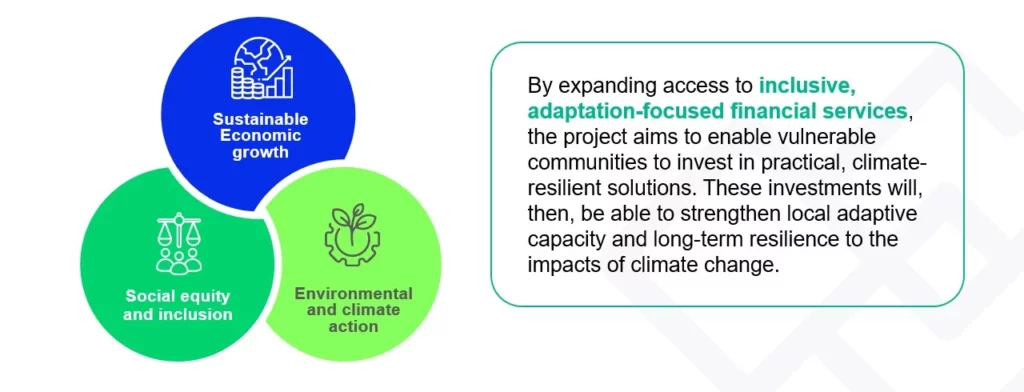
Graphic: SEI Asia
Objective:
To create an enabling environment for inclusive green finance by identifying policy gaps, promoting best practices, and strengthening policymaker capacity across Asia-Pacific.
Scope:
The project will undertake an in-depth analysis of policy and regulatory frameworks to support the adoption of inclusive climate finance policies. It will produce evidence-based, gender-responsive policy recommendations, best practices in green finance, and stakeholder engagement strategies to ensure that climate finance systems are inclusive, locally grounded, and responsive to the needs of vulnerable communities.
Stakeholders:
National and local governments, financial regulators, private sector stakeholders, and civil society organizations.
Objective:
To support financial service providers (FSPs) in delivering client-centric green financial products tailored to the needs of vulnerable populations.
Scope:
The project will offer technical assistance to at least 14 FSPs across six countries, enabling them to design, pilot, and scale inclusive green credit products. It will help FSPs align with sustainability principles, improve investment readiness, and build systems for tracking the performance of their green finance portfolios.
Stakeholders:
FSPs and their clients, as well as green technology providers, investors, and policymakers who support inclusive finance innovation.
Objective:
To catalyse private investment in local climate adaptation strategies by establishing a regional finance platform.
Scope:
The project will establish the RAIF – an innovative facility that channels public and private capital for climate adaptation through FSPs. It will back instruments like blended finance, hedging, and green bonds, with a flexible design to adapt to markets and scale long-term resilience investments.
Stakeholders:
Institutional investors, development banks, national governments, and FSPs seeking to expand their adaptation finance offerings.
Objective:
To co-create locally relevant, innovative, and bankable adaptation solutions in partnership with communities and climate finance pipeline stakeholders.
Scope:
The project will pilot six Multi-stakeholder Action Labs using a participatory, beneficiary-centred approach to develop and test innovative and needs-responsive adaptation solutions. These labs will bring together climate-vulnerable communities and marginalised groups, private sector actors, policymakers, and technical experts. The co-developed adaptation solutions will be linked to financial products designed by FSPs and scaled through financing catalysed by the RAIF.
Stakeholders:
Local climate-vulnerable communities and marginalized groups, FSPs, local policymakers, technical experts, and private sector actors.
Objective:
To ensure that all ICCAP activities are inclusive and responsive to the needs of marginalised and climate-vulnerable populations.
Scope:
The project will mainstream GESI across the project by applying intersectional analysis, integrating inclusive MEL frameworks, and supporting gender-responsive financial design. It will help ensure ICCAP advances inclusive climate finance through the development of GESI toolkits, capacity strengthening for FSPs and partners, and implementation of a gender-transformative pilot that addresses root causes of financial exclusion by co-developing financial solutions at the local level.
Stakeholders:
Historically marginalised groups (including women, Indigenous Peoples, ethnic minorities, persons with disabilities), FSPs, local stakeholders, civil society organisations, and ICCAP implementing partners.
ICCAP targets six high-risk countries in Asia-Pacific, selected for their climate vulnerability and urgent need for adaptation finance:
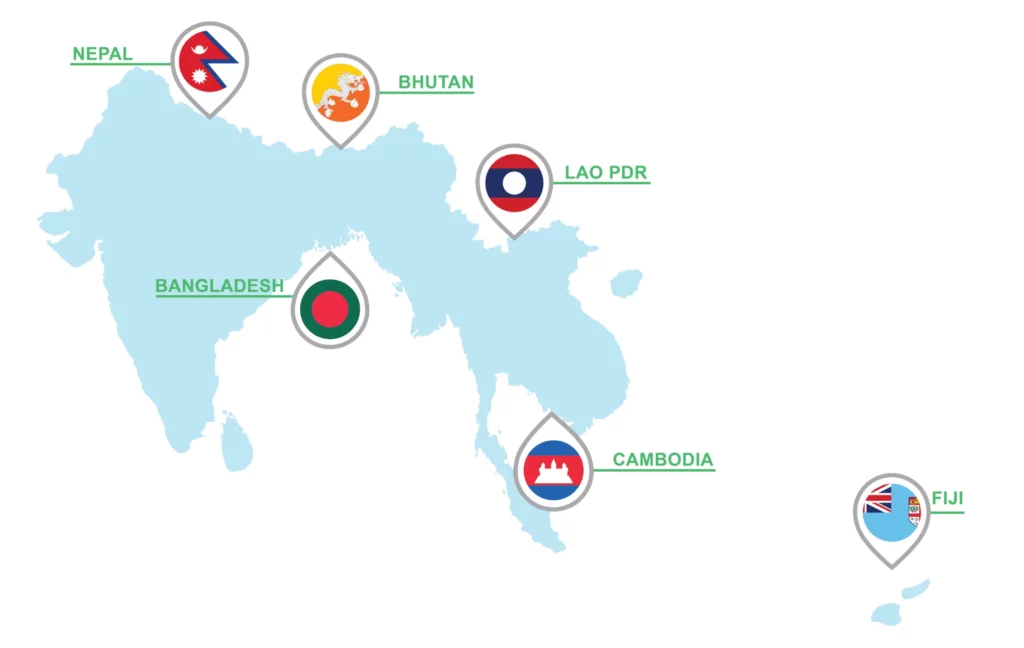
Graphic: SEI Asia
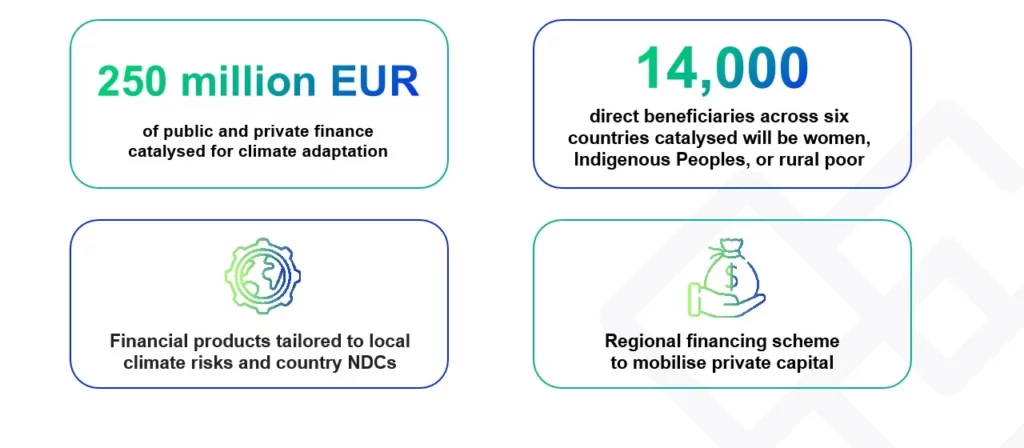
Graphic: SEI Asia
As part of the “Enabling inclusive climate finance in Asia through fit-for-purpose capacity development planning and action” project, the Center for Ecological Economics (CEE), Faculty of Economics, Chulalongkorn University, in collaboration with the Stockholm Environment Institute (SEI), is offering the Climate Finance for Professionals Course in 2026. The course is available in English and Thai.
The Regional Adaptation Investment Facility (RAIF) is a regional financing scheme designed to catalyse and de-risk climate adaptation finance for vulnerable communities across six Asia-Pacific countries. It connects international investors with local financial service providers to support sound climate adaptation solutions.
Project / The project will identify capacity gaps related to creating an enabling environment for inclusive finance flows, with specific attention to adaptation finance.
IKI’s independent complaint mechanism and SEI’s anti-corruption, ethics and whistleblowing policies will guide ICCAP. All program participants must give free and prior informed consent as part of these policies.
To report any incidence of misconduct, visit this website.
Project / The Centre for Finance for Sustainability (CFS) aims to unlock private sector investments into sustainability and climate change mitigation.
Project / CLIMATEFIT supports innovative financing mechanisms for climate change adaptation by providing key insights into financing sources and strategies.
Feature / Effective from September 2025, Jürisoo will bring her extensive leadership experience alongside professional and personal connections to SEI Asia.