The aim of CADWAGO was to address the global challenge of water security through enabling appropriate responses to the impacts of climate change on water resources. In so doing, it promoted systemic and adaptive transformations in water governance by developing knowledge to support conceptual, institutional and practice based innovations. It is by way of these transformations in governance that CADWAGO intended to support the forms of multi-level and multi-stakeholder collective action that will improve climate change adaptation responses, from a water security perspective. Through this approach, it was envisaged that both the livelihoods of communities and the ecosystem services that are dependent on water will be enhanced.
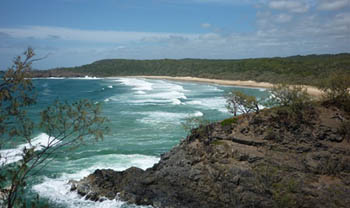
Australia’s coastal zone is diverse but how to improve coastal governance through enhanced decision-making frameworks? This was one of the project’s case studies. Photo credit: CADWAGO.
The three year project (2013-2016) was led by Neil Powell (SEI) and managed by Annemarieke de Bruin (SEI) and brought together 10 partners from Europe, Australasia and North America with extensive experience in climate change adaptation and water governance issues. CADWAGO built on lessons from ongoing case research to create a forum and dialogue between researchers and stakeholders at different scales. The work was structured along four research lenses:
The project produced an extensive list of publications detailing the results of the work as well as a number of project reports, blogposts, and posters.
SEI brief / This brief examines how interest-free cooperatives can help Nigerian smallholders address climate and sustainability challenges.
Perspective / Asia’s next financial revolution must make climate adaptation finance accessible to vulnerable households and small businesses.
Media advisory / Experts from SEI will be at CBD COP17 in Yerevan from 19–30 October and are available for commentary and analysis.