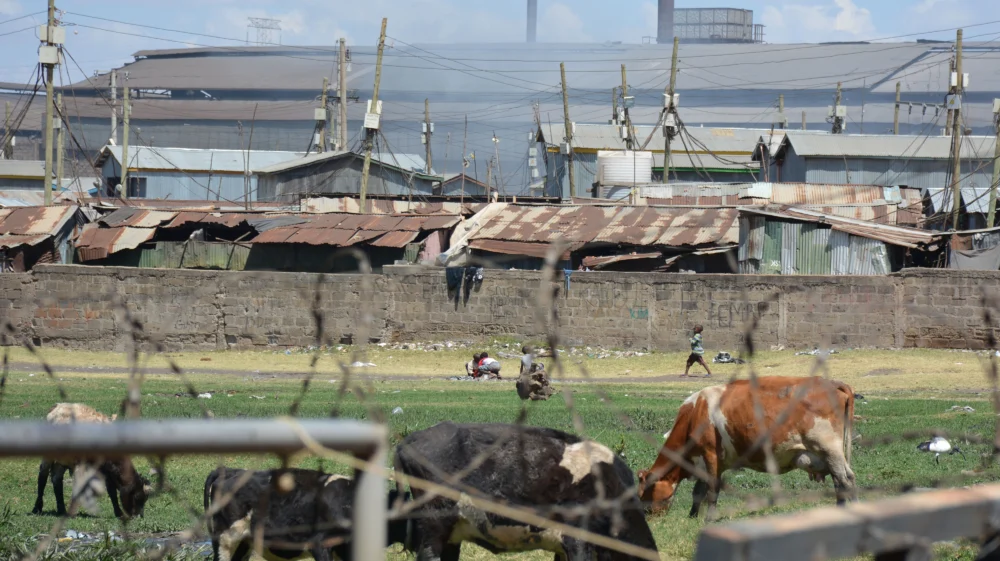
To respond to this pressing challenge, UNEP, with support from the China Trust Fund, proposes an ambitious, multi-country initiative focused on enhancing urban climate resilience, air quality management, and public health in three East African cities—Nairobi, Kampala, and Addis Ababa. These cities are at the forefront of Africa’s urbanization and are particularly vulnerable to the impacts of climate change and deteriorating air quality. The project is built around the Water-Energy-Food (WEF) nexus, recognizing that solutions must be multisectoral to be sustainable and transformative.
The project is strategically aligned with and builds upon ongoing work led by the Stockholm Environment Institute (SEI) in partnership with national and sub-national governments and agencies. In Nairobi, SEI is supporting the Nairobi City County Government through the Department of Environment, Water and Sanitation on initiatives to monitor and manage air quality in real time using low-cost sensors. This includes integrating air quality data into climate adaptation planning and urban resilience strategies, in line with Kenya’s National Climate Change Action Plan and the Nairobi Air Quality Agreement. SEI’s collaboration also supports public awareness and health advisory efforts, with a particular focus on vulnerable populations such as children and people with respiratory conditions.
In Kampala, SEI is partnering with the Kampala Capital City Authority (KCCA) to strengthen institutional capacity for air quality monitoring and forecasting, integrate air quality indicators into climate risk assessments, and promote science-based decision-making. This has involved joint work on scenario development for climate adaptation in transport and waste sectors, as well as the establishment of citizen-engaged air quality campaigns to drive behavioural change and urban planning responses.
In Addis Ababa, SEI is working closely with the Addis Ababa Environmental Protection Authority (AAEPA) to advance the city’s air quality data infrastructure and align this with climate information services. This partnership aims to enhance climate services that can inform municipal planning and policy, including early warning systems for air pollution episodes, urban heat stress, and flooding. Addis Ababa’s participation builds on UNEP’s prior engagement through the Urban Air and Water Quality Monitoring initiative and aims to bring new coherence to ongoing urban environment programs.
These ongoing partnerships are critical to the success of this project. They provide a strong foundation of trust, data, institutional ownership, and local relevance upon which the new activities will be built. By integrating existing workstreams into a unified regional initiative, the project promotes mutual learning and cross-city exchange. It will also reinforce efforts under broader continental frameworks, including the Africa Clean Air Program led by the African Union Commission, and key regional decisions under AMCEN and UNEA6, with specific attention to the Nairobi Air Quality Agreement as a pioneering regional cooperation model.
The project will deliver concrete outcomes over 12 months through a holistic approach focusing on evidence generation, governance strengthening, capacity development, and knowledge sharing. It is designed to catalyse long-term transformation by fostering collaboration across sectors and levels of government, supporting innovation, and scaling solutions that protect the health of people and the planet.
Journal article / "Breathing well" is about more than air quality: cleanliness, population and building density and the presence of vegetation all make a difference.
Feature / Discover how air quality research since the 1990s has shaped policy and highlighted the health, economic and social benefits of addressing air pollution.
Journal article / This research examines how changes in population vulnerability and exposure to air pollutants affect global air pollution-related mortality trends.