Bubbles, or ebullition, from the bottom sediments in the Amazon River basin, contribute to greenhouse gas emissions. Understanding the spatial and temporal variability of methane ebullition is key to mitigating its release into the atmosphere. Through an acoustic survey of ebullition along 274 km of the Amazon River, spanning four ecosystem types in three different river types, this article aims to assess the variability and characteristics of ebullition across the basin.
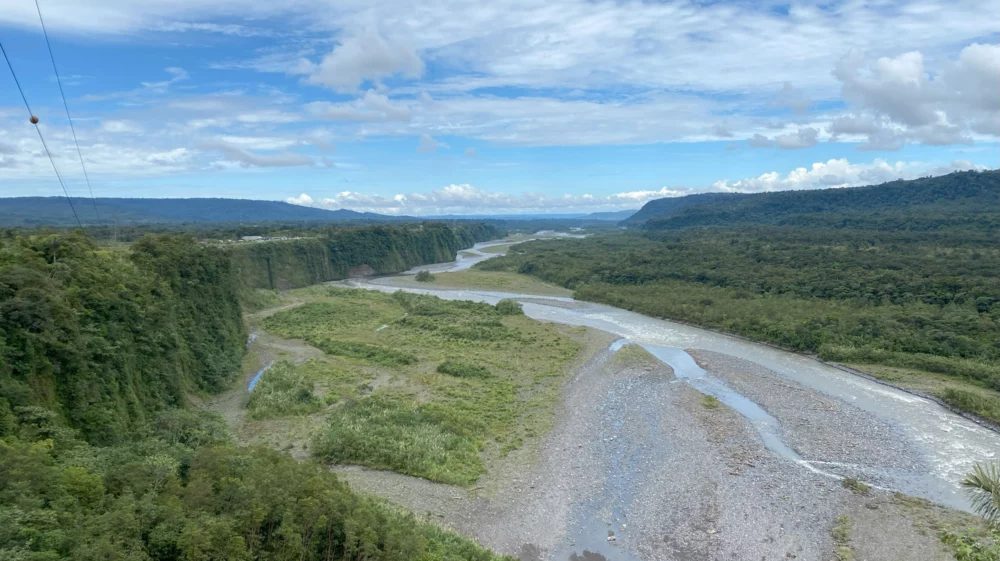
Amazon river basin, picture taken during the researchers' visit.
Rafaela Flach / SEI
Ebullition (gas bubbling) from aquatic ecosystems is an important pathway for gas transport from waterbodies to the atmosphere. The spatial and temporal variability of bubbles is typically high and often driven by the distribution of temporary or permanent hotspots. Understanding ebullition patterns remains key to adequately quantifying the exchange of poorly soluble gases like methane.
In this study, we performed a spatial analysis of bubble quantity and relative size using a scientific echosounder during the high-water season across black-, white-, and clearwater river floodplains, encompassing a wide variety of waterbody types such as lakes, main fluvial channels, tributaries, and flooded forests in the Amazon River basin. Our results revealed the dominance of a few spatially limited hotspots. While the number of bubbles per m2 was highest in the Negro river system, the total bubble flux was dominated by a few measurement sections in the Amazon and Tapajós river systems with substantially higher ebullition. The relationships of river system, waterbody type, or depth with the bubble quantity or size were weak with no clear trends.
These findings highlight ebullition hotspots as an important component of regional gas emissions in the Amazon basin, emphasizing the spatial heterogeneity of ebullition and the importance of local conditions in regulating ebullition and associated gas fluxes.
Journal article / This journal article describes how community-informed water systems modelling has fostered more resilient, equitable water management in Cambodia and Bolivia.
Feature / SEI US formed an agreement with an Ecuadorian university to support the school with watershed modelling for local river basins.
Perspective / This World Water Day, SEI Scientist Doug Chalmers reflects on how science supports conflict resolution around one of the planet's most precious resources: water