This article systematically reviews global research on electric vehicle charging infrastructure demand, highlighting significant variations in charger utilization, the need for more forward-looking studies, and gaps in underrepresented regions and vehicle types.
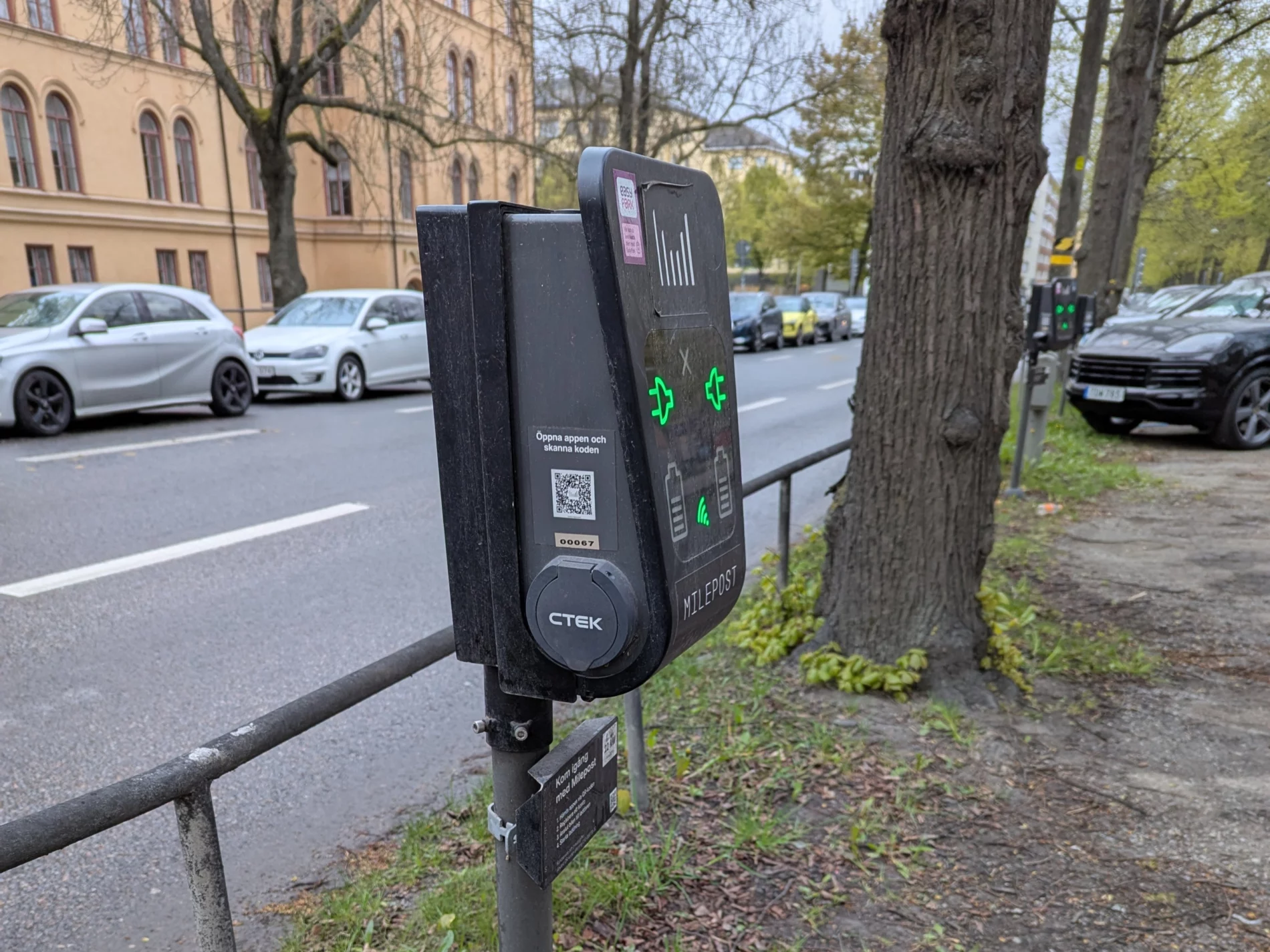
Photo: SEI / Naomi Lubick.
Establishing robust charging infrastructure is crucial for electric vehicle (EV) adoption. This study addresses the lack of systematic literature reviews examining the global charging infrastructure research landscape with a comprehensive review of English literature published between 2017 and 2023. The authors screened 12237 records, and analyzed 137 peer-reviewed and 31 grey literature studies. Findings reveal a mean and median public charging demand of 135 and 23 EVs/charger respectively – that is, a much more efficient utilization of chargers than the current public charging global average (10 EVs/charger). The differences are explained by aggregation of charging strategies – fast and super-fast charging can support 5 to 10 times as many vehicles per charger – but also a wide range of assumption used across studies, apparently deviating from actual deployment. The authors also identify a need for more forward-looking research given evolving technologies and policy ambitions. Further research is necessary for underrepresented regions like Africa and Latin America, and different vehicle types, such as heavy and light-duty commercial vehicles. Recommendations to the research community, policymakers, and practitioners include exploring complementary metrics beyond the widely used EVs/charger and addressing ambiguous charging definitions.
Press release / A systematic review shows that each charger could support up to 135 EVs – far above today’s global average of just 11.
Project / SEI will conduct an evidence synthesis from Swedish and international studies on varying charging infrastructure needs across different vehicles and users.
Perspective / SEI calls for a just, human-centred transport transition as COP30 launches the UN Decade of Sustainable Transport.
Press release / A systematic review shows that each charger could support up to 135 EVs – far above today’s global average of just 11.
Event on 19 October in Dublin / SEI's Francis X. Johnson joins a Global Bioeconomy Summit 2026 panel on how biofuels can accelerate a sustainable bioeconomy.