Research shows that each charger could support up to 135 electric vehicles (EVs), far beyond the current global average of just 11 EVs per charger – highlighting significant inefficiencies in charger utilization. The large gap between mean and median values reflects substantial variability in assumptions and charger configurations. To achieve a cost-effective, profitable charging network, greater understanding of diverse national market conditions is needed.
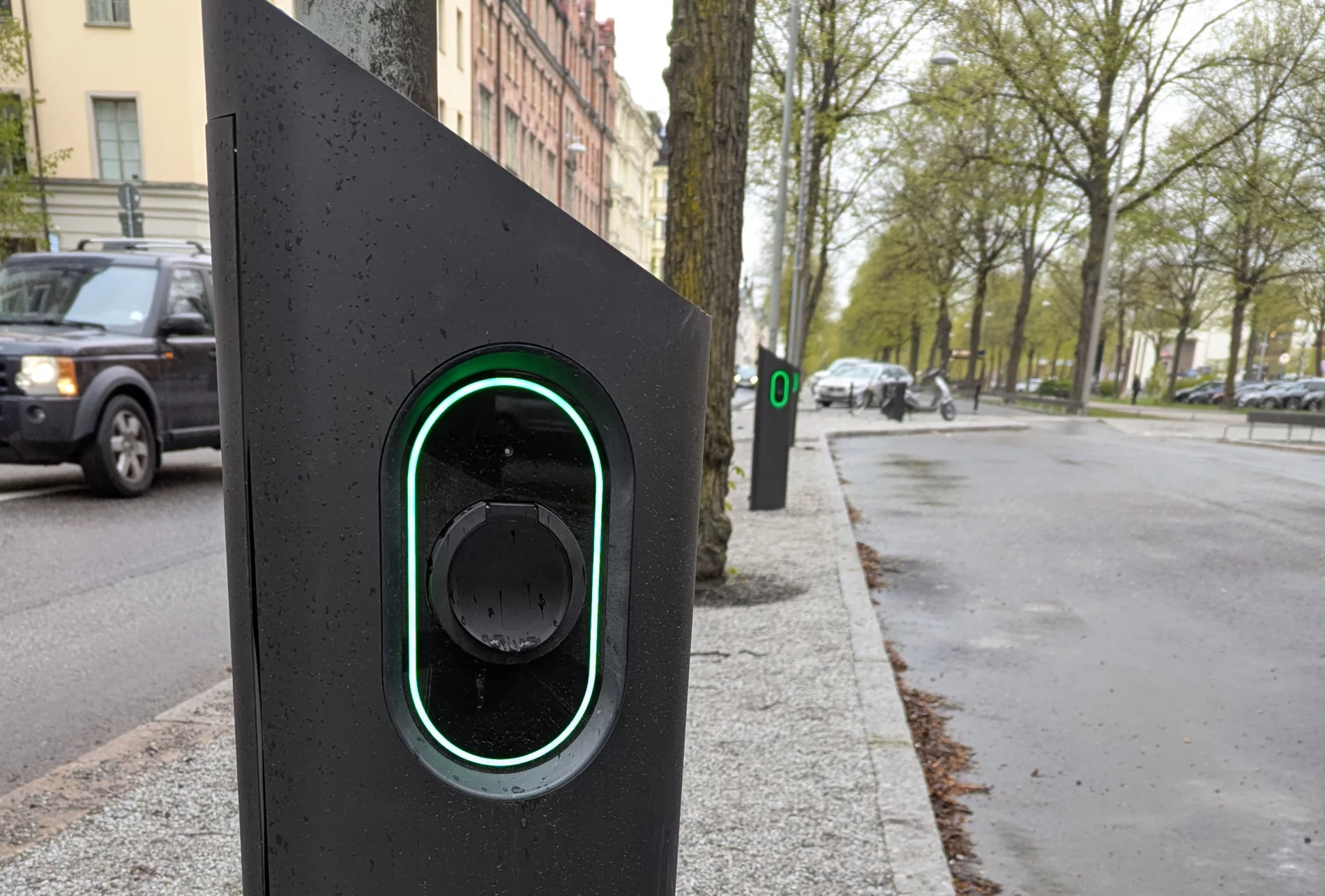
Photo: SEI / Naomi Lubick.
An extensive literature review by Stockholm Environment Institute (SEI), published in Energy Strategy Reviews, provides new recommendations for both public and private actors involved in charging infrastructure planning.
“Even though there is extensive research on charging infrastructure, there is no comprehensive mapping of charging demand estimations. Our review is the first of its kind, helping design more efficient charging deployment and informing new research on optimal charger placement”, said Maria Xylia, Senior Research Fellow at SEI.
The mean estimated charging demand for passenger vehicles is 135 EVs per charger, yet the median is just 23 – with current real-world data averaging only 11 EVs per charger. This disparity is particularly striking since most statistics focus solely on public charging.
“The median value could be seen as more representative of current markets with front-runner countries such as Norway and Sweden already exceeding it, while mean values that include outlier studies of larger EV fleets can be more helpful to understand future market needs,” said Maria Xylia.
If the EV to charger ratio is too high then there is risk for queuing for charging at some locations, while a low ratio indicates we have underutilized infrastructure which is not economically viable in the long term, so there has to be a balance.
Maria Xylia, Senior Research Fellow at SEI.
The study highlights that there is no universal EV-to-charger ratio. Instead, demand varies with charging power, battery capacity and charging strategy – yet many studies fail to make these assumptions clear.
The study also highlights the need to better understand private and semi-public charging demand, expected to play a growing role as EV fleets expand. Additionally, several transport market segments – including light-duty commercial vehicles, micromobility, autonomous vehicles and car sharing services – remain underrepresented in current research.
For heavy duty vehicles, the review finds that on average, one public charger is allocated per five buses and per fourteen trucks, though evidence for trucks is more limited due to their more recent market entry.
This systematic literature review screened over 12 000 records and synthesized 168 studies published between 2017 and 2023. Funded by the Swedish Energy Agency, it identifies knowledge gaps and key trends in the electrification of transport. The review focuses on English-language peer-reviewed and grey literature and offers a comprehensive evidence synthesis to inform charging infrastructure planning and development.
Maria Xylia, Senior Research Fellow, [email protected] , + 46 76 069 34 52
Ulrika Lamberth, Senior Press Officer, [email protected], + 46 73 801 70 53
Project / SEI will conduct an evidence synthesis from Swedish and international studies on varying charging infrastructure needs across different vehicles and users.
Journal article / This article systematically reviews global research on electric vehicle charging infrastructure demand.
Other publication / The 9th ASEAN Energy Outlook explores three energy scenarios through 2060, six policy directions and pathways to strengthen regional energy security.
Past event / SEI's Francis X. Johnson joins a Global Bioeconomy Summit 2026 panel on how biofuels can accelerate a sustainable bioeconomy.