Thailand’s Pollution Control Department has worked with researchers at the SEI York and Asia centres, alongside other partners, to develop a first assessment of how Thailand can improve and achieve its climate change targets. This new report marks the first major output from Thailand’s engagement with the Climate and Clean Air Coalition National Short-Lived Climate Pollutant Planning hub, which began in 2021.
Although Thailand already engages in ambitious climate policy and is working to tackle air pollution, there is considerable potential for the country to integrate its air quality and climate change policies, which could save money and lives. In 2021, Thailand began working with the Climate and Clean Air Coalition to explore these opportunities further.
In this report, the first major output from the process, the authors produced an emissions inventory, finding a significant crossover in major sources of air pollutants, short-lived climate pollutants, and greenhouse gases. They also explored emissions projections for the next three decades. They then analysed existing air pollution and climate change policies that could contribute to emissions reductions, policies both local to Thailand and from international assessments, and produced a list of 19 priority mitigation measures.
The authors showed that, by implementing these strategies, Thailand could achieve substantial improvements in air quality and human health, as well as contributing to global efforts to combat climate change. In addition, the report identified barriers to accomplishing these goals, and assessed how much these barriers could slow achievement of climate and clean air benefits if not overcome. By 2030, if economic, technological, social and political barriers are not overcome, only half of the potential emission reductions and health and climate change benefits would be realised.
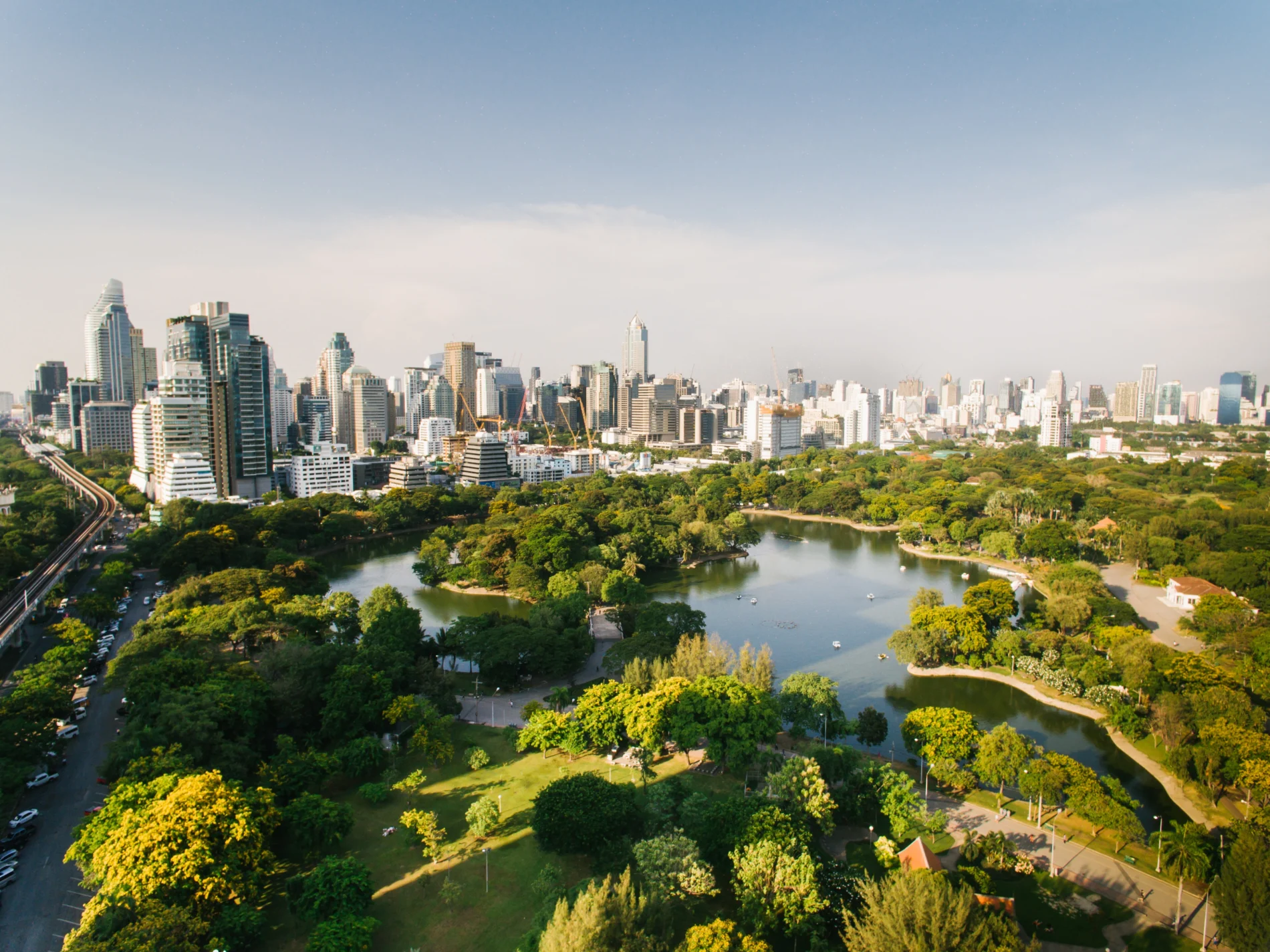
Lumphini park, Bangkok.
Photo: Mikhail Nilov / Pexels
The authors offered seven key recommendations to policymakers and stakeholders for capitalizing on the opportunities offered by integrated planning:
Other publication / This assessment shows 15 measures could clean air for 250 million people and reduce PM2.5 by 50-70% in Southeast Asia by 2030.
Journal article / Researchers developed an enhanced methodology to estimate future health burdens from air pollution. The new estimates improved strikingly upon previous metrics.
Journal article / Analysis shows that Colombia's SLCP targets are well within reach thanks to careful planning and capacity building.