The authors of this paper analyse eight key trade-offs between different dimensions of quality, which is intended to inform discussions on how adaptation finance can remain effective and just as pressure to do more with less becomes greater and greater.
The past two years have seen the international community make a number of commitments to scale up climate finance flows, particularly to communities which are most vulnerable to climate and economic shocks.
At COP30, Parties made a political commitment to at least triple adaptation finance within ten years. The year before, Parties agreed the New Collective Quantified Goal to mobilize USD 300 billion a year by 2035 with a wider aim to scale up financing for climate action to USD 1.3 trillion a year over the same time frame. These milestones were reached at a time of decreasing development cooperation and shifting geopolitical priorities. With pressure to reach these targets growing while development finance becomes more constrained, the authors of this paper ask: what does efficient and strategic allocation of quality finance for adaptation looks like?
Definitions of quality are constantly evolving, varying depending on who is making the assessment and who is receiving the support. The authors of this paper argue for a nuanced picture that is able to balance different synergies and trade offs for “high-quality” adaptation finance.
Media advisory / SEI invites journalists to a media briefing where its leading experts will share their perspectives on the major themes shaping COP31.
Press release / Berget AI releases an open-source method for calculating carbon emissions of every individual AI request, developed with SEI, WattTime and Klimatkollen.
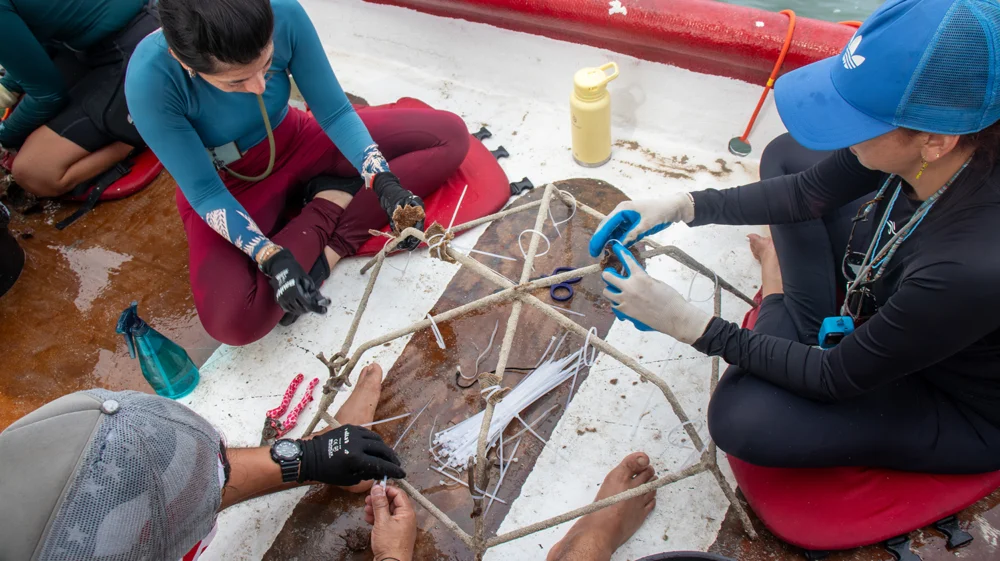
Feature / Three SEI living labs in Colombia, Cuba and the Dominican Republic show how community-led restoration can revive the Caribbean’s coastal ecosystems.