In his opening speech at the first global Food Systems Summit, UN Secretary Secretary-General António Guterres stated that “food systems are broken – and billions of people are paying the price”. Approximately 19% of all food available to consumers is wasted, while 13% of food is lost in the supply chain from post-harvest up to retail. Food loss and waste (FLW) perpetuates food and nutrition insecurity and exacerbates the climate and environmental costs of food systems.
This report provides insights for food loss and waste (FLW) reduction across different food systems in Southeast Asia from an interdisciplinary perspective. Supported by a semi-systematic literature review, three case study “deep dives” trace aspects of selected food systems and value chains, highlighting barriers and opportunities for transformation:
Our literature review found there is a particular lack of robust conceptual analysis from angles which tackle embedded power structures in food systems, including gender transformation, food sovereignty and food justice. Similarly, there was little discussion in the literature of multi-scalar and relational aspects of FLW within food systems. These frameworks may be limited because the predominant discourse on food system development is currently based on improving efficiency and reducing greenhouse gases, excluding questions of where food is produced and distributed, and by whom.
Related to the emphasis on improving efficiency, we found an over-emphasis on technocratic approaches. Technology and infrastructure deficiencies in food are certainly important drivers for FLW, such as inadequate refrigeration and cold storage, as well as poor road links in rural and less developed areas. However, improving efficiency will not necessarily challenge broader unjust food structures. Greater attention needs to be paid to social angles, such as which technologies are developed and for whom, as well as how technologies are taken up, disseminated and maintained.
Regarding our case studies, we found the social forestry for coffee cultivation in Bali case to represent an example of “good practice” for climate resilient agriculture and circular practices within food systems. There was very little waste throughout the process, as agricultural cuttings were used for composting and low-quality beans were roasted and made into powder for sale at a lower price. Nevertheless, gaps remain. For example, sub-optimal composting could be enhanced through improved fermentation processes to turn it into fertilizer. Key challenges to enhancing materials circularity appear strongly linked to gender equity and social inclusion (GESI) gaps. These include barriers faced by women in accessing resources and government funding to scale up their coffee waste upcycling activities. Therefore, future investments should integrate a strong gender lens and work to support women’s economic empowerment which can support mutual goals of FLW reduction and justice within food systems.
The second case study on small-scale fisheries found a complex system of trade-offs and interdependencies. Preserved fish are an important food item for both nutrition and local economies that can greatly reduce FLW. However, transnational flows of trade and unsustainable and extractive modes of fishing, characterized by increasing commercialization and industrialization in Southeast Asia, can exacerbate ecosystem degradation and reduction in current and future fish stocks. GESI aspects also emerged strongly as a barrier to the sustainability of fish processing. For example, while technological innovations such as solar dryers can reduce drying time by over 50% and increased fish shelf life, there is still limited adoption. One reason may be the restricted access of women, who dominate the processing node, to this technology. Women reported less agency as new capital-intensive technologies proliferate and are mainly managed by men.
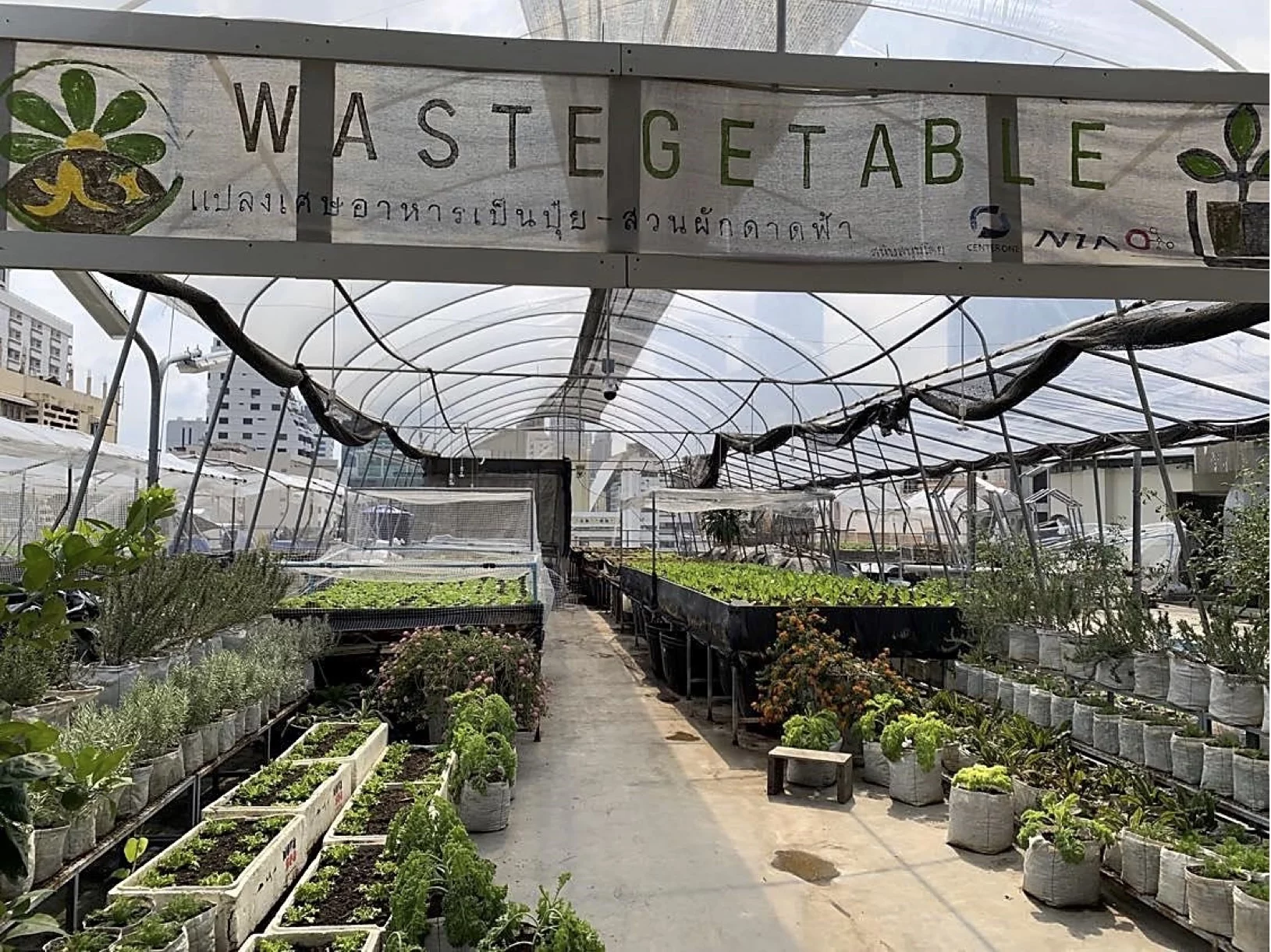
In the final case on organic waste valorization and urban agriculture, we noted strong momentum toward circularity and FLW reduction in Bangkok as evidenced by a successful business case of rooftop agriculture which utilizes processed food waste as inputs, as well as significant progress from Bangkok’s Metropolitan Authority (BMA) with its District Food Management Sandbox initiative. Despite this, we identify massive untapped potential for utilization of urban food waste, with challenges in physical space, human resources and market linkages limiting the current operational capacity of actors involved. We recommend market studies for compost, organic fertilizer, and related products such as black soldier flies to understand demand, as well as potential partnerships and institutional structures that could support scaling.
Overall, we underscore the need for a cross-sectoral, relational and multi-scalar approach within food systems which can bring together multiple actor groups and knowledge types to achieve synergistic outcomes that support just food systems. Therefore, we recommend the systematic integration and mainstreaming of frameworks such as FAO’s City Region Food Systems and agroecology in future research and investment.
As UN Secretary Secretary-General António Guterres underscored in his opening speech at the first global Food Systems Summit, “food systems are broken – and billions of people are paying the price” (UN, 2023). Roughly 42% of the world’s population cannot afford a healthy diet, and this trend is worsening over time (Fanzo & Miachon, 2023). Discourses on food systems have been critiqued as driven by the “corporate food empire”, characterized by growing corporate concentration of land, capital and control over aspects of the agrifood chain, from seeds and chemical inputs to processing and retailing (Devex, 2021; Motta, 2021). Meanwhile, smallholder farmers and fishersoften suffer from food insecurity despite being key agents of food production (FAO, European Union and CIRAD, 2022). The largest proportion of food insecure people live in Asia, where lower and unstable yields of major crop commodities have driven up food prices, threatening food and income security (Fanzo & Miachon, 2023).
The need for transformation of global food systems is increasingly being recognized in sustainable development and just climate transition agendas. Yet business-as-usual approaches to addressing food systems challenges have tended to focus narrowly on improving efficiency in production. These often fail to leverage other critical pathways to transforming food systems, including ones that have co-benefits in terms of environment, climate and social justice.
A key potential pathway is through addressing food loss and waste (FLW).1 FAO’s Food Waste Index Report estimates that 19% of all food available to consumers is wasted, while 13% of food is lost in the supply chain from post-harvest up to retail (UNEP, 2024). FLW not only perpetuates food and nutrition insecurity, but also exacerbates the climate and environmental costs of food systems (Wang et al. 2019). For example, between 2010 and 2016, 8–10% of global greenhouse gas emissions came entirely from FLW (FAO, 2022b). In addition, the conversion of natural ecosystems for agriculture is a leading cause of habitat and biodiversity loss (UNEP, 2024).
The field of FLW in sustainable development and research is relatively new, and key gaps exist in current understandings of reduction pathways. The definition of FLW and its first global estimate (SDG 12.3.1 or the Food Loss Index) was established in 2019 and the Sustainable Development Goals (SDGs) set corresponding targets, aiming to halve global per capita food waste at the retail and consumer levels and reduce food losses along production and supply chains (UN, 2019a). While this ambition is promising, much emphasis has been placed narrowly on avenues to reduce greenhouse gases. For example, FAO stated that “the only global justification for reducing FLW is the objective of reducing GHGs” (FAO, 2022b). This misses the disproportionate burden of FLW on certain gender and social groups – and the potential benefits of reductions in FLW to food security, food sovereignty, nutrition, and sustainable and resilient livelihoods. Aligning with this gap, there is a need for interdisciplinary research that meaningfully expands understandings of FLW reduction pathways, builds linkages to policy and surfaces critical gender equity and social inclusion (GESI) implications, in order to support just food systems transformation.
The purpose of this synthesis report is to provide insights for FLW reduction across different food systems in Southeast Asia from an interdisciplinary perspective. From these insights, we build recommendations for future research investments and programming of IDRC–Canada’s International Development Research Centre. Findings will also have relevance for other research and development organizations and civil society groups with an interest in food systems transformation.
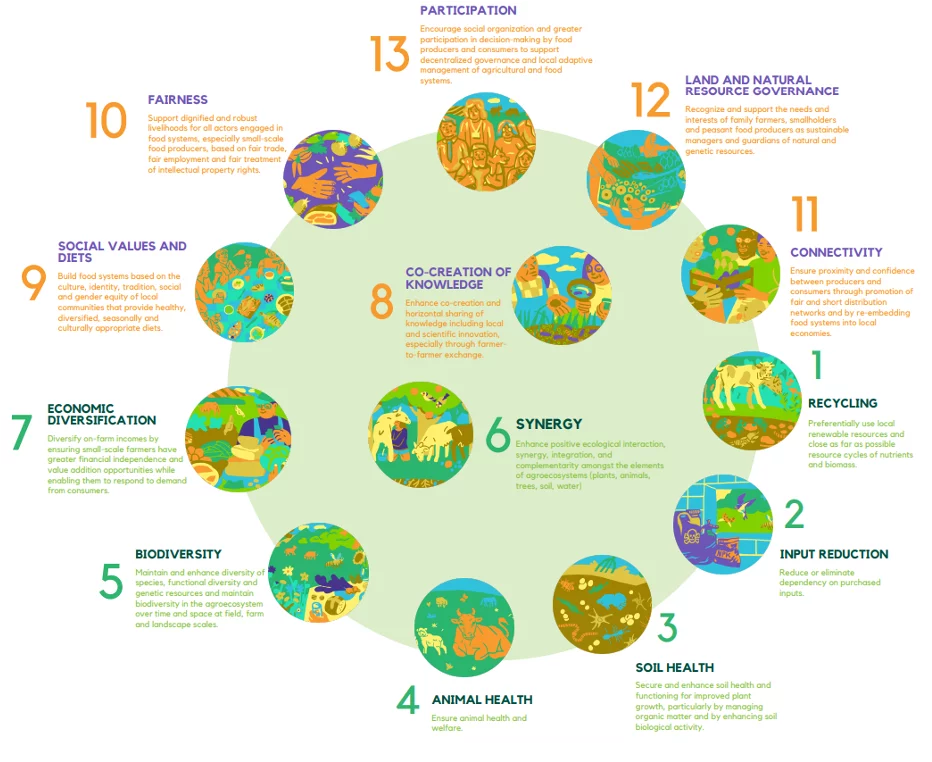
The report begins with a background of food systems in Southeast Asia, before providing results of a semi-systematic literature review intended to draw out the current state of FLW discourse in the region and highlight emergent gaps. This literature review provides the basis for three case study “deep dives” which trace aspects of selected food systems and value chains, highlighting barriers and opportunities for transformation across FLW, GESI, and technological and social innovation aspects. We then provide high-level synthesis, evaluating the innovations which emerged and assess alignment of findings with principles of agroecology (Wezel et al., 2020).
Food systems in Southeast Asia are currently being challenged in a unique way. Socioeconomic development and rapid urbanization have not only improved income levels and living conditions (Wang et al. 2023; Wan, Zhang, and Zhao 2022; Ha, Dang Le, and Trung-Kien 2021) but also transformed agricultural production and food systems to accommodate the growth (de Bruin et al., 2021; Mohammed et al., 2020; Shackleton et al., 2020). These transformations have resulted in rapid poverty reduction and lifted about 1.1 billion people out of extreme poverty since 1990 (UN, 2019b). However, new sets of food security issues have also emerged that are challenging countries’ progress in achieving the SDGs. These interrelated food issues include, but are not limited to, over and undernourishment (FAO et al., 2023), food security risk induced by climate change, environmental degradation (Gálvez, 2022), and food loss and waste (FAO, 2022b).
While the onset of the SDGs in 2015 established the trajectory of food system development to end all forms of hunger and malnutrition by 2030, food systems in Southeast Asia are falling behind in these goals. For example, the margins of Prevalence of Undernourishment (PoU) in every country in Southeast Asia, except for Malaysia, have been increasing (FAO et al. 2023). Among the key drivers for the increasing PoU is the rise in cost and unaffordability of healthy diets (FAO et al., 2023). Table 1 shows that Southeast Asia overall is experiencing an increase in the prevalence of moderate and severe food insecurity since 2014.
Table 1. Percentage of moderate and severe food insecurity. Source: (FAO et al., 2023)
| Moderate food insecurity (%) | Severe food insecurity (%) | |||||||
| Year | 2014 | 2019 | 2020 | 2021 | 2014 | 2019 | 2020 | 2021 |
| Status in countries in Southeast Asia | 13.0 | 14.2 | 15.5 | 16.6 | 2.4 | 2.6 | 3.4 | 4.1 |
Furthermore, food production – particularly crop yields – are increasingly stressed by climate change including shifting monsoon patterns, drought, and aquifer salinization (IPBES, 2018). Although research has found that a warming climate can create longer growing periods for fruits and vegetables, higher temperatures in a tropical region (i.e. Southeast Asia) can impair produce quality and increase yield loss which will have significant implications for FLW (IPCC, 2022). Concurrently, agricultural greenhouse gas emissions (particularly from rice production, livestock and fertilizer use) are projected to increase by at least 28% by 2050 (CGIAR, 2023), fuelling a negative feedback loop that worsens climate impacts to food production.
On the consumption front, growing populations, rising income levels and urbanization are contributing to changing preferences that are significantly reshaping the food system. An increasing share of middle-income households in Southeast Asia (Brueckner et al., 2017; HSBC, 2022; Park & Yeung, 2021; World Bank, 2022) are consuming healthier and more diverse food sources (Gálvez, 2022). They are also consuming more meat, fish and ultra-processed food, and are producing greater levels of waste (Sahakian et al., 2018). Asian countries are thus encountering a double burden of both undernutrition and overnutrition, with rates of obesity expected to double from 2010 to 2030 (Tham et al., 2023), and sales of ultra-processed food expected to approach those of high-income countries by 2035 (CGIAR, 2023). According to current trends, overall food demand could rise by up to 62% by 2050 (FAO, 2022b), which will massively stress food production systems, particularly given climate change impacts. This underscores the need for transformative changes to food systems that can support the dietary needs of current and future generations and the ecosystems that our food production systems depend on.
One pathway forward to address these shifts in Southeast Asia food systems is through reducing FLW. This can concurrently improve efficiency, enhance equitable distribution of resources, reduce greenhouse gas emissions, improve food security, and challenge broader attitudes towards consumption and production that undermine sustainability. A key challenge within FLW is obtaining sufficient, comparable and downscaled data (FAO, 2022b; UNEP, 2024). FAO estimates that Eastern and Southeastern Asia are experiencing rates of food loss from post-harvest to distribution at around 7.5% – lower than the global average of approximately 14%. However, the region faces a concentrated proportion in certain products. Notably, approximately 15–50% of fruit and vegetables are lost due to inefficient harvesting, post-harvest handling practices, and inadequate knowledge and infrastructure (Tansuchat et al., 2023). Delayed harvesting is a significant driver of fruit loss, primarily driven by socio-economic factors such as labour shortages and farmers waiting for higher prices at the end of the season (Tansuchat et al., 2023). This delay can lead to overripe or damaged produce, increasing the likelihood of infestation and disease, particularly in regions where there is monsoon rain during the harvest period (Jaroensathapornkul, 2021).
Another main sector in which loss can be observed is fisheries. According to CGIAR (2023), fish products are vital for food and nutrition security in Southeast Asia, with consumption contributing more than 50% per capita animal protein intake across the region, with this figure rising to 60% in Myanmar and Cambodia (Akester & Ali, 2021). However, focusing on Myanmar and Cambodia, Ali and Akester (2021) found that 25% of all fish produced are lost due to poor post-harvest quality and safety control measures. Limited storage facilities and primary processing capabilities further exacerbate losses, as does inadequate market infrastructure and packaging practices.
Regarding food waste, the latest UNEP Food Waste Index (2024) has collected estimates at the household and food service level for most countries of Southeast Asia. Percentages as rates of total production are unavailable, and cited data points vary broadly. Calculated in kg/capita/year, the study finds Cambodia to produce 38–117 kg, Indonesia 20–77 kg, Lao PDR 86–94 kg, Malaysia 40–112 kg, the Philippines 18–33 kg, and Thailand 69–106 kg, indicating a relatively similar range, with the exception of the Philippines which may be lower. Singapore is the only country with a singular official statistic at 68 kg. Particularly for low-income countries, UNEP claims that “more research is needed to understand how much food waste there is, and its causes” (2024, 37).
Across all food systems, warmer temperatures exacerbated by climate change are likely to contribute to increased FLW, particularly in rural regions of lower income countries in Southeast Asia, including Lao PDR, Cambodia and Myanmar, where refrigeration and cold storage infrastructure are lacking (Thant et al., 2022; UNEP, 2024). Heavy rainfall can create logistical challenges, such as flooded roads, which can delay transport and lead to further losses. Other challenges in less developed contexts include the informal structure of the domestic food processing sector, limited food import controls, and poor sanitary conditions leading to a high prevalence of unsafe food (FAO, European Union and CIRAD, 2022). Finally, there is mounting evidence for cosmetic or aesthetic specifications as a source of food wastage in fruit and vegetable products, which is exacerbated by the growing role of supermarkets in Southeast Asia compared to traditional markets, particularly in urban contexts (Ortiz-Gonzalo et al., 2021).
To summarize, consumption patterns in Asia are shifting, driven by demographic shifts, population growth, urbanization and rising incomes. While some of these shifts support improved outcomes for food security and nutrition, Southeast Asia is also facing enhanced climate hazards which stress food production sites, increasing rates of obesity, and increasing consumption of ultra-processed foods and meat and fish which consume more energy and emit more greenhouse gas emissions. While tackling FLW is identified as a critical pathway to sustainable and resilient food systems, there is a lack of data collection for FLW in the region (FAO, 2022b). This reflects broader global challenges of developing and agreeing on standardized quantification methods for measuring FLW (Hoehn et al., 2023). This lack of data makes it challenging for policymakers and other actors to effectively target interventions, while the true functioning of the system remains opaque.
We examine the topic through a lens of food systems, which “encompass the entire range of actors and their interlinked value-adding activities involved in the production, aggregation, processing, distribution, consumption, and disposal of food products… and parts of the broader economic, societal, and natural environments where they are embedded” (FAO, 2020). We take a multi-scalar and relational approach, considering interlinked aspects of food systems including ecosystem services, livelihoods and economic development, and food and nutrition security.
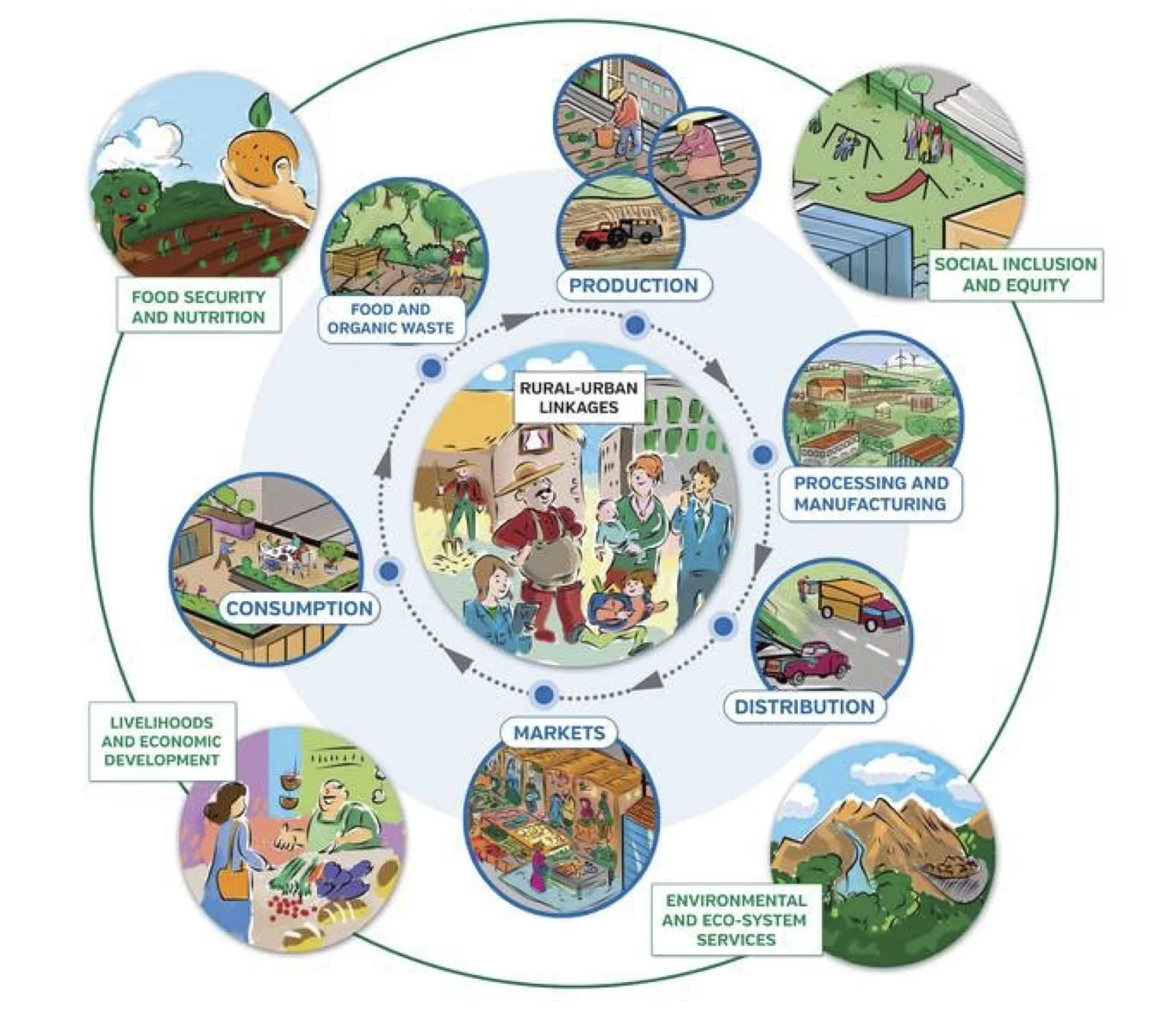
To operationalize this approach, the study draws on FAO’s City-Region-Food Systems (CRFS) framework (FAO, 2023). CRFS encompasses “all the actors, processes and relationships that are involved in food production, processing, distribution and consumption in a given city region” (i.e. both cities and the surrounding and interspersed peri-urban and rural hinterlands). The CRFS approach recognizes connections to many other sectors, including water, waste management, livelihoods and economic development, energy, and spatial planning. As such, it can be useful in addressing enduring and complex problems of food systems such as the rural-urban dichotomy and multilevel governance, and can support comprehensive insights into where and why FLW is occurring.
Figure 1. City Region Food Systems Approach. Source: (FAO, 2024b)
In addition, the study applies an intersectional GESI lens drawing on McDougall et al.’s (2021) guidance on gender and intersectionality in food systems research for development. An intersectional GESI lens acknowledges that gender intersects with other social identities such as age, class, religion, ethnicity, citizenship status and ability. It assesses how these different gendered and social interactions, barriers and discriminations influence and compound experiences of (dis)empowerment, (in)equality and marginalization for different groups. An intersectional lens is therefore useful to identify systemic inequalities or exclusions within food systems and recognize how and why they occur. Unpacking this further, an intersectional lens allows the identification of gaps, incentives and disincentives for sustainable and equitable outcomes that are more responsive to the needs of these groups.
Finally, the study draws on decolonial approaches, acknowledging and addressing risks of unequal power throughout the research process. Researchers aimed to be actively reflexive and aware of their own positionality and power in relation to the project participants (McDougall, 2023). The case study selection reflects collaborations across the Global North and South, engaging with diverse organizations and individuals. Moreover, the analysis aims to unpack existing power imbalances which drive vulnerability and inequity within food systems (Daszkiewicz, 2022).
The literature review involved three overlapping searches conducted using Google Scholar to ensure comprehensive coverage of FLW in relation to food system transformation and climate impacts in Southeast Asia. The search strings used were:
These overlapping search strings were selected to capture diverse perspectives and findings addressing various elements of food systems transformations in relation to FLW across the food chain. The search criteria were limited to literature published from 2020 onwards, in the English language and with a geographic scope of Southeast Asia. The time limitation was applied to ensure that trends described reflect the current regional situation. Google Scholar was chosen as the database due to its inclusion of both peer-reviewed studies and relevant grey literature.
After screening for relevance and eliminating duplicates, 30 sources were selected for analysis, focusing on identifying key insights, trends and gaps. This was supplemented with relevant international publications from reputed sources such as FAO and IPCC. The literature review was conducted between February and April 2024.
From the outset, this small number of papers shows a knowledge gap in this topic. In terms of geographical distribution of the papers (see Table 2), there was a focus on Indonesia (three papers), Thailand (four papers) and Myanmar (four papers), while Malaysia, Cambodia and Lao PDR collectively accounted for three papers. Other countries in Southeast Asia were not well represented in the literature. Most papers took integrated approaches which considered multiple aspects of food systems through interlinked technical, social, economic, behavioural and policy angles; however, deficiencies remain. Five papers focused on cities, but there was little discussion of rural-urban linkages or multi-scalar and relational approaches beyond food value chains. Friedman et al. (2022) note in their review of food systems resilience in the Indo-Pacific that social and ecological interactions are underrepresented in food systems framings and call for more interdisciplinary and multi-scalar conceptualizations.
Table 2. Geographic distribution of literature review
| Country | # of papers |
| Thailand | 4 |
| Myanmar | 4 |
| Indonesia | 3 |
| Malaysia | 1 |
| Cambodia | 1 |
| Lao PDR | 1 |
| Regional | 10 |
| Global | 6 |
The literature review highlights the following key gaps: 1) a lack of robust conceptual analysis; 2), a lack of meaningful intersectional GESI approaches; 3) an over-emphasis on technocratic approaches; and 4) the omission of the animal welfare perspective.
There is a lack of robust conceptual analysis particularly from angles which tackle embedded power structures in food systems, including gender transformation, food sovereignty and food justice. Similarly, there was little discussion in the literature of multi-scalar and relational aspects of FLW within food systems. These frameworks may be limited because the predominant discourse on food system development is currently based on improving efficiency and reducing greenhouse gases, excluding questions of where food is produced and distributed, and by whom (Hossfeld et al., 2018). Therefore, the food system discourse can tend towards taking a neutral position regarding power relations in food system planning (Gordillo & Jeronimo, 2013). This neutrality risks obscuring underlying power dynamics and inequalities, preventing deeper understanding of how gender and social relations interact to shape food system outcomes and contribute to FLW.
The lack of meaningful intersectional GESI approaches or analysis in the literature includes a tendency to equate gender with women, often restricted to homogenizing women as one group. Similarly, several papers point out gender and social considerations are key for resilient food systems, but do not expand on how this will be achieved. Several papers share their working definitions of food systems, including “gender equity, livelihoods, and local capacities” (Friedman et al., 2022), yet fail to integrate these considerations throughout their research methods or analysis. Other papers share gendered differences in FLW behaviour, but fail to describe why these trends may be occurring (Aulia & Dewi, 2022; Hett et al., 2023). Vulnerable groups including women, informal workers and smallholder farmers face underlying and intersecting barriers due to limited access to resources such as land and capital, technology, training and marketing services, and unequal participation in decision-making (Hett et al. 2023; Thornton et al. 2023). These dynamics hinder women and other vulnerable groups’ empowerment and exacerbate the technical challenges mentioned above, ultimately limiting the potential of food systems to contribute to improving food and nutrition security, poverty alleviation and reducing FLW (Cole et al., 2018, 2020). A GESI-transformative approach which addresses the root drivers of gendered and social barriers is key and will strengthen efforts to reduce FLW while fostering more inclusive and resilient food systems (Cole et al., 2020). Without such an approach, interventions risk perpetuating existing inequalities.
An over-emphasis on technocratic approaches in the context of improving efficiency in agricultural production landscapes was also present. The literature review highlighted technology and infrastructure deficiencies in food systems that can be important drivers for FLW, for instance inadequate refrigeration and cold storage and poor road links in rural and less developed areas (Thant et al., 2022). However, improving efficiency will not necessarily challenge broader unjust food structures. Greater attention needs to be paid to social angles, such as which technologies are developed and for whom, as well as how technologies are taken up, disseminated and maintained. For example, in the agricultural production sector, vulnerability can be increased by a lack of digital literacy. Intersectional multipliers of vulnerability are also present according to age, gender and education levels, with older producers, women and the less educated more likely to face exclusion. Conversely, early adopters of technology are more likely to be powerful actors with good access to capital, meaning technology may exacerbate existing inequalities. Similarly, diverse forms of knowledge should be recognized, including local and indigenous knowledge which is often obscured under technocratic approaches (Hett et al. 2023.)
Finally, the omission of the animal welfare perspective and the role animals play in food production, including the loss and waste that are often unaddressed, was a clear gap in the literature. Only one paper in the reviewed literature addressed this topic, despite FLW in the meat products sector emerging as a challenge (Klaura et al., 2023). The study highlights that resilient food systems rarely go beyond the traditional “people-planet-profit notion of sustainability” and calls for greater integration of animal welfare dimensions that would ultimately promote interventions that are beneficial across dimensions.
To supplement the semi-systematic literature review, address key knowledge gaps and gain a deeper understanding of FLW in specific contexts, three case studies were selected in different countries in Southeast Asia. The case studies help to elucidate the interconnections between different aspects of food systems within the CRFS approach, and identify key opportunities and limitations for sustainable and inclusive transformation. The case studies included two in-person field visits and one virtual study, all undertaken between May and September 2024:
In all case studies, qualitative primary data was gathered through key informant interviews. Interviews targeted participants with a specific knowledge of one part, or a holistic overview of the food system. The sampling approach was purposive, selecting key informants based on their specific role within the value chain and role in FLW management. Several respondents were targeted at each node of the value chain, including producers, processors, distributors, buyers and policymakers, aiming for a gender balance of participants throughout. In addition, the social forestry case undertook a focus group discussion with coffee farmers. The complete list of interviewees can be found in Appendix A. In each case, researchers continued to solicit interviews until a point of data saturation was reached.
Aligning with the relational CRFS approach, the selection of case studies was designed to investigate a range of different food systems and value chains at different scales, while responding to key gaps which emerged in the literature review. The first examines a social agroforestry scheme which produces, processes and trades coffee for consumption on the island of Bali, Indonesia, permitting a comprehensive analysis of FLW within a “closed loop” value chain. It was also selected to address the important, and often overlooked, role of Indigenous and local knowledge and the impact of climatic changes on key commodity crops which have typically been excluded from the FLW discourse. The second case takes a higher-level approach, presenting a regional analysis of FLW within small-scale fisheries and fish processing in Southeast Asia. We select this case as FLW in fisheries emerged from the literature review as particularly problematic in Southeast Asia. We focus on small-scale fisheries as a particularly vulnerable segment of the industry, and explore the context of Cambodia in greater depth, in acknowledgement of the country’s heavy reliance on fish for nutrition security. The third case focuses on an urban context, taking the challenge of organic waste as the entry point and investigating opportunities for valorization, including as part of urban agriculture schemes which can represent more localized, just and climate resilient modalities of food production. The first and second cases focus on commodity products (coffee and preserved fish), while the third focuses on food waste as a resource (input to vegetable production).
Four overarching research questions guided the case studies:
Employing a food systems approach means that the case studies sometimes go beyond FLW to explore complex issues and interconnections, particularly from a social justice and a resources circularity perspective. This approach specifically responds to the gaps highlighted from the literature review (Section 2.2). However, as emphasized in Section 1.3, a particular challenge for tackling FLW in the region is a lack of robust and standardized data. Due to the limited scope, this study was unable to gather quantitative data. Instead, we aim to provide indicative results into selected food systems from a qualitative perspective. Further research should integrate robust data collection to validate results and describe pathways for more standardized approaches across food systems and geographies.
Each case study begins with a background and rationale, before delving into FLW as part of the broader food system. Finally, each case describes GESI considerations and social and technological innovations which emerged. Actual findings are supplemented by external literature to provide a depth of analysis.
Coffee is the most widely traded tropical product in the world, and the second-largest traded commodity after petroleum worldwide (Lee et al., 2023). Demand continues to grow, with experts estimating that producers will have to triple their production to meet demand by 2050 (Chandrasekhar et al., 2023). Production is dominated by smallholders, with around 60% of coffee worldwide produced on farms covering less than five hectares (Chandrasekhar et al., 2023). In Southeast Asia, Vietnam and Indonesia are among the top four coffee-producing countries globally (World Population Review, 2024).
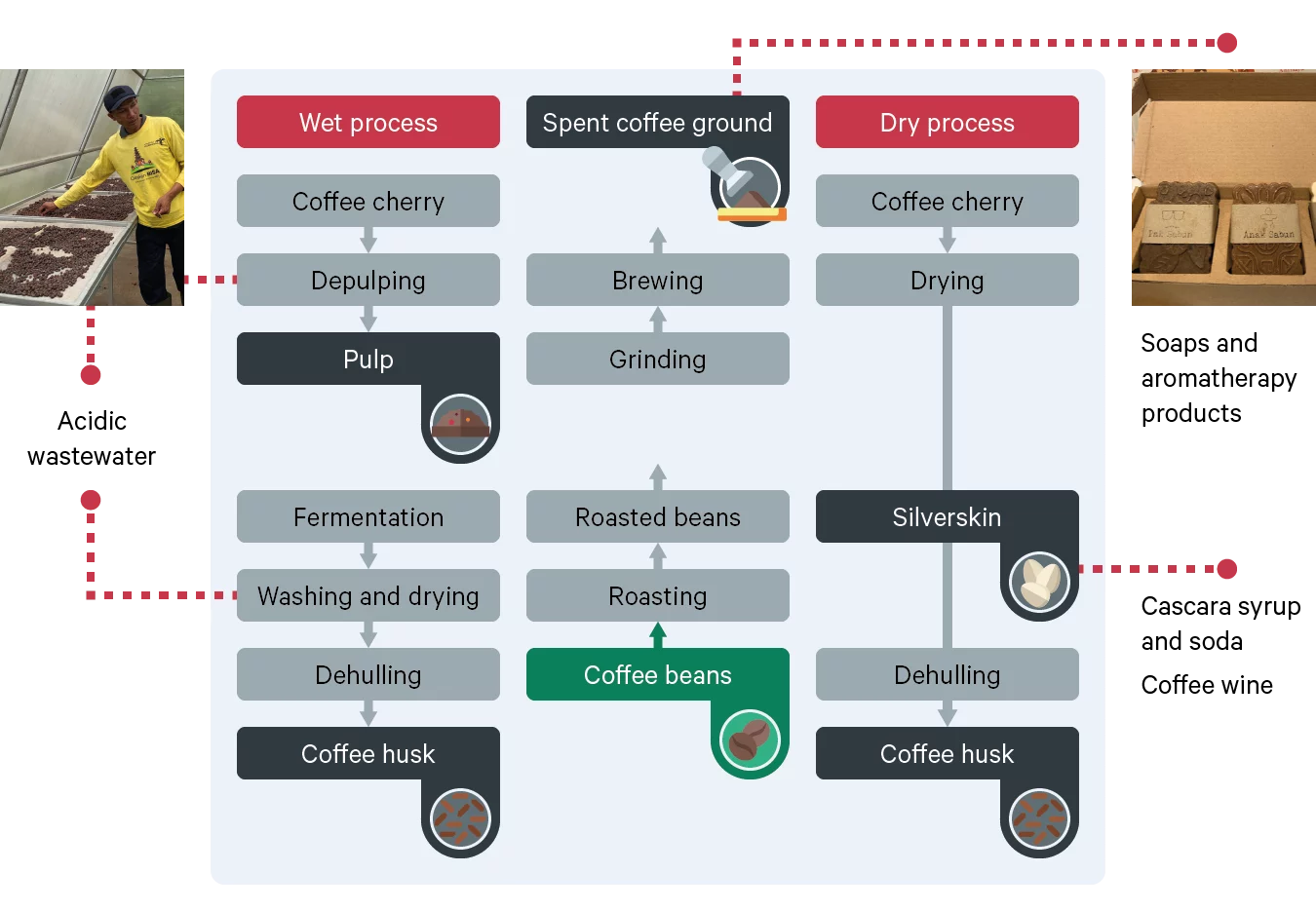
Despite producing a huge amount of waste throughout the stages of processing to consumption, with approximately 90% of the coffee cherry discarded as agricultural waste or by-product (Iriondo-DeHond et al., 2020; Nolasco et al., 2022), there is a lack of focus on coffee within the FLW discourse. The product is often excluded in FLW calculations as it does not fit into traditional food groups (von Braun et al., 2019), and it is not mentioned at all in FAO’s Regional Strategy on Food Loss and Waste in Asia and the Pacific (FAO, 2022b). The stages of coffee cherry processing include sorting, washing, de-pulping, drying, roasting, grinding and brewing. Agricultural waste and by-products from coffee include husks, pulp, mucilage, parchment silverskins and spent coffee grounds. Among these materials, Lee et al. (2023) calculate that spent coffee grounds represent the largest residue generated, at 0.6 tons per ton of coffee. Coffee production systems also contribute to water pollution and eutrophication through acidic wastewater which cannot be discharged without treatment (Laili et al., 2022). According to estimates in literature, 1000 kg of fresh coffee cherries produces around 400 kg of wet waste pulp (Rangarajan, 2019), which is also a large emitter of methane gas.
Climate change is also a major threat to coffee cultivation. The coffee cherry is highly sensitive to temperature and rainfall, with global trends of rising temperatures and less predictable rainfall impacting yield and quality alongside worsening incidence of diseases and pests such as coffee rust and coffee berry borer (Boer et al., 2020). Studies find that many of the current coffee growing areas may soon become unsuitable (Bunn et al., 2015; Ovalle-Rivera et al., 2015). In Indonesia, the suitable area of land for cultivating coffee may decrease by one-third by 2050 (Schroth et al., 2015). These climatic changes mean that areas of cultivation may need to shift into highland areas, raising the level of threat from deforestation.
Agroforestry is thus highlighted as an ecosystem-based adaptation strategy for climate-affected coffee growing regions (Pham et al. 2019; Schroth et al. 2015). Agroforestry techniques include the integration of other productive species including oranges, banana, avocado and bamboo, as well as retaining large trees which provide shade that is essential for coffee production. These techniques support vital ecosystem services including water retention and soil fertility, which in turn support resilient coffee production and enhance materials circularity.
Jointly considering the challenges of climate resilience, social equity and FLW reduction, this case study focuses on the coffee production site of Wanagiri in Bali, Indonesia, which is employing a social forestry system with agroforestry as the main activity. Wanagiri presents an interesting closed-loop system for coffee production, with almost all processing, distribution and consumption taking place on the island, enabling a holistic picture of the system to be built. Production at Wanagiri is undertaken by the village-owned enterprise BUMDes aggregating green (unroasted) beans from farmers and managing processing and roasting. The beans are then sold to different cafes and hotels around Bali. Profits are channelled back into the community, for instance to provide seedlings and improve infrastructure.
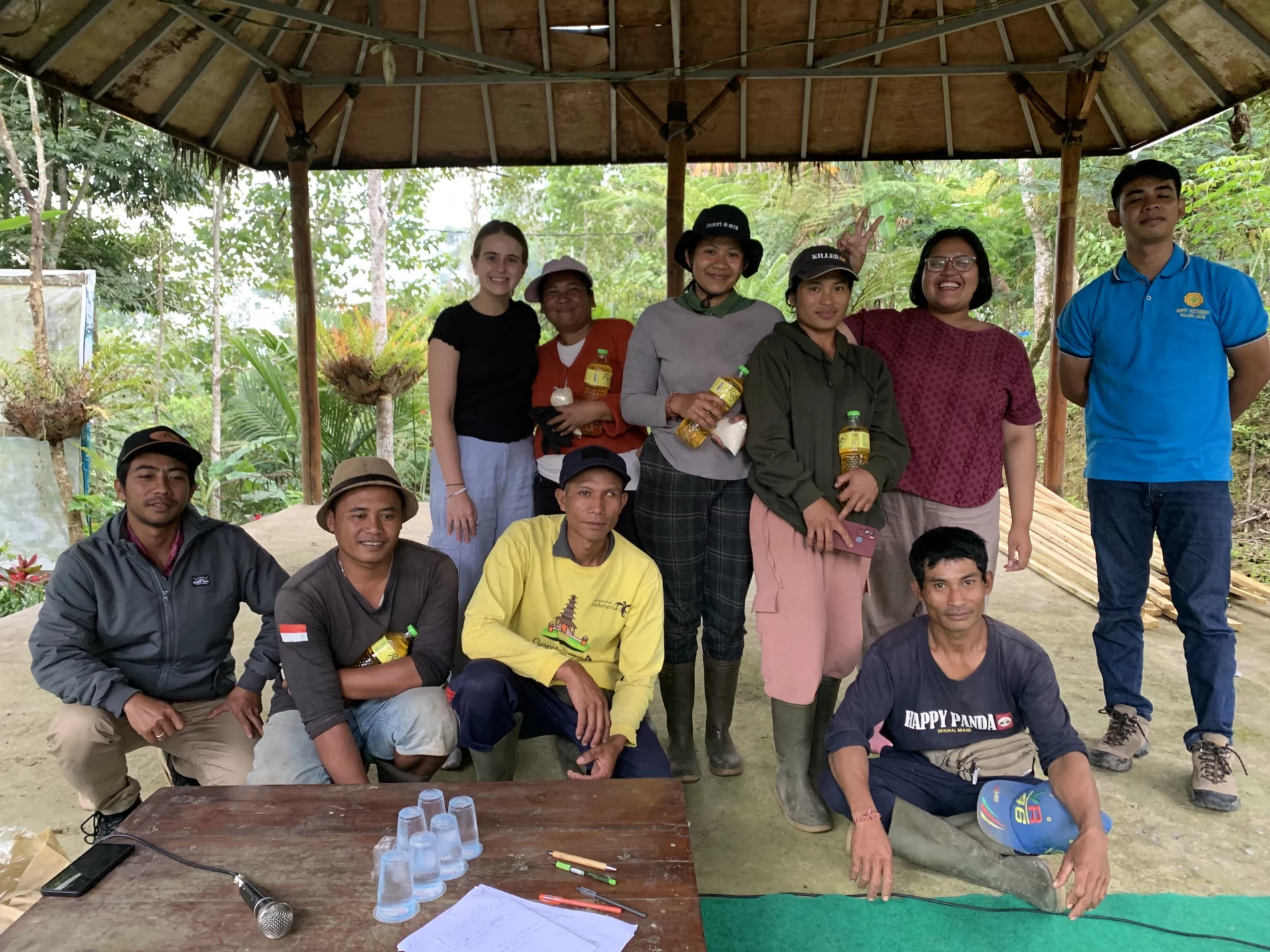
Figure 2. Research team meeting with Wanagiri coffee farmers. Photo credit: SEI.
Photo credit: SEI
At the production node of the chain, coffee farmers estimated around 15% loss of coffee cherries due to pests, with further loss from bacteria when the cherries are not processed quickly enough. Farmers reported that in recent years the rainy season is getting longer and the hot season stronger, with cherry loss during the growing period exacerbated by high humidity levels. Despite increased risk from climate change, farmers continue to cultivate coffee but are also increasingly reliant on diversified sources of income including tourism, animal agriculture, and flower, orange and avocado cultivation. Farmers were proud of their organic farming techniques which have been passed down for generations. They claim that organic farming methods make the plants more resilient to disease, with farmers applying natural methods of pest control including spraying of fermented garlic. Most producers in Bali cultivate coffee in the traditional way, and a local informant claimed “there is a lot of local wisdom about how to protect the forest.”
Discards from the processing stage such as plant cuttings were used for either compost, which is then applied to the coffee plants and other productive species, or the method of rorak, which involves creating a hole in the ground for organic waste as a nutrient bank for the soil. However, doubts were raised about the efficacy of these techniques, as the organic waste is not processed to turn it into fertilizer. “It’s not really fertilizer, they just dump it”, commented the head of the village-owned enterprise. Meanwhile, farmers voiced challenges in obtaining adequate amounts of organic fertilizer. This represents a missed opportunity for optimizing circularity in coffee production via enhanced fermentation processes for organic waste to locally available fertilizer.
Moving to the processing node, there are two main methods used: the wet process in which cherries are first washed then dried, and the natural process in which cherries are only dried. The wet process is more commonly utilized in Bali as it is faster, taking 3 days compared to 10 for the natural process. However, there are also much higher resource requirements (water) and waste outputs (wastewater and pulp) which constitute a key source of environmental pollution. At Wanagiri, the head of the village owned enterprise acknowledged wastewater as a problem but stated they do not have the manpower and facilities to store the liquid so it is directly discharged, causing threats to long-term soil and water health both on the farm and downstream. The dry process is more sustainable and delivers higher prices but requires a lot of sunlight. There also may be more loss due to bacterial contamination, which is exacerbated by particularly high humidity levels on Bali (Duque-Dussán et al., 2023).
There was little FLW after processing, as farmers reported that even the low-quality beans are roasted and made into powder to be sold at a lower price. Some initiatives for production of materials using coffee by-products as raw material were evident, such as coffee wine, cascara tea and beauty products. For example, the Ubud-based Famili Sabun coffee shop utilizes waste products from their shop – including coffee grounds, steamed milk, orange rind and sunflower oil – to make soap. The Wanagiri Women’s Group were active in making coffee wine; however, it was observed that this is perceived as more of a “hobby”, with limitations for women to get involved in larger activities (explored more in Section 4.3). Despite these outlying examples, coffee waste and by-product valorization opportunities were seldom observed in Bali, with the majority of spent coffee grounds ending up in landfill.
Figure 3. By-products generated during wet and dry processing of coffee. Adapted from (Lee et al., 2023).
Across the coffee chain in Bali, all case study interviewees emphasized that men and women have “equal opportunities” to choose their roles. However, division of labour is influenced by cultural norms, socio-economic status and religious practices, all of which intersect with gender to influence roles at various levels. At the household level in the social agroforestry farm node, women bear the primary burden of household duties, with women farmers sharing that they start their day early to manage tasks such as preparing meals, getting children ready for school, and handling household finances. Hindu women are also expected to prepare offerings for twice-daily Hindu prayers and prepare for religious ceremonies or celebrations throughout the year. Men typically do not share these household chores. Occasionally, men noted that they may assist with specific tasks, such as taking care of the goats when their wives are busy cooking, but this assistance is not a regular or systematic distribution of responsibilities.
Socio-economic status also plays a role in shaping household power dynamics and division of labour. For example, women married to farm or cooperative leaders often reported feeling more empowered, with the women also being head of the Women’s Group, which could influence the expectations placed on men and women to participate in agricultural activities in addition to household tasks. Conversely, respondents shared that households with lower socio-economic status were more likely to require women to work on the farm, exacerbating their workload and perpetuating traditional gender roles.
On the farm, gendered divisions of labour are evident. Men are generally responsible for physically demanding tasks like harvesting, which farmers consider “hard work”, while women handle post-harvest activities such as sorting, roasting and branding. This division of labour has been identified across the globe in coffee sector, with the International Coffee Organisation (ICO) sharing that women provide up to 80% of labour in coffee farms globally, playing key roles in processing and marketing (ICO, 2018). During interviews, women’s roles were often viewed through the lens of their “meticulousness”, reinforcing their responsibility for detailed tasks. Women’s involvement in handling coffee waste, such as making cakes from cascara or coffee wine, extends their household role into the farm. Despite their skills and contributions, these activities are less visible, with men farmers sharing their wives did these tasks as “hobbies”, and are often not scaled up or monetized due to the undervaluation of work associated with the home.
In the coffee-selling node, gender roles are also apparent. One man coffee shop owner shared that men are more commonly found in roles such as baristas, which involves operating machines and technology – areas traditionally seen as more suited to men. In contrast, women are typically involved in roles related to food preparation or waiting tables. The same shop owner noted that these tasks were considered the “women’s domain”, with age of the women not determining their role. Interestingly, some younger women working as waitresses were also pursuing university education alongside their jobs. This gendered division of labour intersecting with technology and social expectations in the coffee industry influences the types of roles available to men and women, and accordingly their status and recognition within the coffee industry. However, we did notice some exceptions to this norm. In one coffee shop, a young woman barista shared her perspective, stating that although the sector overwhelmingly employs men, she does not feel constrained by gender norms because of her passion for coffee and her role as a barista.
While there is a perception among interviewees that men and women have equal access to resources such as land and financial support, gender norms, socio-cultural factors and legal constraints often limit women’s practical access. This finding is consistent with broader literature on women’s constrained access to resources with food systems. For example, a study on cassava post-harvest loss reduction in Ghana, Nigeria and Vietnam found that men often control decisions on resource allocation and own most production and processing assets, even though women are primarily responsible for post-harvest management (Abdulsalam-Saghir et al., 2015). In Bali, traditional land ownership laws in Bali restrict land titles to men, particularly those of higher social status within the Hindu caste system, which excludes women from fully controlling and benefiting from agricultural activities, including coffee cultivation. Women from lower-income households or marginalized caste groups often face even greater challenges in accessing resources and opportunities, as they contend with both gender-based discrimination and class or caste-based exclusion. These systemic barriers reinforce entrenched gender hierarchies, reducing women’s capacity to participate equitably in and benefit from the coffee sector.
The leader of the Women’s Group shared several examples of such barriers to resources. For instance, she expressed a strong interest in monetizing their skills by recycling coffee waste, such as cascara peels, and using space under the community building for these activities. Despite their knowledge and expertise, she shared that woman in the community face significant barriers due to limited access to resources and government funding, preventing them from developing these activities into viable business models. She further noted that even if they were able to secure funding, there is concern that power and profits may still not flow back to them, highlighting the challenges women face in accessing and controlling resources crucial to reducing coffee waste.
When women are able to secure resources, their ability to access and use them can still be affected by gender inequalities. The Women’s Group leader shared that the group successfully lobbied for the installation of solar drying facility at the farm, a resource that improved efficiency and helped reduce energy-related waste in coffee production. However, they currently have no control over or access to this resource, which was placed under the management of the Forestry Group. This situation further underscores the broader issue that, despite women’s critical role in securing such resources and their equal opportunity to lobby for such resources, their efforts are often sidelined and equal opportunities may not lead to equal outcomes.
At the coffee-selling node, access to resources and opportunities are influenced by gender at the local level, yet when considering coffee shop ownership by non-locals, gender may not be such an influencing factor. For example, one coffee shop owner shared that in Bali, the majority of coffee shops are owned by foreigners, sharing he knew both men and women owners from outside of Indonesia, such as “the Japanese lady who owns the coffee shop opposite”, and believed they have a different mindset to risks and also are more likely to have access to available finance. He shared that he does not know any coffee shops in Bali that are owned by local Balinese women, sharing that he does not know any law or regulation that states women cannot be legal owners of coffee shops. He stated it is more of a Balinese “mindset” that men are the legal owners, further underscoring gendered barriers to women’s economic empowerment.
Although men and women are perceived to have equal opportunities to participate in decision-making, in realitywomen’s roles and contributions are often undervalued. The sentiment expressed by the Women’s Group leader that “we are seen as second-class citizens” highlights the broader issue of gender inequality that affects their involvement and influence within the coffee chain.
For decision-making on the farm, women reported that the process is intended to be fair and equal, with husbands and wives taking turns to attend meetings and all having the opportunity to participate. However, women respondents shared that meetings are often scheduled late in the afternoon, which makes it difficult for those who have children or elderly relatives to attend due to their domestic and childcare responsibilities. Despite this, many women farmersshared that they “trust their husbands to make decisions for the farm”, with the decision-making on the farm dominated by men and ultimately the farm leader.
This situation is compounded by traditional gender norms that shape perceptions of women’s roles and achievements. Even when women achieve notable successes, such as an older woman farmer who came second in the 2023 Cup of Excellence award, her accomplishment was framed by interviewees within a traditional narrative that emphasizes her role as a “mother who loves coffee” rather than recognizing her as a professional with advanced coffee cultivation skills. This reflects broader challenges where women’s expertise and achievements may be viewed through a domestic and motherhood lens, rather than being acknowledged as valid and significant within the professional realm.
The formal and informal structures in Bali play a significant role in shaping gender dynamics within the coffee chain. The Forestry Department described the social forestry legislation in Bali as “gender neutral” and perceives men and women to have “equal opportunities”. However, by framing their legislation as gender-neutral, it fails to account for and address the multiple and intersecting inequalities and power imbalances within the forestry sector, as well as at the household level and in the country more broadly. For instance, the Forestry Department stated that while women should make up one-third of the land ownership on the registration papers, this is not the case, likely due to land ownership laws which traditionally go to men being as the “official household head”.
Land laws in Bali state that land inheritance is traditionally the right of the man of the family due to patrilineal lineage, resulting in stark gender differences in land ownership. A key informant explained that there is one meeting held every 10 years (Pesambuhan Agung) that discusses customary law in Bali, including laws related to land inheritance. After Pesambuhan Agung is held, there are several adjustments that ultimately have an impact on women’s rights to inheritance (Dyatmikawati, 2016). However, key informants shared that cultural norms mean that many still follow the traditional rules in determining land ownership in Bali, including only recognizing the men as the official landowner.
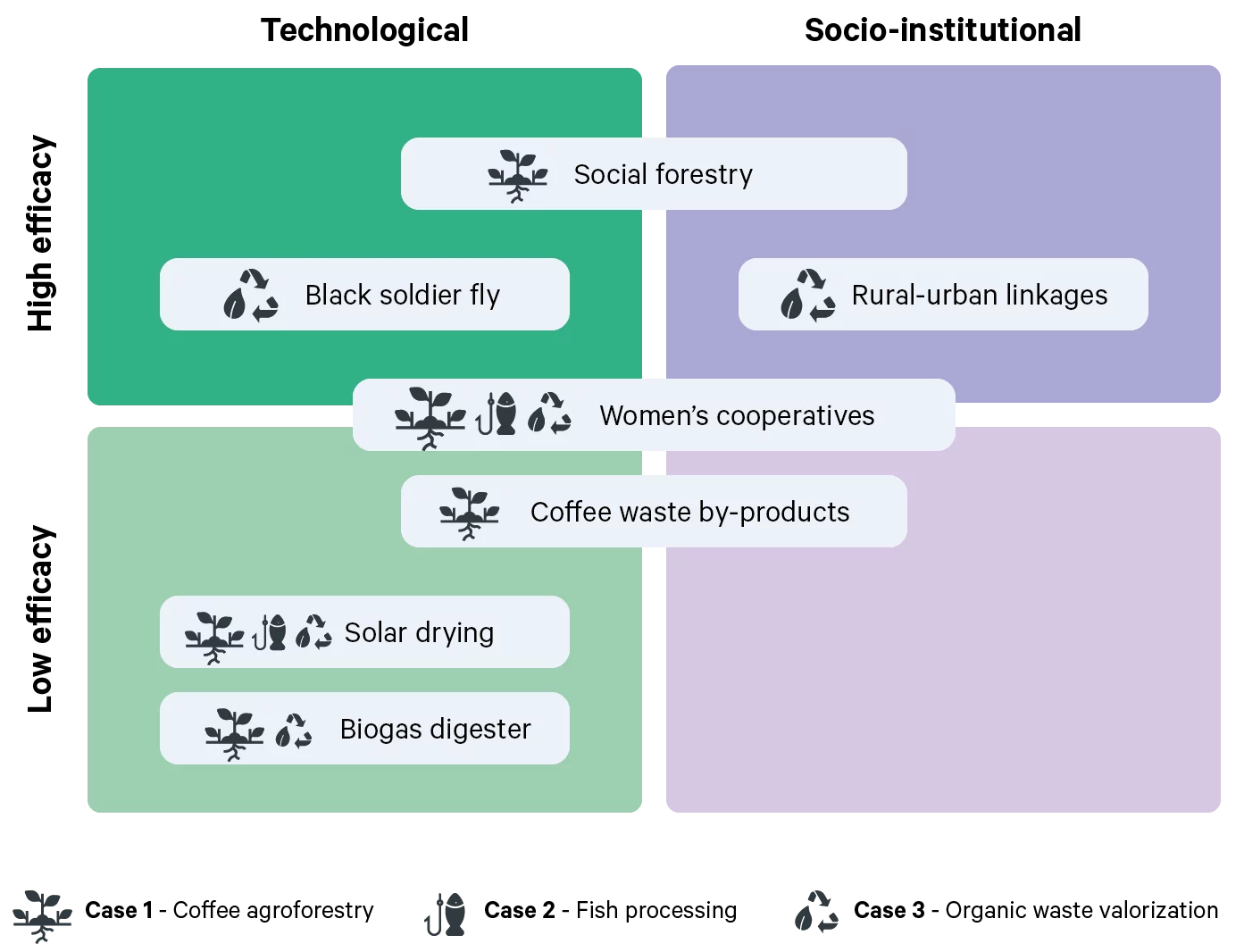
Moving from GESI considerations to social and technical innovations, several examples emerged from the study which aim to support goals of equitable and sustainable transformation of food systems. From a socio-institutional perspective, there are the social agroforestry scheme and women’s cooperatives, while the technological side includes coffee waste upcycling, solar drying and biogas digesters. Crucially, we found that the social innovations seemed to be more impactful than technological ones, with the technologies all having limited uptake and challenging maintenance requirements.
The social agroforestry scheme was established in Wanagiri in 2015, with the village-owned enterprise BUMDes aggregating beans from farmers, managing processing and roasting and channelling profits back into the community. However, until 2022 planting new coffee was prohibited by Bali’s Forestry Department under fears of deforestation. It was only reallowed when a short film was released by the head of the farmer’s cooperative, together with a local journalist, which emphasized the ecosystem services of coffee agroforestry. For example, in 2008 there was significant land conversion from coffee to flowers as the price of coffee was very low. However, this resulted in major flooding downstream. The film led to an attitude and policy shift to trial the social agroforestry scheme, with 30% of the forest allowed to be cultivated and the remainder to be kept as intact forest. Coffee can only be harvested once a year in Bali, meaning that farmers rely on integrated systems with other species such as oranges, banana, avocado and bamboo, as well as other livelihood activities such as tourism and livestock including pigs and goats. These are particularly important due to the increasing climate vulnerability of coffee crops.
After fifteen years (in 2037), the Forestry Department will assess the social forest scheme to evaluate profitability as well as conservation indicators to determine whether to provide another permit for cultivation. Multiple actors in Bali report the social agroforestry scheme to be working well, and the head of the village-owned enterprise has been providing training to replicate the model in other coffee-producing regions of Indonesia. A key factor of success according to respondents is synchronization between the farmer’s cooperative and the government. Nevertheless, as the land is only leased, not owned by the farmers, concerns were expressed for their livelihoods if they do not get permission again.
Waste recovery and valorization opportunities have been identified for almost all coffee by-products, including for dietary supplements, food products, biocomposite materials for construction, animal feed, compost and biomass for biofuel production, yet large-scale and systematic application remains limited (Iriondo-DeHond et al., 2020; Lee et al., 2023; Nolasco et al., 2022; Saberian et al., 2021). In Bali, coffee waste and by-product upcycling innovations were evident in the form of coffee wine, cascara tea, and beauty products including soaps. However, these were constrained to a select number of coffee shops which emphasize sustainability in their business model and by the Wanagiri Women’s Group as a small-scale entrepreneurial activity.
The Women’s Group and their activities exemplify a form of social innovation by transforming coffee waste, such as coffee cascara, into new products like coffee wine, tea, cakes and soaps, which are both marketed and sold within their local community. This initiative creatively addresses the environmental issue of coffee waste but also provides women with additional income-generating opportunities, fostering economic empowerment at the grassroots level. Despite its potential, the scaling of this innovation has been hindered by challenges detailed above, including limited access to resources and funding, as well as broader systemic barriers such as restricted access to credit, land and markets that restrict women’s ability to fully capitalize on their skills. Nevertheless, with the appropriate support, this could present a model for using waste to create sustainable, community-based products.
In Wanagiri, there are four solar-powered facilities to support efficient drying of coffee after washing. However, when the research team visited, it was reported that the dryers are not functioning optimally. While the farmers did not share specific reasons for this, traditional drying techniques using drying racks appeared to be widely adopted in Bali, likely due to the comparatively low maintenance, cost and training requirements. Moreover, interviews revealed that while the solar dryer was predominantly used by men, the drying rack technique was most often carried out by women.
Other innovations for coffee drying have been developed and discussed in external literature, such as two examples of hybrid solar systems piloted in Colombia. The first was a hybrid solar-biomass system involving coffee husk pellet combustion which managed to reduce operating costs by 80% and achieve net zero carbon emissions (Manrique et al., 2020). The second combined mechanical drying using solar tunnels as a base together with biomass burners using agricultural waste and a photovoltaic system to obtain a self-sufficient drying system (Duque-Dussán et al., 2023). However, it is worthwhile to note that both of these systems were only developed to a pilot stage and remain without real-world evaluation which would give much deeper insights into concerns around efficacy and maintenance requirements.
There was scarce evidence of any approach to treat the acidic wastewater from the case study, but nature-based solutions are being piloted to treat coffee wastewater elsewhere with limited academic literature on this topic to date. In East Africa, a company called Sucafina is applying a three-step treatment process involving a settling tank, filtration and acidity treatment stage, followed by final treatment in a constructed wetland (Sucafina, 2021). Similarly in Peru, TechnoServe is supporting a simple, low-cost solution with filtration of pollutants through vetiver grass; this approach is now being applied by over 300 families (TechnoServe, 2024). Treated coffee wastewater can also be used as organic fertilizer, with some anecdotal reports emerging from Bali, yet without robust evidence of application or scaling. Alternatively, a respondent who runs a coffee trading business spoke of trialled applications of dehydrators in Colombia to dry coffee quickly without the use of water.
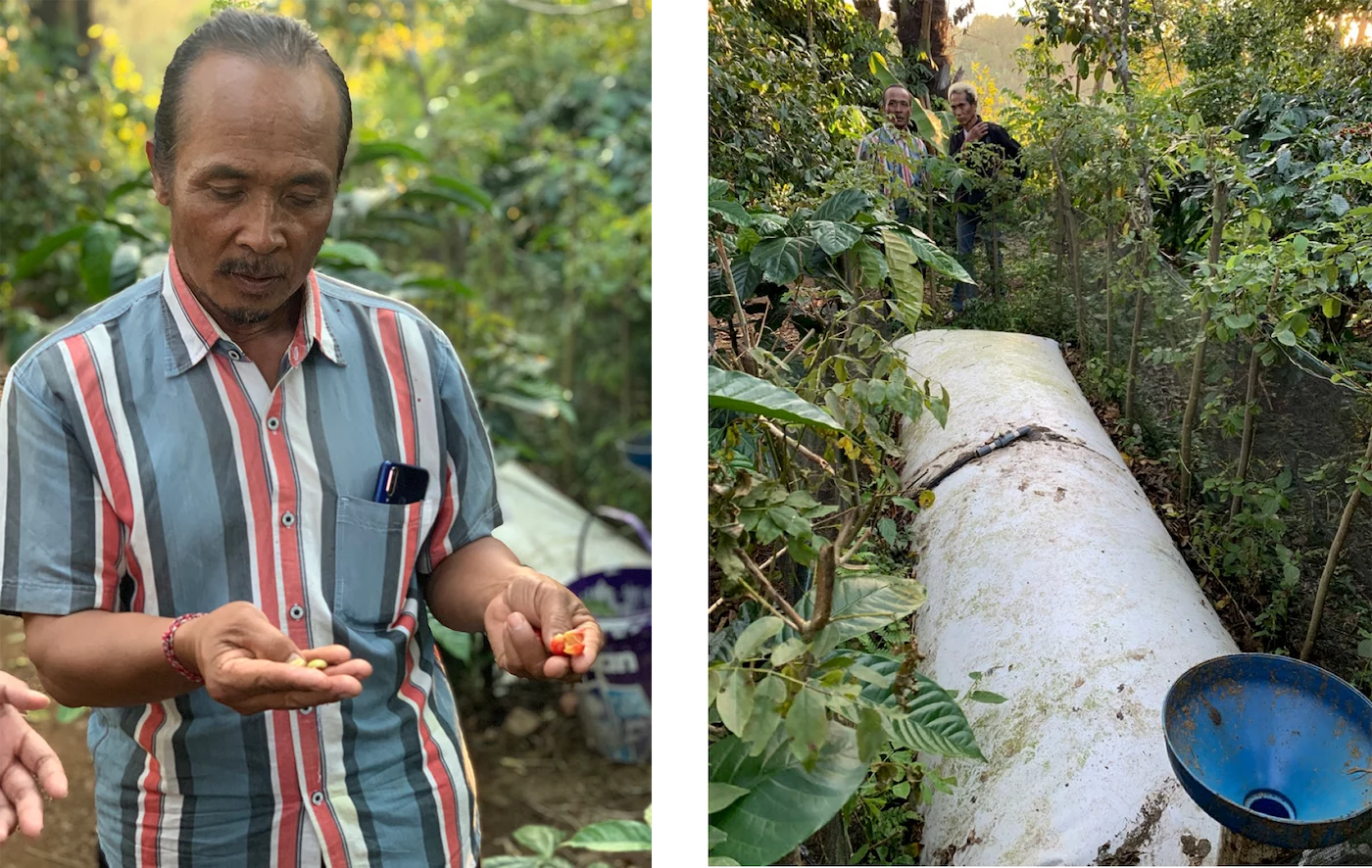
Biogas digesters – a relatively simple technology involving anaerobic digestion to biodegrade organic materials and produce biogas for cooking and fertilizer – are being trialled among Wanagiri farmers. Coffee tree cuttings, food waste scraps and animal waste can all be added to the machine. However, a farmer who has had the biogas machine for a year reported that it has not been working well for the last several months, with “not even enough energy to boil noodles”. When the research team visited, it did not look like the machine had been used in quite some time. It was speculated that weather might be a problem, with the machine needing to get enough sunlight to properly ferment the contents.
In a systematic review of design and construction considerations for small-scale biogas digesters, Issahaku, Derkyi, and Kemausuor (2024) note that although the technology is not new and has strong potential for meeting the waste management and clean energy needs of rural households, there remain key challenges which hinder mass adoption. The authors suggest that there were no reports of guidelines or standards being followed in the design of small-scale biogas digesters, making it challenging to evaluate. They further recommend the incorporation of real-time monitoring systems as a design factor for digesters to minimize system failures.
Figure 4. Wanagiri farmer showing coffee cherries (left), and biogas digester machine (right). Photo credit: SEI.
We argue this case represents an example of “good practice” for climate resilient agriculture and circular practices within food systems. There was very little waste throughout the process, as agricultural cuttings were used for composting and even the low-quality beans were roasted and made into powder for sale at a lower price. Nevertheless, gaps remain. For example, sub-optimal composting could be enhanced through improved fermentation processes to turn it into fertilizer. Taking this one step further, there are potentials to link coffee waste fertilizer to forest restoration, further strengthening positive feedback loops and socio-ecological outcomes (British Ecological Society, 2021).
Framed as a “social innovation”, the social agroforestry scheme itself is broadly hailed as a success in terms of its ability to strengthen forest conservation and enhance local livelihoods, with steps being taken to replicate the model in other parts of Indonesia. Lessons learned could be usefully applied to inform collective organization for sustainable and socially just food production in other sectors. However, the examples of technological innovation evident from the case were less successful. For example, the solar dryer was functioning sub-optimally and the biogas digester was not working at all, emphasizing the importance of on-ground evaluation of technologies and provision of continuing support for maintenance requirements.
Interestingly, key challenges to enhancing materials circularity and reducing FLW appear strongly linked to GESI gaps. These include the barriers faced by the Women’s Group in accessing resources and government funding to scale up their coffee waste upcycling activities, and their lack of control over the solar dryer, despite the fact it was through their efforts that it was installed. Therefore, future investments should integrate a strong gender lens and work to support women’s economic empowerment which can support mutual goals of FLW reduction and justice within food systems.
Fish are critical to food and nutrition security in many countries in Southeast Asia, particularly Myanmar and Cambodia where the food type represents 60% of all animal protein consumed (Akester & Ali, 2021). Global estimates in the fisheries sector indicate that around 35% of catch is loss or wasted (Akester & Ali, 2021). However, a major challenge to reducing fisheries’ FLW in low- and middle-income countries, including in Southeast Asia, is data gaps and non-standardized approaches to data gathering (Kruijssen et al., 2020). In a global review, Kruijssen et al. (2020) find that studies of physical and nutritional loss are more common than those of quality or market force loss, while research gaps include the need for robust impact assessments of interventions to reduce fish loss and studies assessing how loss affects men and women differently. Looking at Zambia, Cole et al. (2018) find that postharvest losses leads to supply of poorer quality fish, reduced output, lower incomes and creates the need for more fish to make up losses and meet growing demand.
Preserving fish through processing is a widespread technique to reduce waste while supporting livelihoods and nutrition outcomes. Small-scale fisheries (SSF) represent about 90% of the world’s capture fisheries (FAO & INFOFISH, 2022), and SSF in Southeast Asia, like in other developing countries, use simple preservation techniques to process the fish. According to the research project Dried Fish Matters, processed fish (including dried, smoked and pickled) is highly economically, nutritionally, and culturally important in Southeast Asia (DFM, n.d.). These traditional techniques were the main form of practices before the introduction of cold chain technology and ice-making techniques (Fagan, 2017). It is estimated that processed fish products make up 25–30% of all fish consumption in Southeast Asia (Akester & Ali, 2021). Statistics from the Department of Fisheries shows that of all the fisheries processing plants in Thailand, 66% are related to drying (Department of Fisheries, 2023). It is a labour-intensive process which employs a large number of women in the pre-, post-, and processing stages (SEAFDEC, 2022), yet can entail risks to the health of consumers and processors from contamination and toxic preservatives (Akester & Ali, 2021).
This context makes fish processing a compelling case to examine food system transformation and social development, and research gaps persist in the dried fish sector. The first global systematic assessment on dried fish by Belton et al. (2022) concluded that fisheries literature has been focused on fish (food safety and consumer health), fishers (exploitative labour conditions and SSF livelihoods), and fishing (fishing methods and their impact). However, the land-based practices (processing and trading) were far less studied and examined (Belton et al., 2022). A limited number of studies were found to assess FLW in SSF, including the FLW in the dried fish value chain in India (Sharma et al., 2016), Zambia (Kefi et al., 2017), Nigeria (Eyo, 1999), and Malawi (Torell et al., 2020), but none in Southeast Asia. Nevertheless, the ASEAN-SEAFDEC Resolution and Plan of Action on Sustainable Fisheries for Food Security for the Towards 2030 has recognized FLW management in its principles for fisheries development, bidding ASEAN member states to reduce FLW (SEAFDEC, 2020).
In Southeast Asia, post-catch fish processing activities include drying, salting, smoking, fermenting and pickling. FLW can occur across these traditional processes due to physical damage, microbial contamination, and insect infestation of the fish (Belton et al., 2022). Critical loss points are located during the processing, packaging, distribution and marketing stages of the fish processing chain (FAO, 2018). A full list of the causes of FLW according to the stage in the fish value chain is provided in Appendix B. As these practices are labour-intensive, use low-cost technology, and have minimal facilities for storage and sanitation control (Thombathu & Im, 2023), these conditions contribute to the risk of fish degradation. One of our key informants explained that dried fish processing can be problematic from the FLW perspective because it can have poor-quality processes. During drying, fish are often processed in an open-air environment which exposes the product to various contaminants. This includes bird faeces, flies and insects (Akester & Ali, 2021).
Once dried, the products are transported in bulked sacks and sold in an open-air market which further increases risks of contamination and physical damage by insects and rats, respectively. Moreover, to prevent the dried fish product from degrading and becoming undesirable to buyers, sellers spray preservatives (e.g. pesticides) onto the product. This makes the dried fish products harmful to the buyers’ and consumers’ health. Often, the poorest quality fish are purchased by low-income households. This is not always the case, however, as some specialized products like Cambodian Prahok2 are generally viewed as a high-quality (as well as culturally important) food item, for which the time-intensive nature of production is poorly reflected in the price. Prahok generates virtually no waste, fully utilizing all sizes of, and all parts of, the fish. The key informant explained that any leftovers can be fed to the aquaculture fish or livestock that are being raised in the SSF community.
In parallel to fish processing, we found that SSF communities are actively seeking to maximize the utilization of fish discards. Physically damaged fish from poor handling and undesired fish parts such as head, skin, fins, viscera and trimmings are being utilized for input such as fish feeds in aquaculture farms (Akester & Ali, 2021). Studies estimated that fish for human consumption yield only 40% of the edible fish’s bodyweight while 60% are its by-product (head, skin and viscera) (Ockerman & Hansen, 2014; Raa et al., 1982). As such, industries utilizing these byproducts include the fishmeal, fish oil, fish silage, pet food, fertilizer, nutrient supplement, and pharmaceutical industries (FAO, 2024a). Compared to the industrial fishing sector, our key informants assess that SSF communities generate very little waste because the scarcity of resources incentivizes them to utilize all the resources they have. For example, in Cambodia, inland aquaculture uses discards as direct inputs for carnivorous fish (Joffre et al., 2021).
Nonetheless, the management of FLW in SSF is not universal and their activities depend on the local context. Reduction of FLW in SSF processes needs to be appropriate with local conditions such as improving traditional processes in terms of safety, social equity and technicality. For example, in Indonesia, SEAFDEC (2020) has found that skilled workers in post-harvest activities may waste more fish parts when separating the flesh from the bones, skin and shells. Initiatives have been carried out to train workers to increase utilizations of byproducts (such as processing shrimp shell waste into chitin or chitosan), develop post-harvest facilities such as integrated cold chain storage, and promote regulation to increase value of fisheries products (Eu & Chia, 2022). In Malaysia, the Malaysian Standard of Hygiene on Board (MSHOB) provides voluntary training for local fishers to properly handle fish to reduce FLW onboard the fishing vessels. In the Philippines, the Community Fish Landing Centers (CFLCs) are identifying strategic SSF communities in the coastal areas to develop ice-making facilities to reduce FLW due to poor storage temperature (Eu & Chia, 2022).
A critical area in which loss can be observed is through fish bycatch and discards. Bycatch refers to the unintentional capture of fish and other marine animals, often associated with unselective fishing techniques such as trawling. Meanwhile, discards refer to fish which are undersize, low-value or damaged. It can also refer to the non-edible parts of the fish such as frames, viscera and skins. In Southeast Asia, a study estimated that discards and bycatch contribute to about 8% of FLW in the fish value chain (Cederberg et al., 2011). As explained in the previous section, there are various opportunities to utilize discards, including as inputs for pharmaceutical products, nutrient supplements, and fishmeal (Eu & Chia, 2022; FAO, 2022c). Teh & Pauly (2018) explained that rates of discards are relatively lower in Southeast Asia than other regions due to demand from the fishmeal market. Fish discards caught by trawl nets channelled towards fishmeal ranged from 100% in Cambodia to 50% in Vietnam. Rates in Vietnam are lower due to competing uses, such as for fish sauce production. Still, it is challenging to accurately measure rates of discards as the definition is broad, ambiguous, and not standardized between countries (Banzon et al., 2019).
Despite this system of discard utilization seeming to offer reductions in FLW, the process can still encourage and incentivize unselective methods like trawling that inflict unnecessary mortalities to captured fish and generate bycatch (EJF, 2023). Discards also include “low-value” fish (including juvenile fish) that are too small to be eaten so have little commercial value. This process of “fishing down the food web” has been well studied (Pauly et al. 1998; Pauly and Palomares 2005), and continues to reduce fish populations and undermine the marine ecosystems in Southeast Asia (Warren & Steenbergen, 2021). Our study also points to an increase in consumer demand for processed fish, which is increasing mainly because of the accessibility of e-commerce and online markets (Rungruengrayup et al., 2023). A key informant explained that this is putting pressure on fish stocks, with the demand incentivizing fishers in coastal areas both in the Gulf of Thailand and the Andaman Sea to catch smaller fish.
Aligning with the phenomenon of “fishing down the food web”, another way we might conceptualize loss is through the lost opportunity or future benefit not realized to the ecosystem. Unsustainable fishing practices minimize the total amount of fish available in future years, for instance when juvenile fish end up as fishmeal or dried fish. Moreover, there are important justice issues evident here, with fish diverted from direct and local consumption to inputs in higher-value industries such as salmon which are often traded to countries of the Global North (Belton & Thilsted, 2014). This presents a potential injustice to the current and future food security of lower-income countries in Southeast Asia, with small-scale fishers, pregnant and lactating women, children, the elderly, and low-income households dependent on fish for both food and income most likely to suffer from fish stock depletion over time (Kendra et al., 2021). Meanwhile, interviews suggested that trade pressures from Thailand to Cambodia for “high value” fresh fish have exacerbated processes of fish stock depletion in the Tonle Sap Lake, leading in turn to increased demands for cheap fish meal imports for aquaculture in Cambodia. Teh & Pauly (2018) find that when the amount of fish that are diverted to fishmeal is omitted, small-scale fishers contribute more fish for human consumption than industrial fisheries, emphasizing their role as a “pillar” of socio-economic wellbeing for coastal communities. Management to reduce trawling and unselective methods of fishing while supporting the livelihoods of small-scale fishers therefore remains crucial to FLW reduction and sustainable and equitable food production.
In Cambodia’s SSF sector, labour is distinctly influenced by gender, with women making up 57% of the workforce – well above the global average of 40% (SEAFDEC, 2022; Kusakabe, 2016). While men and boys work typically ends once the boat reaches shore, women and girls take on the labour-intensive tasks of processing, drying and selling the fish. As one informant put it, “fish processing is 100% women’s job.” This division is shaped by social and gender norms, particularly beliefs about men’s and women’s physical and religious capacities to engage with ocean resources. Men are seen as suited for marine harvesting and fishing, while women focus on post-harvest activities on land. This is particularly evident for Muslim women in the region due to religious norms and beliefs. These roles not only reinforce traditional gender expectations but also determine how labour is divided throughout the value chain, from catching to processing (Kusakabe, 2016).
Fish processing is often done at home, where the lines between productive and household responsibilities blur and women commonly must manage both sets of responsibilities, leading to “time poverty” (Kusakabe, 2016). This dual burden is particularly pronounced for women in low-income households, which is common in Cambodia’s fishing communities. These women take on household chores, fish processing, and childcare with limited resources (Heyl, 2024). Research on the fish supply chain in Zambia revealed how women’s participation in both paid and unpaid work resulted in less attention being paid to processing, impacting FLW and leading to over-processing loss during drying. Additionally, women often start with lower-quality fish to process because they cannot carry heavy loads or travel long distances to access fresher fish found in more distant locations, contributing to higher losses (Cole et al., 2018; Kaminski et al., 2028).
When considering interventions to reduce FLW, it is important to recognize that additional measures may disproportionately impact women, as one interviewee stated. Increasing demands on fish processing, such as improving efficiency or scaling up operations, often result in increased workloads for women. This is largely because critical loss points are located during the process, packaging, distribution and marketing stages of the fish processing chain, the key nodes at which more women work (FAO, 2018). As such, these interventions, if not gender responsive, could exacerbate their already heavy time poverty, as they balance both fisheries and household responsibilities without sufficient support or resources. Thus, gender transformative approaches are needed to address the underlying norms that drive inequitable gender distribution of unpaid labour. For example, solar drying tents have reduced drying time by over 50% and increased fish shelf life, enabling women to access higher-value formal markets while continuing to balance household responsibilities. When paired with gender transformative approaches in training and technology sensitization, the solar tent dryers not only support women’s participation in improved processing practices but also challenge and influence gendered power dynamics by encouraging men’s support for women’s roles in fish processing, market access and decision-making (Nagoli, n.d).
Description from two key informants and from Heyl (2024) explained that the fish processing stages, which are carried out primarily by women, are done manually. They shared that most often, women have limited access to both finance and technical support to improve the working conditions or upscale their fish processing operations. Women from low socio-economic households also have limited access to services including education and finance, when compared to women living in higher socio-economic households. Due to the limited access to such resources, they are often left without option but to accept unfair conditions and practices. These inequalities disproportionately impact women from socially marginalized groups, including those from lower castes, widows, migrants and refugees (Belton et al., 2018). Moreover, as new capital-intensive technologies and enterprises expand in the post-harvest node aiming to improve quality and reduce waste, it was noted that women report less agency and lower equity outcomes due to intersecting factors including education and care responsibilities. Women are also often unable to access social protection benefits including health insurance and minimum wages (Rao et al., 2024). Interviews indicated that as a result of increasing commercialization and industrialization of fishing in Southeast Asia, women may be negatively impacted as they tend to be small-scale actors who lose out when they are unable to compete in increasing economies of scale.
SSFs often lack formal organizational structures, leaving women less empowered as they are often poorly represented, if represented at all, in any local decision-making processes. Their demands, such as for safe working environments, are not prioritized. Moreover, there are relatively few women’s collectives and other women-led organizations in the sector, preventing them from benefitting from cooperatives, collective bargaining and trade negotiations. Given women’s key role in fish post-harvesting roles, women’s lack of decision-making power in SSFs contributes to FLW as fish are often not effectively distributed and therefore degrade (Heyl, 2024). In the dried fish value chain, migrant women, women with lower educational backgrounds, and those from lower socio-economic or caste groups face compounding challenges. Their limited negotiating power in interactions with buyers is exacerbated by longstanding gender and social inequalities, restricting them to less profitable activities and resulting in lower economic returns compared to men counterparts (Jones et al., 2012, as cited in Kusakabe, 2016)
Informal norms and formal structures limit women’s access to different aspects of the dried fish chain. Cultural expectations and safety concerns often restrict their mobility, preventing them from accessing key market spaces, such as harbours, during early hours when fish prices may be more favourable. For instance, one key informant shared that due to social expectations and safety reasons, many women are not able to be at harbours at 3 a.m., a key time for buying or selling fish, putting them at a disadvantage. In addition, if women do play a role in SSF harvesting they mostly fish near the shore, usually less than 10 km out, due to physical and religious norms as well as their multiple roles in the household. As climate change and overfishing deplete fisheries near land, women are unable to access fisheries, reducing their opportunities for economic empowerment. As the industry becomes more industrialized these challenges grow, further pushing women out of profitable opportunities and deepening their exclusion from the sector (Adam et al., 2024).
In addition, migrants, especially migrant women, face additional challenges in the dried fish chain. For example, in Thailand, they are prohibited from operating independently from businesses (Belton et al 2016). Migrant women involved in dried fish production and trade encounter multiple and intersecting barriers, including interferences from authorities due to migrant status, limited access to fish supplies, minimal control of the benefits they generate, and inadequate support for their activities.
On top of these gendered and social inequalities and power imbalances, gendered health and safety factors generate disproportionate risks to women in SSF. Two key informants explained the SSF livelihood of consuming dried fish is subjecting SSF communities – including women and children – to bioaccumulation of preservatives and potentially heavy metals, agricultural pollutants and microplastics (Vidaček & Janči, 2016; Wagner & Green, 2024). These health risks are elevated for migrant workers who often lack formal labour rights and access to health protections. The key informants explained that because dried fish products are naturally at risk of insect infestation and bacterial contamination, preservatives such as pesticides are being added during the wholesale or distribution stage to increase the product’s longevity or prevent the product from degrading (i.e. losing its value). This poses an increased risk, especially for women who are over-represented in this stage of the dried fish chain. In addition, this suggests that long-term consumption of dried fish in SSF communities can lead to the bioaccumulation of pollutants, such as pesticides. This is a particular risk for vulnerable and nutritional priority populations, including pregnant and lactating women, who depend on dried fish for essential nutrients.
According to our key informants, the emphasis of research and development projects for SSF in Southeast Asia has so far been technical and focused on better product quality and reducing waste, for instance through optimized technologies for processing. However, these projects have largely been implemented in a top-down manner, with limited efficacy and local uptake. A main example that was discussed was solar drying. There were limited examples of social innovations, other than moves to strengthen collective action among women fish processors in Cambodia that were largely unsuccessful.
An example of a social innovation that emerged through the study was attempts to improve resources management through collective action3 among women fish processors in Battambang, Cambodia (Kusakabe, 2016). However, it was found that these women face challenges in organizing their collective fish and Prahok business due to seasonal fluctuations in fish supply, dependence on Thai traders, and a lack of government support for collective negotiations. As a result, women processors struggle to build the capacity and solidarity necessary to manage resources and renegotiate power imbalances that influence trade agreements with their Thai trading counterparts (Kusakabe, 2016). This underscores a need for further studies to understand the capabilities of different gender groups to process fish products and influence trading conditions, and how this can in turn reduce FLW in SSF. An example of gender-based assessment in SSF is FAO’s pilot project of the gender-responsive fish loss assessment methodology (GRFLAM) in Ghana (Heyl, 2024). The project aims to inform strategies and interventions to co-address gender constraints and reduce fish losses in SSF communities.
One of the main technological innovations for fish processing that emerged from the study is solar drying (e.g. greenhouse structured covered with glass or plastic to dry fish), which has been developed for SSF in multiple coastal regions (Belton et al., 2022). The method is showing promise to enhance the SSF processing activities in Cambodia because it accelerates the drying process and reduces the risk of infestation, minimizing FLW (Thombathu & Im, 2023). However, evidence of technology adoption has been limited (Akintola & Fakoya, 2017; Dwivedi et al., 2023). This is because the technology – among other socioeconomic barriers – cannot meet the post-harvest operational demands yet. In the case of Thailand, key informants explained that the durability and reliability cannot keep up with the scale of fish needed to be constantly dried (Belton et al., 2022; Hin et al., 2024; Thombathu & Im, 2023; Vidaček & Janči, 2016).
While data on the specific distribution and management of solar dryers is limited in this context, one reason for limited adoption may be the restricted access of women, who dominate the processing node, to this technology. Research from various contexts finds that women often have less access to fish processing technologies, assets and financing, making them less able to adopt technologies (Cole et al., 2018; Kaminski et al., 2020). Conversely, simple technology such as raised racks are cheap and can be made with local material. In the SSF sector, profit margins are slim, and fishers cannot afford to invest in or maintain expensive technologies.
There are three factors that solar drying technology has yet to precisely resolve: weather conditions, temperature control of the solar chamber, and scale of drying. Because the solar availability and intensity vary throughout the day due to the weather and seasonal factors (e.g. interval of clear and cloudy sky), these conditions make the drying process unpredictable. This is in comparison to other drying methods such as raised drying, which the fish processors can expect to dry the product in around 6 to 7 hours (on a sunny day) or longer (on a dull day), though this may raise the risk of bacterial contamination (FAO, 2022a). Even though solar drying may be quicker than other methods (Thombathu & Im, 2023), our key informant stated SSF processors in Thailand found the traditional and raised drying method more predictable. They do not have to worry about whether the fish will dry quicker or slower due to the fluctuation of solar availability and intensity. Predictability is more important to them than the speed of drying the fish for SSF because it implies the processes can consistently produce the same amount of product and quality of dried fish.
Our key informant explained that solar drying feels like its “stuck at the experimental stage”, where researchers that develop the solar drying prototype are constantly tweaking the right temperature for drying. So far, the solar drying machine is over- and under-drying the fish. In Thailand, the solar intensity is sometimes so strong that the skin and outer layers of the fish become over-cooked while the inner layers are raw, leading to more FLW. Re-recalibrating the machine to correspond with the solar availability and achieve the precise temperature for a consistent drying outcome has proven to be an enduring challenge. Finally, as further experimentation will cost time and funding, fish processors found it obvious to resort to the traditional way of drying. Our key informant reported that developers of the solar drying technology need to co-design the technology with the SSF fish processors for more appropriate designs and local uptake. This is particularly key when considering the predominance of women in the processing node and the need to address gendered impacts to ensure equitable access, control, improved uptake and the long-term sustainability of solar drying technologies in SSF contexts.
We have found that the SSF sector and dried fish economy in Southeast Asia – encompassing trade links with processors, the mesh of digital and traditional markets, and consumer demands – demonstrates a complex system of trade-offs and interdependencies. Preserved fish are an important food item for both nutrition and local economies that can greatly reduce FLW. However, transnational flows of trade and unsustainable and extractive modes of fishing, characterized by increasing commercialization and industrialization in Southeast Asia, can exacerbate ecosystem degradation and reduction in current and future fish stocks. In turn, this threatens local food security – particularly in low-income countries such as Cambodia which rely on fish as a key source of protein. Moreover, in the context of diminishing fish stocks, it is the poorest consumers who will turn to low-quality fish such as contaminated dried fish.
An overarching recommendation is to address data gaps for FLW in fish processing, which can be particularly pronounced in the SSF sector. This can assess the costs of fisheries FLW (including through destructive and unselective fishing practices), both to producers and from an ecosystems perspective (i.e. through reduced stocks of juvenile fish). More broadly, fairer and more regulated trade relationships can lead to fish products being more efficiently managed along the processing and distributing stages (Markelova et al., 2009), while the critical importance of regulating industrial trawlers remains a priority to ensure just and sustainable fisheries systems.
Similarly to the social forestry case, GESI aspects emerged strongly as a barrier to the sustainability of fish processing, including FLW aspects. While solar dryers can reduce drying time by over 50% and increased fish shelf life, there is still limited adoption. One reason for the limited adoption may be the restricted access of women, who dominate the processing node, to this technology. Women reported less agency as new capital-intensive technologies proliferate and are mainly managed by men. Moreover, SSFs often lack formal organizational structures, leaving women less empowered as they are often poorly or not represented in any local decision-making processes. Contrary to the successes of the social agroforestry scheme in Wanagiri, efforts to enhance women’s collective management of fisheries resources in Cambodia fell short. Further research and investment into this area to address the challenges faced by women processors could jointly improve both gender equity and FLW outcomes, enabling women to access higher-value formal markets, while continuing to balance household responsibilities.
With the proportion of the global population living in urban areas projected to reach 68% globally by 2025, about 80% of all food produced will be destined for urban areas by 2050 (Ellen MacArthur Foundation, 2019; UN DESA, 2018). Despite this, food systems issues have historically been approached at national and provincial levels rather than municipal ones – this has led to a fragmented approach which misses opportunities for enhancing sustainable outcomes (Cabannes & Marocchino, 2018a). Localizing food systems through urban agriculture can support enhanced access to nutritious food (Gordillo & Jeronimo, 2013), community resilience to environmental changes such as urban heating (FAO et al., 2022), create local jobs and opportunities for community-building (Cattivelli, 2022; Charoenratana & Shinohara, 2018), and reduce FLW through shortening the supply chain (Bennedetti et al., 2023).
Critically, research is increasingly acknowledging that enabling urban inhabitants to determine their ability to produce food can promote a democratic and participatory urban planning (Langemeyer et al., 2021; Weidner & Yang, 2020). In many dense cities of the Global South such as Bangkok, for example, rooftop urban agriculturepresents an opportunity to utilize marginal or disused urban space to optimize land use and promoting resource efficiency. Still, the challenge of promoting urban agriculture includes questions of how to supply and utilize urban resources (land, water, and labour) (IPCC, 2022), and coordinate cross-sectoral planning (Cabannes & Marocchino, 2018a). Moreover, recent studies are indicating potential trade-offs from increased carbon footprint of food from urban agriculture compared to conventional agriculture, for example due to investment in infrastructure that may only be used temporarily (Hawes et al., 2024).
A parallel priority for developing cities is the management of a large proportion of organic (food) waste as part of municipal waste streams, particularly given existing deficiencies in waste management systems. Across Asia, organic waste accounts for the highest proportion of waste types at around 50% across the ASEAN countries, and 64% in Thailand according to official statistics (UNEP, 2017). However, this proportion could actually be much higher, with a household survey in Bangkok finding organic waste to comprise 83% of total waste generated (Pottinger-Glass et al., 2024), underscoring difficulties in employing standardized measurements for FLW.
Waste valorization, a growing field of policy action and research (Ansari et al., 2024; Wildeboer & Savini, 2022), is demonstrating ways that urban stakeholders are converting waste materials into valuable products (UNEP and UN-Habitat, 2021). Opportunities for reducing FLW while improving circularity emerge from synergizing urban agriculture with organic waste valorization, using food waste for composting which in turns provides critical inputs for food production. For example, Weidner and Yang (2020) find that integrated urban agriculture could assimilate 51.7% and 16.9% of food waste in Glasgow and Lyon, respectively, although they also find trade-offs with overall emissions due to high heating and lighting requirements for greenhouses in winter months (Hawes et al., 2024).
Building from this rationale, this case study explores the barriers and opportunities for integrated urban agriculture and organic waste valorization. We take a multi-level perspective, examining barriers and opportunities from actors at the municipal, household and private sector scale, and considering opportunities for enhancing urban-rural linkages. The entry point is Bangkok Rooftop Farming (BRF), a local social enterprise which combines urban agriculture with a circular economy approach, collecting food waste from the food court of the shopping mall in the lower floors of the building they occupy and using this to create compost as an input for vegetable cultivation for local sale. This presents an interesting opportunity to study food waste both as an input to food production and as an output on the consumption side.
BRF has demonstrated its proof of concept as a business model that can reduce FLW. The initiative needed an investment of just THB 300 000 per year (approximately USD 9300), growing to THB 1 080 000 (approximately USD 33 470) in three years and taking just three years to recover the initial capital costs. The key informant reported the current BRF business operation converts about 200 kg of FLW that is generated daily in Centre One Shopping Plaza’s food court – the BRF’s main FLW supplier – into compost, utilizing auto-composters which shorten the total composting process from 30 days to just 7 days. Waste is also received and collected from BRF’s selected partners, including the United Nations office, a hotel, and a food court from another major mall in Bangkok. However, it was reported that BRF do not collect beyond 7 km of the business to minimize trade-offs from vehicle emissions. By converting the FLW into compost and using it to grow vegetables, the BRF is selling the produce and generating profit from this valorization activity while creating local jobs. The case demonstrates the ability for social enterprise (BRF owner), mall operator (space provider and waste generator), and general customer (buyer) to create a FLW valorization system.
Figure 5. Bangkok Rooftop Farming social enterprise, also known as “Wastegetable”. Photo credit: SEI.
Photo credit: SEI
Scaling presents one of the challenges for this model. Although there is an abundance of food waste available, physical limitations on space to receive waste and grow vegetables along with staffing barriers means that BRF cannot receive more from new suppliers. As such, their primary customer base has not spread much further than locals living in the area, and BRF’s output is not enough to sell to large businesses, with only approximately 80 kg per week of produce available for sale.
In terms of staffing barriers, BRF’s six gardeners are all immigrants from Lao PDR. It was stated that they cannot find local Thai staff as there is a lack of interest, due to the perceived dirtiness of dealing with compost. This represents a behavioural barrier to scaling. All food waste suppliers reported challenges with waste segregation as a burden, or “additional workload” on top of daily operations, particularly due to the sheer volume of food waste. For the mall that asked the restaurant in their food court to segregate waste for the BRF to collect, the mall operator had to request the restaurants to segregate waste in a very specific way (i.e. vegetable, eggshell, meat and bones). The mall operator also had to provide containers to the restaurants to segregate waste. For the hotel, the managers stated the kitchen and catering section had to change the workflow to segregate waste and review the staff’s scope of work to compost the FLW and grow the vegetables. Like other cases, the hotel does not have the workforce to segregate, nor source the space to compost the FLW in their institution. Resentment was also reported, with staff segregating food waste for BRF believing they are doing the work that the municipality should be doing.
Despite these challenges, all informants reported to receive non-financial benefits from segregating FLW. Large businesses such as shopping malls can count their involvement in the scheme towards their environmental, social and governance (ESG) targets. The mall operator was also delighted to be recognized and certified by Thailand’s greenhouse gas regulator to reduce greenhouse gases in the business operation. All stakeholders report that since partnering with BRF, knowing that FLW is being utilized for composting and vegetable growing has brought a fulfilling sense of environmental responsibility and personal satisfaction to the owner, employees and customers. The mall operator stated they appreciate they were able to utilize their vacant space at the top of the parking space to the BRF business. The owner of the restaurant situated about 200 meters away from the BRF composting and growing site said they are able to save about THB 5000–7000 per month of petrol to drive to the fresh market. Moreover, even though the vegetables from BRF are about THB 3–5 per kg more expensive than market price, she is willing to pay for BRF’s vegetables as require less travel and the produce is organic, which can increase their competitive advantage. Local international schools come and do learning visits at BRF and have started their own waste separation and composting activities. In summary, all stakeholders reported these social and environmental benefits made their voluntary commitment to FLW management worthwhile. Table 3 summarizes the barriers and opportunities from the FLW valorization according to actor group.
Table 3. Challenges and benefits from FLW valorization
| Actors in the waste valorization system | Challenges | Benefits | |
| Bangkok Rooftop Farming (BRF) | Scaling: physical space to receive more food waste and grow more vegetables, behavioural values that see composting is dirty | Generating profit, generating new jobs | |
| Supplier | Shopping mall (food court); hotel | Physical space to store food waste, excess burden on workforce to segregate waste, inability to generate profit from the activities | ESG reporting targets and certifications, personal fulfilment at reducing FLW |
| Buyer | Restaurant | Extra expense of the produce | Reducing travel time to fresh markets; competitive advantage by procuring organic and fresh produce |
| Learning partner | School | Physical space to store food waste, extra burden on workforce to separate | Learning opportunity for children |
Bangkok is a signatory to the Milan Urban Food Policy Pact, which is an international agreement on urban food policies signed by over 200 cities from all over the world to develop more sustainable urban food systems. In alignment with this policy agreement, the Bangkok Metropolitan Administration (BMA) has designed a District Food Management Sandbox initiative in two districts, which is now being rolled out across the remaining 48 districts of Bangkok. This initiative consists of two pillars: surplus food that can still be eaten, and organic waste management. These initiatives contribute to improvement in food redistribution and reduction in FLW generation at the public and household level. The key informants revealed some successes and challenges of this scheme.
District offices collect fresh surplus food every day from convenience stores and other retailers such as 7/11 and Tesco Lotus’s, as well as temples that receive a lot of excess food donations. The surplus food is then directly donated or transported to the district office “minimart” where low-income groups can come and buy directly for cheap prices. In the past year that the scheme has been operational, approximately 2 million meals have been donated, avoiding 500 kg of food waste. A current barrier is risk from food donors of lawsuits, with the Thai Ministry of Health currently in the process of drafting a “good Samaritan law” to provide safeguards.
Working in tandem with the District Food Management Sandbox, BMA is running a campaign entitled “mix no more” to separate wet and dry waste. BMA separates their target groups into large, medium and small entities. Large – comprising schools, temples, malls and office buildings – is “easy”, according to the key informant, as the waste is already aggregated in one place. BMA acts as bridge to connect these large players directly to farmers in neighbouring provinces who are incentivized to come and purchase food waste in large quantities as valuable fish and animal feed. This is a win-win for BMA as they do not need to expend resources on collection, while the suppliers enjoy positive benefits from a CSR perspective and improve their profit margins. For the medium entities such as restaurants and roadside food vendors, each district has a collection truck which collects food waste from each business that wants to take part in the programme. BMA then serves as the aggregator, with farmers coming to pick up the waste from BMA facilities.
Key informants emphasized that small entities are the remaining challenge, as the BMA cannot currently provide individual bins for household separation. There would be efficiency trade-offs if waste collectors spent time to gather a small amount of waste from each household. A persistent challenge with household separation has been distrust from communities about BMA mixing the waste up again after collection, meaning separation activities feel futile (Pottinger-Glass et al., 2024). Responding to this challenge, BMA has brought in new trucks with differently coloured cages for recyclables, hazardous waste and food waste, so that the public can see waste going into the right place. Effective information dissemination about waste separation and enhanced visibility of the BMA’s activities to build public trust remain key priorities of the Sandbox.
Low waste collection fees of a flat rate of 20 THB per month (USD 0.62) for households have hampered BMA’s efforts. This is now increasing to 60THB (USD 1.86) in 2025, yet key informants emphasized that this remains very little compared to costs, with BMA subsidizing 93% of waste collection fees. BMA are prioritizing the promotion of economic incentives for waste separation to relieve pressure, such as the connection of large players to farmers. For commercial enterprises, BMA is implementing “pay as you throw” waste collection charging which will also increase next year. For example, for large shopping malls, the charge will increase by four times, further increasing the economic incentive to reduce and valorize FLW.
A large proportion of recycling efforts in Thailand are currently undertaken by the informal sector, with some estimates putting the proportion as high as 75% (Pottinger-Glass et al., 2022), although it is difficult to estimate the precise extent of the sector’s contribution due to the hidden nature of the work. The sector faces persistent vulnerability due to exclusion from social security systems, health problems from a lack of protective equipment and the stigma of waste work, and practical barriers such as a lack of space to store recyclables and a lack of capital to purchase waste to get better bulk prices (Pottinger-Glass et al., 2024). These challenges are compounded for elderly or women informal workers, who are more likely to operate on foot (compared to using carts or trucks), and less likely to work at night due to safety concerns. This diminishes women waste workers’ earning capacity and increases their time burden.
This division of labour in urban agriculture at BRF was also evident. BRF employs two men drivers and six gardeners (four men and two women). A BRF key informant shared that they employ migrants from Lao PDR, stating that Thai workers think that “it is disgusting to deal with compost” as well as the wages being “too low to attract Thai staff”. BRF employs one family from Lao PDR in their rooftop farm, all of whom work together and share roles and responsibilities. The key informant shared that the workers receive above the living wage for Thailand, (Dawani et al., 2022) plus accommodation and work permit, regardless of gender. The division of labour for gardeners on the rooftop farm was equal, with all attending to the same tasks, regardless of gender or age.
Access to resources for informal waste workers is limited, especially for women, elderly and migrant workers. They often lack access to infrastructure, tools and formal support systems that would enable them to temporarily store, process or aggregate food waste effectively. Access to completely covered areas to sort and store waste is also a barrier (Archer & Adelina, 2021). This exclusion from formal resources prevents informal workers from benefitting from emerging market opportunities or other initiatives in the sector.
When considering access to resources when relating to the organic produce harvested at BRF, the key informant shared that around half of customers are middle-class Thai locals, with the other half usually expats, with a general tendency for the customer to be women who bring their young children to select the produce. She shared that organic produce may not be the preference for lower-class citizens, given the higher price and time required to visit the BRF.
Given the informal nature of food waste valorization, decisions about and control over resources are restricted among informal workers. Without access to formal systems that present opportunities for participation in decision-making, informal workers are often excluded from influencing how waste is used or distributed, with increased levels of competition problems with other waste collectors (Archer & Adelina, 2021). This lack of formal decision reinforces marginalization and limits their ability to benefit from opportunities within the food waste valorization process.
KIIs with the BMA elicited ideas to move towards semi-formalization of the informal waste sector at some stage, for instance providing registration numbers and uniforms, although there are no tangible plans yet. However, there were also concerns from the municipality that informal collectors might rummage through waste to take the high value items, leaving the lower value materials (such as food waste) as environmental leakage. New initiatives from the private sector are emerging to buy back waste as a public-private partnership model, with the BMA acting as middle-man. However, this would further diminish the livelihood opportunities of informal workers. We identify this lack of robust inclusion of the informal sector as a potential threat to an inclusive urban waste system.
Methods to include informal workers could include providing support to collective efforts for workers to effectively store and aggregate waste, and support for market linkages and mechanisms that create the demand for food waste. This may create new opportunities for informal workers. (Semi)formalization should also be further explored to capitalize upon, and include, the existing network of informal workers in Bangkok within the District Food Management Sandbox.
This case study highlighted particularly strong potential from leveraging urban-rural linkages for organic waste valorization through connecting large-scale agricultural actors in neighbouring farms (buyers) to large-scale producers of food waste such as shopping malls. This can reduce their “pay as you throw” waste collection charges, improve profit margins, and count toward ESG targets.
Another way that urban-rural linkages emerged in this case was through migration and livelihood opportunities. BRF shared that they are trying to expand and share their model with other groups, including with local youth and men rural migrants, aiming to promote sustainable farming while improving livelihoods. In Thailand, rural-urban migration is common due to low productivity on farms. This leads to both a shrinking agricultural labour force and many migrants ending up as the urban poor (FAO, European Union and CIRAD, 2022), working in precarious and low-paid jobs such as informal waste work or as motorcycle taxi drivers. As a result of interaction with BRF, it was claimed that six men who were local neighborhood motorbike taxi drivers have since replicated the business model, returning back to their home in the rural areas to use post-harvest scrap from mangosteen orchards for organic fertilizer, which enhanced agricultural outputs and profitability.
BMA is also piloting black soldier flies in their composting facilities, which can eat up to ten times their size in food waste. Key informants indicated that there has been strong success so far, and the inclusion of the flies can make the food waste much more valuable to farmers, who buy the fly pupae for fish and animal feed at a high price. Emerging literature has also underscored the potential of black soldier flies for organic waste valorization (Hopkins et al., 2021; Magee et al., 2021). However, literature has also indicated concerns from a life-cycle-analysis perspective of high greenhouse gas emissions, with one study finding that 6% of food waste was transformed into black soldier fly pupae, 51% stored in matured compost and 53% emitted into the air (Guo et al., 2021). From the case study, the pupae themselves were the most valuable output due to the market demand from farmers to use them as animal feed inputs.
In a study examining urban agriculture in combination with organic waste valorization in two European cities (Glasgow and Lyon), Weidner and Yang (2020) find strong potential for black soldier flies for optimizing integrated urban waste systems. The flies can increase protein self-sufficiency and reduce waste burden while providing economic opportunities. Specifically, the authors recommend direct feeding of larvae to animals (e.g. fish) rather than the energy intensive processing to powder in order to reduce overall carbon footprint.
One innovation which was less successful, mirroring the findings of the Bali coffee agroforestry case, was the biogas digester at the BRF facility. Despite BRF having robust technical knowledge, when the research team visited, the digester was not working. It was reported that the machine has high maintenance requirements (for example it cannot take animal bones as an input), and is not very cost efficient. If working optimally, the digester could support about 3 hours of gas for cooking per day.
Weidner and Yang (2020) find strong potential for co-located biogas as part of optimized, low-carbon circular waste management systems, alongside insect rearing (e.g. black soldier flies) and integration of rainwater as an input for growing operations. However, it should be noted that this study was hypothetical, based on potentials of waste integration rather than an assessment of action operations. Therefore, the real-life maintenance requirements of biogas digesters remain problematic and a challenge to effective roll-out at scale.
This case finds strong momentum toward circularity and FLW reduction in Bangkok as evidenced by BRF as a successful business case, in parallel with significant progress from Bangkok’s BMA with the District Food Management Sandbox initiative. Nevertheless, Weidner and Yang (2020) conclude that even a fully scaled-up productive urban food system is unlikely to assimilate all the food waste generated in a city – external or central treatment of organic waste will still be required. This underscores the critical role of further strengthening municipal organic waste collection. Specific gaps remain at the household level, with BMA unable to provide individual bins for household separation. Further research and investment could support cross-city learning to support BMA to implement household collection and improve rates of household waste separation, while exploring innovative mechanisms such as community composting.
An overarching challenge from this case is achieving economies of scale. This is evident through BMA’s capacity gaps to implement household organic waste collection. There are also clear barriers to scaling the BRF model due to the sheer quantity of organic waste available compared to the amount that can be processed due to physical limitations on space to receive waste and grow vegetables, alongside staffing limitations. This means that BRF cannot receive more from new suppliers and their primary customer base has not spread much further than locals living in the area.
A social equity and justice concern relates to the inclusion of informal waste workers as systems of waste management become more efficient in Bangkok. Indeed, there was reluctance from BMA to engage with the informal sector as they are perceived to “dump” the low value waste, contributing to environmental pollution. However, the network of informal workers across the city also represents a significant resource that could be leveraged if the market demand was present, for instance to enable household organic waste collection. This indicates an opportunity for further research and investment into market studies for compost, organic fertilizer, and related products such as black soldier flies.
This section provides cross-cutting synthesis and implications across the three case studies. Using the lenses of innovation and agroecology, we analyse results and elucidate overarching recommendations to guide IDRC’s future research and investment in FLW toward just food systems transformation.
Figure 6 maps the various innovations which emerged from the cases according to four quadrants: broadly technological or socio-institutional, and high or low efficacy.
Figure 6. Efficacy of technological and socio-institutional innovation. Source: Authors’ own
Across the cases, we found a higher degree of efficacy for socio-institutional innovations such as social forestry and the leveraging of rural-urban linkages for food waste valorization as compared to the technological quadrants. Particularly disappointing were the biogas digesters, which showed little evidence of efficacy across both actors with limited technological capacity (coffee farmers in Bali) and strong technological capacity (rooftop agriculture business owner) due to complex operational requirements which often rendered them not worth the effort. Similarly, solar drying proved to be challenging across two cases, with facilities not working optimally and actors reverting to simple but reliable technologies. Conversely, the most prominent examples of efficacy across the cases were integrated solutions. Social forestry, for example, showed high efficacy and involves both socio-institutional aspects (policy leadership, farmers cooperatives) and technical knowledge (agroforestry techniques).
While the case studies by no means constitute a comprehensive picture of technology application and uptake, and some examples are only in pilot phases (e.g. the black soldier fly) this evidence does align with initial findings in the literature review which highlighted an over-emphasis on technocratic approaches. These approaches narrowly focus on improving efficiency but fail to adequately consider the complexities behind uptake, such as knowledge and capacity, maintenance requirements, reliability, control, and decision-making compared to traditional methods. The cases suggest that an underlying constraint is top-down approaches within the innovation process, which sideline the priorities and perspectives of local actors and undermine efficacy.
Another key finding was the significance of gendered and structural limitations behind innovations. For example, in relation to coffee waste by-products in Bali, despite their knowledge and expertise, the Women’s Group faced significant barriers due to limited access to government funding and control of resources, preventing them from developing these activities into viable business models. This lack of access and control is underpinned by gendered and social norms in which women’s activities are seen as extensions of reproductive household labour or hobbies rather than serious business ventures, limiting opportunities to reduce FLW. Similarly, there were barriers to involvement of the informal waste management sector in organic waste valorization in Bangkok, due in part to limited capacities to aggregate waste, limited market linkages to waste buyers, and policy barriers via exclusion from BMA’s District Food Management Sandbox initiative. Challenges were observed in collective efforts for women fishers in Cambodia due to seasonal fluctuations in fish supply, dependence on Thai traders, and a lack of government support for collective negotiations which hindered solidarity to address waste issues effectively. Moreover, a key barrier to uptake of the solar dryers may be related to women’s lack of access to the technology. These cases underscore the need for enhanced GESI-transformative approaches to address the underlying barriers and imbalances driving inequalities, which ultimately contribute to increased FLW. Women and marginalized groups often work in nodes of critical loss points, where their inability to fully engage and access resources exacerbate FLW.
Agroecology emerged in the early 1980s as a form of resistance to changes in food systems wrought by the Green Revolution in the 1960s which aimed to increase rates of production by replacing traditional farming structures with large-scale monocultures and widespread application of chemical fertilizers and pesticides, while fuelling the growing “corporate food regime” (Gliessman, 2018). The principles as been defined by Agroecology Europe can be seen in Figure 7. Mapping these principles to the themes which emerged through the case studies, we provide cross-cutting analysis and overarching recommendations for future research and investment.
Figure 7. Principles of agroecology. Source: (Agroecology Europe, 2020)
Applying Principle 11 – Connectivity to the framework of innovation, the most effective examples were integrated solutions such as social forestry which entailed the mutually reinforcing efforts of farmer’s cooperatives, supportive policy frameworks and traditional knowledge. This demonstrated strong capacity for achieving social and ecological outcomes as part of just and resilient food systems. Similarly, the initial success of the black soldier flies in valorizing organic waste in the Bangkok case relied upon leveraging linkages to nearby agricultural buyers as part of an overall policy framework to coordinate action. Conversely, FLW actions among SSF are undermined by destructive fishing methods and extractive trade patterns across Southeast Asia – forces which largely occur outside of SSF’s sphere of influence. These examples demonstrate the need for a cross-sectoral, relational and multi-scalar approach which can bring together multiple actor groups and knowledge types to achieve synergistic outcomes that support just food systems. Therefore, we recommend the systematic integration and mainstreaming of frameworks such as CRFS and agroecology in future research and investment to support operationalization of these concepts.
The key takeaways of Section 7.1 on innovation can be linked to Principle 13 of agroecology – Participation, as despite the challenges with technology that we saw across the cases, co-design and participatory approaches can offer grounded paths to improve technology and processes as well as health and livelihoods. For example, improving solar drying could have significant health and safety benefits for fish processors and consumers in terms of reducing chemical exposure and risk from contamination, as well as reducing FLW. Our key informant on solar drying in Thailand recommended that developers of the solar drying technology need to co-design the technology with the SSF fish processors for more appropriate designs and local uptake. Critically, women should be involved in this process as key actors in the fish processing node.
Elsewhere, participatory action research (PAR) has successfully been used to test improved technologies within the fish processing sector. For example, in Zambia, Cole et al. (2018) applied PAR to a solar drying tent, a Chorkor kiln (improved smoking device) and ice. The authors found that unequal gender relations are an underlying source of postharvest losses, concluding that technological approaches alone are insufficient. Employing PAR through the course of the project resulted in improved gender relations, including via changes in men fishers’ attitudes, and increased participation from women in household decision making. Aligning with these findings, we recommend that future research and investment should be participatory and demand-driven, following principles of co-design and co-production as well as employing a gender-transformative approach. Research and development organizations like IDRC could look to partner with technology companies in the food systems space to bridge sectoral divides and enhance uptake of innovations.
Relating to Principles 10, 12 and 13 – Fairness, Participation and Land and Natural Resources Governance, we draw attention to the overarching need for land and resources rights which emerged across the three case studies. In the social agroforestry case, we identify the governing role provided by the Forestry Department in granting rights to the farmers’ cooperative to cultivate land for sustainable coffee agroforestry. Nevertheless, farmers expressed fear for their livelihoods if that permission is not extended after the fifteen-year trial period. Attention to land policy can also address the often-siloed approaches to urban planning and food systems which constitute a barrier to scaling of urban agriculture schemes (Cabannes & Marocchino, 2018b; Pothukuchi & Kaufman, 1999; Sonnino, 2009). The 2015 Milan Urban Food Policy Pact goes some way to challenge this, creating a framework for cities to commit to and take clear and measurable actions (MUFPP, 2020).
A critical recommendation from a key informant in the SSF case was expanding fishing rights protection in Cambodia. Currently, there are few incentives to protect fish stocks as despite the existence of community fisheries, fishers “only have duties, not rights”, which jeopardizes their access to marine resources. Therefore, we recommend that a rights-based approach should form the backbone for all future research and investment, with attention to who can access what and why. While support for enhanced collectivization might also be a promising angle to support enhanced rights to resources, attention should be paid to addressing structural limitations, such as those that emerged from challenges with collective efforts for women fishers in Cambodia regarding seasonal fluctuations in fish supply, dependence on Thai traders, and a lack of government support for collective negotiations.
Further relating to principles 10, 12 and 13 – Fairness, Participation and Land and Natural Resources Governance, and building from the gendered and structural limitations to innovations that surfaced in Section 7.1, we emphasize the systematic exclusion of women and marginalized groups from access to and control over resources that emerged throughout the cases. For example, in Bali, while national laws state there is gender neutrality for land ownership, societal norms often limit women’s rights to inherit and own land (Dyatmikawati 2016; Westendorp, 2015). These constraints are compounded for marginalized women, such as those from lower socioeconomic backgrounds or women-headed households, who face additional barriers to accessing land. Without secure land tenure, they are less likely to receive support for sustainable practices or be involved in decision-making processes, as highlighted by the lack of government support for space for women’s economic activities or decision-making and control of the solar facilities. This was also reflected in organic waste valorization in Thailand, where informal waste workers have limited official rights to access resources. The systematic exclusion of these marginalized groups reduces fair participation and increases vulnerability while also reducing opportunities for waste to be managed, reused or recycled. Therefore, we underscore the need for GESI transformative approaches to be mainstreamed in FLW research and investment. Future research could look to identify success cases of GESI-transformative approaches for FLW, identifying principles of good practice while acknowledging context specificity.
A key theme across two case studies (Bali coffee agroforestry and urban waste valorization), has been challenges and opportunities for effective valorization of organic waste. This theme relates to Principles 1, 2, 3 and 11 – Recycling, Input Reduction, Soil Health and Connectivity. In the first case, we saw relatively low levels of FLW due to usage of agricultural by-products for compost, but at the same time complaints of a lack of organic fertilizer. An opportunity therefore lies in improving local technologies and processes for fermentation of agricultural by-products to meet this gap for resources inputs, albeit in a co-developed modality which responds to local capacities and priorities. In the third case, we saw a massive untapped potential for utilization of urban food waste, with challenges in physical space, human resources and market linkages limiting the current operational capacity of actors involved. We recommend market studies for both compost, organic fertilizer, and related products such as black soldier flies to understand demand, as well as potential partnerships and institutional structures that could support scaling, building from the initial successes of Bangkok’s District Food Waste Management Sandbox. Interventions in these areas will require integrated solutions which leverage, connect and support actors across the food system.Supporting market linkages to the informal sector could further enhance social equity and inclusion outcomes while incentivizing materials circularity.
Connecting Principles 7 and 9 – Societal Values and Diets and Economic Diversification, we see strong potential for enhanced sustainability and economic empowerment through supporting value addition schemes such as certification for sustainable products. For example, the study showed that Prahok produces virtually no waste through utilizing all parts of the fish, while also serving important cultural functions. The Dried Fish Matters project has been trialing certification schemes via Participatory Governance Systems for Prahok which build relationships between producers and consumers. These relationships increase confidence about product quality and price, while also removing the need for intermediaries. In a similar vein, the farmers in Wanagiri were proud of their organic methods and the unique “story” that the coffee tells, emphasizing the importance of relaying this message to consumers to secure better prices, expand markets and improve livelihoods. However, they voiced challenges in doing so due to constrained market linkages and resource gaps. Therefore, working with smallholder producers and fishers to support sustainable products through value addition could be another promising avenue for research and investment, creating positive feedback loops for producers to engage in sustainable techniques to target higher-value, “niche” markets.
Nevertheless, certification schemes and eco-labelling are not new, and no certifications schemes as of yet (including the prominent Fairtrade, Rainforest Alliance (RA), and organic certifications) explicitly target FLW. Higgins, Dibden, and Cocklin (2008) examine the role of certification in alternative agri-food networks to build markets for their produce outside of conventional supply chains. They find that while certification represented a useful means of building consumer trust, considerable time and effort was required by producers to target and build a market for the certified product – a barrier which may also apply to certification for produce that supports FLW reductions.
Finally, linking to Principles 4 and 5 – Animal Health and Biodiversity, we argue that the FLW discourse has thus far inadequately considered the ecological perspective. Emphasizing greenhouse gas reduction and technical improvements to efficiency, while important, hinders holistic approaches which contribute to just food systems transformation. For example, the phenomenon of “fishing down the food web” shows that while improved freezing technology on trawler vessels and enhanced utilization of bycatch for products like pet food and aquaculture feed may improve efficiency, it does not confront the root challenge of unsustainable fishing practices which function to reduce ocean biodiversity and future fish stocks. Moreover, greater returns may lead to more fish being harvested. This type of “loss” needs to be better integrated to fully account for all negative externalities within food systems.
Similarly, we return to the research from Klaura, Breeman, and Scherer (2023) who highlight the omission of the animal welfare perspective in FLW practice. This is reinforced by recent arguments that point to the overlooked importance of animal welfare for both human health and carbon emissions linked to industrial animal agriculture, such as from the spread of zoonotic diseases (Verkuijl et al., 2024). Incorporating a biodiversity and animal welfare perspective within FLW would better align with the principles of agroecology, while re-orienting discourse to consider a broader range of negative externalities present in our food systems. More broadly, this re-orientation could support a paradigmatic shift within current market-oriented models of production and consumption in food systems which are found to be wholly unable to support the needs of current and future generations. This represents both a recommendation for a general principle, as well as a potential avenue for substantive research to further explore and elucidate this perspective.
| Case Study | Position | Organization type | Consultation type | Gender |
| Case study 1: Coffee agroforestry in Bali, Indonesia | Wanagiri farmers and processors | Agricultural actors | FGD | Men (11) and women (4) |
| Head of Women’s Farming Group | Women’s Cooperative | KII | Woman | |
| Head of Farmer’s Cooperative (BUMDes) | Agricultural Cooperative | KII | Man | |
| Forestry Department | Government | KII | Men (2) and women (2) | |
| Agricultural Extension Officer | Government | KII | Man | |
| Coffee shops and traders | Private sector/social business | KII | Men (2) and woman (1) | |
| Total | 25 (17 men and 8 women) | |||
| Case study 2: Small scale fisheries (SSF) and fish processing in Southeast Asia | Researcher on fisheries and dried fish | Academia | KII | Man (1) and woman (1) |
| Researcher on gender in fisheries in South Asia and Africa | Academia | KII | Women (2) | |
| Leader of CSO working with SSF in Thailand | Civil Service Organization | KII | Man | |
| Leader of CSO working with SSF in Thailand and national fisheries policy advisor | Civil Service Organization | KII | Man | |
| Total | 6 (3 men and 3 women) | |||
| Case study 3: Organic waste valorisation and urban agriculture in Bangkok, Thailand | Founder of Bangkok Rooftop Farming | Private sector/social business | KII | Woman |
| Representative of an international school in Bangkok | Education | KII | Man | |
| Representatives of the Bangkok Metropolitan Administration | Government | KII | Man (1) and woman (1) | |
| Shopping mall manager | Private sector | KII | Man | |
| Hotel manager | Private sector | KII | Woman | |
| Restaurant owner | Private sector | KII | Woman | |
| Founder of a CSO working on urban agriculture | Civil Service Organization | KII | Woman | |
| Total | 8 (3 men, 5 women) | |||
| Stage in fish value chain | Cause of food loss and waste |
| Captured Fisheries |
|
| Aquaculture |
|
| Processing & Storage |
|
| Wholesale |
|
| Transport |
|
| Retail |
|
| Consumption |
|
Acknowledgements
This work was carried out with the aid of a grant from the International Development Research Centre (IDRC), Ottawa, Canada. The views expressed herein do not necessarily represent those of IDRC or its Board of Governors.
The project thanks su-re.co, Bangkok Rooftop Farming and Dried Fish Matters who provided expert input and support with facilitation of field research.
Chloe Pottinger-Glass and Diane Archer are affiliated with both SEI and Chulalongkorn University Social Research Institute (CUSRI).
Adam, R., Amani, A., Kuijpers, R., Danielsen, K., Smits, E., Kruijssen, F., Moran, N., Tigchelaar, M., Wabnitz, C., Tilley, A. and Luzzi, M., 2024. “Climate-resilient aquatic food systems require transformative change to address gender and intersectional inequalities”. PLOS Climate, 3(7), p.e0000309.
Agroecology Europe. (2020). Principles of Agroecology. https://www.agroecology-europe.org/our-approach/principles/
Akester, M. J., & Ali, S. A. (2021). Reduction in food loss and waste through fish value chain, market and food system innovation. World Fish. https://digitalarchive.worldfishcenter.org/handle/20.500.12348/4876
Akintola, S. L., & Fakoya, K. A. (2017). Small-scale fisheries in the context of traditional post-harvest practice and the quest for food and nutritional security in Nigeria. Agriculture & Food Security, 6(1). https://doi.org/10.1186/s40066-017-0110-z
Ansari, S. A., Kumar, T., Sawarkar, R., Gobade, M., Khan, D., & Singh, L. (2024). Valorization of food waste: A comprehensive review of individual technologies for producing bio-based products. Journal of Environmental Management, 364, 121439. https://doi.org/10.1016/j.jenvman.2024.121439
Archer, D., & Adelina. (2021). Labour, waste and the circular economy in Bangkok. Stockholm Environment Institute. https://doi.org/10.51414/sei2021.018
Aulia, N., & Dewi, G. D. P. (2022, July). Exploring the Causes of the Fluctuative Indonesia’s Food Waste Loss in Pandemic Era from the Perspective Value Belief Norm. Proceedings of the 3rd South American International Industrial Engineering and Operations Management Conference, Asuncion, Paraguay.
Banzon, E. M. H., Padilla, M. I. O., Yan, J. P., & Cruz, R. A. L. (2019). Proposed categories of bycatch based on an assessment of data from the Anilao Fish Port, Batangas, Philippines. Marine Policy, 100, 1–7. https://doi.org/10.1016/j.marpol.2018.10.045
Belton, B., Johnson, D. S., Thrift, E., Olsen, J., Hossain, M. A. R., & Thilsted, S. H. (2022). Dried fish at the intersection of food science, economy, and culture: A global survey. Fish and Fisheries, 23(4), 941–962. https://doi.org/10.1111/faf.12664
Belton, B., & Thilsted, S. H. (2014). Fisheries in transition: Food and nutrition security implications for the global South. Global Food Security, 3(1), 59–66. https://doi.org/10.1016/j.gfs.2013.10.001
Bennedetti, L. V., de Almeida Sinisgalli, P. A., Ferreira, M. L., & Lemes de Oliveira, F. (2023). Challenges to Promote Sustainability in Urban Agriculture Models: A Review. International Journal of Environmental Research and Public Health, 20(3), Article 3. https://doi.org/10.3390/ijerph20032110
Boer, R., Jadmiko, S. D., Hidayat, P., Wachjar, A., Ardiansyah, M., Sulistyowati, D., & Situmorang, A. P. (2020). Managing Climate Risk in a Major Coffee-Growing Region of Indonesia. In V. Venkatramanan, S. Shah, & R. Prasad (Eds.), Global Climate Change and Environmental Policy: Agriculture Perspectives (pp. 147–205). Springer. https://doi.org/10.1007/978-981-13-9570-3_5
British Ecological Society. (2021). Forests on caffeine: Coffee waste can boost forest recovery. https://www.britishecologicalsociety.org/forests-on-caffeine-coffee-waste-can-boost-forest-recovery/
Brueckner, M., Dabla-Norris, E., Gradstein, M., & Lederman, D. (2017). The rise of the middle class and economic growth in ASEAN. World Bank Group. https://documents1.worldbank.org/curated/en/426681495130074444/pdf/WPS8068.pdf
Bunn, C., Läderach, P., Ovalle Rivera, O., & Kirschke, D. (2015). A bitter cup: Climate change profile of global production of Arabica and Robusta coffee. Climatic Change, 129(1), 89–101. https://doi.org/10.1007/s10584-014-1306-x
Cabannes, Y., & Marocchino, C. (2018a). Food and urban planning: The missing link. In Y. Cabannes & C. Marocchino (Eds.), Integrating Food into Urban Planning (pp. 18–59). UCL Press. https://doi.org/10.2307/j.ctv513dv1.8
Cabannes, Y., & Marocchino, C. (2018b). Food and urban planning: The missing link. In Y. Cabannes & C. Marocchino (Eds.), Integrating Food into Urban Planning (pp. 18–59). UCL Press. https://doi.org/10.2307/j.ctv513dv1.8
Cattivelli, V. (2022). The contribution of urban garden cultivation to food self-sufficiency in areas at risk of food desertification during the Covid-19 pandemic. Land Use Policy, 120, 106215. https://doi.org/10.1016/j.landusepol.2022.106215
Cederberg, C., Sonesson, U., Otterdijk, R. van, & Meybeck, A. (2011). Global food losses and food waste: Extent, causes and prevention; study conducted for the International Congress Save Food! at Interpack 2011, [16 – 17 May], Düsseldorf, Germany (J. Gustavsson, Ed.). International Congress Save Food!, Rome. Food and Agriculture Organization of the United Nations.
CGIAR. (2023). What do we know about the future of agri-food systems in Southeast Asia? [CGIAR Initiative on Foresight]. https://www.cgiar.org/news-events/news/what-do-we-know-about-the-future-of-agri-food-systems-in-southeast-asia/
Chandrasekhar, A., Graham, F., & Viglione, G. (2023). Commodity profile: Coffee. Carbon Brief. https://interactive.carbonbrief.org/commodity-profile-coffee/
Charoenratana, S., & Shinohara, C. (2018). Rural farmers in an unequal world: Land rights and food security for sustainable well-being. Land Use Policy, 78, 185–194. https://doi.org/10.1016/j.landusepol.2018.06.042
Cole, S. M., McDougall, C., Kaminski, A. M., Kefi, A. S., Chilala, A., & Chisule, G. (2018). Postharvest fish losses and unequal gender relations: Drivers of the social-ecological trap in the Barotse Floodplain fishery, Zambia. Ecology and Society, 23(2), art18. https://doi.org/10.5751/ES-09950-230218
Dawani, K., Prates, I., Lazzari, E., Anker, R., & Anker, M. (2022). Anker Living Wage Reference Value for Urban Thailand.
de Bruin, S., Dengerink, J., & van Vliet, J. (2021). Urbanisation as driver of food system transformation and opportunities for rural livelihoods. Food Security, 13(4), 781–798. https://doi.org/10.1007/s12571-021-01182-8
Department of Fisheries. (2023). Fisheries statistics of Thailand 2022. Department of Fisheries.
Devex. (2021). UN Food Systems Summit faces criticism at kickoff of counter-event. https://www.devex.com/news/un-food-systems-summit-faces-criticism-at-kickoff-of-counter-event-101668
DFM. (n.d.). About “Dried Fish Matters.” Dried Fish Matter. https://driedfishmatters.org/pub/about-dried-fish-matters.html
Duque-Dussán, E., Sanz-Uribe, J. R., & Banout, J. (2023). Design and evaluation of a hybrid solar dryer for postharvesting processing of parchment coffee. Renewable Energy, 215, 118961. https://doi.org/10.1016/j.renene.2023.118961
Dwivedi, A., Goel, V., Kumar Pathak, S., & Kumar, A. (2023). Prioritization of potential barriers to the implementation of solar drying techniques using MCDM tools: A case study and mapping in INDIA. Solar Energy, 253, 199–218. https://doi.org/10.1016/j.solener.2023.02.030
EJF. (2023). Scourge of the seas: Analysing the impact of bottom trawling on Thailand’s marine ecosystems. Environmental Justice Foundation. https://ejfoundation.org/resources/downloads/Scourge-of-the-Seas-EJF-report-Jan-2023-EN.pdf
Ellen MacArthur Foundation. (2019). Cities and circular economy for food. https://www.ellenmacarthurfoundation.org/cities-and-circular-economy-for-food
Eu, A., & Chia, S. (2022). Issues and challenges in sustainable development of fisheries and aquaculture of the Southeast Asian Region: Utilization of fishery resources: Management of food losses and wastes. (Southeast Asian State of Fisheries and Aquaculture, pp. 117–119). Secretariat, Southeast Asian Fisheries Development Center. https://repository.seafdec.org/handle/20.500.12066/7068
Eyo, A. A. (1999). The effect of traditional handling, processing and storage methods on the quality of dried fish in small scale fisheries in Nigeria. 50–54. http://hdl.handle.net/1834/21414
Fagan, B. (2017). Fishing: How the Sea Fed Civilization. Yale University Press. https://doi.org/10.2307/j.ctv1bvnff7
Fanzo, J., & Miachon, L. (2023). Harnessing the connectivity of climate change, food systems and diets: Taking action to improve human and planetary health. Anthropocene, 42, 100381. https://doi.org/10.1016/j.ancene.2023.100381
FAO. (2020). A Framework for Promoting Food Systems Transformation Aligned to the 2030 Agenda and the Sustainable Development Goals. http://www.fao.org/3/i1881e/i188 1e00.pdf
FAO. (2022a). Drying fish on raised racks. Food and Agriculture Organization. https://openknowledge.fao.org/server/api/core/bitstreams/da577779-e143-4ddd-90a1-9eb19d5e7565/content
FAO. (2022b). FAO Regional Strategy on Food Loss and Waste Reduction in Asia and the Pacific. Food and Agriculture Organization of the United Nations.
FAO. (2022c). The State of World Fisheries and Aquaculture 2022. FAO. https://doi.org/10.4060/cc0461en
FAO. (2023). Building sustainable and resilient city region food systems. Food and Agriculture Organization. https://doi.org/10.4060/cc5184en
FAO. (2024a). Food Loss and Waste (FLW) in Fish Value Chains. Food and Agriculture Organization. https://www.fao.org/flw-in-fish-value-chains/overview/food-loss-and-waste-in-fish-value-chains/en/
FAO. (2024b). The CRFS approach. https://www.fao.org/in-action/food-for-cities-programme/overview/crfs/zh/
FAO, European Union and CIRAD. (2022). Food Systems Profile – The Lao People’s Democratic Republic. Catalysing the sustainable and inclusive transformation of food systems.
FAO & INFOFISH. (2022). The small-scale fisheries and aquaculture sector in Asia. FAO. https://doi.org/10.4060/cc0026en
FAO, UNICEF, WFP, & WHO. (2023). Asia and the pacific regional overview of food security and nutrition 2022. Food and Agriculture Organization. https://doi.org/10.4060/cc3990en
Friedman, R. S., England, R. M., Ricketts, K. D., van Wensveen, M., Lim-Camacho, L., & Crimp, S. (2022). Scanning Models of Food Systems Resilience in the Indo-Pacific Region. Frontiers in Sustainable Food Systems, 6. https://doi.org/10.3389/fsufs.2022.714881
Gálvez, E. (2022). Scaling up inclusive innovations in agrifood chains in Asia and the Pacific. FAO. https://doi.org/10.4060/cb8306en
Gliessman, S. (2018). Defining Agroecology. Agroecology and Sustainable Food Systems, 42(6), 599–600. https://doi.org/10.1080/21683565.2018.1432329
Gordillo, G., & Jeronimo, O. M. (2013). Food security and sovereignty. Food and Agriculture Organization. https://www.fao.org/3/ax736e/ax736e.pdf
Guo, H., Jiang, C., Zhang, Z., Lu, W., & Wang, H. (2021). Material flow analysis and life cycle assessment of food waste bioconversion by black soldier fly larvae (Hermetia illucens L.). Science of The Total Environment, 750, 141656. https://doi.org/10.1016/j.scitotenv.2020.141656
Ha, N. M., Dang Le, N., & Trung-Kien, P. (2021). The impact of urbanization on poverty reduction: An evidence from Vietnam. Cogent Economics & Finance, 9(1), 1918838. https://doi.org/10.1080/23322039.2021.1918838
Hawes, J. K., Goldstein, B. P., Newell, J. P., Dorr, E., Caputo, S., Fox-Kämper, R., Grard, B., Ilieva, R. T., Fargue-Lelièvre, A., Poniży, L., Schoen, V., Specht, K., & Cohen, N. (2024). Comparing the carbon footprints of urban and conventional agriculture. Nature Cities, 1(2), 164–173. https://doi.org/10.1038/s44284-023-00023-3
Hett, C., Aye, Z. C., Gironde, C., Beban, A., Castella, J.-C., Bernhard, R., & Ehrensperger, A. (2023). Agroecological initiatives in the Mekong Region: A systematic literature review and mapping reveals their implications for transitioning to sustainable food systems. Journal of Land Use Science, 18(1), 334–355. https://doi.org/10.1080/1747423X.2023.2248980
Heyl, J. N. (2024, February 27). Why gender matters when it comes to reducing food loss and waste in fish value chains | Food Loss and Waste in Fish Value Chains | Food and Agriculture Organization of the United Nations [FAO]. FAO. https://www.fao.org/flw-in-fish-value-chains/resources/articles/Why-gender-matters-when-it-comes-to-reducing-food-loss-and-waste-in-fish-value-chains
Higgins, V., Dibden, J., & Cocklin, C. (2008). Building alternative agri-food networks: Certification, embeddedness and agri-environmental governance. Journal of Rural Studies, 24(1), 15–27. https://doi.org/10.1016/j.jrurstud.2007.06.002
Hin, L., Buntong, B., Mean, C. M., Chhoem, C., & Prasad, P. V. V. (2024). Impacts of Using Solar Dryers on Socio-Economic Conditions of Dried Fish Processors in Cambodia. Sustainability, 16(5), 2130. https://doi.org/10.3390/su16052130
Hoehn, D., Vázquez-Rowe, I., Kahhat, R., Margallo, M., Laso, J., Fernández-Ríos, A., Ruiz-Salmón, I., & Aldaco, R. (2023). A critical review on food loss and waste quantification approaches: Is there a need to develop alternatives beyond the currently widespread pathways? Resources, Conservation and Recycling, 188, 106671. https://doi.org/10.1016/j.resconrec.2022.106671
Hopkins, I., Newman, L. P., Gill, H., & Danaher, J. (2021). The Influence of Food Waste Rearing Substrates on Black Soldier Fly Larvae Protein Composition: A Systematic Review. Insects, 12(7), Article 7. https://doi.org/10.3390/insects12070608
Hossfeld, L. H., Kelly, E. B., & Waity, J. F. (2018). Food and poverty: Food insecurity and food sovereignty among America’s poor. Vanderbilt University Press. https://doi.org/10.2307/j.ctv167585f
HSBC. (2022, June 10). A 3D view of Southeast Asia: Demographics, digitisation and dynamism [He Hongkong and Shanghai Banking Corporation]. https://www.business.hsbc.com/en-gb/insights/growing-my-business/a-3d-view-of-southeast-asia
IPBES. (2018). The IPBES assessment report on land degradation and restoration. [object Object]. https://doi.org/10.5281/ZENODO.3237392
IPCC. (2022). Climate change and land: IPCC special report on climate change, desertification, land degradation, sustainable land management, food security, and greenhouse gas fluxes in terrestrial ecosystems (1st ed.). Cambridge University Press. https://doi.org/10.1017/9781009157988
Iriondo-DeHond, A., Iriondo-DeHond, M., & del Castillo, M. D. (2020). Applications of Compounds from Coffee Processing By-Products. Biomolecules, 10(9), Article 9. https://doi.org/10.3390/biom10091219
Issahaku, M., Derkyi, N. S. A., & Kemausuor, F. (2024). A systematic review of the design considerations for the operation and maintenance of small-scale biogas digesters. Heliyon, 10(1). https://doi.org/10.1016/j.heliyon.2024.e24019
Jaroensathapornkul, J. (2021). Value of food loss in ASEAN countries and its relationship with economic growth. International Journal of Agricultural Technology, Vol. 17(1):115-128.
Joffre, O. M., Freed, S., Bernhardt, J., Teoh, S. J., Sambath, S., & Belton, B. (2021). Assessing the Potential for Sustainable Aquaculture Development in Cambodia. Frontiers in Sustainable Food Systems, 5. https://doi.org/10.3389/fsufs.2021.704320
Kefi, A. S., Cole, S. M., Kaminski, A. M., Ward, A., & Mkandawire, N. L. (2017). Physical losses of fish along the value chain in Zambia: A case study of Barotse Floodplain. International Journal of Fisheries and Aquaculture, 9(10), 98–107. https://doi.org/10.5897/IJFA2017.0638
Klaura, J., Breeman, G., & Scherer, L. (2023). Animal lives embodied in food loss and waste. Sustainable Production and Consumption, 43, 308–318. https://doi.org/10.1016/j.spc.2023.11.004
Kruijssen, F., Tedesco, I., Ward, A., Pincus, L., Love, D., & Thorne-Lyman, A. L. (2020). Loss and waste in fish value chains: A review of the evidence from low and middle-income countries. Global Food Security, 26, 100434. https://doi.org/10.1016/j.gfs.2020.100434
Kusakabe, K. (2016). Women Fish Processors in Cambodia: Challenges for Collective Business. Asian Fisheries Science, 29(Special Gender in Aquaculture and Fisheries: The Long Journey to Equality), 93.
Laili, N., Indrasti, N. S., & Wahyudi, D. (2022). Design of sustainable coffee processing wastewater treatment system using K-means clustering algorithm. IOP Conference Series: Earth and Environmental Science, 1063(1), 012032. https://doi.org/10.1088/1755-1315/1063/1/012032
Langemeyer, J., Madrid-Lopez, C., Mendoza Beltran, A., & Villalba Mendez, G. (2021). Urban agriculture—A necessary pathway towards urban resilience and global sustainability? Landscape and Urban Planning, 210, 104055. https://doi.org/10.1016/j.landurbplan.2021.104055
Lee, Y.-G., Cho, E.-J., Maskey, S., Nguyen, D.-T., & Bae, H.-J. (2023). Value-Added Products from Coffee Waste: A Review. Molecules, 28(8), Article 8. https://doi.org/10.3390/molecules28083562
Magee, K., Halstead, J., Small, R., & Young, I. (2021). Valorisation of Organic Waste By-Products Using Black Soldier Fly (Hermetia illucens) as a Bio-Convertor. Sustainability, 13(15), Article 15. https://doi.org/10.3390/su13158345
Manrique, R., Vásquez, D., Chejne, F., & Pinzón, A. (2020). Energy analysis of a proposed hybrid solar–biomass coffee bean drying system. Energy, 202, 117720. https://doi.org/10.1016/j.energy.2020.117720
Markelova, H., Meinzen-Dick, R., Hellin, J., & Dohrn, S. (2009). Collective action for smallholder market access. Food Policy, 34(1), 1–7. https://doi.org/10.1016/j.foodpol.2008.10.001
McDougall, C., Newton, J., Kruijssen, F., & Reggers, A. (2021). Gender integration and intersectionality in food systems research for development: A guidance note (CGIAR Research Program on Fish Agri-Food Systems).
Mohammed, I., Kosa, A., & Juhar, N. (2020). Economic linkage between urban development and livelihood of peri-urban farming communities in Ethiopia (policies and practices). Agricultural and Food Economics, 8(1), 21. https://doi.org/10.1186/s40100-020-00164-2
Motta, R. (2021). Social movements as agents of change: Fighting intersectional food inequalities, building food as webs of life. The Sociological Review, 69(3), 603–625. https://doi.org/10.1177/00380261211009061
MUFPP. (2020). Milan Urban Food Policy Pact. Milan Urban Food Policy Pact. https://www.milanurbanfoodpolicypact.org/the-milan-pact/
Nolasco, A., Squillante, J., Velotto, S., D’Auria, G., Ferranti, P., Mamone, G., Errico, M. E., Avolio, R., Castaldo, R., Cirillo, T., & Esposito, F. (2022). Valorization of coffee industry wastes: Comprehensive physicochemical characterization of coffee silverskin and multipurpose recycling applications. Journal of Cleaner Production, 370, 133520. https://doi.org/10.1016/j.jclepro.2022.133520
Norng, C., Chay, C., Nam, S., & Chau, K. (2011). Small-sized fish paste (prahoc) processing in Cambodia. International Journal of Environmental and Rural Development, 2, 36–41.
Ockerman, H. W., & Hansen, C. L. (2014). Animal By-Product Processing & Utilization. CRC Press. https://doi.org/10.1201/9781482293920
Ortiz-Gonzalo, D., Ørtenblad, S. B., Larsen, M. N., Suebpongsang, P., & Bruun, T. B. (2021). Food loss and waste and the modernization of vegetable value chains in Thailand. Resources, Conservation and Recycling, 174, 105714. https://doi.org/10.1016/j.resconrec.2021.105714
Ovalle-Rivera, O., Läderach, P., Bunn, C., Obersteiner, M., & Schroth, G. (2015). Projected Shifts in Coffea arabica Suitability among Major Global Producing Regions Due to Climate Change. PLOS ONE, 10(4), e0124155. https://doi.org/10.1371/journal.pone.0124155
Park, C., & Yeung, B. (2021). An integrated and smart ASEAN: overcoming adversities and achieving sustainable and inclusive growth (ADBI Working Paper Serie). Asian Development Bank Institute. https://www.adb.org/sites/default/files/publication/705221/adbi-wp1267.pdf
Pauly, D., Christensen, V., Dalsgaard, J., Froese, R., & Torres, F. (1998). Fishing Down Marine Food Webs. Science, 279(5352), 860–863. https://doi.org/10.1126/science.279.5352.860
Pauly, D., & Chuenpagdee, R. (n.d.). Development of Fisheries in the Gulf of Thailand Large Marine Ecosystem: Analysis of an unplanned experiment.
Pauly, D., & Palomares, M.-L. (2005). FISHING DOWN MARINE FOOD WEB: IT IS FAR MORE PERVASIVE THAN WE THOUGHT. BULLETIN OF MARINE SCIENCE, 76(2).
Pham, Y., Reardon-Smith, K., Mushtaq, S., & Cockfield, G. (2019). The impact of climate change and variability on coffee production: A systematic review. Climatic Change, 156(4), 609–630. https://doi.org/10.1007/s10584-019-02538-y
Pothukuchi, K., & Kaufman, J. L. (1999). Placing the food system on the urban agenda: The role of municipal institutions in food systems planning. Agriculture and Human Values, 16(2), 213–224. https://doi.org/10.1023/A:1007558805953
Pottinger-Glass, C., Vanhuyse, F., Asvanon, R., & Archer, D. (2022). Household waste and the circular economy in Bangkok. https://doi.org/10.51414/sei2022.051
Pottinger-Glass, C., Vanhuyse, F., Asvanon, R., & Archer, D. (2024). Bangkok’s waste metabolism: Barriers and opportunities for inclusive circularity. Journal of Material Cycles and Waste Management, 26(2), 946–960. https://doi.org/10.1007/s10163-023-01872-9
Raa, J., Gildberg, A., & Olley, J. N. (1982). Fish silage: A review. C R C Critical Reviews in Food Science and Nutrition, 16(4), 383–419. https://doi.org/10.1080/10408398209527341
Rangarajan, D. P. (2019). Coffee waste management-An overview. International Journal of Current Research, 33, 9–16.
Rungruengrayup, K., Rungrattanapongporn, P., Traesupap, S., Satumanatpan, S., Yeemin, T., Juntarashote, K., & Chuenpagdee, R. (2023). 19. Shopping for Dried Fish: A Photo Essay Portraying the Varieties of Dried Fish Products in Thailand. In Dried Fish Matters Exploring the Social Economy of Dried Fish. TBTI Global Book Series.
Saberian, M., Li, J., Donnoli, A., Bonderenko, E., Oliva, P., Gill, B., Lockrey, S., & Siddique, R. (2021). Recycling of spent coffee grounds in construction materials: A review. Journal of Cleaner Production, 289, 125837. https://doi.org/10.1016/j.jclepro.2021.125837
Sahakian, M., Saloma, C., & Ganguly, S. (2018). Exploring the role of taste in middle-class household practices: Implications for sustainable food consumption in metro Manila and Bangalore. Asian Journal of Social Science, 46(3), 304–329.
Schroth, G., Läderach, P., Blackburn Cuero, D. S., Neilson, J., & Bunn, C. (2015). Winner or loser of climate change? A modeling study of current and future climatic suitability of Arabica coffee in Indonesia. Regional Environmental Change, 15(7), 1473–1482. https://doi.org/10.1007/s10113-014-0713-x
SEAFDEC. (2020). Resolution and Plan of Action on Sustainable Fisheries for Food Security for the ASEAN Region Towards 2030. Southeast Asian Fisheries Development Center. https://repository.seafdec.org/handle/20.500.12066/6583
SEAFDEC. (2022). Small-scale Fisheries in Southeast Asia: A Regional Digest. Secretariat, Southeast Asian Fisheries Development Center. http://hdl.handle.net/20.500.12066/6947
Shackleton, C. M., Drescher, A., & Schlesinger, J. (2020). Urbanisation reshapes gendered engagement in land-based livelihood activities in mid-sized African towns. World Development, 130, 104946. https://doi.org/10.1016/j.worlddev.2020.104946
Sharma, H., Swain, M., & Kalamkar, S. S. (2016). Evaluation and Assessment of Economic Losses on Account of Inadequate Post- Harvest Infrastructure Facilities for Fisheries Sector in Gujarat State. Agro-Economic Research Centre, Sardar Patel University, (No. 163; p. 283). https://desagri.gov.in/wp-content/uploads/2024/04/2013_17-Evaluation-and-Assessment-of-Economic-Losses-for-Fisheries-Sector-in-Gujarat.pdf
Sonnino, R. (2009). Feeding the city: Towards a new research and planning agenda. International Planning Studies, 14(4), 425–435. https://doi.org/10.1080/13563471003642795
Sucafina. (2021). Piloting Water Sustainability.
TechnoServe. (2024). Vetiver: The Low-cost Innovation to Treat Coffee Wastewater. https://www.technoserve.org/blog/low-cost-solution-treats-coffee-wastewater/
Teh, L. C. L., & Pauly, D. (2018). Who Brings in the Fish? The Relative Contribution of Small-Scale and Industrial Fisheries to Food Security in Southeast Asia. Frontiers in Marine Science, 5. https://doi.org/10.3389/fmars.2018.00044
Tham, K. W., Abdul Ghani, R., Cua, S. C., Deerochanawong, C., Fojas, M., Hocking, S., Lee, J., Nam, T. Q., Pathan, F., Saboo, B., Soegondo, S., Somasundaram, N., Yong, A. M. L., Ashkenas, J., Webster, N., & Oldfield, B. (2023). Obesity in South and Southeast Asia—A new consensus on care and management. Obesity Reviews,24(2), e13520. https://doi.org/10.1111/obr.13520
Thant, P. S., Espino, A., Soria, G., Myae, C., Rodriguez, E., Barbon, W. J., & Gonsalves, J. (2022). Myanmar local food systems in a changing climate: Insights from multiple stakeholders. Environmental and Sustainability Indicators, 14, 100170. https://doi.org/10.1016/j.indic.2022.100170
Thombathu, S. S., & Im, S. (2023, June 15). Solar fish-drying tech has the potential to transform Cambodia’s fisheries. UNIDO. https://www.unido.org/stories/solar-fish-drying-tech-has-potential-transform-cambodias-fisheries
Torell, E. C., Jamu, D. M., Kanyerere, G. Z., Chiwaula, L., Nagoli, J., Kambewa, P., Brooks, A., & Freeman, P. (2020). Assessing the economic impacts of post-harvest fisheries losses in Malawi. World Development Perspectives, 19, 100224. https://doi.org/10.1016/j.wdp.2020.100224
UN DESA. (2018). 2018 Revision of the World Urbanization Prospects. UN Department of Economic and Social Affairs. https://www.un.org/development/desa/en/news/population/2018-revision-of-world-urbanization-prospects.html
UNEP. (2017). Summary Report: Waste Management in ASEAN countries. United Nations Environment Programme. https://wedocs.unep.org/bitstream/handle/20.500.11822/21134/waste_mgt_asean_summary.pdf?sequence=1&%3BisAllowed=
UNEP. (2024). Food Waste Index Report 2024. Think Eat Save: Tracking Progress to Halve Global Food Waste. United Nations Environment Programme. https://wedocs.unep.org/xmlui/handle/20.500.11822/45230
UNEP and UN-Habitat. (2021). Global environment for cities-GEO for cities: Towards green and just cities. United Nations Environment Programme and United Nations Human Settlements Programme. https://www.unep.org/resources/report/geo-cities-towards-green-and-just-cities
Verkuijl, C., Smit, J., Green, J. M. H., Nordquist, R. E., Sebo, J., Hayek, M. N., & Hötzel, M. J. (2024). Climate change, public health, and animal welfare: Towards a One Health approach to reducing animal agriculture’s climate footprint. Frontiers in Animal Science, 5. https://doi.org/10.3389/fanim.2024.1281450
Vidaček, S., & Janči, T. (2016). Safety of Fish Products. 79–97. https://doi.org/10.1016/B978-0-12-800605-4.00005-0
von Braun, J., Sánchez Sorondo, M., & Steiner, R. (2019). The Proceedings of the Conference Reduction of Food Loss and Waste. The Pontifical Academy of Sciences.
Wan, G., Zhang, X., & Zhao, M. (2022). Urbanization can help reduce income inequality. Npj Urban Sustainability, 2(1), 1–8. https://doi.org/10.1038/s42949-021-00040-y
Wang, C., Ghadimi, P., Lim, M. K., & Tseng, M.-L. (2019). A literature review of sustainable consumption and production: A comparative analysis in developed and developing economies. Journal of Cleaner Production, 206, 741–754. https://doi.org/10.1016/j.jclepro.2018.09.172
Wang, Q., Hu, S., Li, L., & Li, R. (2023). Accelerating urbanization serves to reduce income inequality without sacrificing energy efficiency – Evidence from the 78 countries. Sustainable Cities and Society, 92, 104477. https://doi.org/10.1016/j.scs.2023.104477
Warren, C., & Steenbergen, D. J. (2021). Fisheries decline, local livelihoods and conflicted governance: An Indonesian case. Ocean & Coastal Management, 202, 105498. https://doi.org/10.1016/j.ocecoaman.2020.105498
Weidner, T., & Yang, A. (2020). The potential of urban agriculture in combination with organic waste valorization: Assessment of resource flows and emissions for two european cities. Journal of Cleaner Production, 244, 118490. https://doi.org/10.1016/j.jclepro.2019.118490
Wezel, A., Herren, B. G., Kerr, R. B., Barrios, E., Gonçalves, A. L. R., & Sinclair, F. (2020). Agroecological principles and elements and their implications for transitioning to sustainable food systems. A review. Agronomy for Sustainable Development, 40(6), 40. https://doi.org/10.1007/s13593-020-00646-z
Wildeboer, V., & Savini, F. (2022). The state of the circular economy: Waste valorization in Hong Kong and Rotterdam. International Journal of Urban and Regional Research, 46(5), 749–765. https://doi.org/10.1111/1468-2427.13122
World Bank. (2022, November 24). Philippines: Reducing inequality key to becoming a middle-class society free of poverty. https://www.worldbank.org/en/news/press-release/2022/11/24/ph-reducing-inequality-key-to-becoming-a-middle-class-society-free-of-poverty
World Population Review. (2024). Coffee producing countries 2024. https://worldpopulationreview.com/country-rankings/coffee-producing-countries
Food loss is defined as all the crop and livestock human-edible commodity quantities that, directly or indirectly, completely exit the post-harvest/slaughter production/supply chain by being discarded, incinerated or otherwise, and do not re-enter in any other utilization (such as animal feed, industrial use, etc.), up to, and excluding, the retail level. Losses that occur during storage, transportation and processing, also of imported quantities, are therefore all included. Food waste is defined as food and associated inedible parts removed from the food chain in retail, food service and households (FAO, 2022b)
Prahok is a salted and fermented fish. It is a popular condiment for Khmer cuisine and has been widely consumed in Cambodia for over 1000 years (Norng, et al., 2011).
Other publication / The synthesis of narratives from AgriFoSe2030 project reports and program evaluation documents was led by Selorm Kugbega, Brenda Ochola and Lovisa Hast.
Journal article / This article analyses the impact of informal intermediaries on heritage governance within indigenous rice-farming communities in Southeast Asia.
Other publication / This report underscores how forests and trees can strengthen agrifood systems by supporting climate regulation, soil health and resilient production.