Skip navigation
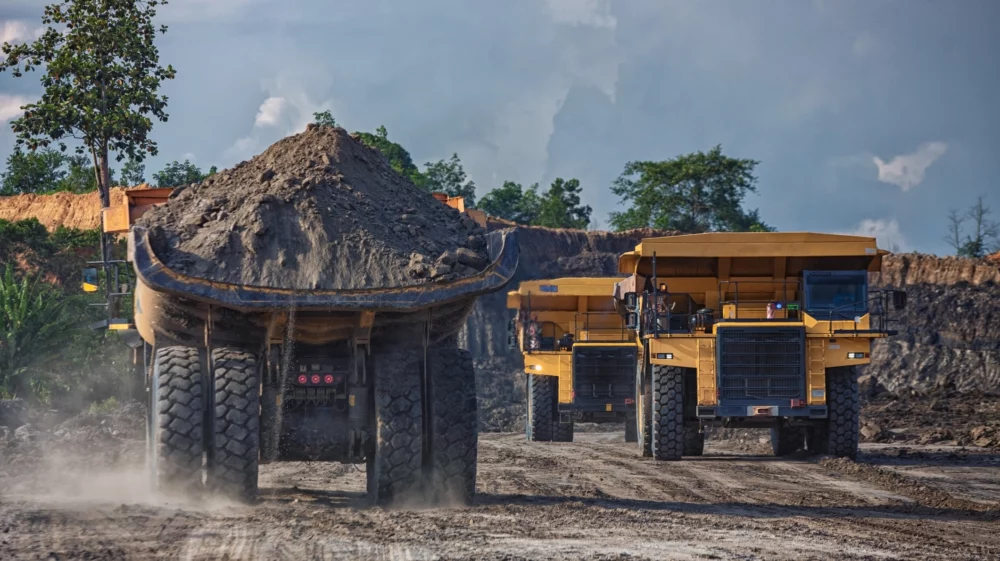
Tilt-shifted image of coal mining, with red dirt in the foreground and a truck carrying coal in focus in the middle ground
SEI brief

also available in Indonesian and Spanish

Just transitions from coal in Colombia: between policy and reality

Start reading
SEI brief

Just transitions from coal in Colombia: between policy and reality

This policy brief highlights challenges for a just transition from thermal coal in Colombia, in order to inform policy, development cooperation and private finance, research and on-the-ground projects and to offer insights for researchers and practitioners in other contexts.

Elisa Arond, José Vega Araújo / Published on 11 October 2024

Download  SEI brief / PDF / 272 KB
Citation

Arond, E., Vega-Araújo, J., Peña-Niño, J., & Patzy, F. (2024). Just transitions from coal in Colombia: between policy and reality. SEI brief. Stockholm Environment Institute. https://doi.org/10.51414/sei2024.038

This brief is based on two reports from the project Just Transitions from Coal in Colombia, Indonesia and South Africa, which drew on workshops, interviews, quantitative analysis and literature reviews conducted between 2022 and 2024, with a focus on two departments that produce the majority of thermal coal for export: Cesar and La Guajira (Vega-Araújo et al., 2023, forthcoming 2024).

Key messages

  • The current Colombian government has made commitments to establish a just energy transition roadmap and has begun to prioritize thermal coal regions in the Caribbean, where coal is a major export commodity but not a major fuel for domestic use, but more resources are required to meet the ambitions for a just transition.
  • Visions for a future beyond coal vary between stakeholders: labour organizations, community groups, local and national NGOs, and academia differ from some policymakers, mining companies and other stakeholders that resist transitioning away from coal mining and use in Colombia.
  • Thermal coal regions in Colombia face multiple challenges for an energy transition, given geopolitical tensions and severe global market fluctuations, as well as the costly environmental and social legacy of extractive activities and the repercussions of losing a significant industrial sector, affecting local and regional economies and communities.
  • Local and regional governments have a crucial role to play in supporting just transitions from coal, and those in Colombia face barriers due to lacking subnational institutional capacities and competencies and the inadequacy of financing mechanisms.
  • Inclusive stakeholder dialogues are crucial to a just transition, yet actions must also include concrete investments, programs and strategies at the local level, especially in regions already affected by the suspension of mining activities, such as in Cesar.
Download

SEI brief / PDF / 272 KB

SEI authors

Elisa Arond

Senior Research Fellow

SEI Latin America

José Vega Araújo

Team Leader: Renewable Energy; Research Fellow

SEI Latin America