Using securitization theory this study examines how security discourses, actors and tools shape offshore wind development in Sweden. It also explores implications for democratic Marine Spatial Planning, energy governance and environmental protection in Europe.
Offshore wind power in the Baltic Sea
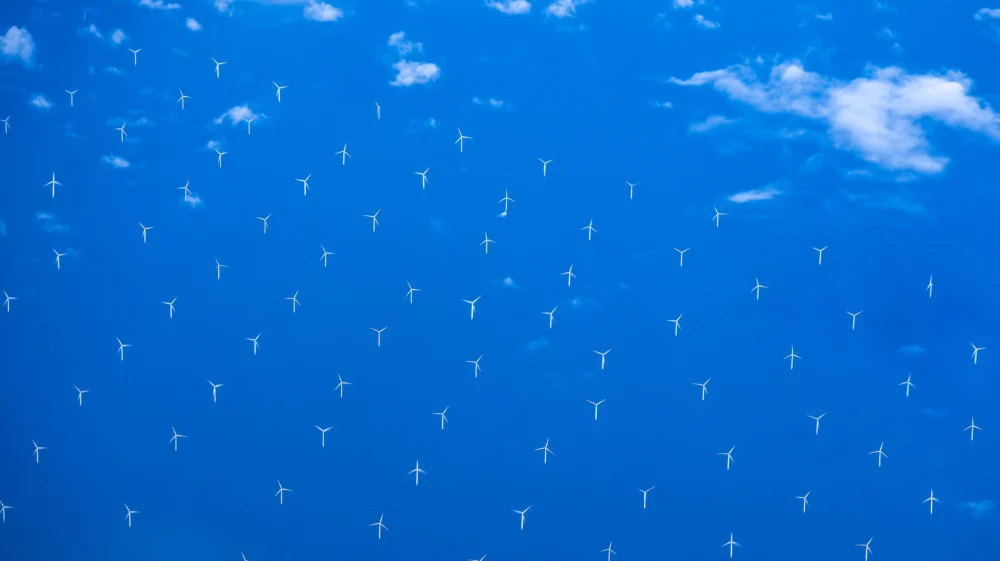
Photo: Mary Ray / Unsplash
Offshore wind energy is increasingly framed by the European Union (EU) as critical infrastructure for achieving energy security, reducing fossil fuel dependence, and responding to geopolitical tensions, especially following Russia’s invasion of Ukraine. This paper investigates how offshore wind development in Sweden is shaped by evolving security-related narratives, and whether it is becoming securitized across international, national, and local levels of governance. Addressing a gap in the literature on energy transitions and security, the study combines insights from securitization theory with a multi-level governance lens to examine how discourses, actors, and tools shape the governance of offshore wind. Empirically, it draws on qualitative analysis of 15 policy documents and 10 interviews with EU, Swedish national, and local stakeholders. The findings reveal a fragmented governance landscape: while EU institutions increasingly treat offshore wind as a security imperative, Swedish authorities approach it primarily through risk-based and technical planning frameworks. Yet national defence actors, especially in the Baltic Sea region, exert significant behind-the-scenes influence, shaping outcomes without transparent deliberation. This “soft securitization” constrains the democratic and integrative ambitions of Marine Spatial Planning, the key policy tool for managing marine use conflicts. The study underscores the uneven and contested nature of securitization processes and highlights the institutional challenges of balancing security, environmental, and democratic priorities in offshore energy governance.
Project / Mistra Co-Creating Better Blue (C2B2) is a collaborative project for a more sustainable blue economy in Sweden.
Project / This project aims to critically examine how the dynamics of geopolitics, human security and global environmental change interrelate.
Press release / As El Niño intensifies across the Amazon, new research in Science highlights the urgent need to better protect the region’s remaining forests from disturbances.
Feature / Ukraine’s green recovery begins with documenting environmental destruction now -- essential to accountability, restoration and sustainable reconstruction.
Feature / Trase identifies the leading coffee trading companies and estimate where traders and markets source coffee from within key coffee-producing countries.