This paper reports on the development of a model for assessing transitions to sustainable mobility.
The model uses the concepts of transition theory as a framework for assessing possible pathways by which a transition to a sustainable mobility society might happen.
The modelling approach combines agent-based modelling techniques with a system dynamics structure. It is original in that there are two levels of agent.
There are a small number of complex agents, which have an internal structure and are therefore subsystems within society, and a larger number of simple agents.
Based on the UK data, the results show that Hydrogen Fuel Cell Vehicles (FCVs) come to dominate, but only in the very long run (after 2030), while biofuels and ICE (Internal Combustion Engine)-electric hybrids are the main alternatives to the regime in the next 10–30 years, because a) they are already developed and b) they fit better into current infrastructures.
The model shows that technological transitions are most likely. Lifestyle change transitions require sustained pressure from the environment on society and behavioural change from consumers.
Download publication here (external link)
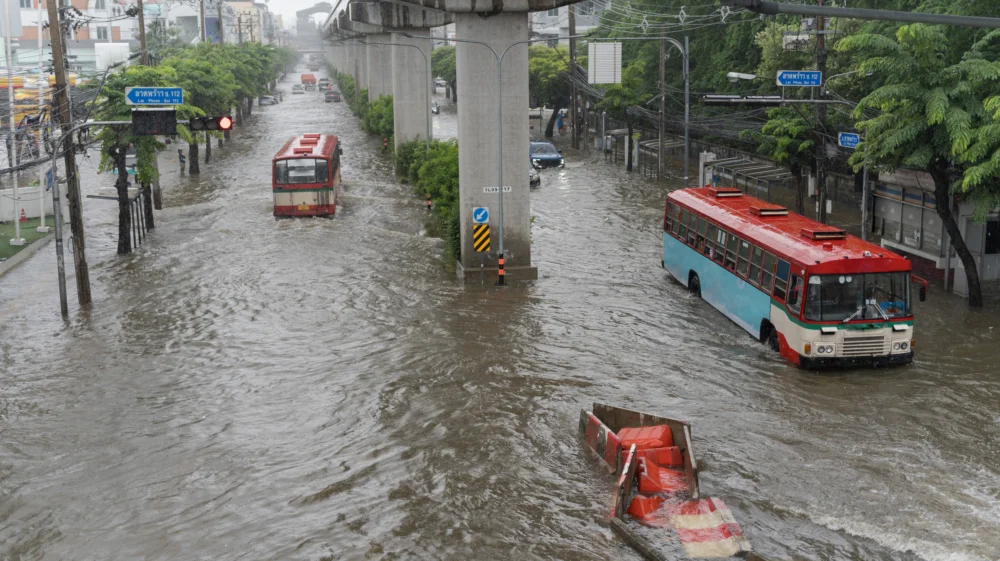
Perspective / Flooding in Bangkok in late September exposed a critical gap: forecasts identified the threat days in advance, warnings and preparedness did not translate fast.
Event on 08 December / In this fourth CS Co-labs discussion session we will explore the use of digital tools in different aspects of citizen science projects.
Media advisory / SEI invites journalists to a media briefing where its leading experts will share their perspectives on the major themes shaping COP31.