Where land for larger parks is scarce, pocket parks can give people access to green space close to home. Drawing on research in Bangkok, this SEI brief offers city governments five recommendations on where to create pocket parks, how to involve residents in their design and how to fund and manage their upkeep.
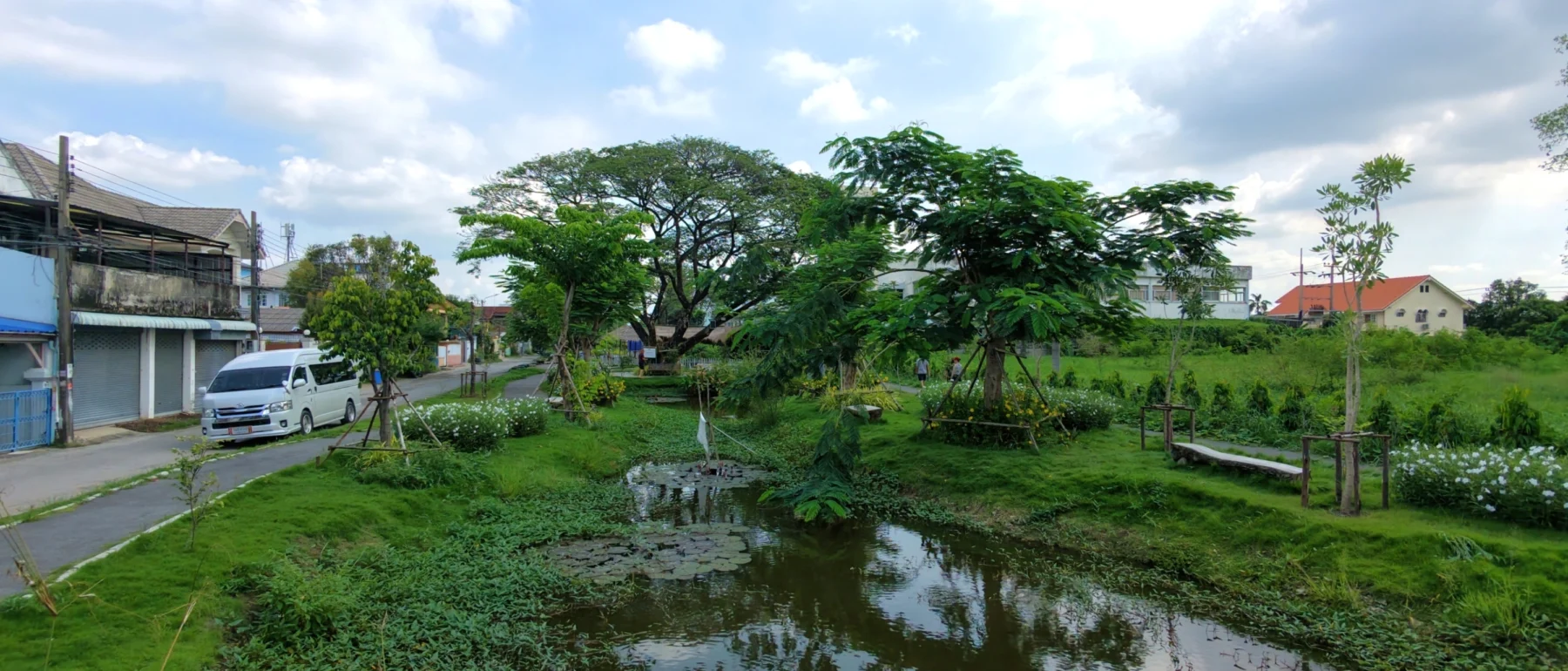
Pocket parks are small neighbourhood public spaces that bring outdoor space and nature within a 15-minute walk of local residents, especially in dense urban areas with limited nearby access to public green spaces.
Bangkok has turned small plots of land into neighbourhood parks where people can rest, exercise, socialize and play. SEI researchers studied five of these parks in three lower-income districts, using observations, questionnaires and conversations with residents and district officials to understand how the parks are used and managed.
For cities where land is scarce, finding space for a park is only the first step. Drawing on Bangkok’s experience, the brief offers policy recommendations to help city governments create parks that meet local needs and remain useful to residents over time.
The brief was produced by SEI York, based at the University of York, and SEI Asia. It draws on the project Evaluating 15-minute pocket parks.
The project was funded by the British Academy’s Social Determinants of Health Programme (award reference IOCRG\101062).
Project / The project assessed how Bangkok’s pocket parks enhance urban wellbeing, accessibility, and environmental benefits, informing inclusive urban planning policies.
Project / Using a visual storytelling approach, this project documents everyday mobility practices and infrastructure use, revealing local issues.
Feature / Researchers document how low-income communities in Bangkok are coping with the intense and unforgiving heat.
Feature / SEI researchers explore how Bangkok’s pocket parks impact urban health, wellbeing, and social life, offering insights for greener, more livable cities.