Skip navigation
SEI brief

Exploring how interest-free cooperatives can help Nigerian smallholders address climate and sustainability challenges

Start reading
SEI brief

Exploring how interest-free cooperatives can help Nigerian smallholders address climate and sustainability challenges

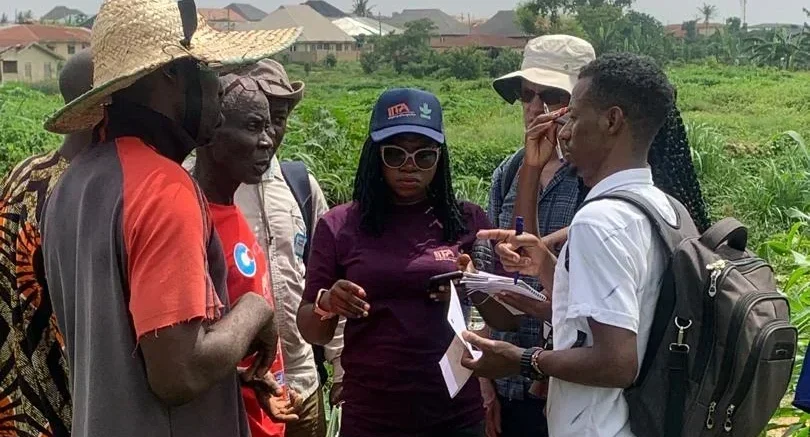
This brief outlines insights that emerged from the SustainFood Collaborative Learning School 2025, which explored interlinked finance, technological and climate challenges facing smallholders in Egbeda, Oyo State, Nigeria, and examined potential ways to address these challenges.

Foluke C. Olatoye, Cynthia Odili, Day B. Mohlala, Abebe Hegano, Gordon Y. Mwesigwa, Souleymane Camara / Published on 19 October 2026

Download  Read the brief / PDF / 904 KB
Citation

Olatoye, F.C., Odili, C., Mohlala, D.B., Hegano, A., Mwesigwa, G.Y., & Camara, S. (2026). Exploring how interest-free cooperatives can help Nigerian smallholders address climate and sustainability challenges. Stockholm Environment Institute. https://doi.org/10.51414/sei2026.042

Key messages

  • Smallholders said that they lack the following: access to capital and markets, information about how to improve production, and the technology and knowledge to help them adapt to the impacts of climate change.

  • Sessions to co-explore and co-design potential solutions with smallholders, state-level policymakers and early-career researchers focused on establishing interest-free cooperatives as one way to help farmers access capital, invest in climate-smart technologies and sustainably increase food production.

  • The brief makes recommendations for Oyo State policymakers to consider to better integrate interest-free cooperatives into Nigerian agricultural and climate policies, and to provide targeted financial and institutional support for such cooperatives.

Download

Read the brief / PDF / 904 KB