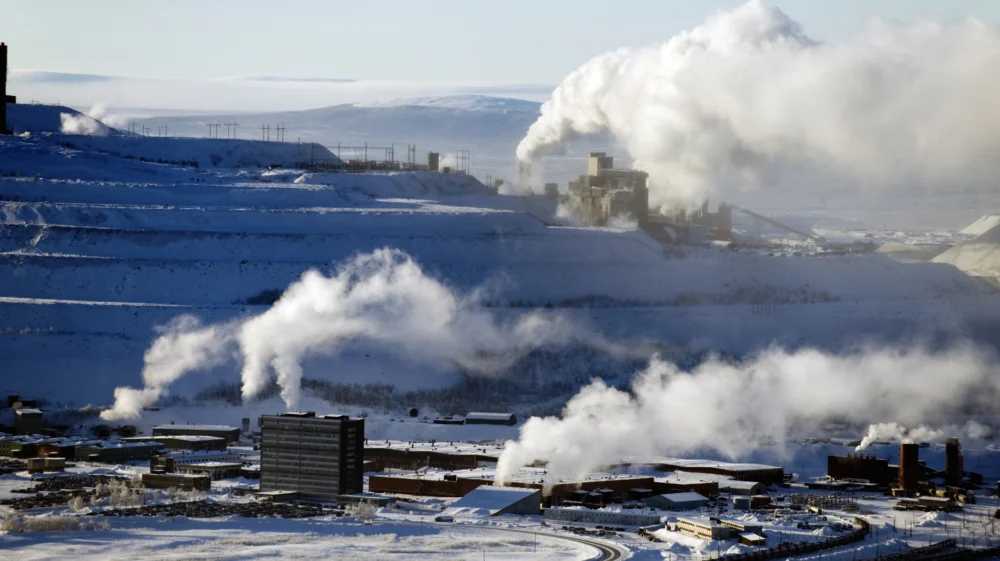
This paper explores the role of human rights impact assessment in clarifying corporate accountabilities, using the example of Sámi reindeer herding in Sweden and LKAB’s proposed Per Geijer mining project on traditional Sámi lands.
Emerging due diligence laws aim to ensure responsible resource extraction but leave companies with considerable discretion. In this paper, the authors explore the role of human rights impact assessment (HRIA) as an arena for clarifying corporate accountabilities, and provide a novel framework based on a synthesis of research, international law, and good practice standards. They focus on the example of Indigenous Sámi reindeer herding in Sweden: this is a high-risk context for human rights violations, and the mining industry has a growing interest in the large mineral resources located on traditional Sámi lands.
The criteria-based framework defines six preconditions that must be protected to ensure that herding communities can enjoy their collective rights to land and culture, notably the cultural practice of natural grazing-based herding and its seasonal migration.
As a case study they examine state-owned mining company LKAB’s proposed Per Geijer project – notably, the project’s application for a concession permit on the traditional lands of Gabna reindeer herding community. The study is based on collaborative research with members of the community, guided by principles from participatory action research and Indigenous methodologies. The analysis demonstrates how LKAB’s project entails a significant risk of violating the Indigenous rights of the members of Gabna. In so doing, the authors provide one of the few evaluations of the human rights risks of mining on Sámi lands in Sweden.
Finally, because of the challenges of using HRIA tools to build cross-cultural understanding, they consider how innovative methods could help us develop rights-based approaches with Indigenous communities.
Project / Mistra Mineral Governance research project aims to help decision-makers in Sweden and the EU navigate the critical mineral governance landscape.
Journal article / This paper examines how the designation of strategic mining projects under the EU Critical Raw Materials Act relates to state obligations to protect Sámi rights
SEI report / The report presents agricultural mitigation measures adoptable under Swedish conditions and with sufficient evidence for operationalization in the VCF dashboard
Past event / A webinar about land claims, land use conflicts, the state of Sámi rights and rule of law in the Nordic countries.